Insights
Global infectious disease outbreaks and natural disasters—such as earthquakes, volcanic eruptions, and heavy rainfall—pose significant risks to the tourism industry in Japan. To help develop safe and resilient tourism destinations capable of responding effectively to such crises, we support the development of comprehensive crisis response systems.
Over the past two decades, numerous crises and disasters have occurred worldwide, significantly impacting the tourism industry. With the increasing frequency of extreme weather events linked to climate change, the high likelihood of a major earthquake in the Tokyo metropolitan area within the coming decades, and ongoing geopolitical tensions, tourism will continue to face a wide range of risks both domestically and internationally.
At the same time, the number of international visitors to Japan continues to grow, making it increasingly important to provide clear and accessible information to foreign travelers—who may have different levels of disaster preparedness, behavioral norms, and language abilities—and to support appropriate responses during emergencies.
Tourism crisis management involves preparing for a range of risks, including natural disasters (such as earthquakes, tsunamis, and typhoons), terrorism, and emerging infectious diseases. This includes developing response strategies in advance, establishing practical plans and manuals, and enabling staff to respond effectively in real time.
To support the development of resilient tourism destinations, JTB Tourism Research & Consulting works with local governments and tourism businesses to develop crisis management plans, guidelines, and operational frameworks that mitigate risks to visitors and enable rapid recovery. We also assist in establishing systems that allow on-site personnel to respond effectively when crises occur.
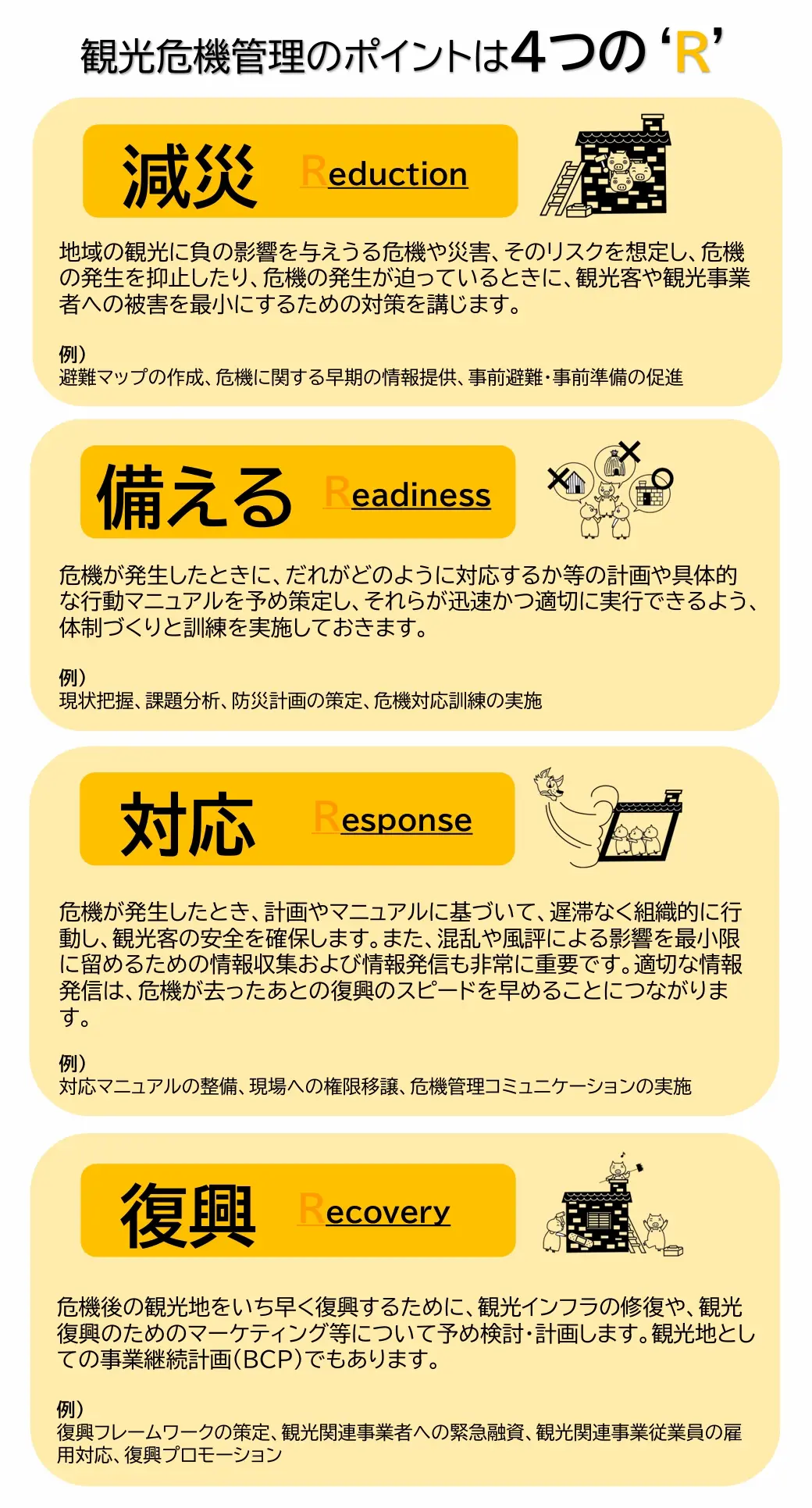
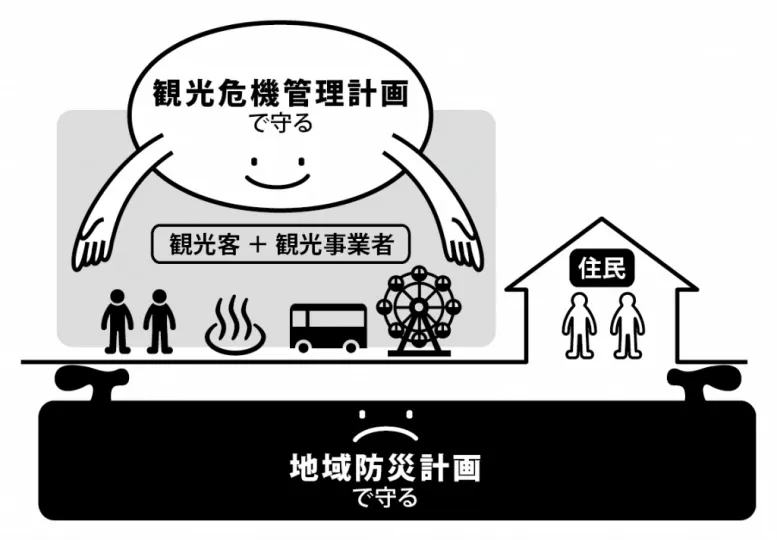
The Basic Act on Disaster Management aims to “protect the lives, physical well-being, and property of the public from disasters”; safeguarding the safety of tourists and travelers is not included in the objectives of this law. Furthermore, only a small number of local governments’ disaster prevention plans specifically address measures for tourists.Based on a review of existing plans and on-site conditions, we will examine evacuation guidance policies to protect the safety of tourists and travelers who encounter disasters or crises, systems for the rapid and accurate collection and dissemination of information, and mechanisms to facilitate their early return home or to their home countries. This will lead to the formulation of concrete plans and manuals.
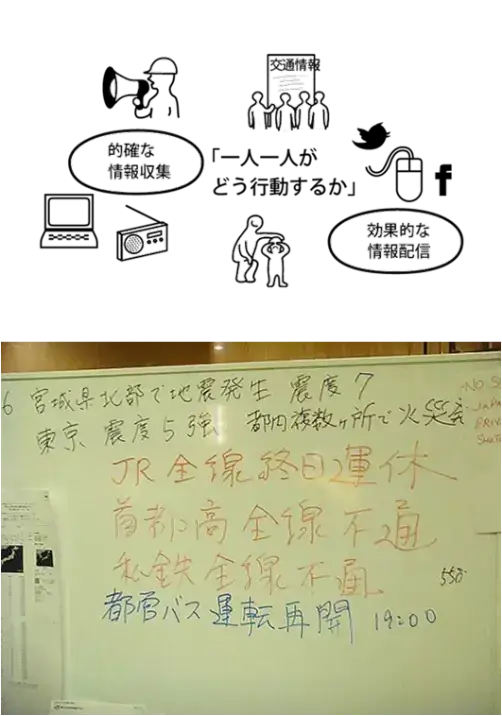
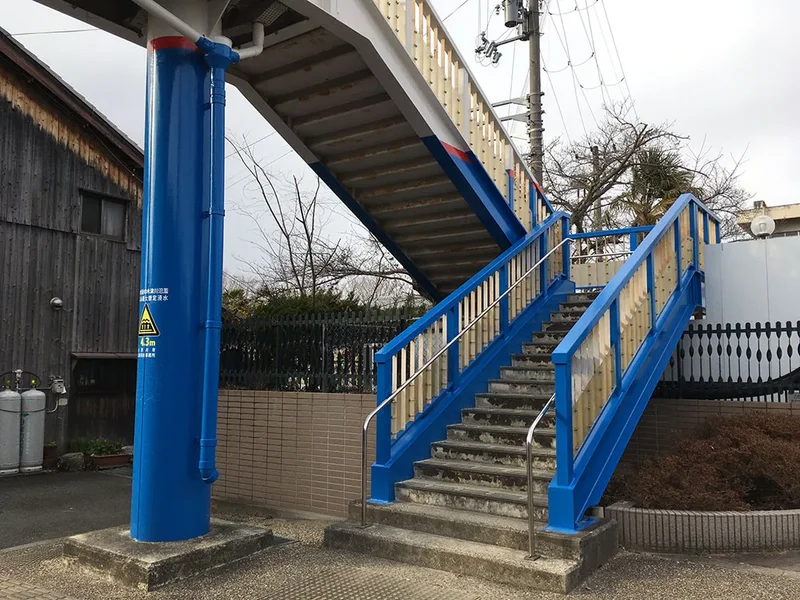
While human guidance is crucial during evacuations, it is also effective to provide information in advance—such as allowing tourists to recognize the elevation of their current location while sightseeing, or including emergency contact information and evacuation guidelines in the tourist materials they carry (such as paper maps or digital tools).We support the development of evacuation maps and the planning and installation of evacuation signage to prevent on-site chaos caused by crowds of tourists congregating in specific areas or the jumbled flow of evacuees, as well as to clearly identify safe zones where people can feel secure once they arrive.
Even if a tourism crisis management plan or evacuation manual is in place, if staff members do not have these plans and manuals firmly in mind when a crisis actually occurs, they will be unable to take swift and appropriate action. To strengthen the ability of all relevant personnel to respond calmly and effectively based on these plans and manuals, regardless of when or what kind of crisis occurs, we provide support for planning evacuation drills and refining manuals based on reviews of drill results.
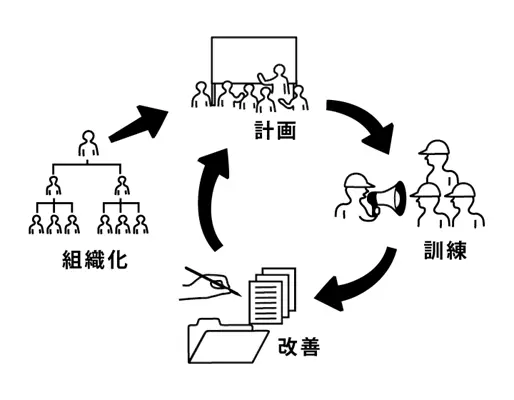
To help local governments and tourism operators develop tourism crisis management plans and evacuation guidance manuals, and to strengthen systems that enable on-site personnel to act in accordance with these documents, the Japan Tourism Agency has published “Guidelines” for creating such plans and manuals (for local governments and DMOs / for businesses). However, for organizations and companies just beginning this process, it is not easy to create plans and manuals on their own.To promote organic collaboration between local governments and tourism operators and strengthen the region’s comprehensive framework, we will support efforts to raise awareness and provide guidance on creating manuals through seminars and workshops, thereby enhancing the entire region’s understanding of tourism crisis management.
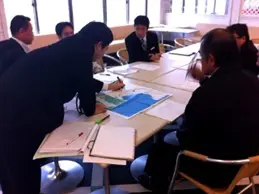
Conducting seminars and workshops at inns and hotels in Kochi Prefecture to teach staff how to communicate information and guide guests—including foreign tourists—to safety in the event of a Nankai Trough earthquake.
To promote the development of a "safe and secure" tourism brand—a key requirement for the future—we conducted a survey of tourist destinations that are implementing innovative initiatives, including Yamanashi Prefecture, Toyooka City in Hyogo Prefecture, Kesennuma City in Miyagi Prefecture, Myoko City in Niigata Prefecture, Nasushiobara City in Tochigi Prefecture, Beppu City in Oita Prefecture, Gero City in Gifu Prefecture, and Okinawa Prefecture. Based on this research, we have formulated proposals regarding the roles these destinations should play.
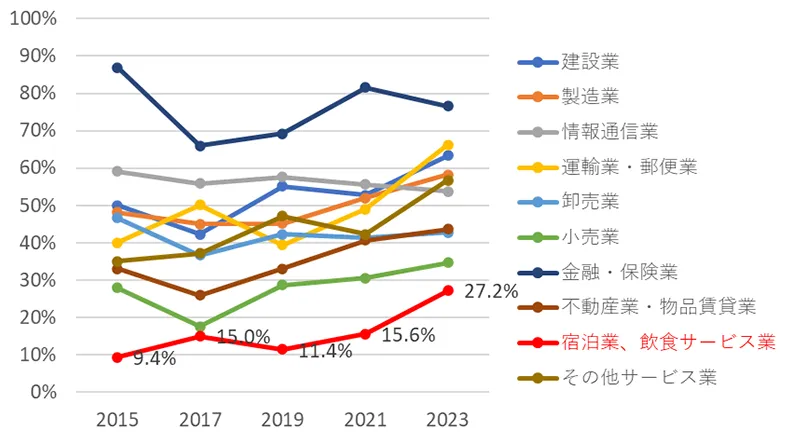
Conducting seminars at inns and hotels in Kochi Prefecture to promote an understanding of the importance of tourism crisis management—including responses to earthquakes—and to encourage a renewed focus on business continuity plans (BCPs) during the COVID-19 pandemic.