An Interview with Philosopher Hitoshi Ogawa: What Travel Will Look Like Five Years Ahead
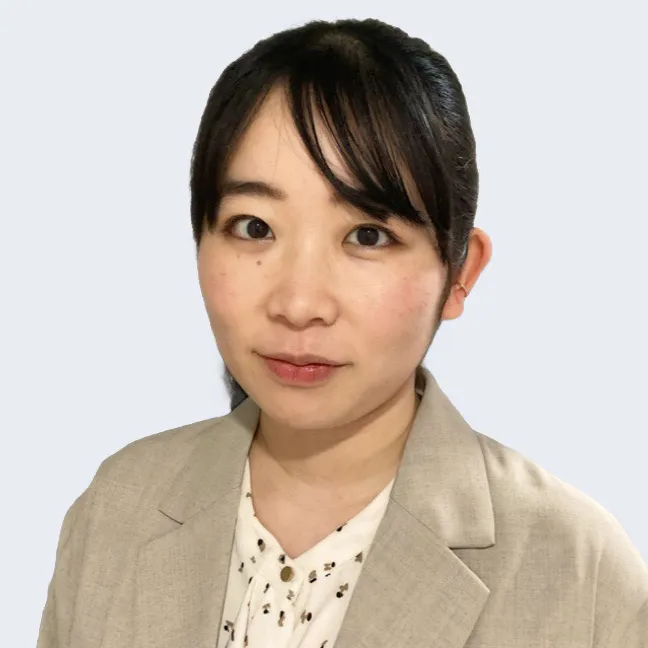
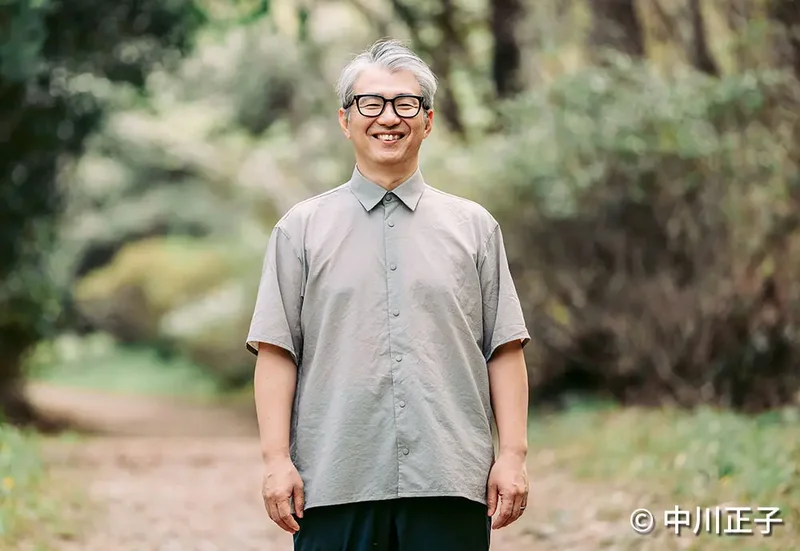
What does Mr. Ogawa, a philosopher active in a wide range of fields, envision as the ideal form of a “contemplative” journey in extraordinary settings? In this column, with the aim of identifying future trends in tourism and travel as well as signs of change (i.e., the seeds of new tourism), we present “exploration reports” (i.e., interview transcripts) featuring leading experts from various fields beyond just the travel industry. This time, we spoke with philosopher Hitoshi Ogawa, a professor in the Faculty of Integrated International Studies at Yamaguchi University who researches public philosophy and is also active in various media outlets, including the new NHK E-TV philosophy program “Rocchi to Ko-hitsuji.”

Graduated from the Faculty of Law at Kyoto University; completed the doctoral program at Nagoya City University Graduate School\Ph.D. (Humanities and Cultural Studies) Advisory Consultant at Princeton University (FY 2011) Specializes in public philosophy. A philosopher with an unconventional background, having worked at a trading company (Itochu Corporation), a local government (Nagoya City Hall), and as a part-time worker Practices philosophy for the general public, including hosting “Philosophy Cafés” Author of numerous books and an active commentator in various media
How has the COVID-19 pandemic changed our concept of "travel"?
Explorer Squad: Mr. Ogawa, do you usually go on trips?
Mr. Ogawa: I don’t go very often, actually. I’m not really the type to go out much on my own, so I usually end up traveling when my family or friends invite me. Even when I do go on a trip, I tend to stay cooped up in the hotel and work... (laughs).I do incorporate the “extraordinary” into my “daily routine” of work—writing, working at hotels abroad or at beautiful train stations—so I do go to different places. Working in a different location changes my perspective. It changes the way I see the world and has a positive effect on my thinking. It’s particularly beneficial for my philosophy of trying to view things outside the bounds of conventional wisdom.
Explorer Squad: I see. Has that work style—incorporating the “extraordinary” into your “everyday”—remained the same for a long time?
Mr. Ogawa: Actually, that’s changed a bit recently. I think I’m just like everyone else these days—I’ve started to “reconsider the extraordinary.” Especially during the pandemic, when I couldn’t travel, I began to appreciate the happiness of being able to travel and thought, “I want to incorporate the extraordinary into my daily life more effectively.”
I believe there have been three major “changes in travel” during the pandemic. The first is “Travel Happiness” (Ryoko), where people have come to feel happy just to be able to travel. The second is “Travel Quality” (Ryoko), where because we rarely get to travel, we want to make the most of every trip, leading to higher standards and spending. The third is “Travel Reflection” (Ryoko). We’ve started thinking about the meaning of the trip beforehand—like what purpose a particular destination serves—or reflecting on what we learn along the way to re-examine ourselves and our lives... Perhaps because these three concepts of travel have shifted within me, I’ve started to enjoy traveling even more.

Engaging in “Reflective Travel” automatically shifts your perspective.
Explorer Squad: The “three types of travel” is a very interesting perspective. I often think about “Reflective Travel” in particular—what exactly is the “difference in mindset” when thinking while on a trip?
Mr. Ogawa: In our daily lives, when we “think about things,” we do so by adopting various perspectives. Usually, we think about things from our own perspective, but to engage in deep reflection, we need to view them from multiple angles. The more perspectives we have—and the more unexpected they are to us—the deeper our thinking becomes. The process of shifting perspectives is a crucial part of thinking, and the fact that “our perspective shifts significantly and automatically” when we think while visiting different places is one of the true meanings of travel.
Explorer Squad: I see. Unlike in daily life, the fact that your perspective “changes drastically and automatically” while traveling is what creates a different way of thinking. Is who you travel with also an important factor in shifting your perspective even further?
Mr. Ogawa: Who you travel with is something I personally place great importance on in “Travel Thinking” (thinking while traveling). In a sense, thinking is also a form of dialogue. You’re having a conversation with another version of yourself. There’s another “you” inside your own head, and this is the mechanism of thought. Dialogue is more effective when done with someone else rather than alone, and having a travel companion deepens your thinking even further.
Amid the cycle of the ordinary and the extraordinary, travel will continue to evolve. But some things remain constant.
Explorer Squad: Is philosophy itself something that follows trends?
Mr. Ogawa: Philosophy is a child of its time, so new philosophies emerge depending on the era. Just like travel, a “reconsideration of the extraordinary” is definitely taking place. Whether it’s travel or philosophy, aren’t they both influenced by the external environment? As for current trends, ideas related to the pandemic and technological changes driven by things like ChatGPT… these two factors are having a significant impact on philosophy. The field of “philosophy of mind,” which discusses topics in relation to AI, is also thriving.
Explorer Squad: So, philosophical thinking is indeed influenced by the times. With both philosophy and travel undergoing a “reconsideration of the extraordinary,” what do you think travel will look like five years from now?
Mr. Ogawa: If the current situation continues, I think the next five years or so will be an extension of the “three types of travel.” However, I also think it will change significantly depending on external factors.

Explorer Squad: I believe that once you get used to the extraordinary, what you previously considered ordinary can, conversely, become extraordinary. Does that mean travel is essentially a cycle of alternating between the extraordinary and the ordinary?
Mr. Ogawa: For example, if you’re traveling abroad for a long time, you start thinking, “I want to go home,” right? That’s the moment when the ordinary becomes extraordinary—you want to return because your daily life has become something “precious,” but once you’re back, you get used to that routine again. I think it’s precisely because of this cycle that people keep traveling. Once you’ve experienced the “extraordinary” once, it ceases to be extraordinary the second time. The extraordinary and the ordinary aren’t simply a repetition; they grow and develop in a spiral. As we cycle through the extraordinary and the ordinary, we grow as well. In other words, by continuing to travel, people grow. Humans inherently possess both a “dynamic” drive to seek change and a “static” desire to preserve the status quo, and the balance between these varies from person to person. I believe the difference between those who travel frequently and those who don’t lies in individual differences in vitality.
Explorer Squad: If it’s just a cycle of the ordinary and the extraordinary, it seems we wouldn’t need to be bound by the concept of “travel.” So why do people still set out on journeys? What is the essence of travel?
Mr. Ogawa: That’s a truly ultimate question. I think it’s ultimately “to meet the real me.” The person I most want to meet while traveling is my true self. I can usually catch a glimpse of it, but it always slips away... (laughs). I believe my true self exists, but the version of myself I see depends on where I go. Even the same place feels different on a different day, so I can’t possibly visit every place in my lifetime. The number of places to go is infinite. That’s why I can’t find my true self. And yet, the essence of travel itself never changes. That’s why I think people keep traveling.
The “Seed” I Found on This Expedition
What I discovered on this expedition was the “reason” behind the vague feeling I’d always had that “traveling allows me to reflect on myself and grow.” Through “Ryoko” (travel reflection), I realized that I was able to perceive things from a perspective different from my usual self, and that by unconsciously placing myself in the cycle of “the extraordinary” and “the ordinary,” I had been experiencing personal growth through travel. What we seek from travel may change with the times, but I feel that the effects of “Ryokou” itself will surely remain the same. From now on, I believe the way we enjoy travel will change depending on how we define our own “non-daily life,” and it will become one of the means by which we can move closer to the person we want to become.
著者