A Conversation with Amazon Chef Tetsuo Ota: What Travel Will Look Like Five Years Ahead
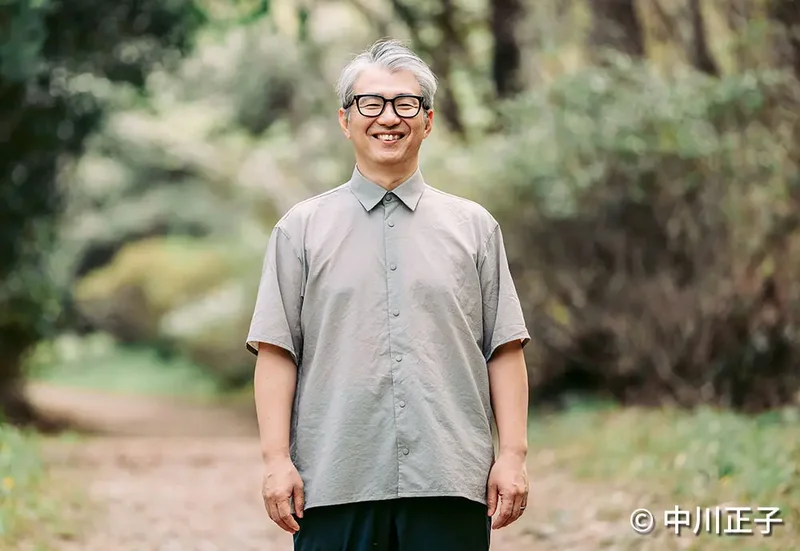
What world has Mr. Ota, a chef active in a wide range of fields in the Amazon region, discovered through food? In this column, with the aim of identifying future trends in tourism and travel and capturing signs of change (i.e., the seeds of new tourism), we present “exploration reports” (i.e., interview transcripts) featuring leading experts from various fields beyond just the travel industry. We spoke with Tetsuo Ota, a chef with a diverse range of activities, including importing Amazonian cacao, running restaurants, and manufacturing confectionery.

Born in 1980 in Hakuba Village, Nagano Prefecture.As a chef, he gained over 10 years of experience across three countries—Italy, Spain, and Peru—before returning to Japan in 2015. In Italy, he worked at Michelin-starred restaurants, as a private chef for a Milanese socialite, and at a cutting-edge pizzeria; in Spain, he worked at “El Bulli”; and in Peru, at “Astrid y Gastón.” Currently, in addition to cooking, he is actively involved in promoting Amazonian cacao.
Encounters with people from various countries that inspired me to spread my wings and take on the world
Explorer Squad: What was your childhood like before you set your sights on becoming a chef?
Mr. Ota: I was born in Hakuba Village, Nagano Prefecture, and my family ran a lodging business. In the summer, we hosted world mountain biking championships, and in the winter, the Olympics, so athletes from all over the world stayed with us. I graduated from high school right around the time the Olympics ended, and that inspired me to want to go out into the world. I liked the atmosphere of European people and had thought about going to France or Italy, but in the end, an Italian guest staying with us at the time recommended Italy, so I decided to go there! I’d been exposed to art and classical music since childhood, so that might have influenced me as well. I’ve loved trying different foods since I was little. It’s probably not very common, but starting around middle and high school, I’d often go to places like Tokyo, and my hobby was visiting various restaurants, patisseries, and chocolate artisans to sample their creations. Continuing that passion, even after I went to Italy, I’d visit all sorts of restaurants, relying on books I’d brought from Japan.
Explorer Squad: You ventured into the world of Italy, and I believe you started by attending a language school. What prompted you to pursue a career as a chef from there?
Mr. Ota: At the language school I was attending at the time, there was a class where we had to give presentations in Italian about where we’d gone over the weekend. I’d talk about dining at high-end restaurants that even the teachers wouldn’t go to—not just saying it was delicious, but explaining things like, “The traditional Milanese cutlet was given a fresh, modern twist, and that interpretation was…” Both the teachers and the other students were completely dumbfounded.(Laughs) The principal, who was watching, said to me, “If you love eating that much, why not try working at a restaurant? You’ll get staff meals, and I think it’ll fulfill all your desires.” That’s what made me think, “Maybe I should give the culinary world a try.” I’d always enjoyed trying different foods and recreating those flavors, and ever since I was a child, I’d loved looking at cookbooks and cooking. I think part of it was also the joy I felt seeing the happy faces of people who ate what I’d made.
Explorer Squad: Did you then go on to train as a chef in Italy for a while?
Mr. Ota: People around me advised me, “Cooking isn’t something you can just do your own way; you’ll improve more if you master the basics before training in Italy.” So I returned to Japan once to study cooking. I went back to Italy when I was around 23. I already knew which restaurant I wanted to work at in Italy, so back then, I called that restaurant from a phone booth on Dogenzaka in Japan and said, “I’d like to work there…” (laughs). Looking back now, I’m surprised they actually accepted me.

Adaptability and a Steadfast Core That Led to Becoming an Amazon Chef
Explorer Squad: Currently, your work revolves around three main pillars: importing Amazonian cacao, running restaurants, and producing confectionery. How did your experiences in Italy lead you to these fields?
Mr. Ota: Well, I think part of it was that I had many opportunities to make pastries at the restaurant where I was working. After my training in Italy, I wanted to study at the cutting edge of the culinary world. When I consulted a friend in Italy, he told me, “Spain is really exciting right now, so you should go check it out.” So, I drove straight through Nice and southern Provence all the way to the Catalonia region of Spain. The moment I tasted a bite of food at that Spanish restaurant, I felt like “Spain is calling me,” and I decided to go there immediately. Later, when I was thinking about where to train next after Spain, I realized that there were many Spanish-speaking people from Central and South America in Spain, and I often heard stories about those regions and the cutting edge of their cuisine. That’s how I became interested in Central and South America. At first, I thought about going to Brazil, but I heard that Peru was actually quite interesting right now, so I decided to go there.
Explorer Squad: Listening to your story, I get the sense that you’ve been blessed with many serendipitous connections, are very adaptable, and have a strong drive to improve. Is there anything you value most when taking action?
Mr. Ota: I’m an incredibly positive thinker. If you look at things negatively, it’s like rolling down a hill—you just keep going. There are countless people in the world who never see the light of day, and others suffering from conflict. At the time, I lived with a Ukrainian person for about five and a half years, and hearing their harrowing story of coming to Italy made me realize just how fortunate Japan really is. People like that are always positive. To survive abroad, it all comes down to whether you can adapt or not. If you can’t adapt, you’re weeded out, and I believe that the more adaptable you are, the more resiliently you can blaze a new trail. So I suppose I naturally ended up living that way. Opportunities present themselves equally to everyone. When it comes to whether to wait for one big chance in life or be satisfied with small ones, I’m the type who’s content with the small ones. So, rather than seeking others’ approval, I keep choosing what I personally believe in during this one-time-only life. Even so, maintaining a steadfast core might be important.
Explorer Squad: “Adaptability” is such a great word. I heard you’re currently based in Karuizawa…
Mr. Ota: Nagano Prefecture is rich in nature and offers plenty of open space. The main reason is that I wanted to work in a relaxed environment, even within Japan. That said, it’s not like I absolutely have to be here. I believe I can adapt and live anywhere, so I want to cherish the connections I make. When I saw the reality behind chocolate ingredients in the Amazon, I realized that back then, it wasn’t an era where chefs just had to focus on cooking. I wondered if there were aspects I could incorporate in my own way, which is why I started my current work with cacao and chocolate. Right now, I’m supporting about 2,000 farmers, and since I have to keep supporting their future, I don’t want to be too fixated on cooking itself—it could be confectionery, too—and I just hope I can continue to express myself in the future. I hope to ride the wave of the times while maintaining a balance between my three main pillars: “cocoa import and wholesale,” “chef,” and “confectionery.”

Food is a tool for communication; I want to convey the truth I’ve seen with my own eyes
Explorer Squad: Is there anything you’ve gained or come to see through the world of cooking?
Mr. Ota: “Delicious” is a universal language used even when people don’t share a common language, so the food sector is an easy gateway to the world. There’s so much you can see through food. For example, since food and religious culture are closely intertwined, you can understand the cultural context behind why certain foods are eaten on specific days or why others are forbidden. Since what people find delicious varies by ethnicity, I’ve even had CT scans taken to examine differences in physical structure, such as the length of the intestines or teeth. I believe that by using food as a tool for communication, we can learn about people’s origins and the background of how their food cultures were born.
Travel is a source of inspiration that allows you to feel the flow of an ever-changing era
Explorer Squad: Mr. Ota, you view food as a form of communication. What role do you think travel plays in your activities?
Mr. Ota: Since my job involves introducing things to people, I see travel as a source of inspiration. When I return to Japan, sharing these stories with everyone and applying them to my future work is the output. No matter how many times I visit a place, there are always new discoveries, so I feel a sense of the changing times. Take Italy, for example: major cities like Milan are incredibly different now compared to 10 years ago. Old town districts have disappeared and been replaced by new commercial complexes, and while long-established confectionery shops may look the same on the outside, their packaging has become modern. I think travel also involves reflecting on the background of these changes—asking myself why things had to change that way, or why a 300-year-old institution couldn’t keep up with the trends of the times. I also think that for me, travel is about seeing with my own eyes how cities and the people living there will change in the next five or ten years, and finding my own answers to those questions. Since I often have the opportunity to visit the Amazon, I use my travels to internalize not just the people, but also the loss of virgin forests and the changes in the environment and the planet as a whole.
Explorer Squad: In today’s world, you don’t necessarily have to go to a place in person to get a sense of travel through social media and other sources. What is the value of communicating with people on-site for you, Mr. Ota?
Mr. Ota: I believe there’s nothing better than firsthand experience. You can talk about authentic Italian cuisine based on videos or books, but the weight of the words spoken by someone who’s actually experienced it is completely different from those who haven’t. I sometimes give lectures to children, and I want to share my real-life experiences accurately. That way, I feel I’m speaking more truthfully, which satisfies me personally, and I think it also gives my message more passion and impact. Many of the people I look up to act in this way, so I want to do the same.
The “Seed” I Found on This Expedition
What I discovered and was amazed by during this expedition was Mr. Ota’s “adaptability.” I learned that it is precisely because he has an unwavering core—continuously pursuing what he must do through “food”—that he can adapt to any environment or era and soar to new heights. I believe that moving forward, the keyword “food” will continue to serve as a gateway to the world, bringing global issues and their underlying contexts into sharp relief and connecting the world. (YVR)
著者