An Interview with Linguist Takafumi Shimizu: What Travel Will Look Like Five Years Ahead
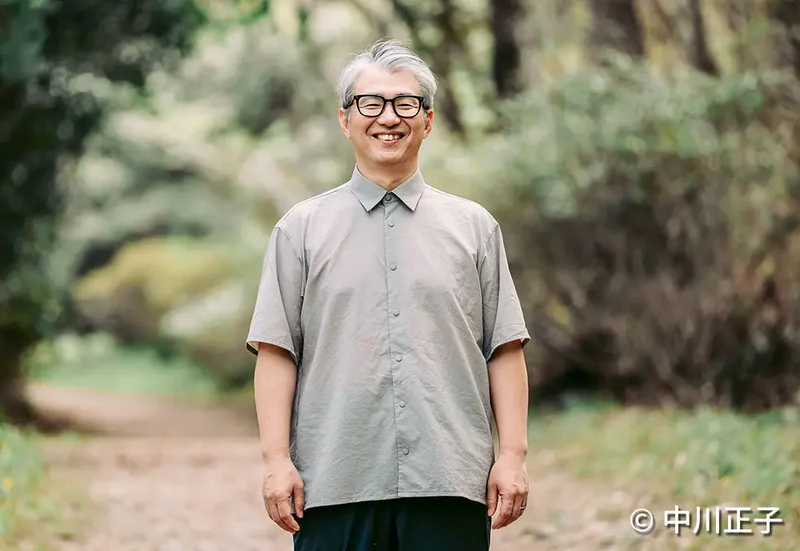
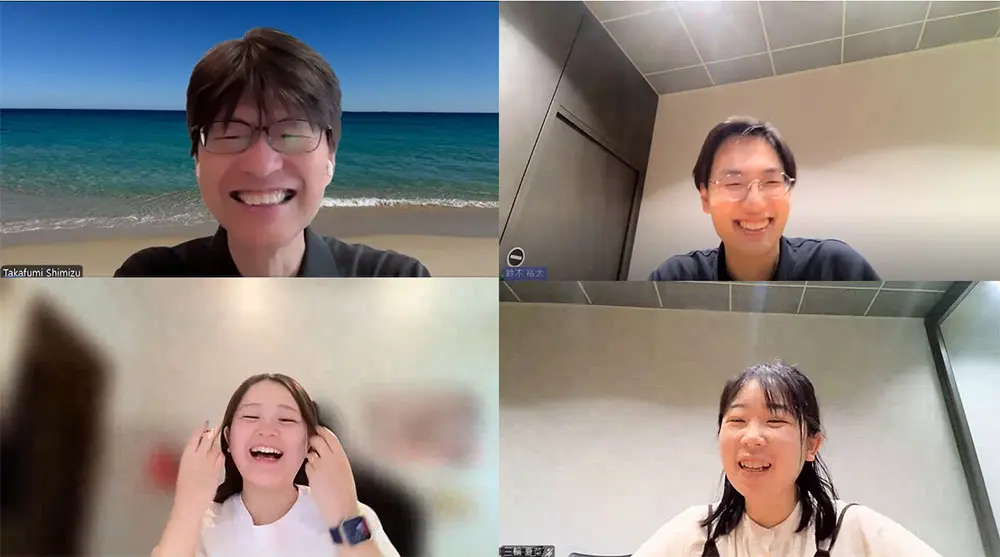
In this column, with the aim of grasping future trends in tourism and travel and capturing the signs of change (= the buds of new tourism), we bring you "expedition logs" (= scenes from our interviews) with leading figures in a variety of fields, not limited to travel. This time, we spoke with linguist Takafumi Shimizu, who continues to research the theme of "how people acquire practical communication skills and connect with others." A specialist in second language acquisition and pragmatics, Mr. Shimizu shared with us the value that communication with people brings to travel, and the future of travel in the age of AI.

Graduated from the Faculty of Law, Waseda University. He completed a master's program in East Asian Languages and Cultures at the University of Illinois Urbana-Champaign, a master's program at the Harvard Graduate School of Education, and a doctoral program in Applied Linguistics at Birkbeck, University of London. He holds a Ph.D. in Applied Linguistics. After serving as a lecturer in the Department of Asian Languages at Stanford University and as an associate professor in the Faculty of Liberal Arts at Sophia University, among other positions, he has held his current post since 2012. His main research fields are the acquisition and development of communicative competence in a second language among learners of Japanese and English. He is also engaged in activities that bring his research findings back to the practical settings of Japanese- and English-language education, through writing and creating language textbooks and dictionaries and holding seminars and workshops for in-service teachers.
What do we truly need for travel in the years ahead? As AI delivers information and planning a trip grows ever more convenient, chance encounters with people and casual conversations may, if anything, take on greater presence as a value unique to travel. From the perspective of linguistics, we consider the future of travel in the age of AI.
A Book for Japanese-Language Teachers That Changed My Life
Explorer Squad: Thank you for joining us today. To begin, could you tell us about your current research?
Mr. Shimizu: My specialty is applied linguistics, and I focus mainly on second language acquisition and pragmatics. In a word, I explore the question of "how do people acquire practical communication skills?"
When people think of foreign-language learning, many picture memorizing grammar and vocabulary. But in real communication, that alone is not enough. How do you strike up a conversation with someone you're meeting for the first time? What kind of language do you choose depending on the person and the situation? How do you close the distance with the other person? These abilities are also essential to smooth communication.
I research how the communication skills used in real conversations are acquired and how they function. In recent years, as an extension of that question, I have also focused on small talk. Small talk may look like casual chatter at first glance, but it is in fact important communication for building trust between people. By analyzing real conversation data, I am trying to reveal how people build relationships with others through small talk.
Explorer Squad: So within linguistics, your research focuses on practical communication. What first led you to become a linguist?
Mr. Shimizu: Actually, I didn't originally set out to become a linguist. In university I majored in law, and after graduating I took a job at a financial institution. Later, as I rethought my future, I came to aspire to a career in law. While looking into paths forward, I learned about the option of going to law school in the United States, and I began studying English to prepare for it. One day, while looking for study materials at a bookstore, I happened to notice a book for Japanese-language teachers, and I applied for a volunteer program introduced in it to teach Japanese abroad. I thought I could refine my practical English skills while living in the United States. As it happened, I was given the opportunity to teach Japanese at an American university.
However, while I could teach Japanese grammar and vocabulary, I myself couldn't communicate adequately in English in daily life. Through that experience, I began to think, "How do people acquire language?" and "What is the difference between knowing grammar and words and actually being able to communicate?" As I kept pondering that question, my desire to explore the question itself gradually grew stronger than my ambition to pursue a legal career. Another major reason was that, for me—having spent most of my studies preparing for entrance and qualification exams—I was strongly drawn to the pursuit of research, an endeavor of pursuing questions with no fixed answers. And so I decided to study linguistics at a graduate school in the United States, and ever since I have continued my research around the question of "how do people acquire practical communication skills?"
Small Talk = An Investment in Future Communication
Explorer Squad: What kind of discipline is linguistics, specifically?
Mr. Shimizu: When I mention linguistics, people often ask, "So how many languages can you speak?" (laughs). But in fact it is not a discipline for studying foreign languages; it is a discipline that seeks to scientifically clarify "what human language is." To put it in extreme terms, anything related to language can become a subject of research. For example, the topics range widely—from the mechanisms of language itself, such as sounds, grammar, and meaning, to the process of acquiring language, communication between people, and even its relationship with society and culture. Within all that, my specialty is the field that researches how people acquire language, use it to build human relationships, and communicate within society and culture. Specifically, these are areas such as second language acquisition, pragmatics, sociolinguistics, and discourse analysis. Each takes a different approach, but in my mind they all converge on a single question: "How do people connect with others?"So for me, the purpose of exploring linguistics is not to understand language itself. It is to understand, through language, how people relate to others and build society. In recent years, communication with AI has also been spreading rapidly. That is precisely why I believe the questions of what communication between humans is, and how people connect with others, will become increasingly important in the times ahead.
Explorer Squad: So the scope of linguistics extends even to understanding the mechanisms and structures of human society. You also research small talk—what kind of communication is the small talk we often see in human society?
Mr. Shimizu: Small talk is "communication whose primary purpose is not the exchange of information." For example, when you say "It's hot today, isn't it?" you don't really want to convey how warm you feel, nor do you want to know how warm the other person feels (laughs). In this exchange, more important than conveying information is conveying to each other the messages "I want to connect with you" and "I'm someone you can talk to at ease." In other words, small talk is communication for building relationships between people, rather than for exchanging information.
That's why, to me, small talk is the infrastructure that supports society. With family, friends, workplaces, and communities, we build relationships of trust by accumulating casual, everyday conversations. We don't usually notice it, but it is precisely because of this that we can help one another in times of trouble and cooperate with peace of mind. At first glance, small talk tends to be seen as "conversation we could do without," but it is in fact very important communication that supports the connections between people.
Explorer Squad: Thank you. What kind of change occurs within the speakers as a result of engaging in small talk?
Mr. Shimizu: I believe the essence of small talk is nurturing rapport (a relationship of trust) through mutual self-disclosure. When you hear "self-disclosure," you might imagine confiding your worries or secrets, but in reality it is something much smaller. Casual remarks like "I love coffee" or "I come to this town often" are also self-disclosure. In response, the other person also talks about themselves a little—"I love coffee too," or "Actually, I'm more of a tea person." By repeating this back-and-forth of small self-disclosures, a sense of "I think I can talk to this person at ease" grows, and a relationship of trust is built. What changes through small talk is not only your relationship with the other person. In talking with people, you sometimes newly realize things about yourself—"So I was interested in this," or "So this is how I think." That's why I believe small talk is a process not only for getting to know the other person, but also for encountering a new version of yourself.
Explorer Squad: So small talk is a tool for building relationships of trust. On the other hand, in recent years I feel that "time performance" (an emphasis on time efficiency) and "mental performance" (reducing psychological burden) have come to be valued among young people. Within that, how do you think the position and role of "small talk" will change?
Mr. Shimizu: Certainly, the idea of wanting to use limited time and energy efficiently will likely continue to spread. Within such values, small talk may at first glance appear to be "something we could do without" or "inefficient communication."
But I think it's actually the opposite. It is precisely because there is small talk—which may seem like a roundabout detour—that the relationship of trust "I can talk to this person at ease" is born. And once that relationship of trust is built, the overall cost (effort) of subsequent communication decreases. So even though small talk may look like it uses up time in the short term, in the long run I think we can call it "an investment in future communication." Precisely because we live in an age that values efficiency, I believe the value of small talk—which nurtures the trust and reassurance that cannot be produced by efficiency alone—will only grow from here on.
The New Relationships That Travel Brings—with Others, the World, and Yourself
Explorer Squad:I'd like to ask about travel as you see it. Is there anything you value when you yourself travel?
Mr. Shimizu:When I travel, I make a point of talking with local people as much as possible. Just exchanging a few words with the person sitting next to me at a café or with a shop staff member can greatly change my impression of that place. Looking back, I feel that my travel memories are made up of "who I talked with and what we talked about" rather than "what I saw." Of course, seeing beautiful scenery, tasting local cuisine, and visiting historic buildings are also great attractions of travel. But those are experiences you can plan to a certain extent. On the other hand, talking with someone you happen to meet while traveling, or going to a place a shop staff member told you about, doesn't go according to plan. That's why I believe the essence of travel lies in unplanned communication.
Explorer Squad: Then, what kind of change does "unplanned communication" while traveling bring to travelers?
Mr. Shimizu: I believe that communication with people brings the world over to us. For example, when you talk with locals while traveling, you sometimes hear stories not found in any book—the history and daily life of that place, or recommended spots. Then, a place that had been merely a "tourist destination" comes to be seen as a "place of daily life" for the people who live there.
And what changes is not only how you see the world. As you meet various people and exchange words while traveling, you are sometimes made aware of what you value and what kind of values you hold. That's why I believe travel is not only about going to new places, but a process of encountering new people, a new world, and a new version of yourself.
Explorer Squad: Do you think "unplanned communication" will still be valued in travel five years from now?
Mr. Shimizu: If anything, I think it will become even more important than it is now. That's because the very value of travel is gradually changing. In the past, there was a great deal of scenery you could only see by going to that place. But now, through the internet and social media, we can view beautiful scenery and tourist destinations from all over the world in high-definition images. In other words, I think the value of "seeing" itself has become relatively smaller than before.
That is precisely why, in the travel of the future, the value of experiences that can only arise in that moment will become more important than ever. The prime example is unplanned communication with local people. No matter how much AI develops and can optimize an itinerary, it cannot design "who you will meet and what conversations will arise." A chance conversation may change your plans, or make you see a place from a different perspective. I believe it is precisely such unplanned communication that transforms travel from mere movement into an experience unique to that person. So five years from now, or even ten years from now, chance encounters with people will likely remain the essence of travel.
Explorer Squad: Thank you. "Unplanned communication" is a story that starts from people, but how do you think tourist destinations that welcome such people will look five years from now?
Mr. Shimizu: I think the role expected of tourist destinations will also gradually change. Until now, the content itself—"what to see" and "where to go"—was the appeal of a tourist destination. But with the development of the internet and AI, we have entered an age where information itself can be obtained anywhere. It has become easy to look at scenery and townscapes, and to research recommended routes, before a trip. That is precisely why I think the value of "experiences that can only be gained in that place" will grow more and more from here on. The prime example, I believe, is casual conversation and chance encounters with local people. For instance, casually exchanging words with a local person in a shopping street or a market might lead to being invited to a local festival, or to an unexpected exchange. Such unplanned events are not something AI designs in advance. That is precisely why they remain as travel memories that differ for each person. For tourist destinations, too, it will become more important than ever not only to provide scenery and facilities, but also to create environments and mechanisms that encourage natural encounters between local people and travelers.
The appeal of a place cannot be conveyed by information alone. Only by exchanging words with local people does the culture, values, and daily life of that region come into view with a real sense of presence. So I think the tourist destinations of the future will change from merely providing "places" into places that provide opportunities for people to connect with one another.
Explorer Squad: So five years from now, travelers will seek to encounter new people, a new world, and a new version of themselves, and tourist destinations will be called upon to provide settings that respond to this—is that right?
Mr. Shimizu: Yes, that's how I see it. Of course, beautiful scenery and food cultures unique to a place will continue to be attractions of travel. At the same time, who you meet in a place and what words you exchange there create a journey unique to you. That is precisely why travelers will come to seek such connections with people, and why it will become more important than ever for tourist destinations, too, to provide places and opportunities where communication between people naturally arises.
AI delivers information to us, but communication with people brings the world itself right to our side. By exchanging words with local people, a place emerges not as a mere tourist destination but as a world where people live. I believe that people expand their world through communication with others and, at the same time, discover themselves. So I think travel will continue to be a very important endeavor that connects people with one another.
Explorer Squad: The change in the "relationships" that travel brings. I felt this is a perspective unique to you, Mr. Shimizu, who researches the mechanisms and structures of human society through the lens of linguistics. Thank you very much for sharing such valuable insights today!
The "Bud" We Found on This Expedition
In recent years, the development of AI has made it easier to obtain personalized information, enhancing convenience and satisfaction—yet I also feel that our sensitivity to information outside our own domain and awareness has become lower. To put it another way, this may be a state in which we are narrowing our own possibilities. From Mr. Shimizu's talk, I strongly felt that by building relationships with people and communities through small talk and travel, we can become aware of our own new possibilities. Why not, as an early investment in your future self, actively incorporate small talk and travel into your life? (Yuta Suzuki)