
What kind of connections do today’s “travelers” form with “local communities”?

This series explores the "line" between the everyday and the extraordinary in the lives of travelers, examining different perspectives on travel. The second installment focuses on Yoshino Town in Nara Prefecture, which has been working for the past five years to create a new "relationship-based population."I traveled to the area myself to see firsthand how the interactions between “travelers” and “local residents” are transforming the community.
Area: 95.65 km²; Population: 5,917 (as of June 2024). Located in the central part of Nara Prefecture, in the northern part of Yoshino District. Part of the town is designated as Yoshino-Kumano National Park and the Yoshino River-Tsuburo Prefectural Natural Park, and it is famous for the cherry blossoms of Mount Yoshino. With a history dating back to ancient times—as evidenced by references in the Kojiki, Nihon Shoki, and Man'yōshū—the town has a long-standing heritage and a thriving forestry industry. It continues to implement settlement promotion programs aimed at encouraging people to move to Yoshino Town.
A service provided by SAGOJO Co., Ltd. that allows travelers to stay in the area for free while helping to address local community needs. There is no screening process for registration, and anyone can apply. It has been selected as a model project under the Cabinet Office’s “Project to Promote Interaction for the Creation and Expansion of the ‘Relational Population’ (FY2022).” Yoshino Town was the first municipality to adopt the program. As of 2024, there are 16 locations nationwide.
In the past, travelers played a role in delivering information to rural villages, but in today’s information-saturated world, that role has changed. In recent years, the term “relationship population” has emerged to describe people who engage with a region continuously and in diverse ways—neither “permanent residents” nor “visitors” who come temporarily for tourism. Expectations are rising that this “relationship population” will help solve the challenge of a shortage of people to lead community development efforts amid population decline and an aging society. In Part 2, we introduce Yoshino Town in Nara Prefecture, which is taking on the challenge of creating a new “related population” by offering stay experiences where travelers interact with local residents and forge human connections. Now, five years after this initiative began, we examine the background and current situation to see what changes have occurred in the region.
What does “traveler” mean in Yoshino Town, Nara Prefecture?
Many people likely feel they are hearing the term “related population” more frequently these days. The scope of this concept is very broad, ranging from people who actually relocate to the area to those who simply make “hometown tax” donations without ever having visited. Consequently, it can be difficult to visualize the results of initiatives aimed at creating a “related population.”
Against this backdrop, Yoshino Town in Nara Prefecture—which had been exploring ways to promote relocation and permanent settlement—launched an initiative in 2019. In collaboration with SAGOJO Co., Ltd., a venture company focused on travelers, the town began offering stay experiences that allow travelers to engage deeply with local residents and forge human connections—essentially creating a new form of “related population.”
Under this system, called TENJIKU, travelers can stay in the area for free by taking on missions to solve local problems and challenges.
Since its founding in 2015, SAGOJO has been providing services that match travelers’ skills with the needs of their destinations, driven by a desire to create “systems where travelers contribute to society.”It was from this context that the idea emerged: rather than just offering paid work, inviting travelers to casually engage in activities that only they can do at their destination—and to visit from a perspective and position distinct from both tourism and business—would lead to the creation of a “related population. ”In July 2019, TENJIKU Yoshino was launched through a partnership with Yoshino Town, which was conducting initiatives to promote relocation. Since then, Yoshino Town has offered various missions depending on the season and timing, such as tree planting, cleanup, and helping out at local community kitchens and festivals.
Five years after beginning to host travelers, the term “traveler” has gradually become established among the town’s residents. Initially, residents would watch from a distance, wondering, “Who could that be?” But now, more people are approaching them to ask, “Are you the travelers this time?” and some even introduce themselves.
For this article, I stayed in Yoshino Town as a “traveler” myself and spoke with those involved.
The “Relationship Guides” Travelers Meet at the Entrance to the Community
In this initiative, the first people travelers come into contact with are known as “Community Guides.”Serving as coordinators who “connect travelers with the community,” they handle preparations for hosting and mission coordination, providing a reassuring presence for the travelers. In Yoshino Town, Mr. Kikuchi, a temporary town employee, fills this role. Mr. Kikuchi himself is a transplant who moved to Yoshino Town from Kanagawa Prefecture in 2018.
The goal of the Community Guides is to help travelers get to know Yoshino through experiences and their stay, and to turn them into fans of the town. When a traveler applies and the town is able to accept them, the Community Guide first arranges an online briefing session in advance. During this session, the guide listens to the traveler’s wishes, considers which of the available missions to assign based on current needs, and decides whom in the community to introduce, thereby shaping the traveler’s stay.
Mr. Kikuchi is careful to support travelers in what they want to do and offer suggestions, but he avoids treating them too much like customers. He places importance on ensuring that the missions do not feel like work or a duty, keeping them within the scope of what can be done enjoyably, and on managing expectations beforehand.
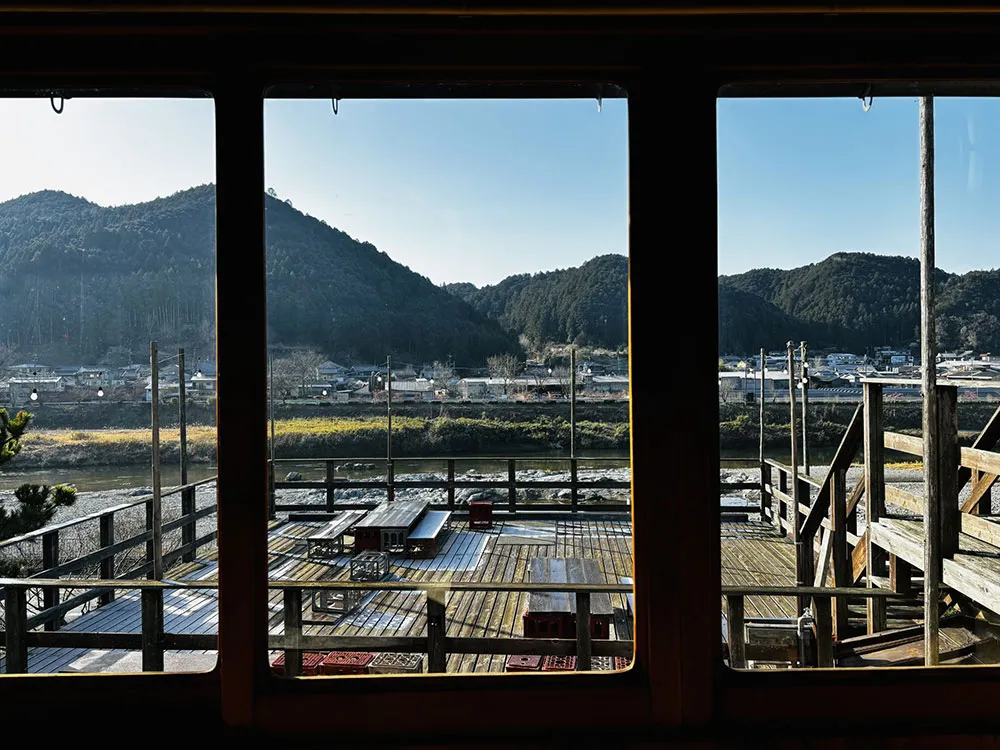
Travelers enter the community without preconceptions and build connections
Initially, the plan was to use the missions to foster relationships between travelers and local residents, but as they’ve hosted more travelers, something interesting has emerged.Outside of the time spent on missions, through exploring the town and meeting people, travelers have begun encountering local residents unknown even to their guides or town hall staff, experiencing things they never knew existed, and reporting back with stories like, “Today I met this person and did this.”
Furthermore, when travelers who have already established relationships contact local residents in advance, opportunities for gatherings—such as “Let’s have a dinner party”—arise naturally. They also organize workshops and events based on their own ideas, and some even share the charms of Yoshino with their friends and acquaintances, actually bringing them here to serve as guides.
“Travelers come without preconceptions and help bring local people together. They act as a hub, connecting even local residents with one another. This often leads to new insights for us as well. They are a presence that transcends generational and neighborhood boundaries,” Mr. Kikuchi explained.
Furthermore, four travelers who have been visiting Yoshino frequently and building strong relationships with local residents have been appointed as “Official Guide Supporters.” In addition to directly sharing the charms of Yoshino with those around them and helping to increase the number of visitors, they also serve as stand-in guides when Kikuchi, the lead guide, is absent.Thanks to the supporters’ efforts, people connected through this “related population” are attracting new connections, making it possible to welcome even more travelers.
I was able to speak with one of these guide supporters. A self-employed individual who can work remotely, she has been coming to Yoshino Town from Kyoto about once a month for nearly three years.She says she had been interested in multi-location living since her days as a company employee, and when she left her job, she used TENJIKU to visit various places. Among these, the fact that she could reach Yoshino in about two hours without disrupting her life in Kyoto, along with her interest in mountain worship, traditional culture, and forestry, and the local people she met, became the reasons she came to love Yoshino.
“Using this system allows me to interact with local residents while maintaining a comfortable distance.It has a uniqueness that’s different from both traveling and living there permanently; it’s not just about helping out and then leaving, but about building connections through meals and interactions. I feel there are people in Yoshino who support my challenges, and as I’ve talked about how interesting it is, more and more people around me have naturally wanted to visit, leading to the current trend,” she told me.
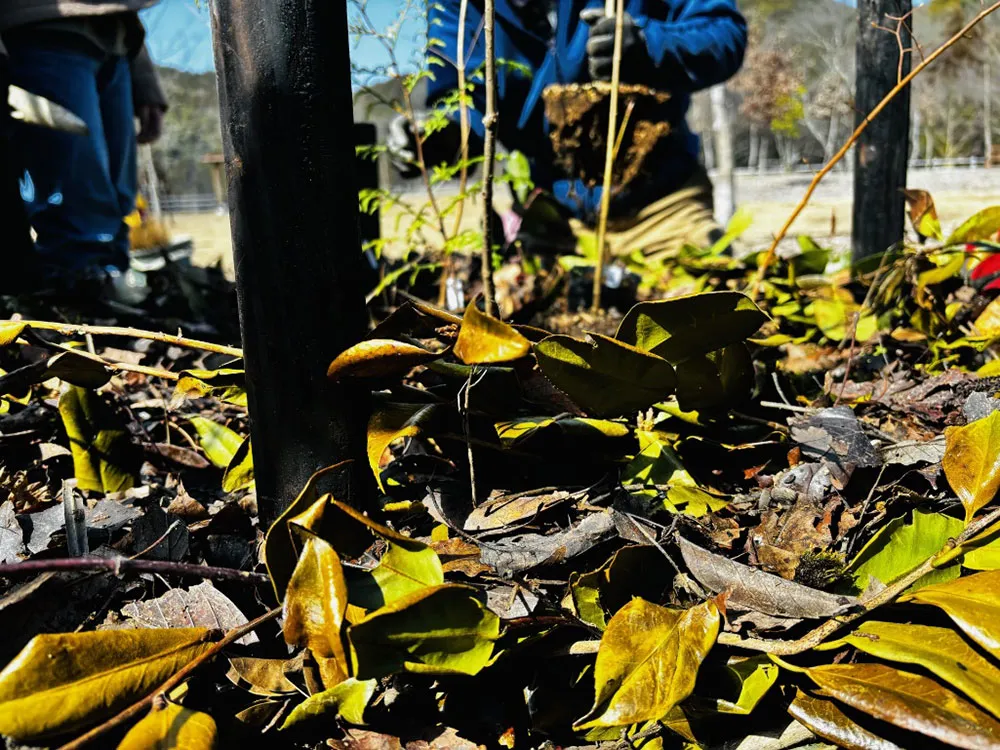
alongside local residents. The mission on the day I participated involved a tree-planting activity to restore the playground of a defunct elementary school into an organic
forest, working alongside local people involved in forestry (photo by the author).
A Win-Win Situation for Travelers and the Community
Another key principle of this initiative is ensuring a win-win relationship between travelers and the local community. According to Ms. Kikuchi, when the initiative first began, they coordinated activities based on travelers’ requests. However, she noted that the people involved tended to be concentrated in specific areas or among certain individuals within Yoshino Town. Additionally, there were instances where missions were created specifically for travelers rather than addressing actual local needs, leading her to feel that this approach wasn’t truly a win-win.
So, they went back to basics. To get to know the community better, they visited each neighborhood with Yoshino Town Hall staff to introduce themselves and explain the initiative directly.By continuing to work toward building relationships where local concerns would naturally be brought up for discussion, they found that perceptions within the community began to change. At the same time, regarding the acceptance of travelers, they changed their approach to display requests on a calendar when they came in, ensuring they wouldn’t forcefully accept travelers when there was no work available. It can truly be said that this system has taken root through trial and error, with no set manual to follow.
Another key element is the base where travelers spend extended periods of time. In the case of Yoshino Town, this base is a detached cottage (Sankiro Deck on Shita) located on the grounds of the guesthouse Sankiro, which opened in October 2016.
Mr. Minami, the owner of this guesthouse and the second-generation president of a local construction firm, says that ever since his predecessor’s time, he has valued giving back to Yoshino and contributing to the community.Then, in 2014, after becoming president himself, he encountered a vacant former ryotei (traditional Japanese restaurant) while regularly grappling with issues such as vacant houses, an aging population, and population decline within the town.
Mr. Minami, who had never even heard of the concept of a guesthouse, approached the idea with an open mind, thinking about how to utilize the space for the benefit of the community. Through this process, he met various people and experimented with different ways to use the property.As a result, he arrived at the current model centered around the guesthouse, which welcomes all kinds of activities. In addition to providing lodging for tourism, business, and homecomings, the space now hosts gatherings for local residents, serves as a coworking space and satellite office, and even hosts concerts. With TENJIKU’s travelers joining in, it has become a place where various cross-boundary interactions and chemical reactions occur on a daily basis.
I asked Mr. Minami about the past five years. “I feel the ‘travelers’ have truly become part of the community. We’re sharing moments together and forming all kinds of connections.Despite the COVID-19 pandemic, I feel that after five years, we’ve built a solid foundation and a positive momentum is beginning to take shape. I want to increase the number of people who visit us repeatedly, and I’m delighted to see the spread of fans and people connected to Yoshino. I truly feel that both the town and its people can change. I hope even more interesting things will happen.”
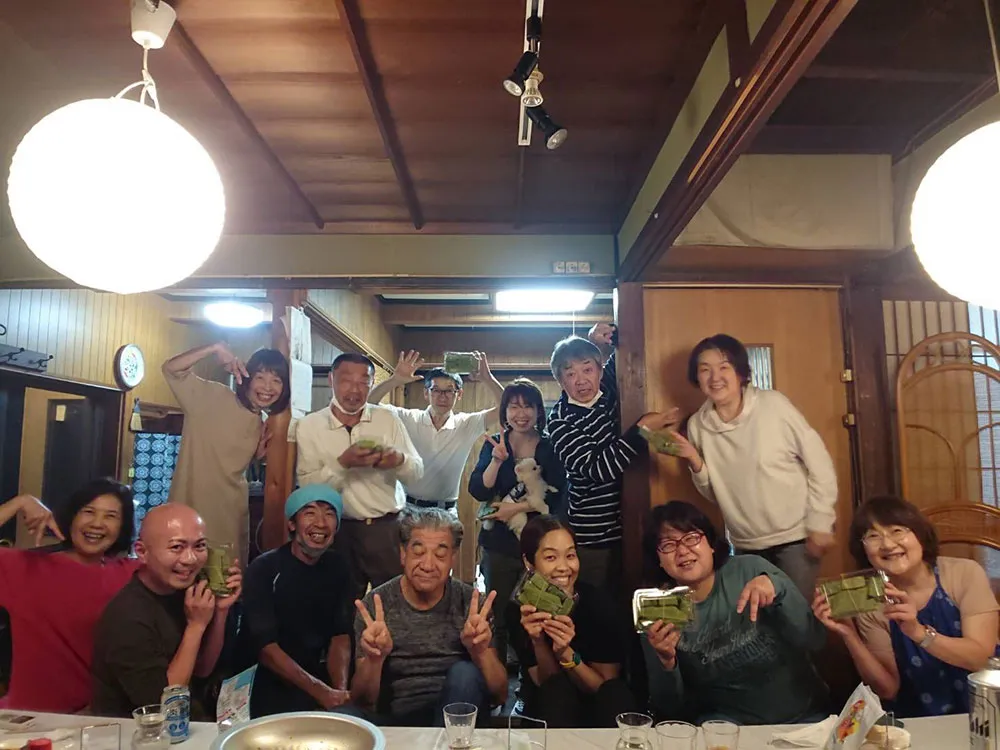
What travelers and the local community exchange
Finally, we spoke with Mr. Shin of SAGOJO Co., Ltd., who conceived this system for connecting travelers and the local community and worked with Yoshino Town to implement it from the very beginning.
Because this system doesn’t involve direct monetary transactions, both travelers and the community naturally focus on fostering positive interactions. This leads to mutual stimulation and change through encounters with the unknown, creating connections between people that feel almost like those among friends.
Even when travelers visit the same area, the content and locations of their missions vary, and the people they meet expand their horizons, allowing them to experience the region from diverse perspectives. In fact, some travelers have even decided to relocate after their stay. As they continue to visit, they get to know local residents, gain access to firsthand information, and in some cases, have even secured housing or employment through the relationships they’ve built.
For the local community, the fact that travelers come to love their area and return time and again, and the joy they bring, fosters a sense of pride. This leads to a rediscovery of the region itself and serves as a source of hope.
“People often say that rural areas face many challenges, but I’ve come to feel that the existence of challenges isn’t the problem itself—the real issue is whether there is the will and hope to tackle them,” says Mr. Shin.He notes that communities which used to look for excuses—such as “we’re too busy” or “we don’t have the right people”—even when challenges were evident, are now becoming more positive. With travelers as new partners, he says he’s seeing more instances where people think, “We’ll do it when the next traveler comes,” or “Even if we don’t have the skills locally, let’s invite a skilled traveler to help us take on the challenge.”
For travelers, it’s a “community where people support what they want to do”; for local residents, it’s “people who lend a hand for the sake of our town.” It’s a relationship where both sides feel, “Maybe we can do it together with those people.” The author felt that this might be the very nature of the “relationship population” currently emerging in Yoshino Town.
A Comment from an Observer of “Connections”
What potential roles can travelers—as cross-boundary visitors—play in our information-saturated modern world? Beyond simply conveying information, their ideas, perspectives, skills, efforts, and the connections they forge may themselves hold value and become a source of vitality for the region.Furthermore, I felt that travelers who enter a region with an open mind, free of preconceptions, engage with the area, and connect with its people hold the potential to act as mediators who transcend generational and district boundaries, bringing together the outside world and the local community—and even mixing local residents with one another.Unlike those who tend to research vast amounts of information digitally in advance, seeking efficiency, certainty, and immediacy, such travelers may be explorers who enjoy the serendipity and uncertainty of the unknown.
著者













