A Journey Where People Connect Beyond Physical Limits and Distance [Part 1]

This project explores the "line" between the everyday and the extraordinary in the lives of travelers, encouraging us to reconsider our perceptions and perspectives on "travel." The focus of the fourth installment is "OriHime," an avatar robot developed by Orii Laboratory Inc.This "avatar" robot, which is operated remotely by humans rather than AI, is opening up new avenues for human interaction.
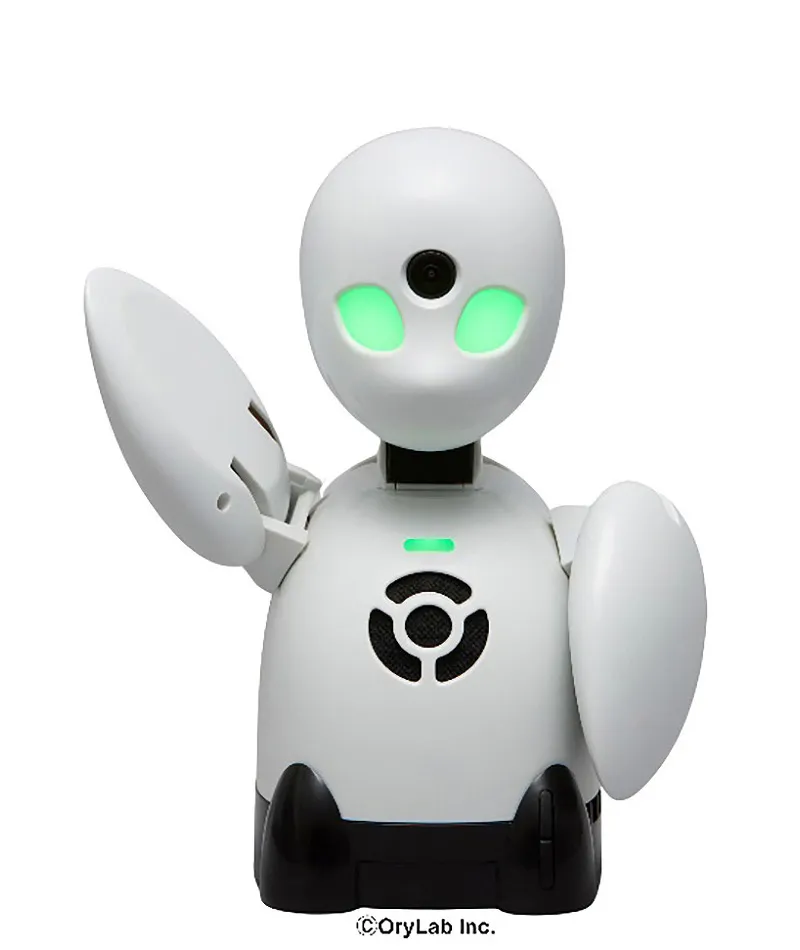
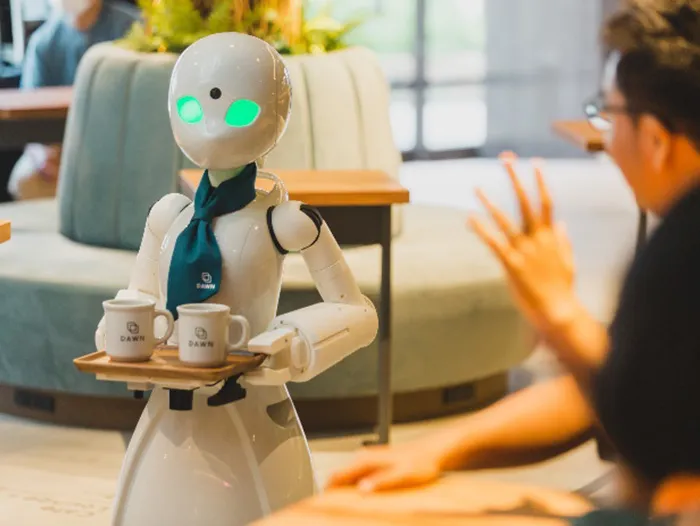
This robot is remotely controlled by a person and enables conversation via a camera and microphone. It features emotional expressions conveyed through gestures and a design inspired by Noh masks that evokes a variety of facial expressions, providing an experience that feels as if the person is actually there. The concept is “to be able to visit the people you want to see, even across great distances.” By enabling remote conversation and interaction via robots, initiatives such as the “Avatar Robot Café DAWN ver.β” are facilitating social participation for people who find it difficult to go out due to illness or disability, in offices and hospitals across Japan. (Photo courtesy of Ory Lab Co., Ltd.)
Does “travel” mean physically going somewhere far away? Tourism is defined as “going somewhere outside one’s daily living sphere.” In other words, “encounters while traveling” need not be limited to those involving physical movement; they can also be understood to include all interactions with people one would not normally meet in daily life. The pilots of OriHime, who find it difficult to go out, work at a café beyond the limitations of their physical bodies, meeting guests from all over the world every day.These interactions not only shape the appeal of travel destinations but also address social challenges such as labor shortages and the need for greater understanding of diversity, thereby pointing to new possibilities for the future of tourism.
What is the "OriHime" avatar robot, which feels as if your soul has teleported?
I will never forget the day I first visited the “Avatar Robot Café DAWN ver.β” in Nihonbashi, Tokyo, a few years ago. The moment I walked in, a robot with a pure white face and beautiful green eyes greeted me cheerfully with “Welcome!” At the tables, robots and guests were conversing, and on the floor, I could see medium-sized robots delivering orders.
The avatar robot “OriHime” is not one of those autonomous robots powered by AI that have been making headlines in recent years. It is operated remotely by a real person, with speech and movements occurring in real time.
As soon as I sat down, the robot in front of me’s eyes turned green, and it cheerfully said, “Nice to meet you!” Motions programmed for each emotion instantly conveyed the operator’s feelings, and with the addition of gestures, a range of emotions—joy, anger, sorrow, and pleasure—began to emerge, even though it was a robot with a blank, Noh-mask-like face. Before I knew it, I felt as though I were talking to a “person” rather than a robot, and it felt as if the operator were “there” right in front of me.
After enjoying the conversation for a while, it was time for a pilot change. The moment the pilot switched, the green light in the eyes went out and the robot went limp, as if its soul had departed. Then, a different soul entered, and it awoke. The phrase “soul transfer device” immediately came to mind.
This café is a permanent experimental facility operated by Orii Research Institute, Inc., the company that developed OriHime. People who find it difficult to go out due to intractable diseases or severe disabilities remotely operate OriHime to provide services such as customer service and guidance. The operators are called “pilots,” and currently, about 70 pilots work on a shift system.
One of the requirements for becoming a pilot is “having restrictions on going out and being in a situation where employment is difficult.” The backgrounds of these individuals are truly diverse.They include people who are bedridden due to congenital rare diseases, those who lost the ability to move due to accidents or progressive illnesses, those with chemical sensitivity or developmental disabilities, and those awaiting heart transplants. Some pilots even work by operating the robot using eye-tracking or by holding a stick in their mouths.Through OriHime, people who previously struggled to find employment due to their inability to leave home are now connecting with society and realizing new ways of working.
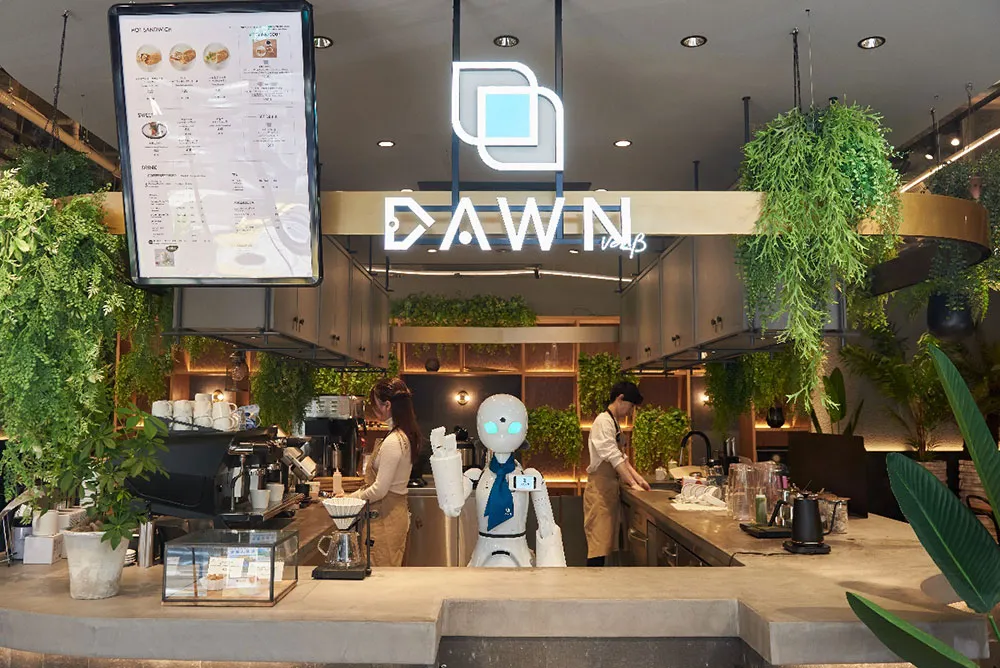
work (Photo courtesy of Orii Laboratory Co., Ltd.)
A journey where you can meet new people without physically moving
My First Interaction with a Pilot
On the day I visited the café, I met three pilots in about an hour. Each showed me their unique self-introduction boards, and some even shared their hobbies and special skills.
What impressed me most was how openly they spoke about their lives. Until then, I hadn’t had many opportunities to interact closely with bedridden individuals or those with severe disabilities, and I often hesitated about whether it was appropriate to pry. However, the pilots greeted me with great warmth and natural ease, saying, “It’s a pleasure to meet you. Please ask me anything.”
They shared stories about their pasts and lives leading up to their current situations. They also told us about the joy of being able to work from home and, in particular, the joy of meeting guests through customer service—a field they had previously thought would be especially difficult.Everywhere I looked, I could strongly sense a spirit of hospitality and ingenuity rooted in the belief that “We want our guests to enjoy themselves—that brings us joy too.” In fact, they seemed to be working with even more vitality than staff in physical restaurants. It was striking how clearly their passion came through, even though they were not physically visible.
The Essence of Human Encounters
We tend to think of travel as moving through physical space, and the farther we go, the more we believe we’ll meet people we wouldn’t encounter in our daily lives. But the lives touched upon here are ones we might never have encountered, even if we’d traveled to the other side of the globe.Even if we had been in the same country or the same city, we might have just passed each other by. This felt like a meaningful exchange of lives between the pilots and the guests. There was a human connection born through these avatars—one where pilots and guests become friends and even connect personally on social media.
When I first visited, it was in the midst of the COVID-19 pandemic, and the guests were mostly Japanese. Nowadays, many foreign tourists also visit this place. Lines sometimes form before opening, and the pilots are reportedly learning to serve guests in English and preparing topics tailored for international visitors.Without leaving their homes, they serve guests from all over the world, listen to stories about countries they’ve never visited, and help guests take their time together home as “memories.” Interacting with people from various countries and regions—something they never thought they could do—might be described as the realization of the pilots’ dreams.
You can meet people from around the world without physically traveling. That kind of “journey” is being born right here. And these encounters go beyond mere interaction; they hold the potential to create new ways of working for people who find it difficult to go out, while quietly addressing the labor shortage facing the tourism industry.
A “journey of encounters beyond the everyday,” liberated from physical distance—it felt like the very essence of travel.
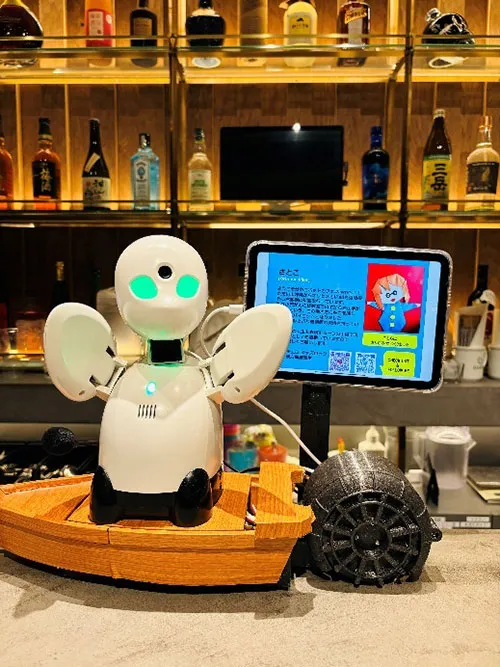
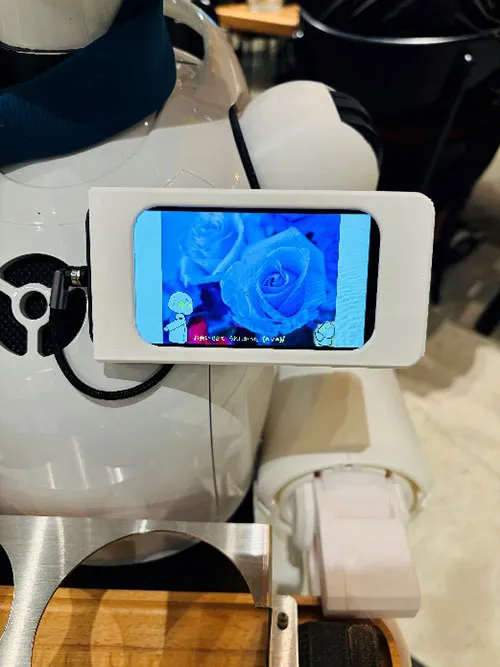
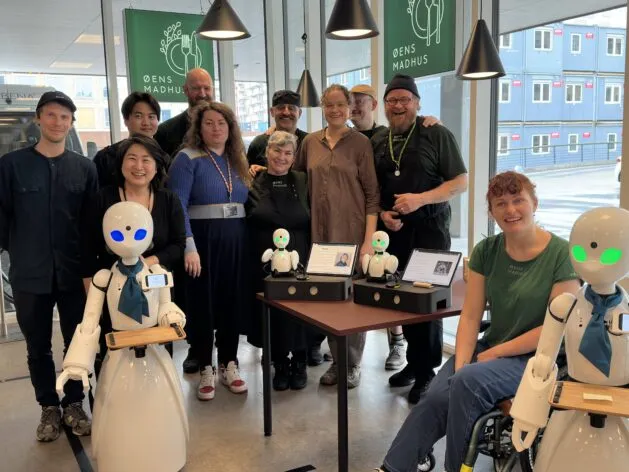
The pilots, each showcasing their own unique personalities. They introduced their hobby projects and even surprised guests by asking their favorite colors and displaying images of flowers in those colors.
Interacting with the Invisible: Encounters and Work Styles
What do the working pilots think about this? This time, we spoke with two pilots.
The Flat Relationships Created by Avatars
The pilots work together through avatars called OriHime. Precisely because they cannot see each other directly, preconceptions about age, appearance, or disabilities do not come into play, allowing them to naturally build equal relationships. For example, even when there is an age gap as large as that between a mother and daughter, they interact so naturally as equals that they often don’t even notice the difference.
This feeling extends to guests as well. Because the pilots’ appearances are hidden, guests can meet them without preconceptions—encountering them as their true selves, free from everyday titles and roles. Perhaps this is what a genuine encounter at a travel destination should be.
A Worldview Expanded by Connections with Peers
Working as a pilot creates opportunities to engage with the lives of colleagues who have different disabilities and backgrounds. Some pilots with severe disabilities manage to carve out limited time to work while juggling medical appointments and physical limitations.
“I understood the nature of my own disability, but I realized just how narrow a world I had been living in,” said a pilot who uses a wheelchair—her words left a lasting impression on me. Even if you know about something as mere knowledge or information, it’s only when you interact with others as a coworker or a friend that you can truly begin to see it as something that concerns you personally.In addition to being able to work within society, making friends has changed her outlook on life. She mentioned that sometimes pilots actually meet in person. “Now, the purpose of my travels often starts with going to see my colleagues,” she told me.
Even brief interactions with others while working serve as a point of contact with society, fostering connections with colleagues and broadening one’s perspective on life. These encounters with people outside one’s daily routine occur not only between guests and pilots but also among the pilots themselves.
Internal Changes Sparked by Interaction
A pilot with a developmental disability shared, “I had once given up on working outside the home, but I’ve become able to think positively about engaging with the outside world again because my confidence has been restored through repeated conversations with guests.”
“While I struggle to speak well in face-to-face situations, I can speak calmly through OriHime from home,” he says. When he first started working, he sometimes struggled to speak well as he repeated “Nice to meet you” every day, but he gradually became accustomed to interacting with people through repeated conversations.He says that through experiences where he was encouraged by guests’ reactions or felt that his words had truly reached them, his connection to society has been restored.
Additionally, as a host, he sometimes welcomes families with members who have the same disability. Because his disability is not immediately visible, he says that by introducing himself upfront before speaking, they can share the joy of mutual understanding.While he rarely discloses his disability in daily life, here he gains a real sense that “he is accepted just as he is,” and he feels a change in himself—becoming more proactive in various ways.
Such interactions demonstrate that human connection is fundamentally about giving and receiving, and the realization that it is okay to be oneself seems to function as a safe emotional haven in life.
A “New Way of Working” Created by Technology
The pilot can work not only at this café but anywhere in the country where an OriHime is present—including local government offices, hospitals, and theme parks—and can even “work” at multiple locations in a single day. They might work at a café in Tokyo, assist at an event in Kyoto, and then handle reception duties at a complex in Niigata.Even without physically moving, as long as time permits, the scope of work, the places involved, and the people one interacts with can expand. Technology has made possible a way of working that feels like teleporting between cities. The option to work without having to travel opens up new possibilities for life for people who have had to give up on working because they couldn’t move around, and it feels like it leads to the “joy of being able to work.”
This way of working isn’t limited to people with disabilities. As we all age, our bodies eventually become less mobile. Sudden accidents or illnesses can also make it difficult to go out. That is precisely why what is happening through OriHime represents a “future way of life” and a “form of travel” for everyone.
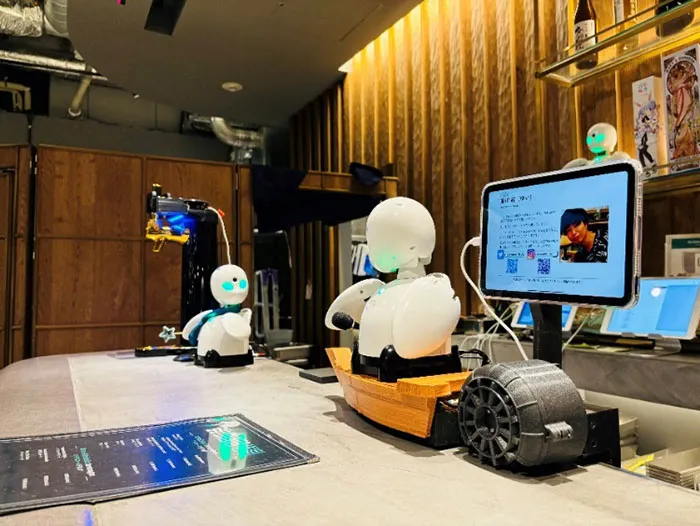
Because they aren’t physically present on the floor, they often carefully confirm details through conversation and support one another. They conversed at the counter and moved about, looking around, just as if they were actually working on the floor.
Interactions through OriHime reaffirm the “value of human connection.” In today’s efficiency-driven world, they allow us to truly experience the “joy of work”—something that cannot be measured by numbers—and the “meaning of encounters” brought about by chance.
The essence of human encounters lies in meeting others as our authentic selves and exchanging our lives with those we’ve never met. This seems to echo the very origins of travel, and the encounters born through OriHime may represent a “new journey” made possible by technology—one that transcends the physical body.
In Part 2, we will explore the possibilities of this new form of travel, focusing on an interview with Orii Yoshifuji, the developer of OriHime.
著者