What Modern People Rediscover in the "Invisible" Otherworld

Throughout Japan, diverse folk traditions and the values and worldviews cultivated by our ancestors remain preserved in various regions. These traditions may have been rooted in a sensibility that embraced the “invisible” rather than measuring all things solely by human standards.Through a journey that allows us to relive the daily lives, sensibilities, and worldview of the “common people” in Tono, we reflect on the significance of connecting with the sensibilities of our ancestors in the modern world.

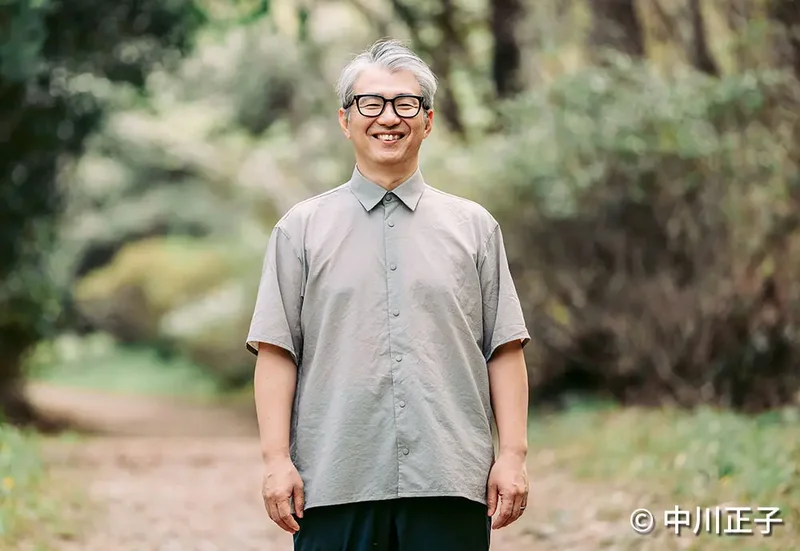
A local producer working to promote regional culture and tourism in Tono City, Iwate Prefecture. After working at an advertising agency in Tokyo, he moved to Tono City in 2016 and founded his own company, “Tomikawaya,” the following year. Drawing on a folkloristic perspective, he brings local stories to life in the modern era, promoting the region’s appeal through tourism planning, the development of local products, and design and content creation.He also performs the local folk art “Shishi Odori” (Boar Dance) himself, dedicating himself to preserving traditional culture and transforming it into a tourism resource. His published works include *The True Beginner’s Guide to the Tales of Tono* and *Becoming a Boar: A Journey into the Otherworld of Tono*.
Japan’s population has already begun to decline, and in rural areas across the country, the number of vacant homes and abandoned farmland is on the rise.As if the forest were quietly descending into human territory, wildlife sightings are on the rise, and the boundary between nature and humanity is beginning to blur. Faced with these changes, shouldn’t we reexamine—from a human-centered perspective—our respect for nature, our appropriate distance from it, and what it truly means to live alongside it? One clue lies in the worldview of people from before the modern era—a sensibility that does not measure all things solely by human standards, but rather embraces the “unseen” in daily life. Engaging with this is not merely a return to the past, but rather a new possibility for a journey that can be applied to the present. Tono City, Iwate Prefecture, lies in a basin surrounded by deep mountains. Here, legends of the otherworld still thrive. The relationship with the “unseen beings” nurtured by our ancestors retains a sense of respect for nature, a sense of appropriate distance, a sense of coexistence, and a sense of how humans have survived as part of nature.
Tono: A Land of Folklore Where Legends of the Otherworld Thrive
Tono City, Iwate Prefecture, is situated in a basin surrounded by the Tono Three Mountains in the center of the Kitakami Highlands. As a key transportation hub where seven major roads intersect, it is also a former post town that flourished by connecting the inland regions with the coast.With its ever-changing seasonal landscapes, scattered shrines, and over 60 active local performing arts groups, it is said to embody the quintessential Japanese landscape.
When people hear the name “Tono,” many likely think of *Tono Monogatari* (Tales of Tono), published by Kunio Yanagita in 1910. This book, which compiles 119 folktales passed down in Tono, is considered the starting point of Japanese folklore studies.It portrays the relationship with “invisible beings”—such as kappa, zashiki-warashi, Oshirasama, and mountain deities—not as mere superstition or fiction, but as “folkloric truths” that reflect the daily lives and spiritual culture of the common people. The city is dotted with places where visitors can experience the world of *Tono Monogatari* firsthand, such as Kappa-buchi (Kappa Pool) and Densho-en (Folklore Park), and the traditions are still passed down today by storytellers.
While the phrase “Town of the Kappa” may sound lighthearted, behind it lies a harsh natural environment—a cold basin where temperatures can drop to nearly -20°C in the depths of winter—and a history of repeated famines.In particular, the great famines that occurred repeatedly during the Edo period are said to have claimed as many as 2,500 lives.These numerous famines had a profound impact on the local community, giving rise to legends such as “Dendera Field,” where the elderly gathered of their own accord to reduce the number of mouths to feed, and the tale of infants who were reluctantly cast into the river to reduce the population and were said to have turned into kappa.and statues of arhats were carved into natural rocks in the mountains to mourn those who starved to death.
Lessons and wisdom for survival were passed down through generations, becoming part of the region’s folklore, and accumulated at the bottom of the basin alongside tales of the supernatural brought by travelers and merchants visiting this post town. As a result, today’s Tono is home to a rich variety of stories.
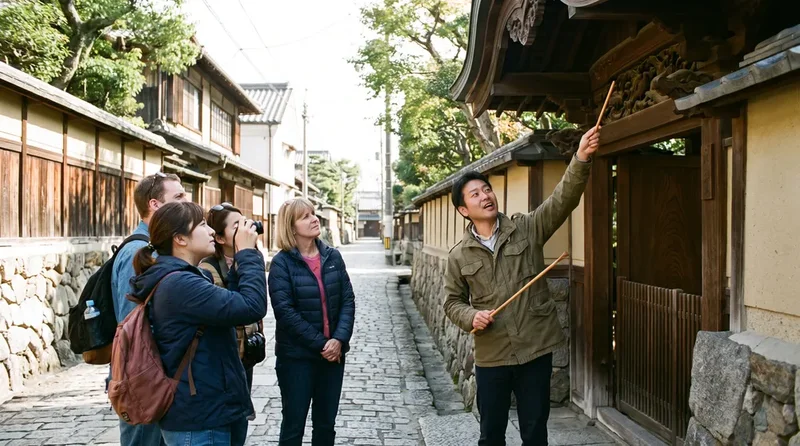
What value does a journey exploring such folklore hold?If we define a historical journey as “a journey that brings one into contact with historical events and figures through historical sites and ruins,” then a folklore journey might be described as “a journey that allows one to relive the daily lives, sensibilities, and worldviews of the ‘common people.’” I visited one such settler who is taking on this challenge in the Tono region.

The “Kappa,” a quintessential character from the Tales of Tonō (Photo: Gaku Tomikawa)

was once a
bustling post town (Photo: Gaku Tomikawa)

: 500
natural stones of various sizes carved with images of Arhats to console the souls of those who starved to death (Photo: Gaku Tomikawa)
The Transcendent Experience of Becoming an Artist Known as “Shishi”
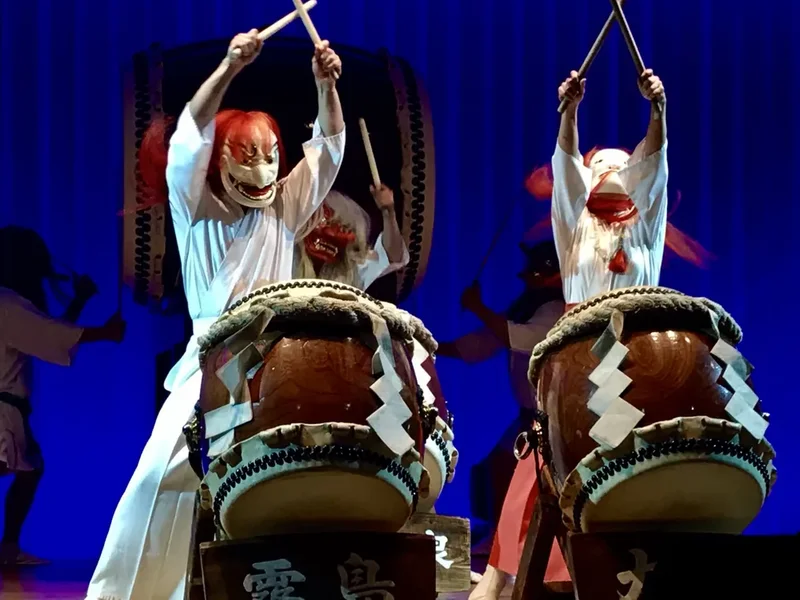
The sound of drums echoes through the summer mountains of Tonō. Dancers wearing animal masks stomp their feet on the ground. Gaku Tomikawa is one of them.Although originally from Niigata Prefecture, he moved to Tono by chance. He works as a producer and guide for the local community and tourism, occasionally dances as a “Shishi,” and is also a writer who expresses his thoughts on Tono.
There are various theories regarding the origins of the Shishi dance, but one suggests it serves as a ritual to appease the spirits of animals killed during the hunt and to pray for a bountiful harvest. It is a dance dedicated at shrines, accompanied by the music of flutes and drums. The fierce masks with deer antlers worn by the dancers are said to be chimeras, combining elements from various animals—such as deer and lions, along with bull horns and dragon eyes. There are currently 17 Shishi Odori groups in Tono City, including those that are currently inactive.
Mr. Tomikawa, who came to Tono about 10 years ago, says he wasn’t strongly drawn to the area from the start. He intended to leave after a few years, but a series of coincidences led him to stay until now. He says, “I’ve encountered the land of Tono twice.”
The first time was a period when, much like retracing the footsteps of Kunio Yanagita, he came to know Tonari through the eyes of an outsider and was awestruck by its cultural depth.The second time was the moment he himself became an insider in Tono, just as the “Shishi” had awaited Yanagita in this land. He says he felt as though he had discovered Tono from two completely opposite perspectives.
It was also a coincidence that he was led by a Shishi dancer. In 2018, while Tomikawa was observing a practice session for the Harayama Shishi Dance, the chairman of the preservation society called out to him. “It’s okay, it’s okay, dance, dance.” Encouraged by those words, he ended up taking the stage at the Tono Festival after just four days of practice.
The moment he donned the Shishi mask and surrendered himself to the sound of the drums, something inside him changed.
Dagaiko, Danzuko, Dandan, Dagaiko, Danzuko, Dandan
He says that the moment he became a Shishi, moving to the rhythm of the drums that felt like a strong push on his back, his “inner wildness”—which had been dormant until then—awakened.
Joining a group and “becoming a Shishi” is an act of receiving the baton of a spirit that has been passed down for hundreds of years, and it is a way to relive the sensations of our ancestors through one’s own body. He says that when he danced and realized he was part of the accumulated legacy of those who came before him, he felt a connection to this land. For him, it may have been a ritual that opened the door to another world. Since then, he has continued to dance.
Since becoming a Shishi, his activities have accelerated. Through encounters with renowned cultural anthropologists and artists, he began efforts to share the sensations he had experienced in Tono.
Launched in 2021, “Toono Meguri Toroge” is an experiential event that fuses the Shishi Dance with contemporary art, weaving together folklore, views on life and death, performing arts, food, and music, all centered on his fieldwork in Toono. As one of the key figures, Tomikawa is involved both as a dancer and a producer. The scene I witnessed—dozens of dancers moving in unison to the music played within the shrine grounds at night—was truly breathtaking, as if transcending time and space.
“I can never become 100% a native of Tonō,” Tomikawa says. “But precisely because I’m an outsider like Yanagita, there are roles I can fulfill.” There are things he can see precisely because he came from outside, and there are things he can speak of precisely because he has now become part of the community. True to his self-proclaimed title, “Shishi in summer, writer in winter,” he changes his role with the seasons. Whether dedicating himself to dance as a performer in summer or weaving words in winter, his deep connection to the land of Tono and his role as a bridge between the otherworld and the outside world remain unchanged.
After working desperately at an advertising agency in Tokyo while aspiring to become a copywriter, he says he now feels a sense of liberation—that by becoming a Shishi, he has finally become a true artist. At the same time, his experiences at the advertising agency continue to support his journey as a creator and performer. The journey itself felt like a crossing into the “otherworld.”

between humans and nature (Photo: Ryo Mitamura)

“Tono Meguri Toroge” (Photo by the author)
All for the sake of survival. Why did the “otherworld” come into being?
Even now, Tomikawa continues to seek guidance from Shishi Odori practitioners, local historians, and museum consultants, learning from those who came before him.
To survive in the harsh natural environment, the people of Tono have long cultivated a culture of mutual aid and support in their farming and daily lives. Furthermore, as a post town where people constantly passed through, the attitude of warmly welcoming visitors from outside, engaging in trade, and flexibly incorporating learning and culture has also taken root as a form of wisdom for surviving in a harsh environment.
It is said that even within *The Tales of Tonō*, stories brought by travelers were reinterpreted, took root as local tales, and served as sources of wisdom and entertainment. In this way, the people of Tonō have lived by incorporating elements from the outside world.
“In local performing arts such as the Shishi Odori, we see a flexibility in actively incorporating new people and methods to preserve the culture,” Tomikawa observes.
While traditional performing arts passed down in a region are often perceived at first glance as “conservative and insular,” Tomikawa notes that in Tono, there is a growing number of groups that are open to the participation of newcomers—as evidenced by his own experience of joining the dance in just four days.
The dance formation on the day of the event also changes depending on the number of people who gather, and everyone takes on some kind of role. The emphasis is placed on everyone being involved and maintaining connections, rather than on formality or skill. As a more grassroots community event, there is value in “doing it together.” That is precisely why it feels as accessible as street culture, with room for anyone to get involved.
Because they have faced nature—a force beyond individual control—and learned to live by making compromises with it, the people of Tono understand the value of connection and cooperation. They accept everyone and survive together. Isn’t that very attitude still reflected today in the belief that “continuing without being bound by formality equals survival”?
“If this were a land of plenty, perhaps we wouldn’t have had to think so desperately about survival.” These words from Mr. Tomikawa suggest that the sense of living alongside a harsh natural environment and the resolve to survive remain unconsciously rooted in the people of Tono to this day.

Tomikawa classifies the worldview of *Tono Monogatari* along two axes—“this world/the other world” and “humans/non-humans”—and explains it as a four-quadrant relationship. The world we normally recognize as “reality” is only a part of this.
So, what exactly is the “otherworld”? The beings that appear there have lived on in daily life as objects of both fear and reverence, while also bringing comfort, lessons, and insights.
In Tono, where the loss of a loved one is a constant presence in daily life and where people sometimes find themselves fighting for their lives against wild beasts, a harsh natural environment has fostered wisdom for survival and an inner wildness. As people faced the instability of their livelihoods and poverty, they may have accepted the “invisible” absurdities of nature, and by praying to unseen beings and weaving them into stories, they soothed the sorrows and anxieties of reality and maintained their emotional balance.
It is believed that when a person dies, their soul returns to the mountains to watch over their family. And because they believe the soul returns during Obon, a custom known as “Mukai Toroge” (welcoming lanterns) still remains today, in which people set up markers to guide the soul back home without getting lost.
If only the “visible world” existed, the deceased would vanish the moment they passed away. However, by accepting the existence of the otherworld, the grief of remembering the departed is soothed, and a spiritual anchor is created. The sense that souls watch over us and return every summer surely wraps people’s hearts in warmth.
As I traveled around Tono, I came to feel that the “otherworld” is not merely superstition or fantasy, but rather a perspective that allows us to view the world with a little more gentleness—a mechanism that has naturally taken root in daily life to help us let go of our sense of omnipotence and regain humility.
Kunio Yanagita documented folklore from across Japan, and Mr. Tomikawa feels that *Tono Monogatari*—which continues to be read to this day—serves as a place to connect with the memories of those who once lived in Japan. He believes that exploring that world holds the potential to deepen self-reflection and introspection.

ancestors to touch the unseen world (Photo: Gaku Tomikawa)

cloth is white for men and
red for women (Photo: Gaku Tomikawa)

exchange views to help participants gain inner insights (Photo: Gaku Tomikawa)
What a journey into folklore brings to the modern world
In today’s world, where information flies back and forth and technology for rationalization continues to evolve, everything is explained through science and logic, creating the illusion that there is a definitive correct answer. Yet at the same time, we may be gradually losing the emotional space to process feelings that defy easy categorization, situations and others we cannot understand, and events beyond our control.
Our relationship with nature is also shifting. Satoyama landscapes, left to their own devices, are quietly decaying and returning to nature, while wild animals are encroaching on human settlements. Amid such changes, I feel it is time for us to reexamine our humility toward nature.
I sensed a certain generosity in the culture of Tono, which embraces the “invisible”—a willingness to live with ambiguity and uncertainty without rejecting the irrational or the unknown. It is a sensibility we tend to forget as we spend our days surrounded by the visible and the things we can control on our own. In a society where everything is too visible, this is an experience of installing within oneself a new way of perceiving the world—one that goes beyond the binary choice of “believing in the ‘invisible’ or not.” When you return to your daily life from this experience, your sense of your own sadness, anger, and the things you cannot fathom may have shifted slightly.
Tomikawa’s vision is to treat Tono as a “database that connects us to the sensibilities of our ancestors” and to organize it so that anyone who needs it can access it. In addition to his work as a guide and producer, he is also working on establishing a base for long-term stays and preparing a used bookstore to collect, preserve, and distribute secondhand books related to the “Tono Monogatari” and local history to those who need them. “You don’t need to be connected all the time,” he says. “But isn’t it important in today’s world to be able to recapture that sense when you need it?”
A guide is not someone who shows you the right path. Tomikawa himself is on the journey, sometimes lost, sometimes dancing, and living in the present while sharing his stories. Entering as an outsider, dancing as a steward, and in the land of Tonō—which once sent shivers down his spine—he is striving to create both an entrance that serves as a “door” and a deep slope leading further inward.
What we encounter in Tono is not so much the kappa or the zashiki-warashi themselves, but rather the sensibilities of the ancestors who needed them—their perspective on how they viewed and lived in the world, and the wisdom they used to survive. By placing ourselves outside the rational world, we encounter the “invisible” and remember the richness of being together.
A journey through folklore allows us to relive the perspective not of distant “victors and celebrities who left their mark on history,” but of the “common people” of that era—people just like us. That is precisely why it feels familiar and real, making it easy to imagine, relate to, and reflect upon. How can we reconnect this to our daily lives today, and use it as a clue to make life easier for each and every one of us? Perhaps that is the very question that a journey through folklore offers us.

A Word from the Observer of “Lines”
“The invisible” is not limited to souls and supernatural beings. “Emotions,” “trust,” “relationships,” “love,” and “the future”—these too exist in our daily lives, and we live hoping to believe in them. Yet in a world driven by rationalization and efficiency, we may find ourselves wishing that these things could take on a concrete, “visible” form. But is life really made up only of things we can control? The opposite of that is the “uncertainty” and “ambiguity” found in the otherworld. One phrase that struck me during my conversation with Mr. Tomikawa was “connected to the ground.” I felt that by connecting with the sensibilities of our ancestors, we can put down our own roots and build a trunk that isn’t swayed by external forces—in a sense, it felt like the “strength to live strongly.”
著者