
When the station changes, the town changes—The power of "station vitality" to revitalize communities

While station-centered redevelopment projects are underway across the country, there are still many stations that fail to fully realize their potential. We will reevaluate the value of “station power”—beyond that of a mere transportation hub—as a gateway for tourism, a commercial hub, and a symbol of local culture, and explore ways to transform stations into engines of regional revitalization through “co-creation” among railway companies, local governments, and residents.
Introduction: How to Leverage the "Power of Train Stations"
In recent years, redevelopment centered around train stations has led to dramatic transformations in communities across the country. However, in my line of work, I have the opportunity to visit various regions, and I have also seen many stations that fail to fully realize their potential—stations where people simply get on and off, and where a sense of vitality is lacking.As companies and local governments focus their efforts on regional revitalization and the creation of a sustainable society, perhaps it is time to reexamine the inherent power of stations—what we call “Station Power.”
"Station Power" refers to the value of stations that extends beyond their role as transportation hubs—serving as gateways for tourism, commercial centers, hubs for information dissemination, and symbols of local culture. Now, as transportation options diversify and the raison d’être of many stations is being called into question, perhaps we should stop viewing stations merely as "transit points" or "facilities to be maintained," and instead transform them into "engines of growth" that actively generate new value and foot traffic for the region. This article explores that potential.
The Key to Success Lies in “Co-creation” Among Stakeholders
What, then, determines the success or failure of regional revitalization centered on a station? Is it innovative design and an extensive lineup of shops achieved through massive investment, or effective events and promotions utilizing media and social media? What has become clear through the analysis of numerous case studies is whether railway companies, local governments, and local residents and businesses can build a relationship of “co-creation” that transcends their respective boundaries and shares a common vision. To build a “co-creation” relationship that goes beyond mere cooperation, railway companies must incorporate community contribution into their management policies alongside profit-seeking; local governments must eliminate siloed administration and implement cross-sectoral policies; and residents must shift their role from beneficiaries to active participants. We believe that true “co-creation” can be realized when these three parties share a common vision and fulfill their respective roles while leveraging their individual strengths.
So, how exactly does “co-creation” come about? Here, I will introduce two noteworthy initiatives from a third-party perspective—initiatives that differ entirely in scale and approach but share the same essence.
1. The Atami Model: From an Individual Initiative to Public-Private Unity, Tapping into New Customer Segments
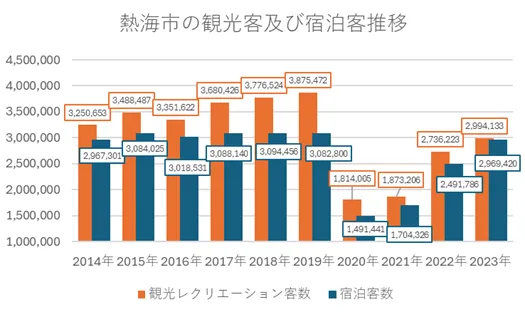
Once a thriving mecca for honeymooners, Atami saw a sharp decline in tourist numbers following the collapse of the economic bubble. The image of Atami as an “old-fashioned hot spring resort” became particularly entrenched among younger generations. By the 2000s, annual overnight stays had fallen below 3 million, and many traditional inns were forced to close, leaving the town in a dire situation.
Witnessing this situation firsthand was Koichiro Ichiki, a native of Atami who was working at a consulting firm in Tokyo. Deeply concerned about the future of his hometown, he decided to return in 2009, driven by a passion to revitalize Atami. Amid these dire circumstances, he founded the NPO atamista, dedicated to community development, and began rebuilding the region from scratch.
The first issue atamista focused on was the problem that “locals didn’t know their own town.” To address this, they launched the “Atami Onsen Tamatebako” program, designed to help residents enjoy their own community. By organizing tours led by local residents, they fostered a shift in residents’ awareness of their hometown and improved the level of hospitality.
Another turning point came in 2016 with the opening of the station building “Lasca Atami.” Departing from the traditional lineup centered on souvenir shops, new stores—such as a bakery café—that appealed to younger generations opened their doors. The station square was also renovated, and a strategy to rebrand existing tourist attractions—such as the Atami Plum Garden, a famous plum blossom spot, and Kigunkaku, built in 1919 and known as one of the “Three Great Villas of Atami”—as Instagram-worthy destinations through tourism and media promotions has proven successful.
As a result, by highlighting Atami’s “Instagram-worthy” appeal, the number of female tourists in their 20s and 30s surged, and by 2018, the annual number of overnight visitors had recovered to 3.09 million. The number of Instagram posts also increased significantly, and the hashtag “#AtamiGirlsTrip” has become firmly established. With a succession of renovations and new openings of lodging facilities, this can be cited as a successful example where enhancing the station’s appeal led to the rebranding of the entire region.
The case of Atami Station teaches us that significant results are achieved only when a “soft” strategy—re-editing and promoting a local narrative that began with a shift in local consciousness to suit the target audience—works in tandem with the “hard” power of large-scale investment. This can be cited as an excellent example of comprehensive production that views the station not as a “point” but as a “core” that enhances the appeal of the entire region.
2. The Kyobate Model: Resident-Driven Ideas Fostered a “Win-Win-Win” Co-Creation Relationship
There are ways to revitalize stations without relying on large-scale investment. Kyobate Station on the JR Manyo Mahoroba Line in Nara City is a groundbreaking model that demonstrates this potential.
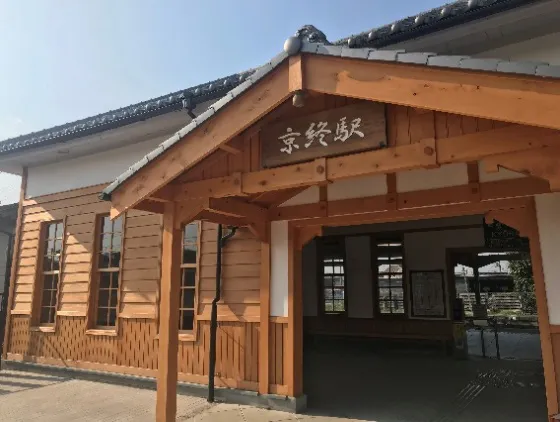
One of the oldest wooden station buildings in the Kansai region was deteriorating, and its maintenance had become a management challenge for JR West. In response to this situation, local residents who were attached to the station began to call for its preservation and revitalization. The project began in 2016 with the establishment of the “Kyobate Station Area Community Development Council.”
The following year, the council decided that local youth would operate the station, and subsequent discussions led JR West and the City of Nara to make a flexible decision. JR transferred the station building to the City of Nara free of charge. The city then entrusted its operation to an NPO established by local youth (NPO KYOBATE).This created a “win-win-win” situation: JR reduced maintenance costs, the city preserved and utilized a cultural asset, and residents secured a hub for community activities. This can be seen as an example of a new model of public-private partnership that goes beyond the traditional relationship between a railway company and the local community.
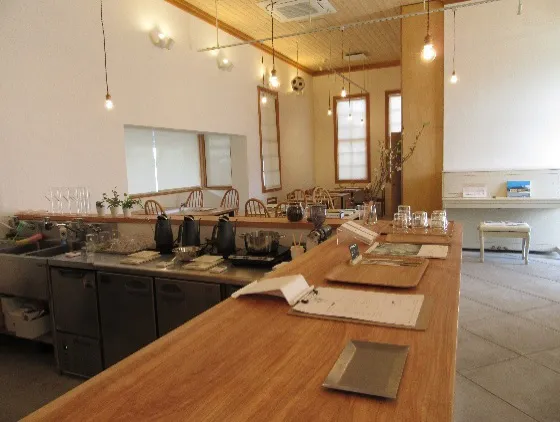
Today, the station building is used daily as a gathering place for local residents. It features facilities such as a tourist information center—operated with the hope of fostering a love for the station—and a station café, both of which are accessible to tourists and locals alike. These initiatives play a vital role in connecting people from both within and outside the community.
The case of Kyōshū Station suggests that when considering the question of “who owns the station,” the community can become the “de facto owner” that nurtures its value, rather than just the legal owner. It is an excellent example demonstrating that proactive community activities can generate sustainable value.
Insights from Case Studies and Concrete Actions
Although the approaches in Atami and Kyoshin differ, three common factors can be identified behind their success. First is a shift in perspective: viewing the station not as a standalone facility (a “point”), but as a strategic hub (a “core”) for enhancing the value of the entire region.Second, the presence of enthusiastic staff members and leaders—key figures who drive the project forward by implementing these plans, coordinating between organizations, and engaging the community—serves as the driving force behind the projects. Finally, it is crucial to note that the revitalization of stations and local areas is not left solely to railway companies or the government; rather, relationships have been established where local residents and businesses go beyond being mere users or bystanders to actively participate in planning and operations, creating value together.
Based on these observations, we will consider the specific actions each stakeholder should take. First, railway operators are required to expand their business scope beyond that of a mere “transportation provider” to become “regional platform operators” that create value along the railway lines. For example, building revenue models beyond fare income—such as leasing vacant space within station premises to local NPOs or utilizing the space as a logistics hub linked to e-commerce sites in the surrounding area—can present new business opportunities.
On the other hand, local governments are expected to go beyond merely mediating the interests of stakeholders and take on the role of “producers” who envision the future of the entire region.It is crucial for them to take a proactive role by clearly positioning stations as core facilities within long-term urban planning, relaxing regulations to encourage the opening of cafes and small offices by revising zoning around stations, and utilizing stations as bases for regional revitalization teams. Furthermore, to ensure the success of these initiatives, it is essential to engage in ongoing dialogue with local residents and reflect their voices in policy.
So, where should we start? There is no need for a grand plan. Why not begin with a small workshop where stakeholders from various backgrounds gather to identify “the assets and challenges of their local station”? This can lead to an objective analysis of the current situation and, ultimately, a concrete action plan.
In Conclusion
Stations are a mirror reflecting the changing times. Now that many rural areas face the major challenge of population decline, some stations may seem to be nearing the end of their traditional roles. However, as we have seen in this article, this may actually mark the beginning of a new role. By leveraging their universal value as “hubs” where people connect with one another and with their communities, and through ingenuity and “co-creation” among stakeholders, stations can once again shine as symbols of hope that foster local culture, interaction, and information exchange. This potential will undoubtedly expand even further through the creativity and ingenuity of each region.
著者













