
Millennials from China and other emerging Asian countries are increasing their presence in the inbound tourism market in Japan
The number of visitors from China and other emerging Asian countries has surged in recent years, with a high proportion of them in their 20s and 30s. Born just before the year 2000, this generation is known as the “Millennial generation” and has recently attracted attention overseas as a new force shaping values, social activities, and consumer behavior. In this article, we will examine the values and lifestyles of the Millennial generation, who are poised to become the core of the inbound tourism market in Japan.
The Lunar New Year has come to an end. Since the start of the year, concerns about a slowdown in the Chinese economy—driven by falling stock prices and a weakening yuan—have been mounting, and right up until the Lunar New Year, many expressed doubts about whether the number of Chinese tourists visiting Japan this year would exceed last year’s figures. In fact, during the holiday period, various topics made headlines, including reports of Tokyo department stores so crowded that people spilled into the aisles and couldn’t move, a shift in popular home appliances from everyday items like electric rice cookers to beauty appliances, a broader geographic distribution of tourist destinations, and a shift from consumption of goods to consumption of experiences. While specific figures will likely become clear in the coming days, the sheer volume of discussion suggests that interest in Chinese tourists—who directly drive domestic sales—is exceptionally high. Given concerns about the Chinese economy, this can also be interpreted as a reflection of our mindset here in Japan: a desire to catch even the slightest signs of change as quickly as possible and not fall behind on emerging trends.
Incidentally, according to data from the Ministry of Justice, we can see that a high proportion of visitors from China and other emerging Asian countries—whose numbers have surged in recent years—are in their 20s and 30s.You can sense this just by observing Asian tourists walking the streets. This generation, born just before the year 2000 and ranging in age from their 20s to early 30s, is known as the “Millennial Generation.” In recent years, they have garnered attention overseas as a new trend-setter in terms of values, social activities, and consumer behavior. Our company has also conducted extensive research on the Millennial Generation, focusing particularly on Japan’s “Yutori Generation.”
In this article, we will examine the values and lifestyles of the Millennial generation—who are poised to become the core of the future inbound tourism market in Japan—based on a report by Telefónica, a major Spanish telecommunications provider, and our proprietary marketing methodology, “Travel Life Segment 5.”
1. What Is the Millennial Generation?
While the age range defined as the “Millennial Generation” varies worldwide, in the United States it generally refers to those aged 18 to 34—a generation previously known as Generation Y or Generation 9/11.At the 2014 Davos Conference (World Economic Forum), they were prominently featured as “new consumers” who have adapted to the digital society and will significantly transform future consumption patterns. Over the past year or two, the term “Millennials” has become firmly established, and they are rapidly attracting global attention not merely as a generational group but as a “new trend.”
Looking at Japan’s Millennials, they are “smartphone natives” who have been using smartphones since their student days and for whom staying constantly connected with others is the norm. This generation has not only been influenced by technological innovations such as digital devices but has also experienced various events during their formative years—including the “Yutori” education reform, prolonged economic stagnation, and the Great East Japan Earthquake—that post-war Japanese people had never previously encountered. Consequently, they cannot be simply dismissed as “today’s youth.”
2. Why Are Millennials Gaining Attention Now?
(1) Becoming a Core Force in Global Markets, Starting with Emerging Asian Nations
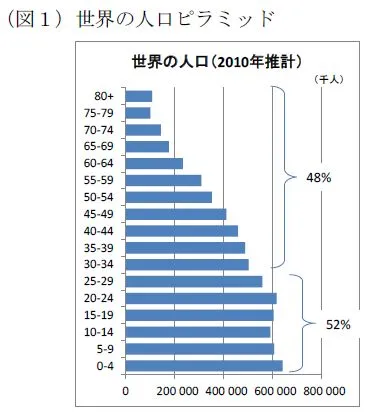
Looking at the global picture, we see a stark contrast to Japan, where concerns about market contraction due to a declining birthrate and aging population are growing. Worldwide, people aged 29 and under account for 52.4% of the total population—nearly double Japan’s 27.9% (Figure 1).Furthermore, according to the U.S. Census Bureau, it is estimated that the proportion of the global workforce made up of Millennials and younger generations will rise from approximately 50% in 2015 to about 75% by 2025.
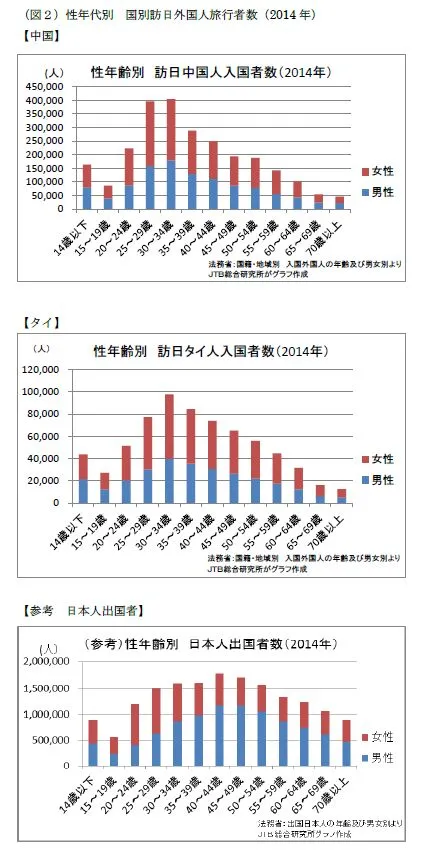
It is fair to say that the Millennial generation is the first to begin reaping the benefits of rapid economic development in emerging economies such as those in Asia. As society and the economy develop, school enrollment rates are rising, and there is a growing trend of young people working for foreign-affiliated companies—including those in Japan—and earning high incomes. In China, households headed by people in their 20s and 30s currently have the highest average annual income, and young people are said to make up a large portion of those who enjoy overseas travel. A similar trend is expected to be observed in other emerging Asian economies. Given this context, it is understandable that a high proportion of travelers to Japan from China and Southeast Asia—regions that have seen remarkable growth in recent years—are young Millennials (Figure 2).
(2) The Global Millennial Generation, Raised Amid Digital Technology
The widespread adoption of mobile devices and social networking services (SNS, such as Facebook and Twitter) has dramatically transformed the nature of time and space in terms of information and communication with others. With a smartphone, it is now possible to easily access information or enjoy shopping anytime, anywhere; moreover, people can effortlessly connect with the world by sharing their own experiences.
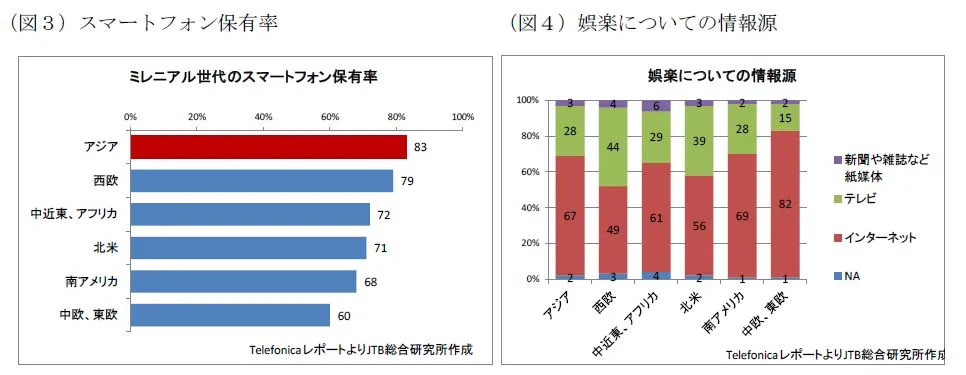
According to a report (*1) compiled by Telefónica, a major Spanish telecommunications provider, on the millennial generation (ages 18–30) in 27 countries worldwide, Asian millennials had the highest smartphone usage rate among six regions, including North America and Europe, and were more active in gathering information via the internet than their counterparts in Western European countries (Figures 3–4).In emerging economies, the internet spread before social infrastructure and traditional media were fully established, suggesting that adaptation to a digital society is progressing rapidly compared to the path followed by developed nations.
(3) Characteristics of the Global Millennial Generation Shaped by the Digital Society
Based on socio-economic environments, country-specific reports, and proprietary surveys, the characteristics of the global Millennial generation can generally be summarized as follows.
- Liberal and open-minded
- Not obsessed with material possessions
- Highly socially conscious
- Millennials act as media themselves and possess strong communication skills (through the use of social media)
Millennials, who are frequently exposed to information from around the world and diverse values on a daily basis, tend to be open to others’ perspectives. They possess relatively liberal and open-minded thinking and have the capacity to accept new things and ideas without much resistance.
The sharing economy, which is currently expanding, is an economic system based on the exchange and sharing of goods, money, and services, made possible by the development of social media. A rational mindset is spreading that involves providing surplus resources—such as spare rooms, unused spaces, and available talent—to those who need them when they need them. In the United States, despite Millennials reaching the age when they typically purchase homes, a phenomenon is emerging where they choose not to own homes.
On the other hand, having been educated from a young age about the impact humans have on the global environment, the millennial generation is considered to have a strong sense of responsibility toward the environment and society.
3. Millennials in Emerging Asian Countries Living Positively Amid Economic Growth
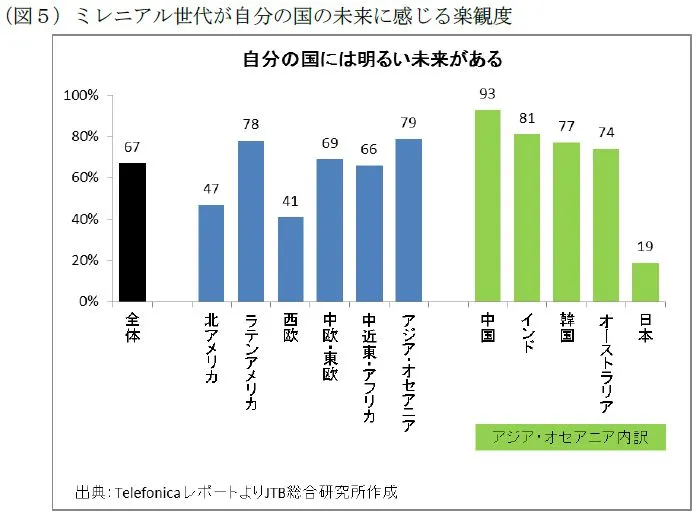
The aforementioned Telefónica survey report also reveals regional differences in the values and perspectives of the global Millennial generation. The greatest optimism regarding “a bright future for their own country” was found among Asian Millennials (79%) and those in Latin America (78%), showing a significant gap compared to Western Europe (41%) and North America (47%). The survey also found that a higher proportion of Asian Millennials than those in other regions believe technology is the most important field to study in order to achieve future success.
On the other hand, while Japanese millennials are part of the Asian region, they showed a marked tendency to be less optimistic than their neighbors in Asia regarding the prospect that “their country has a bright future” (Japan: 19%, South Korea: 77%, China: 93%, Asia as a whole: 79%).Overall, the survey results showed that Japan’s trends were relatively close to those of Western Europe, which is similarly socioeconomically mature; however, it is noteworthy that regarding their views on their country’s future, they are more pessimistic than Western Europe, which faces complex challenges such as the EU, the economy, and immigration issues (Figure 5).Furthermore, the percentage of Millennials who fit the definition of “global leaders”—defined by their strong sense of “utilizing cutting-edge technology,” “being able to improve their own region,” and “having opportunities to start or grow a business or utilize their ideas within their country”—was 1%, the lowest in the world (the global average is 11%).
4. Focus on the strong influence Millennials themselves wield as media
We used our “Travel Life Segment 5” methodology to classify Japanese Millennials and Chinese Millennials planning to travel to Japan within the next year.
“Travel Life Segment 5” classifies consumers into five types based on their lifestyles and values regarding travel. By visualizing these profiles and making them easier to imagine concretely, it facilitates customer targeting (*2).
(1) Japanese Millennials are conscious of public perception. They are quick to catch on to trends and possess strong influence and reach
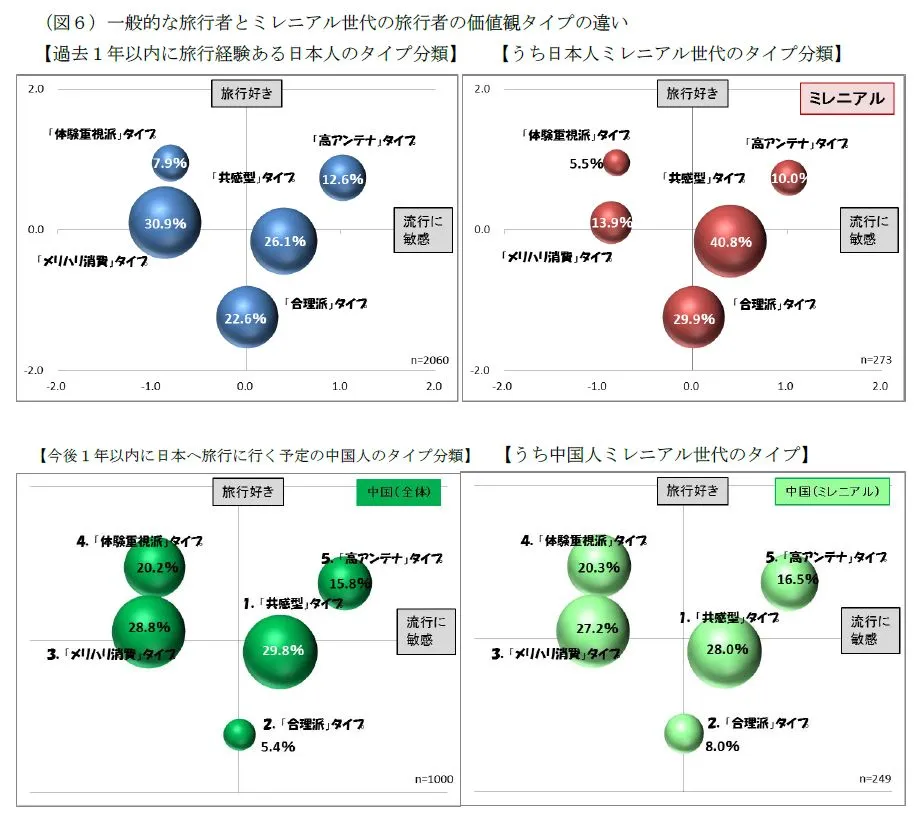
Among Japanese millennials in their 20s who traveled to Japan in the past year (hereinafter referred to as “Japanese millennials”), the most common type was the “Empathy” type (Japanese millennials: 40.8%, average for Japanese travelers in the past year: 26.1%) (Figure 6).The "Empathy" type has a high social media usage rate and a desire to stay connected with others; even when alone, they want to feel like they belong with the group. They are also conscious of others’ opinions and tend to be attuned to trends.
Based on our previous research findings, this "Empathy" type has been shown to have a high influence in spreading information to other types. When LCCs (low-cost carriers) first appeared in Japan, the "Empathy" type was the first to use them as "one of the trends to keep an eye on," and this subsequently spread to their followers—the "Balanced Spending" and "Pragmatic" types.
The results also showed that the Rationalist type is more prevalent among Japanese Millennials compared to other generations (Japanese Millennials: 29.9%, Average Japanese Travelers: 22.6%).The Rationalist type tends to “prefer simple, no-frills options, avoid spending money on unnecessary items, and prioritize spending time with travel companions over experiences at their destination.” This aligns with survey findings that suggest the emergence of new transportation infrastructure, such as LCCs, and affordable yet fun and engaging accommodations is driving domestic travel among the younger generation (*3).
(2) Among Chinese Millennials interested in traveling to Japan, the “Highly Attuned” and “Experience-Oriented” types are predominant. There are few “Pragmatic” types; instead, they focus on expressing their individuality and act independently based on their own values
An analysis of Chinese people planning to travel to Japan within the next year revealed that the most common type among Chinese Millennials was the “Empathetic Type” (28.0%). While this figure was significantly lower than that of Japanese Millennials, the proportion of “Trend-Sensitive Types”—who “are sensitive to trends, want to know and experience things ‘earlier’ than others, and prefer products that allow them to express their individuality”—was higher (Chinese Millennials: 16.5%, Japanese Millennials: 10.0%). When combined, these two types account for 44.5% of the total. There was a higher proportion of “highly attuned” types who “prefer products that express their individuality” (Chinese millennials: 16.5%, Japanese millennials: 10.0%). When combined, this suggests that 44.5% of Chinese millennials are trend-conscious and highly information-sensitive.
Furthermore, compared to Japanese millennials, the “Pragmatic” type (those who don’t overdo things and don’t want to spend money on unnecessary items) accounted for only 8%. On the other hand, the “Experience-Oriented” type (those who aren’t bound by trends, have high intellectual curiosity, prioritize experiences, and actively seek out lesser-known places rather than trendy hotspots) was quite high at 20.3% (Japanese millennials: 5.5%).
With travel to Japan currently booming, the traveler demographic is expanding from this highly information-savvy group to a broader following, making the attention on “mass buying” behavior understandable. However, unlike Japanese Millennials—who “fear being out of touch and dislike being left behind by others”—Chinese Millennials are fundamentally self-driven in their actions. Will they be highly attuned to trends as a form of self-expression, or will they pursue authentic cultural and lifestyle experiences they have yet to discover based on their own values? Even if “mass buying” is the current trend, our typology analysis suggests that a qualitative shift among Chinese millennials may arrive sooner than expected. The key going forward will be whether Japan can maintain a “sparkling” appeal that will make them choose Japan as their travel destination when that shift occurs.
(3) Social media drives Millennials’ consumption and travel. They are both influenced by and influence others.
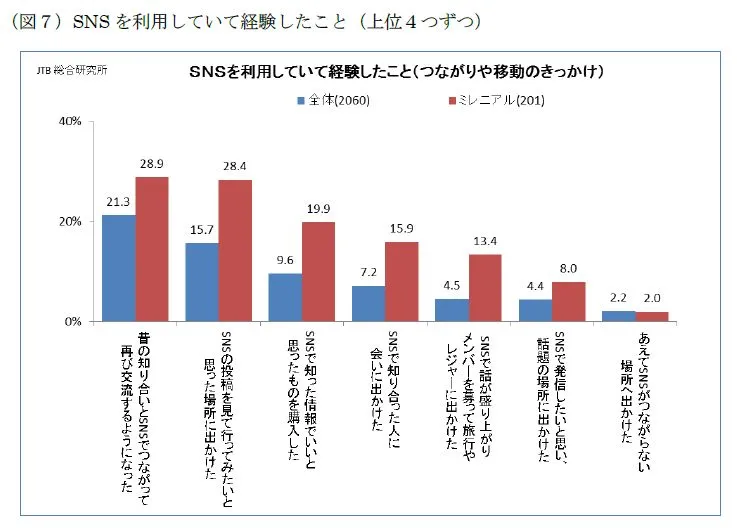
As shown in Figure 4 above, the results indicate that for the millennial generation, the internet is a more significant source of information regarding entertainment and other topics than television. Among these, social media has a particularly significant influence on consumption and travel. When Japanese Millennials were asked about their experiences with social media, responses such as “I reconnected with old acquaintances and started interacting with them again (28.9%),” “I saw a post and went to a place I wanted to visit (28.4%),” and “I purchased something I liked based on information I found on social media (19.9%)” revealed that social media serves as a catalyst for shopping, travel, and leisure spending. Furthermore, while the overall average for “I went to a trending location because I wanted to post about it on social media”—where posting itself serves as a motivation for consumption or going out—was 4.4%, this figure was relatively high among the millennial generation at 8% (Figure 7).
5. The Changing Relationship Between Customers and Companies Brought About by Millennials
As social media influences people’s consumption behavior, changes have emerged in how companies develop products and approach customers.
Recently, it has become standard practice for Japanese companies to pay close attention to user content, encouraging posts on review sites and their own Instagram accounts to create a cycle where these posts enhance product value and lead to new purchases. We are truly entering an era where users act as public relations representatives.
This approach to marketing—where value is enhanced in a two-way manner not only through the product’s appeal but also by users proposing new ways to enjoy it via social media—can be said to align well with the characteristics of the millennial generation.
For inquiries regarding customer analysis based on “Travel Life Segments”:
JTB Tourism Research & Consulting, Planning and Research Department (Contacts: Hayano, Namigata)
contact@tourism.jp













