Reframing Local Resources Through Space Tourism: A New Approach to Destination Management with Space as the Lens

As interest in the space industry grows, space tourism is increasingly seen as a new approach to regional revitalization. Regardless of whether a region has space-related facilities, this article explores the tourism potential that emerges when local resources are reframed through the lens of space.
According to Space: The $1.8 Trillion Opportunity for Global Economic Growth, published in April 2024, tthe global space business market was valued at USD 630 billion (approx. JPY 100 trillion) as of 2023. It is projected to reach USD 1.16 trillion (approx. JPY 185 trillion) by 2030, and USD 1.79 trillion (approx. JPY 286 trillion) by 2035.
Space is a topic that never runs short of headlines. In Japan as well, local governments and regional companies—centered on areas such as Taiki Town in Hokkaido, Ibaraki Prefecture, Fukui Prefecture, and Oita Prefecture—are advancing the development of rocket launch sites and establishing hubs for satellite manufacturing. Community development initiatives built around space are also underway, with expectations for the expansion of the space industry by 2030.
While admiration and expectations are rising, regions without space-related facilities—or those only now entering the space industry—may feel that space tourism is a distant prospect. Yet space tourism is not only about traveling to space, as SpaceX does; it also encompasses experiences that let people "feel" space. By combining local resources such as nature and food culture with the field of space, there lies the potential for a new form of space tourism that offers unique and original experiences.
1. Local Food Culture × Space Food
One of the joys of travel is the "food" unique to each region, yet space is a place with no seasons and no ingredients. As private space travel becomes increasingly realistic, the "G+Astronomy Project" has been launched to address the question of how to turn "space food into gourmet cuisine," in pursuit of making food enjoyable in space.
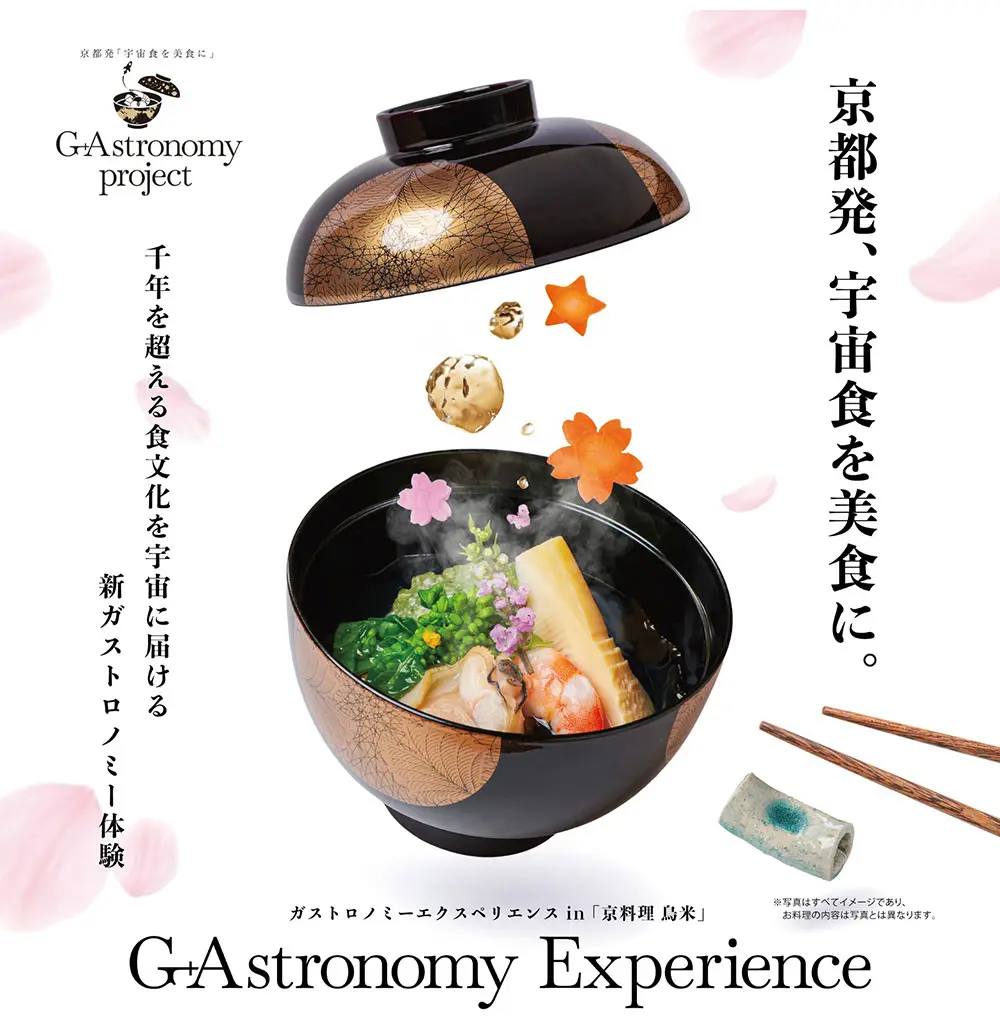
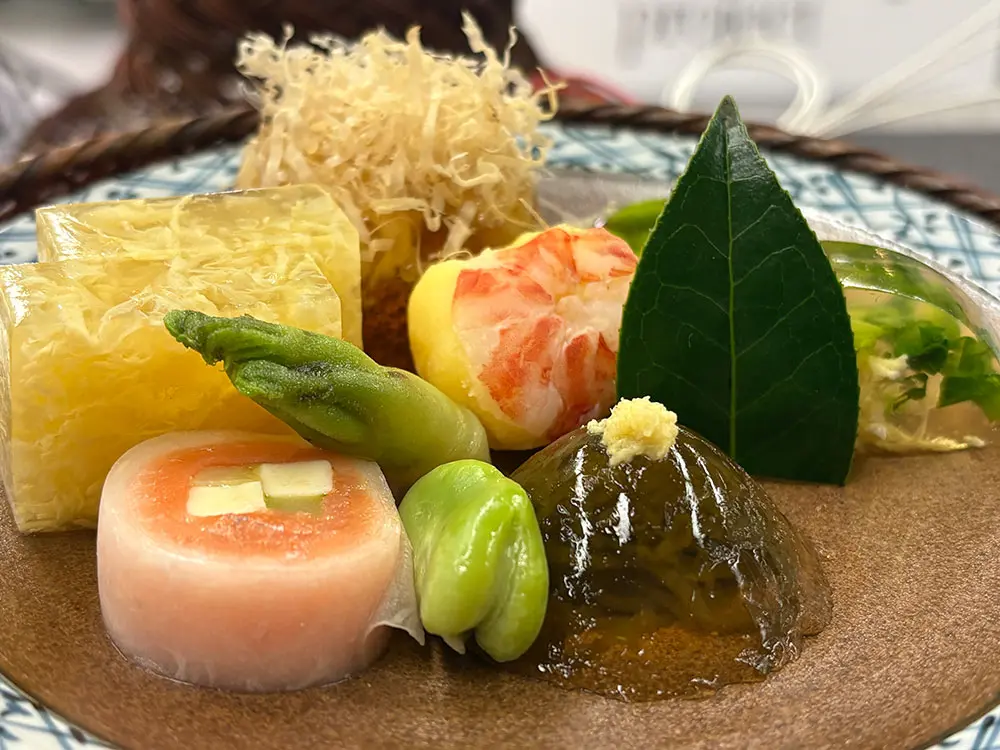
By combining immersive experiences using XR technology with the appeal of Kyoto cuisine—which can only be savored on Earth, where gravity exists—the project creates new possibilities for the Japanese cuisine of Kyoto, the thousand-year-old capital, through the lens of space. "Someday, this dish might be eaten in space, too." A distinctive Kyoto experience has been created, one that invites participants to contemplate the future of food while turning their thoughts to space.
2. Volcanic Crater × Lunar Surface
In Askja, Iceland, the volcanic terrain resembling the lunar surface has been used to create a tour called "Apollo Mission Training," which offers a simulated experience of walking on the Moon. In the 1960s, astronauts from the Apollo program trained at this site, and today the region's natural terrain is reinterpreted through the lens of space to create tourism value.
When we think of space tourism, we tend to picture rocket launch sites or space travel itself. Yet what emerges from the examples introduced in this article is that it is not space itself, but rather "the perspective of space" that serves as a means of rediscovering the value of local resources. Even regions without space-related facilities or rocket launch sites hold the potential to create experiences that make space feel close at hand, by reinterpreting their unique local nature, history, culture, and food through the lens of space.
References and Sources
1. World Economic Forum (2024) “Space: The $1.8 Trillion Opportunity for Global Economic Growth,” World Economic Forum Report
2. The Nikkei: “Kyoto Cuisine and Sake Aiming for Space: Dining Experience Event at a Long-Established Kyoto Ryotei,” The Nikkei article
3. Visit Askja: “Apollo Training in Iceland,” Visit Askja article
著者