An Interview with Sociologist Yutaka Nango: The Future of Travel Five Years from Now
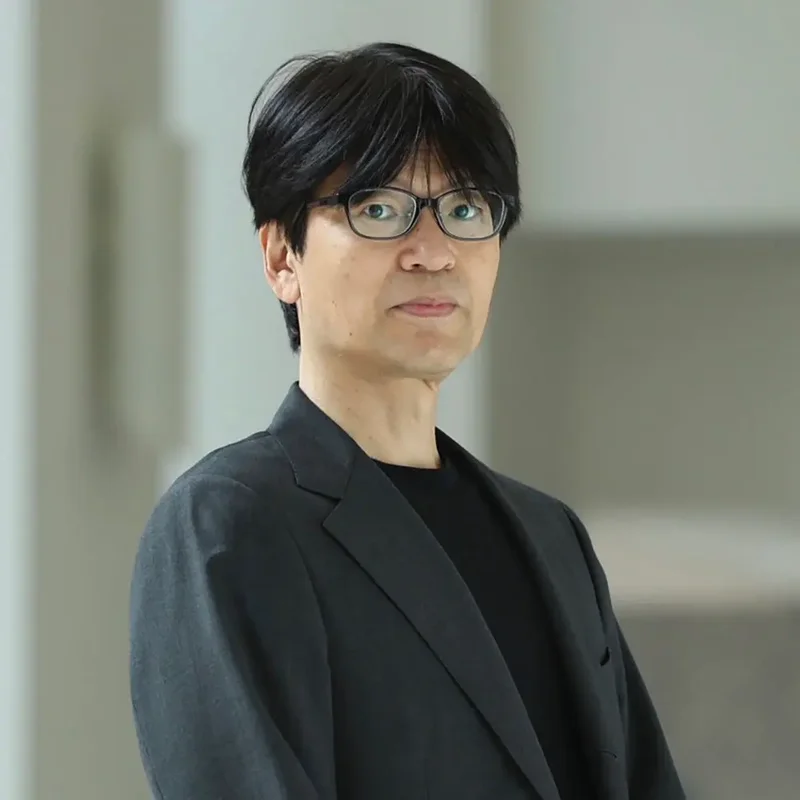
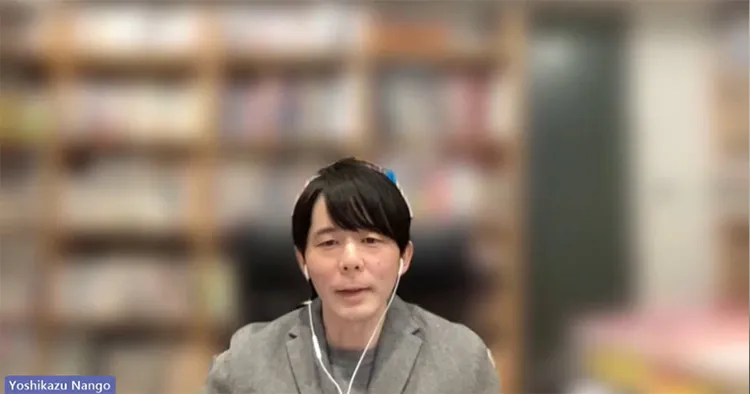
What does Mr. Nango, a researcher of “personal space,” mean by the “right to get lost”—a concept he proposes for enjoying serendipitous encounters in today’s information society? In this column, with the aim of identifying future trends in tourism and travel as well as signs of change (i.e., the seeds of new tourism), we present “exploration reports” (i.e., interview transcripts) featuring leading experts from a variety of fields, not limited to the travel industry. This time, we spoke with Yoshikazu Nango, currently an associate professor in the School of Information and Communication at Meiji University, who conducts research on cities and architecture with a focus on sociology.
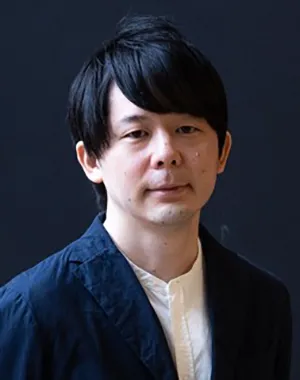
Associate Professor, School of Information and Communication, Meiji University. Specializes in sociology and urban and architectural theory. Born in Osaka Prefecture in 1979. Withdrew from the doctoral program at the Graduate School of Interdisciplinary Information Studies, University of Tokyo, after completing the required coursework. Major publications include *Urban Theory of Solitary Spaces* (Chikuma Shinsho, 2018), *What Dreams Did Commercial Spaces Have?* (co-authored, Heibonsha, 2016), *The Edge of Architecture* (edited, Heibonsha, 2015), and *What Is a Cultural Figure?* (co-edited, Tokyo Shoseki, 2010).
Anonymous Communication in Urban Settings
Explorer Squad: We understand that you, Mr. Nango, conduct research on cities and architecture with a focus on sociology. Could you tell us specifically what kind of research you are doing?
Mr. Nango: Sociology is the discipline that connects the macro-level structures—such as political and economic influences and changes in the media environment, including social media—to the micro-level phenomena we experience as ordinary aspects of daily life and urban landscapes. Within this field, I focus on cities and architecture. During my graduate studies, for example, I conducted fieldwork to investigate who creates urban graffiti, what forms of anonymous communication exist, and what kind of urban subcultures are emerging. In Japan, new forms of anonymous human relationships began to proliferate in the mid-1990s with the spread of the internet and mobile phones. Therefore, I believed that the proliferation of graffiti was contemporaneous with the anonymous communication enabled by the internet and mobile phones, and I conducted research on that topic.
Explorer Squad: What specifically sparked your interest in cities?
Mr. Nango: I was born and raised in a suburban new town. There were many people my age in the area, so parents connected with each other through their children as a sort of “medium,” and it was a relatively low-anonymity neighborhood where people knew each other’s family structures and occupations. In contrast, in urban apartment buildings, it’s common not to know the name of the person living just one wall away, let alone what they do for a living. I felt a significant difference in that, compared to the suburbs or rural areas, urban areas are formed by a crowd of “anonymous individuals,” and that’s what sparked my interest in cities. Another factor is the difference in the rhythm and pace of life in each city. It’s different between Tokyo and New York, and between Tokyo and Osaka, but I became interested in the physical sensation of those urban rhythms.
What is the “solitary space” in Japanese cities that has been common even before the pandemic?
Explorer Squad: It’s true that in urban areas, there may be plenty of places and time to spend alone.
Mr. Nango: Even before the pandemic, we saw a trend where activities traditionally enjoyed in groups—such as karaoke or yakiniku—were increasingly being adapted for solo experiences. I believe this shift is likely connected to a desire to be alone, as people seek to escape the mutual surveillance and peer pressure found on social media.
Explorer Squad: Compared to the past, I think the number of people choosing solo spaces has increased, and the amount of time individuals spend in them has grown. But what exactly does it mean for “solo spaces” to be on the rise?
Mr. Nango: A combination of factors is driving the growth of “solo spaces,” and the way people experience time alone is also changing. The term “solo diner” (おひとりさま) originally referred primarily to singles, a demographic that has grown due to trends like later marriage, declining marriage rates, and an aging population. Of course, singles are certainly a key group in this trend, but the “being alone” I’m researching isn’t tied to marital status. It refers to moments within a 24-hour day when one exists as “alone as a state of being”—whether living with family or as a couple. To put it somewhat abstractly, it’s a state of temporarily stepping away from one’s social group and existing as an anonymous individual. Particularly in urban areas, we are seeing a phenomenon where this “state of being alone” is materializing in various forms of space. For example, compared to Europe and other regions, Japan has many restaurants where you can grab a quick meal like fast food, or that feature partitions designed for solo diners, making it easy to eat alone. While Japan has strong group cohesion within organizations like companies, there is a tendency for people to become indifferent to others once they step outside those groups. I believe this is also a reason why Japanese cities feature such a wide variety of “solo spaces.”
Explorer Squad: I imagine there’s no shortage of time spent alone in Europe as well—whether eating or commuting—but are “solo spaces,” as exemplified by solo karaoke or solo yakiniku, unique to Japan?
Mr. Nango: I believe this is deeply connected to Japan’s customer culture. That’s because many of Japan’s “solo spaces” are essentially “pay-to-use spaces.” With pricing structures like “X amount for 30 minutes,” it feels as though you’re purchasing the right to be there alone by paying in these commercial spaces. While it’s hard to generalize, in the West, for example, even if “solo spaces” aren’t offered as a specific “product” for a fee, people tend to create their own solo spaces—like finding a spot in a park to eat alone. In other words, there’s a major difference between being given a space and creating one yourself. I think this is also related to a culture unique to Japan, where people are overly concerned with the eyes of others—or rather, highly sensitive to how they’re perceived by others. In recent years, hotels modeled after Japanese capsule hotels have started appearing near airports overseas, but they aren’t distributed as packaged “products” to the same extent as they are in Japan.

It’s precisely because we get lost on the way to our final destination that we notice things and encounter experiences we wouldn’t otherwise
Explorer Squad: So, the “personal space” concept is a uniquely Japanese cultural phenomenon, even when compared to
other countries. I understand you sometimes travel abroad for research—what kind of trips do you usually take?
Mr. Nangou: First of all, when people hear the word “travel,” what they imagine varies from person to person, doesn’t it?
“Travel” refers to travel in general, while “trip” implies a specific purpose and the expectation of returning home. A “journey” doesn’t necessarily have a destination, nor is returning home a given. In the field
of action geography, daily commutes to work or school, or going out to run errands, are called “trips.” If we include such “trips” in the broad definition of travel, I’m actually more interested in finding those small changes within daily life and discovering differences within repetitive routines. Even when I travel abroad, rather than enjoying “the extraordinary within the ordinary,” I prefer to savor “the ordinary within the extraordinary.” For example, I observe how locals commute to work or school in the morning, or how they spend their lunch breaks. I also often place myself in places where I can experience the sounds and smells of the city—things you can’t capture in a photograph.
Explorer Squad: Does that mean you often travel without setting specific destinations?
Mr. Nango: Since many of my trips are also for research, it’s not that I don’t have a destination. When I look back on the trips that have left a strong impression on me, what comes to mind are experiences like getting lost, or the journey itself—riding local trains or buses where it’s hard to tell where you’re going—until I finally reach my destination. These experiences remain in my memory as being just as valuable, or even more so, than what I had expected at the actual destination. So, I don’t view travel as simply having a destination—or as “Trip” being inherently more valuable than the “Travel” or “Journey” that takes us out of our daily routine. Instead, I see travel as a combination of both. However, with the widespread use of GPS and map apps these days, I feel that opportunities to get lost—whether at the destination or on the way there—or, to put it another way, the “right to get lost”—are steadily decreasing, and with them, the discoveries and encounters that come from it.
Explorer Squad: That’s a wonderful way of thinking—that getting lost gives us the chance to discover and encounter new things. On the other hand, I imagine many people think, “I don’t want to make mistakes while traveling.” What’s the secret to enjoying unexpected mishaps?
Mr. Nango: On review sites and the like, a sense of risk aversion—a desire for efficiency, certainty, and avoiding loss—has become widespread, hasn’t it? However, I think people who find joy in the small changes of daily life, the nuances within repetition, and their everyday trips tend to have a strong capacity to embrace the unexpected and unpredictability positively, rather than viewing them negatively, and they have a greater ability to enjoy such experiences.
Isn’t the true joy of travel about encountering things that transcend your own way of seeing and thinking, and realizing that what you once took for granted is no longer a given? This includes realizing that the everyday activities taking place at your destination—though they may seem out of the ordinary to you—differ from what you’ve always considered normal. I also believe that discovering what you personally find pleasant or unpleasant is part of the true joy of travel.I believe that travel is “not just about seeking out things that aren’t unpleasant.” This point is surely connected to whether or not one can enjoy serendipity and unpredictability.
To truly enjoy travel from now on, it’s important to re-examine our own senses in this information-driven society and travel proactively
Explorer Squad: Listening to you so far, I feel that in order to enjoy serendipitous encounters and the unexpected, the way we choose our trips needs to change, and as a result, I feel that the nature of future travel products and proposals will also change.
Mr. Nango: Travel is fundamentally tied to movement, isn’t it? Even if it appears at first glance that you’re moving around actively on your own, in many cases—such as during Golden Week or summer vacation—there are likely many people who are actually being “made to move.” Going to places that look good on Instagram or visiting spots popular on review sites may seem like you’re drawn there of your own accord, but I think it can also be viewed as being driven by information from social media. This ties into the “right to be indecisive,” but a defining feature of today’s information society is that we’re being moved without hesitation. On the other hand, the COVID-19 pandemic surely prompted many people to reflect on the constraints of not being able to travel. How will we move proactively in the future? I believe that reexamining this sense of being “moved” is closely linked to how we can enjoy travel.
Explorer Squad: I feel that social media and review sites are such an integral part of travel that they raise important questions we must confront. How do you think these social media platforms will change people’s psychology and behavior in the future?
Mr. Nango: Considering the changes brought about by social media, we’re seeing an increase in “solo [activity],” aren’t we? For example, solo camping has become much more widespread in recent years, but I feel it hasn’t quite become truly “solo” yet. There are often many people camping alone in the same spot, or they’re livestreaming their solo camping experiences, with someone watching from the other side of the screen. When we take the desire to escape the peer pressure and mutual surveillance of social media to its logical conclusion, what does it actually mean to be completely alone? If we think about this point, the psychology and behavior of each individual might change from what they are now.
If we apply this to travel, even when traveling alone, we often stay at accommodations or use services at various locations, so we inevitably have to interact with others. This raises the question: is it even possible to travel in a way that allows you to be truly, completely alone?
As a side note, one thing that’s quite troublesome when traveling alone—and something I often wish could be improved—is dining.
When traveling abroad, there are often few restaurants geared toward solo travelers, and when you’re alone, the menu options and variety you can choose from are limited, aren’t they? Personally, I would really appreciate a matching service that connects solo travelers—whether with locals or even through social media—during mealtimes, and I think there’s a potential need for something like that.
The “Seeds” I Found on This Exploration
Sometimes we want to connect with others, and other times we want to be free from peer pressure. During this exploration, I discovered the potential for a future where—whether in daily life or while traveling—we’ll be able to choose more flexibly between spending time with “someone” and spending time “alone.”
Furthermore, in the latter half of our exploration, we were reminded that no matter how convenient the world becomes, we have the “right to be indecisive.” As symbolized by the term “time performance,” we often find ourselves chasing efficiency, but we were reminded once again that the right to be indecisive is a privilege unique to us as human beings. We, the Explorer Squad, also want to continue searching for the shape of travel five years from now, while enjoying the process of being indecisive.