An Interview with Rakugo Storyteller Kokontei Kikuchiyo: What Travel Will Look Like in Five Years
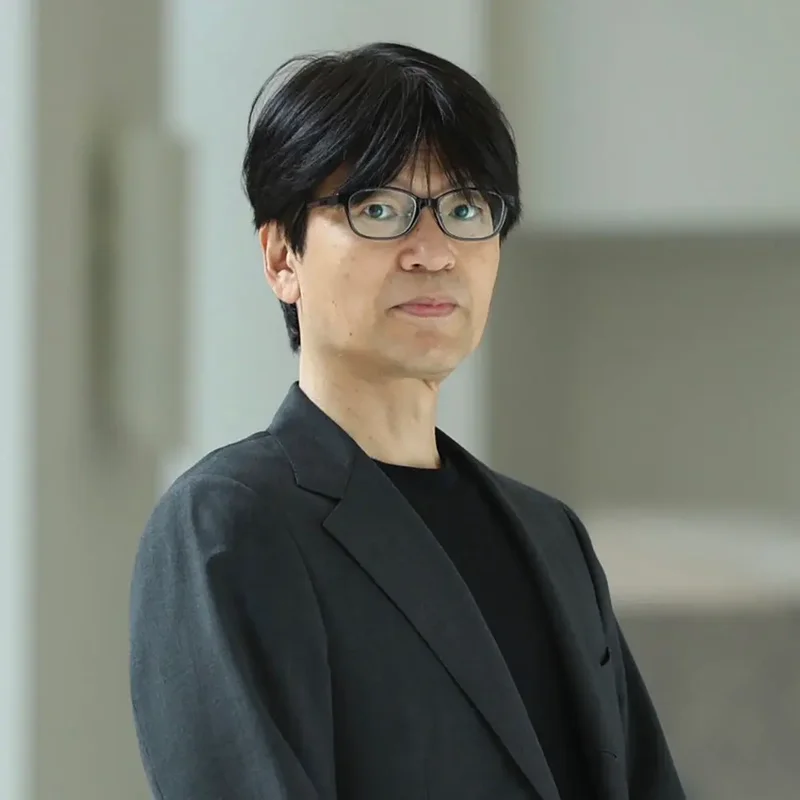
What does Kokontei Kikuchiyo—a pioneering female rakugo master—hope to convey to future generations through rakugo? In this column, with the aim of identifying future trends in tourism and travel and capturing signs of change (i.e., the seeds of new tourism), we present “Exploration Reports” (i.e., interview transcripts) featuring leading experts from a wide range of fields beyond just the travel industry. In this installment, we spoke with Kokontei Kikuchiyo, a pioneer among female rakugo performers who has achieved the rank of shin’uchi (the highest rank in Edo-style rakugo). In addition to performing classic rakugo, she now performs a wide range of genres, including sign language rakugo and rakugo in Korean, and is also active as a guide for the NGO Peace Boat.
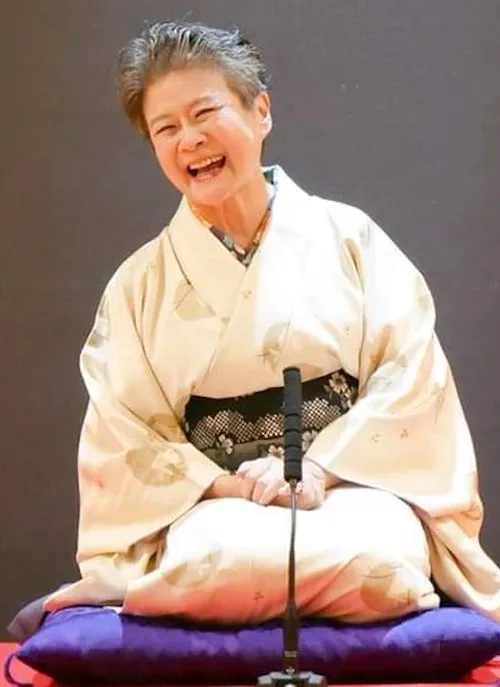
In 1984, she became a disciple of Kokontei Enkiku. In 1993, she was promoted to the rank of female “shin’uchi”—the first woman to achieve this status in Edo—alongside her senior, Sanyutei Karuta. Since then, in addition to performing at traditional yose theaters, halls, and various rakugo events, she has presented rakugo accompanied by sign language, performed in Korean, and delivered new works, original pieces, and essays. She has also given numerous performances for Japanese communities overseas, including in South America.As a director of the Volunteer Interview Committee at the Tokyo Detention Center, she conducts public speaking classes for inmates and aims to perform at correctional facilities nationwide. She is also active as a guide for the NGO Peace Boat and as a Travel Universal Design Advisor and Special Supporter. Her published works include *I Am Kokontei Kikuchiyo, a Rakugo Storyteller* (Nihon Shuppan) and *Experiencing Children’s Rakugo* (Kaiseisha).
Travel in Rakugo, and the Modern World as Seen Through Rakugo
Explorer Squad: Master Kikuchiyo, as the first female master storyteller in Edo-style rakugo, I imagine there were virtually no female rakugo performers at all when you first became one. Given that context, what made you decide to become a rakugo performer?
Kikuchiyo: I was invited to join the rakugo club during my university days, and that’s where I first encountered rakugo. I thought there was nothing else quite as entertaining. I was also interested in careers like theater or broadcasting, but I lacked the talent, beauty, and courage, so I gave up on those. I did have guts, though (laughs).The difference between rakugo and theater or broadcasting is that in rakugo, anyone can be the star once they step onto the takaza (the raised platform where the performance takes place, equivalent to a theater stage). Basically, if I memorize a story and go out there alone, everyone’s eyes are on me. If the story isn’t funny, the audience reacts accordingly. If it’s funny, they’ll laugh. You can’t blame anyone else for a failure in rakugo, but success is entirely thanks to the audience. I found this fascinating. Although I did take a job at a company for a while, I ultimately decided I wanted to become a rakugo performer. Back then, people around me opposed it, saying, “It’s impossible for a woman to be a rakugo performer,” but I didn’t want to have any regrets, so I became one anyway. Now, I’m truly glad I did.
Explorer Squad: We heard that this year marks your 40th anniversary as a rakugo performer. I imagine you’ve encountered all sorts of stories in your career. Among them, what kinds of stories have been about travel?
Kikuchiyo: There are many rakugo stories related to travel. For example, there’s the story “Oyama Mairi” (Pilgrimage to Mount Oyama). Mount Oyama is still a tourist destination in Kanagawa today, but it has long been an object of mountain worship. During the Edo period, there was an organization called the “Oyama-ko,” where everyone in a tenement house would save money together to make a pilgrimage to Mount Oyama. On such occasions, the landlord or an elder would lead the group.When traveling in large groups like this, fights would often break out, and stories about mediating those disputes have become rakugo pieces. There’s also a story about Hidari Jingorō, the carver of the Three Monkeys at Nikko Tōshōgū, who, while traveling, would carve a piece of art in lieu of paying his lodging fees.
Explorer Squad: What kind of message do these travel stories convey to the audience, and what do you hope they take away from them?
Kikuchiyo: I think the audience probably comes away feeling that taking a leisurely walking trip is actually quite nice.You know how there’s the pilgrimage to the 88 temples of Shikoku? Nowadays, you can take a bus tour and get around quickly, but back in the day, of course, people walked the entire route and it took them days. Also, while you can easily book lodging online these days, that wasn’t possible in the Edo period, so people traveled without knowing where they’d stay that night. Perhaps I’m conveying that traveling with that sense of excitement and thrill was one way of experiencing travel.
Explorer Squad: Master Kikuchiyo, when you perform travel stories at yose (popular entertainment venues where traditional performing arts like rakugo, manzai, and kōdan are staged), is there anything in particular you want to convey to the audience or have them feel?
Kikuchiyo: It’s not limited to travel stories, but I feel that even with stories created 200 years ago, there are always moments when I think, “This kind of thing still happens today,” or “People like this still exist.” I believe rakugo has a role in helping people recognize the commonalities between the present and the past. Also, almost none of the characters in rakugo are bad people. They’re all good people. People who are a bit foolish but very devoted to their parents, or people who can’t tell a lie and don’t try to read the room. In today’s society, “reading the room” might be the norm, but when you look back, you realize that those honest, straightforward people are the best. I believe rakugo also serves the role of teaching us about human nature—the kind of things you don’t learn in school.
Bonds Forged Through Travel
Explorer Squad: I understand that Master Kikuchiyo is also active as a guide for the NGO Peace Boat. I heard you recently boarded Peace Boat again—what motivates you to join the ship?
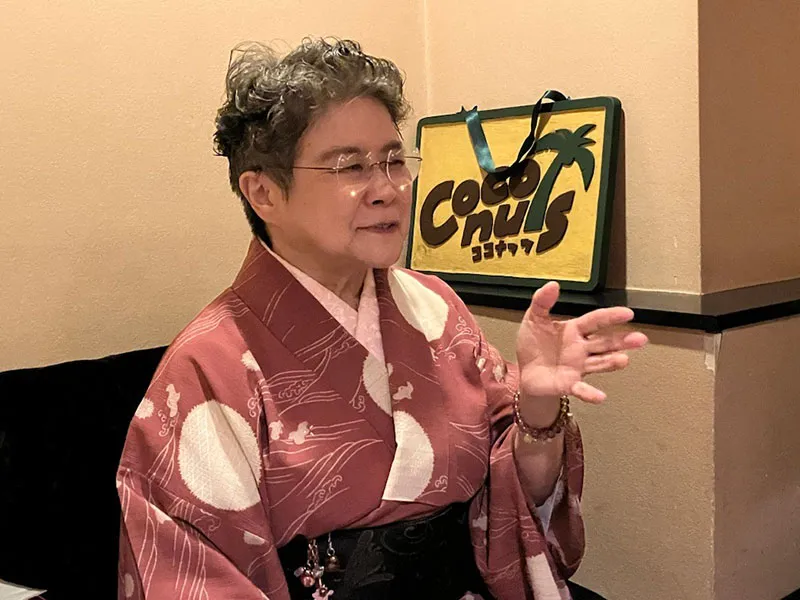
Kikuchiyo: It’s all about connections. When I board Peace Boat, I form so many bonds with people. And I always think, “I’ve received another treasure this time.” Whenever I’m on a long-term voyage, I always hold a rakugo class onboard. I teach for about two hours every day, and on the evening before I disembark, we hold a performance by the students. Participants come from all walks of life—young people around 17 to those nearing 90.Since the practice period is short, I teach them pretty strictly (laughs), but perhaps because of that, a sense of teamwork develops among the participants. To give an example of a “treasure” I received last time: during the rakugo class, there was one child who had been neglected and another who tended to sit quietly in the corner of the room. At first, they had a hard time fitting in. But after I spoke with them individually several times, they began participating in the practice with a positive attitude and gradually blended into the group. And then, at the actual performance, they were able to give a solid presentation in front of an audience of about 350 people. It was truly moving. Things like that happen in some form or another every time. It makes me think, “I just can’t quit this.” Also, running these workshops has deepened my connection with the Peace Boat staff, and they’ve invited me back many times. On the flip side, before I knew it, my work in Japan had started to dwindle (laughs).There’s also the camaraderie among the “guides.” I’ve gotten to know people—like military analysts and musicians—whom I would never have met if I’d just been a regular rakugo performer. What really strikes me about rakugo is that most of these people actually love it. So, they sometimes squeeze in time to come learn rakugo themselves.
The Appeal of Rakugo and Travel That I Want to Pass On in These Changing Times
Explorer Squad: Are there any aspects of rakugo you’d like to change in the future, or things you think will naturally evolve?
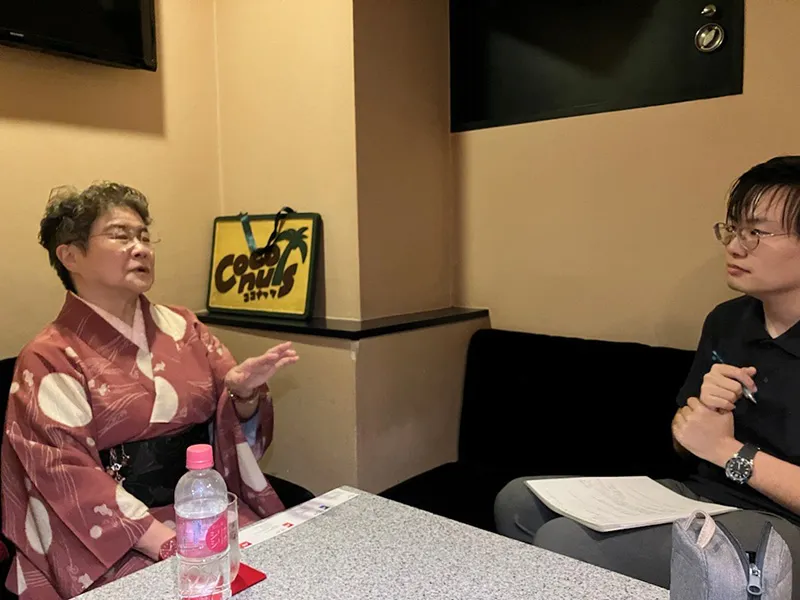
Kikuchiyo: For example, I’m already adapting the stories by replacing words that modern audiences wouldn’t recognize with contemporary terms, updating the tone to sound more modern, and substituting props that didn’t exist in the past with items we have today. Often, while performing, I realize from the audience’s reactions that they’re unfamiliar with certain words or props. That’s why I’m gradually adjusting the language and interpretation of the stories to align with the values of today’s audience. Also, young rakugo performers these days are constantly creating new stories. Audience values have also been changing recently, and more and more people are accepting and relating to these new stories. I believe that changes in the audience—not just the storytellers—are one of the factors that will shape the future of rakugo.
Explorer Squad: As you mentioned, rakugo has undergone—and continues to undergo—various changes. With so many forms of entertainment emerging today, do you feel there is a particular reason why people should listen to rakugo right now?
Kikuchiyo: Rakugo is something that, even if the storyteller gives it their all, the audience won’t fully understand unless they use their imagination. However, I feel that children today may lack the ability to imagine. When I think about why they lack this ability, it’s because in modern times, so many things are immediately obvious at a glance. With TV, for example, you can understand almost everything without even thinking about it. In contrast, with rakugo, you need to immerse yourself in the story and listen while imagining the characters and scenes. Therefore, the storyteller uses various techniques to stimulate the listener’s imagination, and each listener has their own way of listening. I believe it is very important for everyone to use their imagination in this way. That is precisely why I want people today to listen to rakugo.
Explorer Squad: These days, some people feel satisfied just by looking at travel photos on social media and don’t actually go on trips themselves, but I feel there are many things you can only truly understand by going there in person. After hearing your story, I realized that it’s also necessary to cultivate our imagination based on real-life experiences.
Kikuchiyo: The first time I boarded a Peace Boat, it was a voyage to North Korea. At first, I thought it was a scary country, just as the media portrayed it. But the co-representative of Peace Boat at the time told me, “Seeing is believing. Just go and see for yourself,” and that’s what made me decide to go. When I actually went, I was warmly welcomed—it was completely different from the image I had before the trip. Of course, everyone’s impressions vary, but I believe there are always things you can’t understand until you go, and things you only realize once you’ve actually been there.
Explorer Squad: What you just said about imagination applies equally to both rakugo and travel. Are there any other similarities between rakugo and travel?
Kikuchiyo: I think one commonality is that “the joy” is something only the person experiencing it can truly understand. In rakugo, the joy of entertaining the audience through storytelling is something only the performer himself can truly feel. And the audience members, too, are surely enjoying it in their own unique ways. I think the same applies to travel—no matter how many people you go with, everyone enjoys it in their own way. Also, at a rakugo performance, the content is rarely decided until right before the show. If the story or the “makura” (the casual conversation or short anecdote at the beginning that leads into the main topic) overlaps with someone else’s, you can’t use it anymore. That’s why rakugo is something you can’t truly understand until you go there, see the audience, and actually perform. I think this is a commonality with travel—there are many things you simply can’t know until you actually go.
The “Seeds” We Found on This Exploration
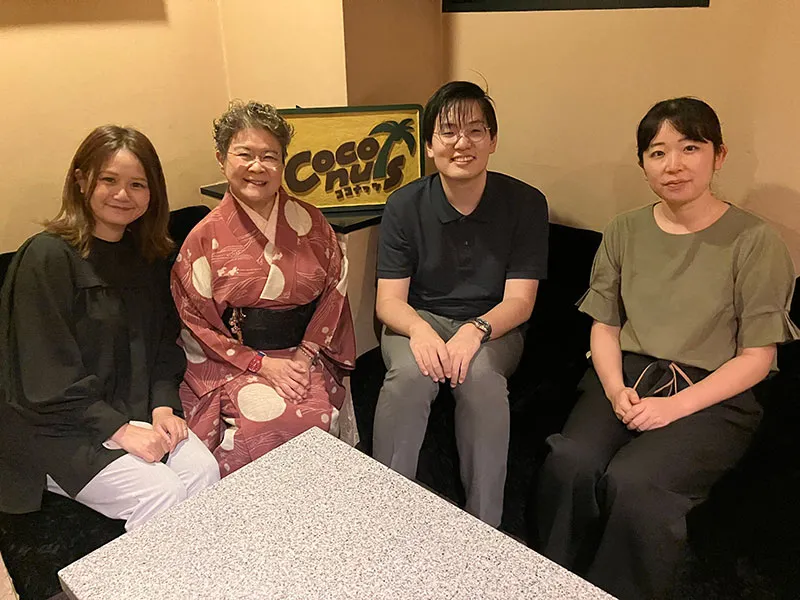
From the stories of Kikuchiyo, who has been delivering laughter and heartfelt messages through rakugo and various other activities for 40 years, I learned the importance of the ability to never lose sight of the essence of things, even as times change. With the advent of space travel and other advancements, the forms and scale of travel are likely to change at an accelerating pace, but I believe the essence of travel itself will remain unchanged. However, how each person perceives the essence of travel varies—everyone is different. To enjoy your future travels even more, why not take a moment to reflect on what travel truly means to you—what its essence is—and imagine the kind of journey you’d like to experience?