
A Conversation with Kodo Nishimura, the Monk Who Wears High Heels: What Travel Will Look Like Five Years Ahead
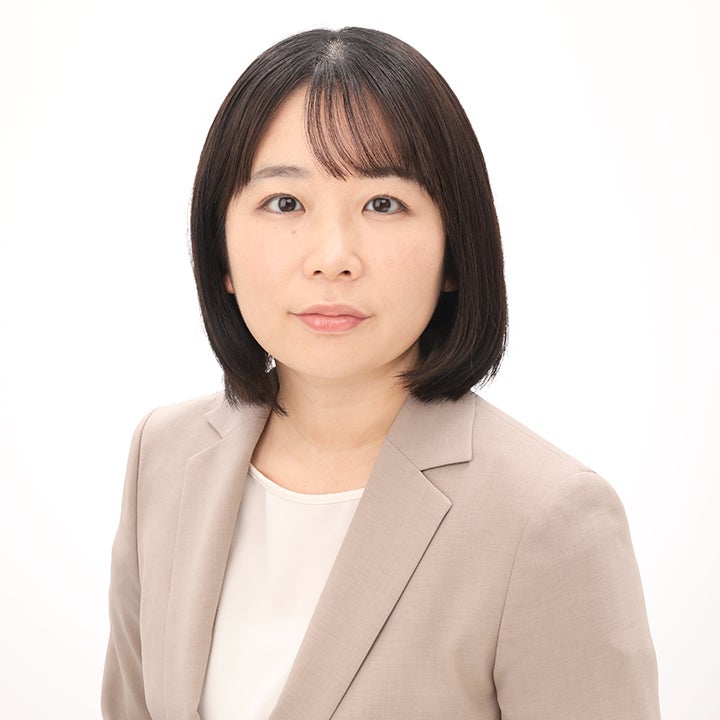
Nishimura is active in a wide range of fields, including as a Buddhist monk, makeup artist, and LGBTQ activist. What sense of self has she discovered through connecting with the world? In this column, with the aim of identifying future trends in tourism and travel and capturing signs of change (i.e., the seeds of new tourism), we present “Exploration Reports” (i.e., interview transcripts) featuring leading figures from various fields beyond just the travel industry. This time, we spoke with Hiroto Nishimura, who is active in a wide range of fields as a Buddhist monk, makeup artist, and LGBTQ activist.
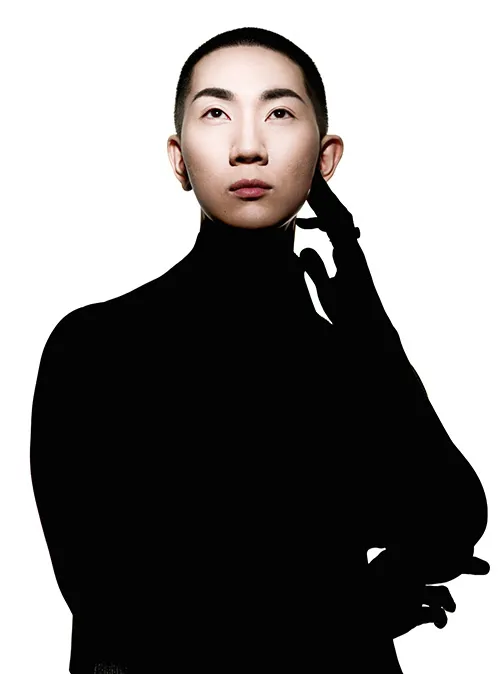
Born in Tokyo in 1989. He studied abroad at Parsons School of Design in New York. After graduating, he gained experience working as an assistant to a makeup artist in New York before striking out on his own. He has earned international acclaim for his work, including doing makeup for the Miss Universe pageant, New York Fashion Week, and Hollywood celebrities. In 2015, he became a priest in the Jodo Shu sect. As a makeup artist, monk, and member of the LGBTQ community, he shares the message that “everyone is equal, regardless of gender or race” from his unique perspective. He has given lectures at the UNFPA (United Nations Population Fund) at the UN Headquarters in New York, Yale University, Stanford University, and Zojo-ji Temple.He has been featured in domestic and international media, including NHK, CNN, and the BBC, and appeared on the Netflix show “Queer Eye.” In 2020, he published his Japanese book *Proud and Unapologetic: It’s Okay to Live as the Person I Love*. In 2021, he was named a “Next Generation Leader” by *TIME* magazine.
The Journey to Expressing "My True Self"
Explorer Squad: Nishimura, did you originally aspire to become a makeup artist?
Nishimura: I was born in a temple, but I loved playing princess and absolutely did not want to become a monk. I felt pressure from those around me who expected me to look and live like a monk. I’ve known I was gay since kindergarten, and I loved wearing my mother’s accessories and skirts. When I started elementary school, the way people addressed me changed from “-chan” to “-kun,” and I began to feel like I couldn’t be myself. High school was the hardest time of my life—I didn’t have any friends. I loved American movies back then, and I was deeply influenced by *The Princess Diaries*, a film about a protagonist who lacks self-confidence but transforms and grows into someone who can express her feelings. After being exposed to Michael Jackson’s songs about racism and Mariah Carey’s songs about poverty, I realized there were places where people could speak out about real issues, so I went to study abroad in the U.S. when I was 18.I also made my first gay friends there. I spent two years in Boston, eight years in New York, and a year and a half in Los Angeles. During those first two years in Boston, I was studying liberal arts. At that time, it was difficult for me to come out to those around me, but later, at an art college in New York, I met people living authentically, and I began to feel that I didn’t have to hide who I was.I had the opportunity to do an internship in college and became an assistant to a makeup artist. In Japan, when I went to the cosmetics counter, I’d be asked, “Is this for your mother? Or your girlfriend?” But in the U.S., male salespeople with glittery makeup were selling the products, so I thought, “Here, I can buy whatever I like.” I joined a makeup team working in the world I’d always admired—at events like the Miss Universe pageant and New York Fashion Week—and that’s how my career as a makeup artist began.
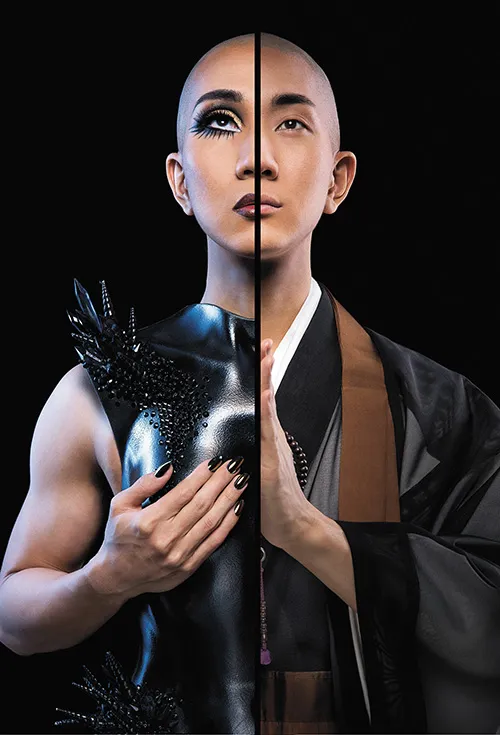
Explorer Squad: During your 11 years living in the U.S., I imagine you faced various struggles, such as finding it difficult to come out while in Boston. Was there a specific turning point that made you realize you had come to love being yourself?
Nishimura: It was a trip to Spain I took during spring break. When I was in Boston, I felt like I was in a chrysalis, but when I went to Spain, I was able to emerge from that chrysalis. I made my first gay friends and went to a gay club with them for the first time. When my friend told his mom around 11 p.m., “I’m going to a gay club,” she made him a sandwich to take with him. The reality that parents could support their child being gay was shocking to me.At the gay club, there were lots of older men with hawk-like eyes who seemed to scrutinize us from head to toe. My friend said, “I feel at ease here because I can be myself,” but I felt so nervous my hands went cold. Still, knowing that my friend’s mother supported him and seeing an environment where gay people could live authentically made me feel like I’d discovered a whole new world. Also, at the art college I attended in New York, the dean was in a same-sex marriage. He had gray hair, wore stylish glasses and smart clothes, and was a cool guy who was knowledgeable and brought everyone together. He introduced me to lots of LGBTQ books and movies, and I began to realize that I wasn’t the only one struggling. Until then, I’d only ever seen people portrayed as “okama” or “onee” characters in Japanese media, but I came to understand that there are many different ways for gay people to live their lives.
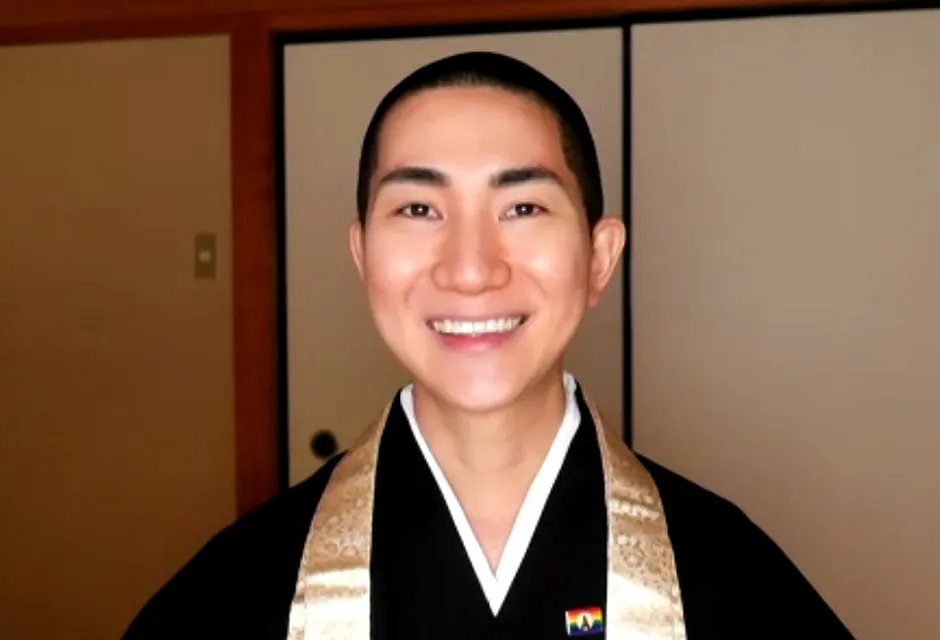
I became a monk to understand why I disliked it—now it’s become a vital part of my life
Explorer Squad: Were you anxious when you returned to Japan from the U.S.?
Nishimura: Well, actually, I hadn’t come out to my parents yet… They didn’t tell me I had to take over the temple, but they did say that if I did, it would be a tough job without a wife. Once, when I was wearing nail polish a cousin had given me, my mother told me, “I don’t want Hiro-chan to grow up to be an adult who does things like that.” That was my biggest worry. I wanted to feel the happiness of being myself even in Japan—doing my makeup with friends, having a boyfriend in the U.S.—so I made up my mind and came out to my parents. My father apparently had known since I was in high school, and he told me, “It’s your life, Hiroto, so live it however you like.” My mother said that while she’d had various doubts while raising me, those doubts were finally resolved, and she finally understood me. As for the nail polish incident from before, my mother told me, “I said that because I thought it wasn’t good for a child’s health—I felt like my nails couldn’t breathe when I had them painted for my wedding. After all, I used to let you borrow my accessories and skirts, didn’t I?” That made me realize I’d been operating under the preconceived notion that my parents would oppose me or dislike me.
Explorer Squad: After that, why did you end up pursuing the path of a monk, something you absolutely didn’t want to do when you were little?
Nishimura: After graduating from college, when I was unsure about my future, I recalled something my mother—a pianist—had once said: “If you say you hate Mozart’s music, you should study it thoroughly; if you can’t point out exactly what you dislike by comparing it to other composers, then your criticism is meaningless.” That made me want to explore the reasons why I disliked Buddhism. I also wanted to understand what kind of teachings and role Buddhism actually has—why we chant sutras, and why people come to temples.
Explorer Squad: I imagine the monk’s training was very difficult, but I hear you were able to find hope even in those circumstances.
Nishimura: When I went for monk training, it was incredibly tough, but I learned that the teachings state, “Just as the moonlight shines on everyone in the city, the teachings of Buddhism reach everyone—prostitutes, sinners, people with disabilities, and anyone else—and everyone is saved equally.” I had been struggling with being gay, but I realized that Buddhism actually supports me in being true to myself. When I was abroad, many of my friends told me that their homosexuality was being rejected because of religious values, so I wanted to tell them, from the perspective of a religious leader, that Buddhism says it’s not a problem. As a way of giving back for the confidence I’ve gained as a gay person, I’ve come to want to share the knowledge I’ve learned with them.
Explorer Squad: I feel that even in Japan, outdated values are slow to change, and there are people who cannot live as their true selves.
Nishimura: While I was training, a monk said to me as I was getting into the bath, “I thought you were a guy.” If this had been me back in high school, I would have pretended not to hear him. But I felt that if I stayed silent or dodged the question, Japan would never change. So, remembering my friends in Spain and the U.S. who had come out and were living with pride, I said, “That’s right.” He was completely taken aback. When one of my friends chimed in from the side, “Did you know? Nishimura-kun does makeup for Miss Universe in New York,” he seemed even more surprised. In the end, he even cheered me on, saying, “Good luck in New York!” That really struck me. I realized that if you have absolute confidence—even when teased—and can say, “So what?” without a shred of doubt, the opinions of those around you can actually change. If you try to hide your sexuality or see it as something inferior, others might feel the urge to poke fun at you. I think the important thing is to truly understand your own identity and learn to hold your head high.
The Earth is my home; step outside Japan and you’ll discover a new world and a new version of yourself
Explorer Squad: As a monk and makeup artist, you must have many opportunities to travel abroad for work, but do you also travel in your personal time?
Nishimura: I love traveling. What excites me most is going to places where I have absolutely no idea what kind of scenery awaits me. Colombia is a perfect example. Back around 2008, when I was studying abroad in Boston, I had a Colombian classmate who kept telling me that her country was unsafe. So, while I wanted to visit South America, I felt like, “I wonder when that will ever happen?” However, after I started dating a Colombian partner and heard that Colombia was becoming safer, I decided to visit—though I was still worried. Despite my anxiety, I was looking forward to experiencing things firsthand that you can’t grasp just from photos or videos, like what the air in South America smells like or what values the people there live by. I visited the capital, Bogotá, and tried tropical fruit juices with names I’d never heard before (like lulo, guanabana, and maracuja).The flavors ranged from creamy to tart, but I thoroughly enjoyed the addictive textures and aromas. Also, on San Andrés, a remote Colombian island in the Caribbean, they say the sea has seven colors, and when I counted them, there really were seven! Light blue, sky blue, blue, ultramarine, emerald green, green, dark green, and more! I was moved as I counted them. Amidst all this, I felt a little nervous when I visited an area called Comuna. I heard that this area used to have particularly poor security, with gunfights in the past, and that bullet holes still remain in the walls. However, the town has since been redeveloped. The walls are now covered in graffiti art, and the streets are lined with stalls selling cute beaded accessories and desserts piled high with all sorts of toppings—much like Takeshita Street in Harajuku—making it a bustling spot for tourists. I could really feel that Colombia is changing. But what made me happiest of all was that my partner’s parents’ love transcended borders; they were truly warm, and we connected on a deep, intuitive level, becoming close friends. After that, we got married in Colombia. When we registered our marriage at the city hall, I was deeply moved to hear them say, “In Colombia, spouses—whether of the same or opposite sex—are granted the same rights.” The bonds I’ve formed with the people I’ve met by mustering the courage to travel are my greatest treasures. This experience has only strengthened my desire to travel even more in the future.
Explorer Squad: It seems you encounter new values through every journey. Do you think this style of travel will remain the same five years from now?
Nishimura: I think there will be both things that stay the same and things that change. Talking with friends from other countries, I realized there’s a new type of travel: a journey to discover where you want to live in the future. I have a Russian friend who works remotely as a digital nomad, never returning to his home country, but instead living while constantly traveling between different nations. I also have friends who spend extended periods in various countries to determine which ones are most livable for LGBTQ+ people, and others who decide where they want to live first and then look for work there. I think the number of people who view the Earth as their home and live freely across national borders is growing.
Explorer Squad: The idea that the Earth is our home connects to the concept that we are simply human beings—regardless of nationality or gender—who just happened to be born as Japanese men or women. Finally, what does travel mean to you, Nishimura?
Nishimura: It’s something that expands my world. When I was young, Tokyo—where I was born and raised—was my entire universe, and I think I used to question things or feel stifled based solely on the values within that world. By traveling to countries and cities I hadn’t yet visited, I encountered people and ways of thinking I’d never imagined before, and I feel my universe expanded. By going to places where LGBTQ+ people are respected, I was able to gain confidence in my own existence and learn to love myself more. I believe travel is important because it allows you to discover a side of yourself you didn’t know by comparing yourself to different people. The small version of myself that used to exist only within Japan now feels as though I’m walking across the globe.
The “Sprout” I Found on This Expedition
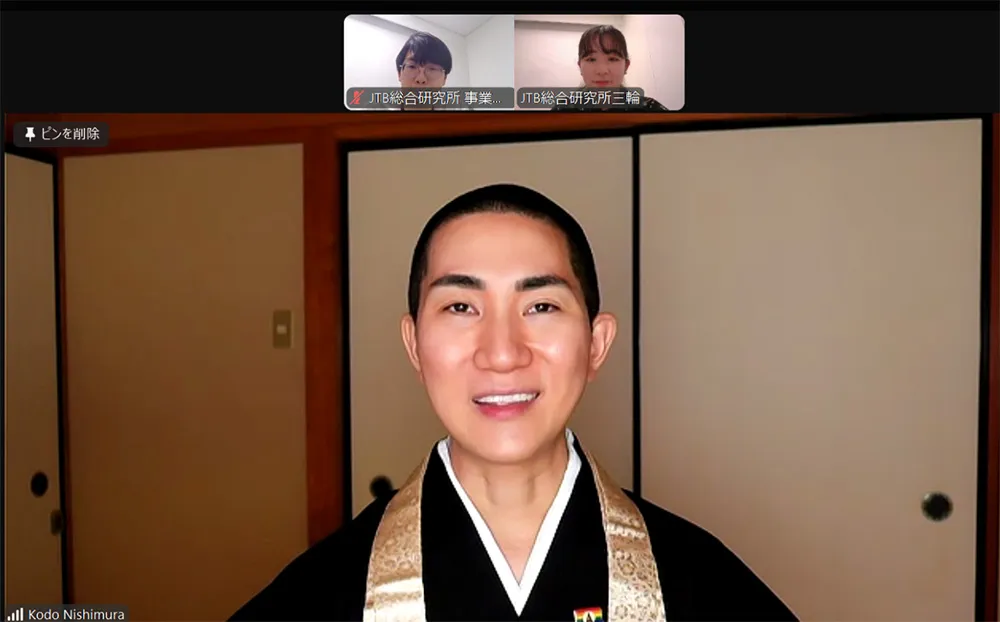
What I discovered on this expedition was Nishimura-san’s sincere approach to every single thing. Whether it was working on being able to articulate why she dislikes something—a lesson from her mother—dealing with insensitive remarks from those around her, or exploring the hidden contexts behind the places she visited, it is precisely because Ms. Nishimura approaches everything in her daily life with such care and attention to detail that she is able to find her true self and move people’s hearts through her own experiences. We were also deeply moved by her warm and kind-hearted nature, as evidenced by her going out of her way during the interview to change from her T-shirt into her priestly robes just so we could take a screenshot.
著者













