
An Interview with Egyptian Archaeologist Michinori Oshiro: What Travel Will Look Like Five Years Ahead
What does Michinori Oshiro, one of Japan’s few Egyptologists, see as the essence of Japanese identity through the lens of Egyptology? In this column, with the aim of identifying future trends in tourism and travel and capturing signs of change (i.e., the seeds of new tourism), we present “Exploration Reports” (i.e., interview transcripts) featuring leading experts from a variety of fields beyond just the travel industry. For this installment, we spoke with Michinori Oshiro, who has long specialized in Egyptian archaeology and currently serves as a professor in the Faculty of Letters at Komazawa University. In addition to his teaching duties, he shares the allure of ancient Egypt through various media, including television appearances, book writing, and YouTube videos.
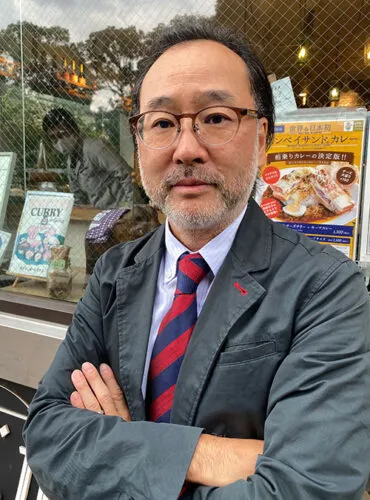
Professor at Komazawa University. Completed his doctoral program in History at the Graduate School of Letters, Kansai University. Completed his studies in Egyptology within the Department of Ancient History and Archaeology at the University of Birmingham, UK. Appointed as a full-time lecturer in the Department of History, Faculty of Letters, Komazawa University, specializing in Foreign History, in 2003. Assumed his current position in 2014. Ph.D. (Literature). Has participated in excavation surveys in Egypt, as well as at the Palmyra ruins in Syria and the Pompeii ruins in Italy.Major publications include *Ancient Egyptian Civilization: The Origins of World History* (Kodansha), *Voices from the Dead: Ancient Egypt* (Kawade Shobo Shinsha), *Illustrated History of the Pyramids* (Kawade Shobo Shinsha), *Egyptian Mythology: Gods and Humans—Stories of Magic, Adventure, and Revenge* (Yoshikawa Kobunkan), and many others.
My Journey into Egyptian Archaeology and Where I Am Now
Explorer Squad: What sparked your interest in Egyptian archaeology, Mr. Oshiro, and led you to become a researcher and university professor?
Mr. Oshiro: When I was a child, my family only ever watched sports or documentary programs on TV. Because of that, I often watched programs about history and Egypt even back then. Also, my father was fond of “buried treasure” stories and owned many books on the subject. Growing up in that environment, I’ve loved history since I was a child. I also enjoyed reading for its own sake and read many of the books we had at home. Time passed, and when I entered university, I had the opportunity to think about what career I wanted to pursue. At that point, I thought about jobs involving writing books, such as being a novelist. While I wanted to write a book someday, I was also interested in Egypt and the Incas, so I chose a university that had a professor of Egyptian history and enrolled there. As I continued my research at university, I became interested in the profession of researcher or university professor, where I could delve deeply into the subjects I loved. To be honest, the fact that university professors get summer and winter breaks was also quite appealing (laughs). Since then, I’ve built my career by studying abroad and participating in fieldwork overseas as a researcher, which has brought me to where I am today.
Explorer Squad: I imagine you’re currently active primarily as a university professor, but what kind of work have you been focusing on recently?
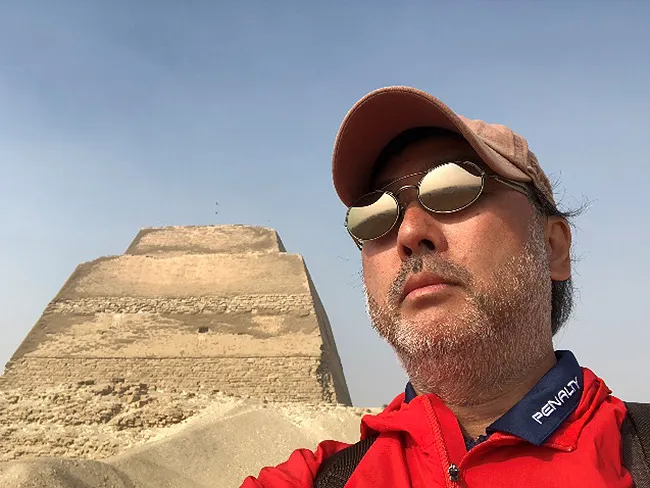
Mr. Oshiro: I currently have two main focuses. One is Egyptian studies. At times, I visit the field up to four times a year to conduct archaeological excavations and surveys. The other is writing books. As I mentioned earlier about wanting to become a novelist in the future, I’ve been writing a lot of books lately. I mostly write academic and research books, but recently I’ve also been writing essay collections and books geared toward entertainment. Another area I’m focusing on is creating content on YouTube. I do this to unwind, communicate with students, and increase the number of applicants to the university. Oh, and I also teach classes at the university every week without fail (laughs).
"Japanese Characteristics" Revealed Through Research on Egypt
Explorer Squad: From here on, we’d like to ask you in detail about your research on Egypt. I imagine you’ve traveled to Egypt and other field sites dozens of times for research. Is there anything that particularly stands out in your memory from those trips?
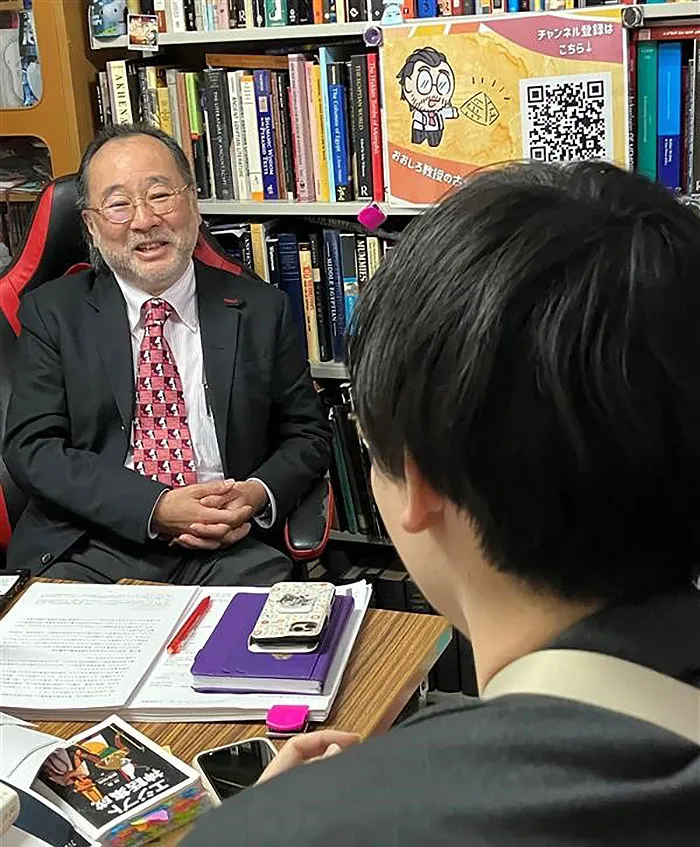
Mr. Oshiro: I found the “way people interact” fascinating. Every year, I go to the same place for the same research and talk to the same people. Through that, I noticed that the way the locals treat me, a Japanese person, is completely different from how they treat researchers from other countries. That’s because the locals have a very positive impression of Japanese people. Egypt, in particular, is a country with a high level of respect for Japan—they’ve even adopted the Japanese school education system. I was curious about why they had such a positive impression of Japanese people, so I once asked a local for the reason. They told me, ‘Japanese people talk to us as equals. People from other European countries won’t even eat at the same table with us. But Japanese people will eat at the same table and talk with us.’ Hearing that, I realized for the first time the characteristic of Japanese interpersonal behavior known as ‘meeting people at eye level.’
Explorer Squad: The differences in “how people interact” are very interesting. So, Mr. Oshiro, is there anything in particular you pay attention to when communicating with local people?
Mr. Oshiro: First, I visit the site repeatedly and make a point of greeting people. In the Arab world, greeting people is the absolute foundation. Repeating this over and over helps them remember your face, name, and personality, which in turn builds trust. In ancient Egyptian research, there are many things that require permission. For example, areas within archaeological sites are off-limits to the general public. To gain access to such places, earning the trust of the local people is more important than anything else. That’s why it’s so crucial to visit the site repeatedly and have face-to-face conversations. It’s also important to go along with whatever the other person suggests. If they ask if I’d like some tea, I’ll have some. If they ask if I’d like to ride a motorcycle, I’ll give it a try. I make a conscious effort to adapt to the other person as much as possible. And I try to speak in the local language, even if it’s just a few words. I don’t know if they’re happy to hear it or if they think I’m suspicious (laughs). However, even if it’s just a greeting, learning the local language and making an effort to communicate tends to help build trust to some extent.
Explorer Squad: Listening to your story, I realize that while academic skills are certainly necessary for fieldwork abroad, communication skills are equally important. Considering your relationships with local people, what do you think is the true appeal of Egyptology, Mr. Oshiro?
Mr. Oshiro: I think the real thrill of Egyptology is, of course, the pyramids. Even after all these years, the construction methods haven’t been fully elucidated, and there are still so many mysteries, which makes it a worthwhile field to study. I also find it fascinating to consider the commonalities between Egyptian and Japanese cultures. For example, the belief in an afterlife and the concept of “Nirai Kanai” (a concept of the afterlife found in Okinawa and the Amami Islands, where the world of the dead is believed to lie beyond the sea) also exist in Egypt. I also think a major commonality is that a polytheistic spirit lies at the root of their way of thinking. In modern Egypt, the majority of people practice Islam (a monotheistic religion), but in ancient Egypt, many people were polytheists. Even now, after the shift from polytheism to monotheism, many people still approach life with the belief that the gods are watching over them in various situations. That is why I believe Japanese people can understand ancient Egypt better than Westerners, and I conduct my research while keeping these shared perspectives with Japanese people in mind.
The Changing Nature of Travel and Its Unchanging Value
Explorer Squad: Here, we’d like to focus our discussion on travel. What are the characteristics of travel in both ancient and modern Egypt?
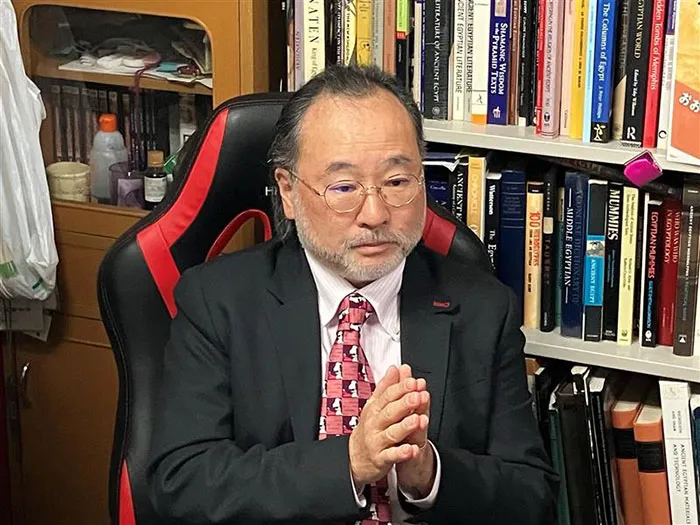
Mr. Oshiro: Actually, Egypt has been a tourist destination since before the Common Era. The ancient Greeks and Romans traveled to Egypt for tourism. Then, from about 100 years ago up to the present, it flourished as a winter resort for Europeans, particularly the British. Additionally, early Christianity remains in Egypt, and there are numerous holy sites associated with it. Today, many people visit as a place of pilgrimage. In addition to these unique tourist attractions, most Egyptians today can speak English—not because they want to, but because they cannot run a tourism business without it. This shows just how closely Egypt has been tied to the tourism industry. So far, we’ve discussed tourism from outside Egypt, but it’s believed that domestic tourism among Egyptians has existed since ancient times as well. In ancient Egypt, there was a god named Osiris, the god of the afterlife, and even back then, Egyptians made pilgrimages to Osiris’s tomb. I’m not sure if the concept of “travel” existed in ancient Egypt, but activities such as families taking long trips certainly did, and I believe faith was the motivation behind them.
Explorer Squad: So Egypt has been a tourist destination since ancient times. Mr. Oshiro, as a scholar of Egypt, what do you think is the appeal and essence of travel?
Mr. Oshiro: I think the appeal of travel lies in the fact that “you never know what will happen.” Whether it’s people, things, or places, I find it fascinating how you end up stumbling upon new encounters without even realizing it. The trip that left the deepest impression on me was to Syria when I was a graduate student. When you hear “Syria,” you might think of war, but at that time, it was a very peaceful country—and above all, a country overflowing with hospitality. When I went to meet local researchers, they would invite me into their homes even though we’d just met, or even arrange lodging for me. There were even times when they let me stay inside a temple. I think the appeal of travel lies in the fact that you can build your own community through these encounters with people. Also, during my trip to Syria, I happened to meet a fellow Japanese traveler. While I was conducting research at the Palmyra ruins, I spotted a Japanese man sketching the site and decided to strike up a conversation. Since it’s extremely rare to meet a Japanese person in Syria, we decided to grab a meal together. These kinds of encounters are something you don’t get on group tours; I believe they happen precisely because I’m traveling alone. We’re still friends today—someone I met in a desert overseas has become a lifelong friend. I think it’s precisely these unexpected encounters that are the true thrill of travel, especially when traveling alone. That’s why I tell students to go travel on their own.
Explorer Squad: Finally, Mr. Oshiro, what do you think travel should look like five years from now?
Mr. Oshiro: I believe more Japanese people should travel abroad. There are many things you only realize or come up with when you see things firsthand, meet local people, taste local food, and smell the local atmosphere. However, when I ask students these days if they have a passport, almost none of them do. One reason Japanese people have been hesitant to travel abroad in recent years is, of course, the COVID-19 pandemic, but I also think it’s because Japan is simply too comfortable to leave. Given that, when I think about how to encourage Japanese people to travel abroad, I believe it’s necessary for countries to actively share information with Japanese travelers, and for travel agencies to gather that information and deliver it to consumers. I hope that intermediaries like travel agencies—which connect local destinations with travelers—will create many opportunities that inspire people to want to travel abroad. By facilitating this flow of people, I believe a positive cycle should emerge exactly five years from now: “Travel abroad → Experience the local culture → Gain new insights → Want to go again → Travel abroad once more.”
The “Seeds” We Discovered on This Expedition
From Mr. Oshiro, who has long studied ancient Egypt, I learned what it means to be “Japanese.” Understanding what lies at the root of our Japanese way of thinking will help us establish a foundation to which we can return—even when we feel lost in an increasingly globalized society. And to that end, the encounters and exchanges that travel brings will be of great help. Furthermore, according to Mr. Oshiro, with a large-scale exhibition on ancient Egypt scheduled to be held in Japan in 2025, there is a possibility that an “Egypt boom” will return. Why not take a peek into the world of ancient Egypt as a first step toward viewing ourselves objectively?













