
An Interview with Fashion Designer Jun Nagai: What Travel Will Look Like Five Years Ahead

What does Ms. Nagai, a fashion designer active in a wide range of fields, think about the emotions and lives of people connected through clothing? In this column, with the aim of understanding future trends in tourism and travel and identifying signs of change (i.e., the seeds of new tourism), we present “Exploration Reports” (i.e., interview transcripts) featuring leading figures from various fields beyond just the travel industry. This time, we spoke with Jun Nagai, a fashion designer who not only “creates” clothing but also focuses on “connecting” people through it.
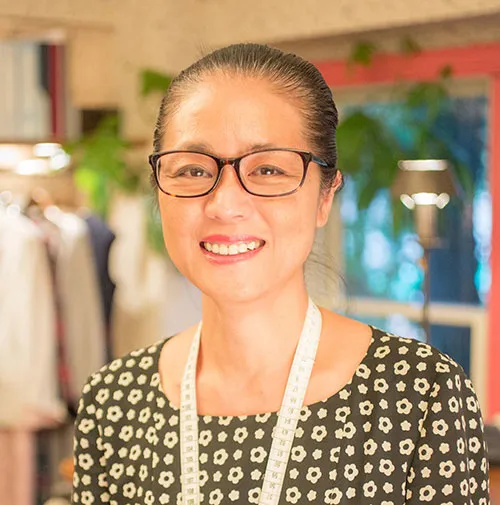
Paris Fashion Week designer. Owner and designer of "Saint Odin," a bespoke brand based in Nishi Ward, Osaka. Currently active as the founder of "from clothes," a sustainable brand that recycles vintage clothing from a bygone era—often left unused in closets—and passes it on to younger generations.
The career I’ve reached after years of working as a designer
Explorer Squad: What inspired you to become a fashion designer, Mr. Nagai?
Ms. Nagai: Since I was good at drawing from a young age, people often told me, “Shouldn’t you go to art school?” One day, I happened to see a Seibu Department Store commercial on TV. I was really drawn to the tagline “I love the mysterious,” created by Shigesato Itoi, and the design that brought that tagline to life—what’s known as “graphic design.” That’s what sparked my desire to become a graphic designer, so I studied that field. I was looking for a job where I could apply that knowledge, so I took an exam for a public relations position at an apparel company and was hired. But to my surprise, on my first day, I was assigned to the men’s fashion planning department instead of public relations. Since I’d never studied fashion before, I started from scratch—wondering, “Is there really that much design involved in men’s fashion? What am I supposed to do here?”—and basically learned about fashion on the job. After that, I left that apparel company and continued working as a freelance designer while traveling back and forth between the U.S.—a place I’d always admired—and Japan.
Explorer Squad: I was surprised to hear that you didn’t initially aspire to be a fashion designer. You’re currently thriving with your bespoke brand, “Saint Odin”—could you tell us how that all began?
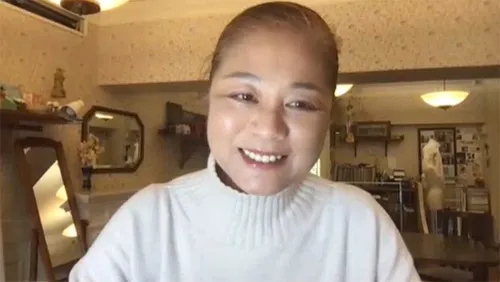
Ms. Nagai: Around 2000, when I was working as a freelancer, the only clothes that sold were extremely casual items. I often heard people say, “Jackets and suits are too stuffy,” even when it came to work attire. However, there simply weren’t any high-quality casual clothes available at the time. Even when I went to buy a suit myself, I couldn’t find a single “good piece” that was comfortable to wear and made me look good. That’s when I decided to make designing suits my life’s work. With the help of about 200 testers over the course of a year, I finally had a solid plan and launched “Saint Odin” in 2001. While creating suits and jackets for working women, I steadily expanded the range of designs, incorporating floral patterns and soft fabrics. We received many repeat orders from customers, and requests for different colors or materials of previous designs increased, so now almost all our products are made-to-order. Originally, we only carried women’s clothing, but when couples or families visited, husbands would often say, “If you have such great fabric, I’d like you to make something for me too.” As a result, we now carry both women’s and men’s clothing. The manufacturing methods and the artisans who create them are completely different for men’s and women’s wear. Since I had to study pattern design on my own, it took about six years before we could begin offering men’s clothing.
Clothing that connects people’s thoughts and lives to the future
So there were various challenges behind the establishment of the “Saint Odin” expedition team. On another note, Ms. Nagai, you also serve as the representative of “from clothes,” a brand that delivers unworn clothes to their next owners along with their stories. What inspired you to start that?
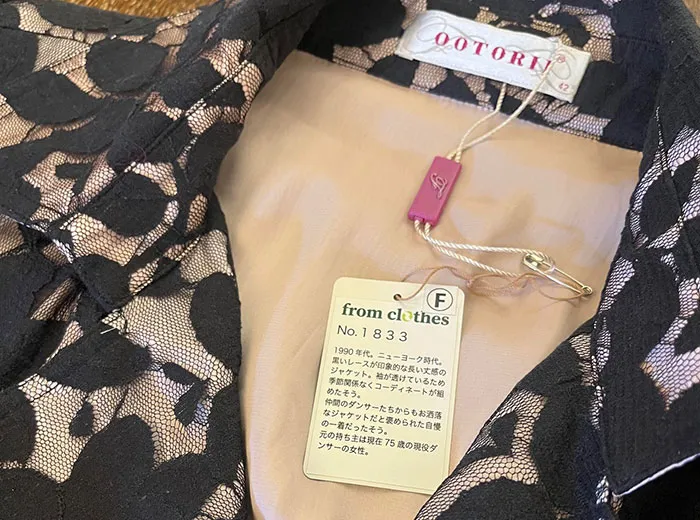
Ms. Nagai: When I was a freelancer, I used to design desperately, trying to create things that would be trendy and sell well the following year. To make trendy products, you have to mass-produce them. At the time, my best-selling item was a jumper skirt—I sold 30,000 of them. That means I must have produced over 30,000 pieces, and the several thousand that didn’t sell had to be incinerated. It was a heart-wrenching experience to see the designs I’d poured my heart into being incinerated. As a creator, I wanted to create something new, but I felt torn. Around that time, a customer at Cent Odin approached me, saying, “I have a lot of my mother’s clothes at home, and I’d like you to do something with them.” When I visited her home, I found a room about 8 tatami mats in size where clothes that wouldn’t fit in the closet were hung along the entire length of the wall. As I sorted through them, I listened intently to all the stories behind the clothes—things like, “This is a cherished piece I bought with my first paycheck,” or “I bought this for my first trip with my husband.” I realized how hard it must be to part with them, so I decided to take custody of those clothes. After that, I received about three similar requests in quick succession, and my studio was soon filled to the brim with the clothes I’d taken in. Around that time, I had the opportunity to have student volunteers come help out. When I showed them the clothes I’d collected and shared the stories behind them, they said things like, “These are really nice clothes,” “They’re so cute,” and “I really relate to those memories.” So, I invited the students to help me host a sale, and we ended up selling about 30 items. I thought that if there are clothes deemed unwanted on one side, but people who want them on the other, maybe I could serve as a bridge between them. That’s why I established the brand “from clothes” in 2021. We’ve just entered our fourth year.
Explorer Squad: It must be so heartwarming to know that clothes you once cherished are passing into someone else’s hands and being cherished all over again. Among the clothes you’ve collected, Ms. Nagai, are there any stories that have particularly stuck with you?
Ms. Nagai: Everyone has their own memories tied to their clothes. No two pieces I’ve received have the same story—it really makes me realize that there are 100 different lives for every 100 people. When the next person wears a garment that has walked alongside someone else’s life, that person’s past gives you a boost. I think that’s why everyone can relate to it. For example, there was a music producer whose job is to launch musicians across various genres. He couldn’t fit all his clothes in his home, so he rented a storage unit, and I received about six boxes of clothes from there. Since their work takes them to all sorts of events, I received a truly wide range of clothing—from dresses to T-shirts to jeans. When I spoke with them, they shared stories behind each piece: “The dress a musician I produced wore for their very first concert,” or “The jeans I wore when it was unbearably hot during a trip to Africa.” Hearing these stories, I was struck by the incredible power of clothes that have walked alongside each person’s life. Until now, I’d just been creating clothes, but when I hear stories through them, I can understand the kind of life each person has lived. And I really feel that this world is made up of all kinds of people.
Explorer Squad: The idea of connecting people’s thoughts and lives through clothing is truly wonderful. For customers who purchased items from “from clothes,” if they no longer need the clothing, do you pass it on to the next person?
Ms. Nagai: I tell our customers, “Please bring it back when you stop wearing it.” I hope the stories of the previous owner will overlap with those of the new buyer, and that the history of the garment will continue to accumulate. It might not fall apart during my lifetime, but if it eventually does, and are eventually disposed of with the thought, “Many people wore this garment and had happy times. Thank you,” I think the clothes themselves would be happy too. Until now, I’ve simply been making clothes, but from now on, I want to create them not just by making them, but by holding onto the hope of how they’ll be used and what I hope they’ll become after they’re made. By doing so, I think both the way they’re made and the way they’re used will change from what they’ve been until now. I’d be happy if more designers like that emerged.
Both clothes and travel can connect waves of happiness
Explorer Squad: Do you think the idea that clothes connect thoughts and lives applies not only to clothing but also to travel and other forms of creation?
Ms. Nagai: I think it’s the same with travel. I often visit art galleries and museums in Paris for work. For example, the exhibits at the Louvre are constantly changing. It’s like, “That was supposed to be here before—where did it go?” Through experiences like this, I think we can effectively convey to people planning to visit, “It used to be like this, but maybe it will change,” or “There are other ways to enjoy it.” Especially with travel—you’re always going to places you’ve never been before. Since the number of places we can visit in our lifetime is limited, I think it’s crucial for those who’ve been there to convey that joy to the next generation of travelers.
Explorer Squad: It would be great if we could convey the appeal of these places to the next generation of travelers. Mr. Nagai, do you travel outside of work? Do your travel experiences influence your future designs and way of thinking?
Ms. Nagai: I love being in nature, so I go to places with lots of it and relax at the hotel. I often sleep by the pool, head to the beach with a glass of wine, and just lounge around reading a book (laughs).I try not to think about work, but my eyes just keep wandering. I catch myself thinking, “Oh, so that’s the kind of swimsuit she’s wearing.” Japanese people tend to worry about their figure when wearing a swimsuit, don’t they? But Europeans—no matter how overweight they are, or even if they’re grandmothers—still wear bikinis. I’ve really come to think that’s the kind of way I want to age. I think we’re heading toward an era where that kind of freedom will become more common.
Explorer Squad: I also long for that kind of free lifestyle. Finally, Ms. Nagai, what do you think your travels will be like five years from now?
Ms. Nagai: I think the future will be one where we can travel anywhere even more casually than we can now. Given global situations like conflicts, it might actually become harder to travel in some cases, but I believe that as more people find happiness through travel, those waves of happiness will spread. I’d be happy if, as more people—including those within Japan—keep venturing out into the world, those waves of happiness could reach people and places that are currently struggling.
The “Seed” We Found on This Expedition
What I discovered on this expedition was that clothing can connect people’s feelings, lives, and happiness. Reusing clothing isn’t just about caring for the environment; it’s a baton that passes on memories and emotions to the next owner. Similarly, in travel, by inheriting the experiences of those who came before us and building upon our own experiences, we can create even better journeys.
著者













