An Interview with Environmental Consultant Teppei Sagawa: What Travel Will Look Like in Five Years

What does environmental consultant Teppei Sagawa envision for a future where marine conservation and tourism coexist? In this column, we present “explorations” (interviews) with leading experts from various fields—beyond just travel—with the aim of identifying future trends in tourism and travel, as well as spotting signs of change (i.e., the seeds of new tourism). In this installment, we spoke with Teppei Sagawa, an environmental consultant based in Okinawa, about the current state of the marine environment and conservation efforts. We explore the future of tourism from Mr. Sagawa’s perspective, which seeks harmony between nature and human society.
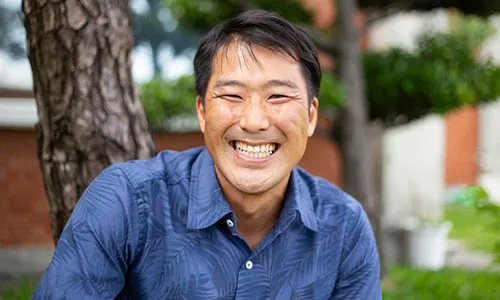
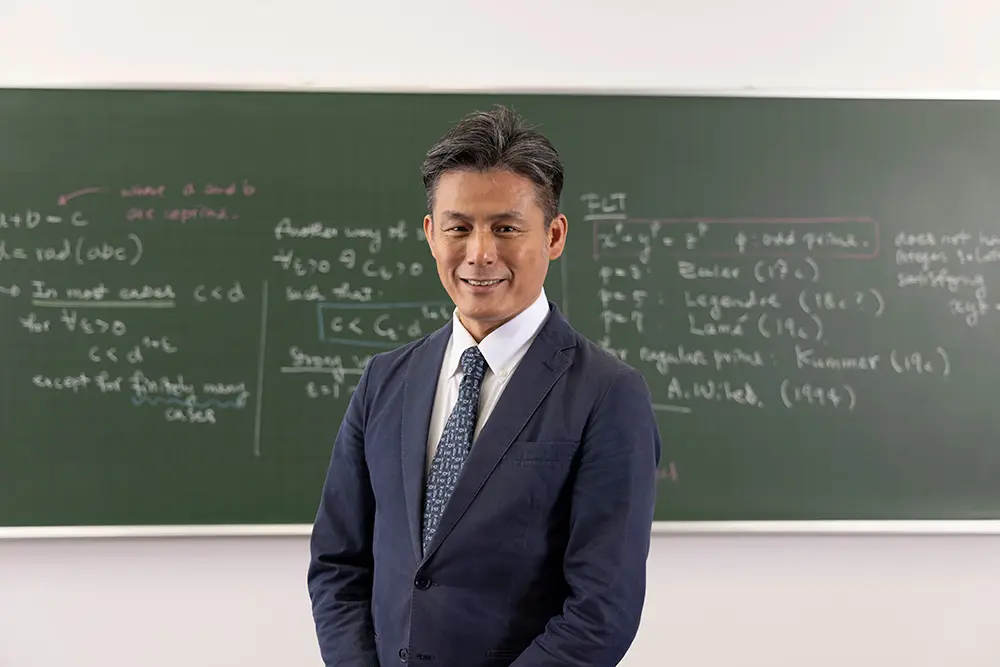
Born in 1979 (Showa 54). Native of Suginami Ward, Tokyo. Section Chief at the Okinawa Environmental Science Center (a public interest incorporated foundation).Certified Professional Engineer (Environment, Construction, and General Engineering Management). Withdrew from the doctoral program at the Graduate School of Science and Engineering, University of the Ryukyus (Marine Ecology). After working on coral reef monitoring at the Coral Reef Conservation Research Center of WWF Japan and as a diver conducting biological surveys of coral reefs in Okinawa Prefecture, he is currently active as an environmental consultant specializing in coral reefs.
How I Became an Environmental Consultant
Explorer Squad: First, could you tell us what sparked your interest in the marine environment?
Mr. Sagawa: My interest in the ocean stems largely from my childhood memories of spending summers with my uncle. He would often take me—a city kid—on overnight trips to the seas around Chiba and Sado Island. We’d have fun snorkeling, and being in the ocean just felt so good that I gradually grew to love it. As I grew to love the ocean and became interested in marine life, I learned that I could study marine biology at the University of the Ryukyus when I was considering my college options. I also felt that since I was going to go away to college anyway, I might as well go far away, so I decided to study at a university in Okinawa.
Explorer Squad: I see. So those experiences and what you learned back then have led to your current work.
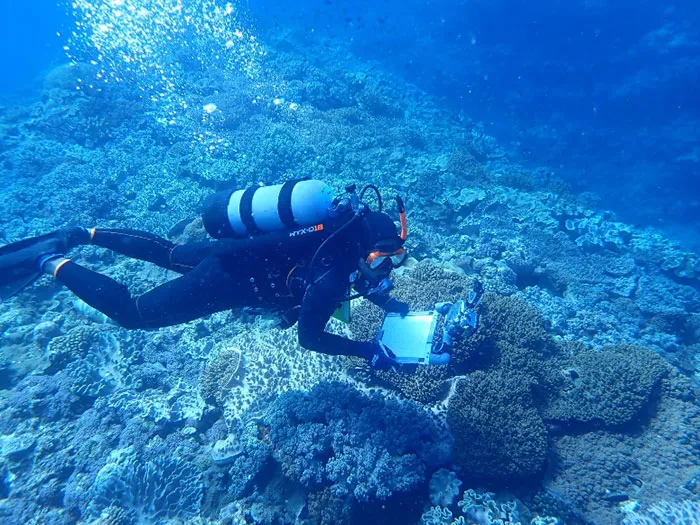
Mr. Sagawa: Yes, that’s certainly true. I came to Okinawa when I was 18 to start college, and since I’ve been here ever since, I’ve actually lived in Okinawa longer than anywhere else. At university, I studied coral reef organisms and their ecology. After graduating, I joined a nature conservation organization and was involved in coral reef conservation activities on Ishigaki Island. That period was a valuable time for me to seriously consider what I could do to protect the local environment. After that, at the invitation of a senior colleague, I moved to an environmental survey company, where I was responsible for biological surveys of coral reefs as a diver. It was a lot of fun to dive in the coral reef waters so often while gaining even more experience. After spending about 10 years on Ishigaki Island, I returned to the main island of Okinawa and began working as an environmental consultant.
Explorer Squad: As an environmental consultant, what specific work do you do? Please tell us about your daily duties.
Mr. Sagawa: Primarily, we receive commissions from government agencies and local governments to conduct natural environment surveys within Okinawa Prefecture, formulate environmental conservation plans, and implement countermeasures. For example, as part of projects commissioned by the Ministry of the Environment and the Nature Conservation Division of Okinawa Prefecture, our role is to propose and implement specific measures to protect the local natural environment. In terms of specific projects, I have been involved in creating Okinawa Prefecture’s Guidelines for the Conservation and Utilization of Biodiversity, the conservation and restoration of the Ishinan Lagoon coral reefs, and natural environment surveys on Miyako Island.
Explorer Squad: Do you ever conduct surveys outside of Okinawa Prefecture?
Mr. Sagawa: Most of our work is within Okinawa Prefecture, but as a team, we also conduct overseas surveys in places like Palau.
Explorer Squad: Palau! I’m so jealous!
Regarding the Marine Environment in Recent Years
Explorer Squad: Given all the marine surveys you conduct, could you tell us about the current state of the marine environment?
Mr. Sagawa: The current state of the marine environment is extremely dire. In Okinawa in particular, coral bleaching—primarily caused by rising sea temperatures due to climate change—is occurring frequently. Coral reefs serve as habitats for many marine organisms, and if they are lost, the fish that depend on them will decline, leading to a reduction in fishery resources. This also has a significant impact on the local economy.
Explorer Squad: We often hear about coral bleaching in the news. I dive myself, and I’ve seen coral reefs where the entire area has turned white. On the other hand, I’ve heard that because sea temperatures are rising, the range of coral species is gradually shifting northward. What kind of changes are occurring globally?
Mr. Sagawa: It is true that rising sea temperatures are believed to be allowing corals to thrive in northern regions. However, for other marine life, such as fish, to inhabit these areas, the corals must form a reef. Yet, even if corals are present, they do not necessarily form a “coral reef,” and it takes time for them to develop into a reef.Each region has its own way of life and livelihoods—such as fishing—that are adapted to its specific natural environment. Even if coral does move northward, I think it would be quite difficult for the people in those regions to adapt to that change immediately.
Explorer Squad: So, you’re saying there’s a lack of balance between the rapid environmental changes and the way people have traditionally lived?
Mr. Sagawa: I think so.
What I Value as an Environmental Consultant
Explorer Squad: I believe that cherishing the local way of life and culture is crucial for environmental conservation. Are there any specific examples of initiatives you’ve undertaken?
Mr. Sagawa: One good example is the interpretation (*1) plan on Ishigaki Island. For this project, we collaborated with local residents to create a plan that connects the natural environment with people’s daily lives.Ishigaki Island is a national park. However, while in other countries it’s clearly defined that “this area is a protected zone,” in Japan’s national parks, the protected areas and the areas where people live aren’t always clearly separated. Given that context, we developed a plan that balances “conservation” and “daily life.” This “daily life” also includes visitors.
*1 Educational activities that introduce the appeal and value of a region’s nature, history, and culture, helping visitors gain a deeper understanding
Explorer Squad: I believe interpreters (*2) will play a key role in this effort. What kind of people will be taking on this role?
*2: Individuals who conduct educational activities to introduce the appeal and value of the region’s nature, history, and culture, helping visitors gain a deeper understanding
Mr. Sagawa: We aim for local residents to each take on the role of an interpreter. This plan isn’t just about conveying information to tourists; we also want local residents and families to share an appreciation for the natural environment with one another. For example, by having a grandfather share the region’s history and natural attractions with his grandchild, we hope to instill a sense of pride in the younger generation and encourage them to want to be active in the local community in the future.Of course, we also aim to help tourists go beyond just visiting and gain a deeper understanding of the region’s nature and culture. Under
this plan, we intend to create stories that say, “Did you know this exists?” and share them with both local residents and visitors. We believe this will help us rediscover the region’s appeal and lay the groundwork for preserving it.
Explorer Squad: Gaining a solid understanding of the region’s natural resources, culture, and history—and then sharing that knowledge—sounds like it would foster a sense of pride in our own community.
Mr. Sagawa: That’s right. I hope that when visitors come to experience life in harmony with nature, they’ll be able to share what they’ve learned about our region.
Explorer Squad: From the perspective of visitors, environmental conservation and tourism may seem to be in conflict at first glance. What are your thoughts on tourist visits?
Mr. Sagawa: It’s true that tourism and environmental conservation may seem to conflict at first glance, but I believe they can actually coexist. Tourism is a vital industry for Okinawa, so it’s important to build a relationship where tourism and environmental conservation benefit each other.
Explorer Squad: What specific initiatives are you currently undertaking?
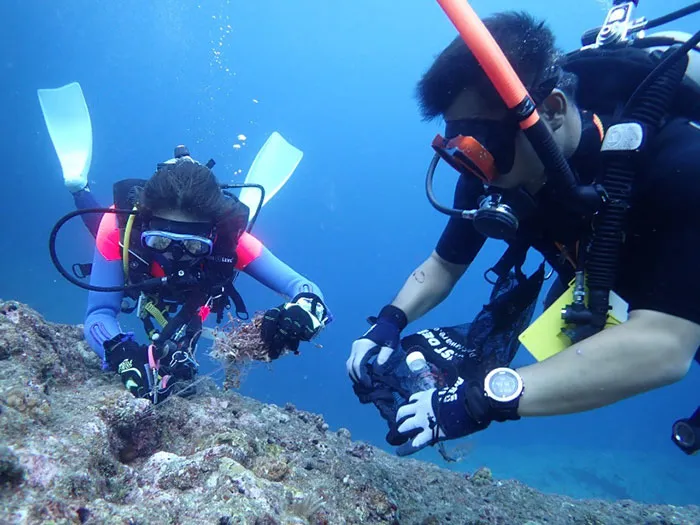
Mr. Sagawa: We are collaborating with diving shops on an initiative called “Okinawa Coral Guardian” to cultivate divers with a strong environmental consciousness. The impetus for starting this program came when we were exploring new forms of tourism as part of a Cabinet Office project. During that process, we were considering initiatives centered on environmental conservation and wondered if we could create a program that engages with Okinawa’s nature from the perspective of diving. Around that time, I had the opportunity to work with a local diving shop, and they told me about PADI’s (a diving education organization) “Dive Against Debris” program. This is a specialty course where divers learn about marine debris and safely collect trash underwater. When I heard about it, I thought, “This is it!”
We created a program that leverages scientific insights, allowing participants to enjoyably learn about coral reefs and their ecosystems while actively engaging in environmental conservation. I was deeply moved by how strongly everyone who participated cared about the marine environment—far more than I had anticipated.
On the Future of Travel That Blends Nature Conservation and Tourism
Explorer Squad: Do you think we’ll see more of these kinds of trips that blend nature conservation and tourism in the future?
Mr. Sagawa: Yes, I really love the term “Nature Positive.” Throughout our lives so far, we’ve heard nothing but news about the loss of nature and biodiversity, haven’t we? But “Nature Positive” aims for the exact opposite. In other words, it’s a philosophy of creating a world where biodiversity becomes richer as time goes on. If
this vision becomes a reality, living a long life will become something to look forward to. After all, you’d be able to actually feel nature becoming more abundant with each passing year. Of course, I think there are various challenges to making this a reality, but I believe it’s important to hold onto this vision.
Explorer Squad: It would be wonderful to see a scene where there are even more fish around the coral reefs than there were last year.
Mr. Sagawa: Yes, I think tourism offers many opportunities to contribute to this “nature-positive” vision. I believe the desire to “protect this scenery even a little because I love it so much” or “get involved in some way” is crucial, and I think travel can create many such opportunities.
Explorer Squad: We also need tourist destinations and tourism operators that can turn those feelings into action.
Mr. Sagawa: I hope we enter an era where tourism that values sustainability advances further, and where tourists choose destinations and operators committed to environmental conservation—and I believe we’re already moving in that direction. I look forward to the development of systems where tourism contributes to improving the natural environment, and to tourists themselves understanding that value and making informed choices. I want to aim for a future where tourism benefits both local communities and the natural environment.
The “Seeds” We Found on This Exploration
From Mr. Sagawa, who is actively engaged in a wide range of activities as an environmental consultant, I learned the importance of deeply understanding and sharing local nature and culture when considering nature conservation. The “Nature Positive” concept envisions a future where nature flourishes over the long term and demonstrates the potential for tourism to be a part of that. This will give rise to a new style of travel that benefits both local communities and the natural environment. Why not be among the first to embark on such a journey?
著者