
An Interview with Biologist Takehiko Kobayashi: What Travel Will Look Like Five Years Ahead

Can Traveling Make People "Happy"? What Does Mr. Kobayashi, a Biologist with a Diverse Career, Suggest About How We Should Live in the Future, Based on His Reflections on "Death"? In this column, with the aim of identifying future trends in tourism and travel and capturing signs of change (i.e., the seeds of new tourism), we present "Exploration Reports" (i.e., interview transcripts) featuring leading experts from various fields beyond just the travel industry. This time, we spoke with Takehiko Kobayashi, a biologist who researches lifespan and aging and continues to share his insights on a wide range of topics, including the death of living organisms, human aging, and human happiness.
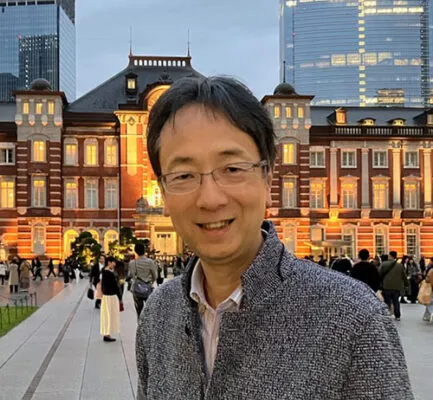
Born in Kanagawa Prefecture in 1963. He graduated from Kanagawa Prefectural College of Foreign Languages High School (now Yokohama International High School) and earned a Ph.D. in Science from Kyushu University. After working at the National Institute for Basic Biology, the Roche Molecular Biology Research Center in the United States, the National Institutes of Health in the United States, and the National Institute of Genetics, he became a professor at the Institute of Quantitative Life Sciences, The University of Tokyo (Genome Regeneration Research Division, Center for Life Dynamics).He has served as President of the Japanese Society of Genetics and Representative of the Federation of Biological Sciences Societies. He is currently a member of the Science Council of Japan. He devotes himself day and night to research aimed at elucidating the mechanisms of genome regeneration (rejuvenation) that sustain the continuity of life. He has a deep love for the ocean and theater. His publications include the best-selling *Why Do Living Things Die?* (Kodansha Gendai Shinsho) and *98% of DNA Is a Mystery* (Blue Backs). His recent works include *Why Are Humans the Only Ones Who Cannot Be Happy?* (Kodansha Gendai Shinsho).
Until the Discovery of the "Death Program" Embedded in Genes
Explorer Squad: What kind of research are you currently working on, Mr. Kobayashi?
Mr. Kobayashi: I specialize in biology and study lifespan and aging. For example, turtles live about 60 years and cranes about 40—lifespans are generally fixed depending on the species. If we can identify the genes that determine lifespan and understand their nature and how they function, we might be able to extend human lifespans. My social goal is to extend healthy human lifespans amid a declining population. Personally, I just love biology, so I’m researching all sorts of things (laughs).
Explorer Squad: That’s very important research for helping people live as healthily as possible in an aging society. Why did you decide to become a biologist in the first place, Mr. Kobayashi?
Mr. Kobayashi: I was originally a total creature geek. I was also an insect-loving kid. Even now, my hobby is catching creatures like hermit crabs from ocean tide pools and observing them for about a week. When you live with them, you start to understand their “thoughts” and way of life. While many biologists primarily study organisms other than humans, I approach biology from the perspective of “humans as one of many living organisms,” which includes humans in my research. By doing so, I can understand what it means to be “human” through the similarities and differences with other organisms. At first, I just loved living things and studied only non-human organisms, but the more I studied biology, the more I wondered, “Why are humans like this?” My interest gradually shifted to humans themselves—to human aging, human happiness—and I began to think about, research, and share my findings.
Explorer Squad: So your research originally began out of an interest in organisms other than humans. What were the first similarities and differences you noticed between humans and other organisms?
Mr. Kobayashi: I study DNA and genetics. I research things like how DNA damage leads to cancer or how accumulated damage causes aging, and the material I used most was yeast. Yeast is almost always present on the surface of grapes and strawberries, and it’s also used in the fermentation process for making wine, bread, and soy sauce. Most single-celled organisms divide indefinitely as long as they have nutrients, so they often have no fixed lifespan. But even though yeast is a single-celled organism, it does have a lifespan. It dies after dividing about 20 times—it lives for about two days. We sometimes use mice in research, but since they live for about two years, it takes two years to see the results. Yeast, with its short lifespan and immediate results, is ideal for aging research. Previously, while conducting research on repairing damaged DNA in yeast, I discovered a mutant strain with a broken gene that lived an unusually long time. If having a broken gene extends lifespan, then one would live longer without that gene in the first place. I wondered why it would carry a gene that hinders longevity, so I investigated. Yeast has a total of 6,000 genes, but strangely enough, if you disable about 200 of them, the organisms actually live longer. We discovered that mice and humans, just like yeast, have genes that limit lifespan. You might think that living longer would be better because you could have more children. But that’s just human imagination; I began to realize that there is actually a strictly defined “program of death”—the idea that we “age and die”—built into our genes.
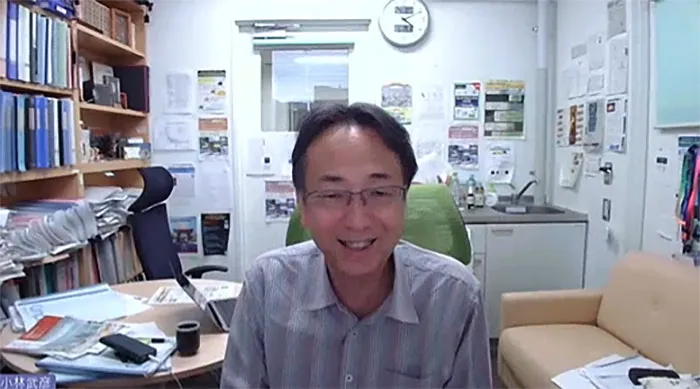
"Why Do Organisms Die?" from a Biologist's Perspective
Explorer Squad: What exactly does it mean that death is programmed from the very beginning?
Mr. Kobayashi: Whether it’s a baby starting to walk, beginning to speak, going through puberty, or having their voice break—regardless of ethnicity or gender—everyone grows (changes) at roughly the same timing. In the same way, even after turning 30, age-related changes continue to occur. People often think of aging as something breaking down, but when you look at gene expression profiles, there are genes that are expressed at ages 44 and 60 regardless of gender—it’s exactly like the developmental process when humans grow. Aging is clearly an extension of development; it is not a process of things breaking down. Ultimately, the genes that cause the organism to die are expressed, and life comes to an end. In other words, if we consider that life is programmed to end in death, our perspective on living changes. Yeast has taught me that living while acknowledging the inevitable end of life—a goal we cannot resist—is likely the correct way for us to live. From an evolutionary perspective, it was probably advantageous for organisms to be programmed to die. As individuals, we continue to age. But babies start at age zero, regardless of their parents’ age, don’t they? All living things undergo a reset—in other words, rejuvenation—during generational turnover. This rejuvenation is the “key” that sustains the continuity of life. And death, too, has a proper meaning; we had to die for the sake of evolution. We can see that only those things that experience death have evolved and exist here today.
Explorer Squad: So aging isn’t simply a matter of genes breaking down. Up to what age is the genetic program programmed to last?
Mr. Kobayashi: Actually, the original human “immortality program” ends around age 55. Until then, through the process of evolution, most people are designed not to get sick or die. Most people don’t die until they’ve had and raised children in their youth. This is the same for our relatives, the chimpanzees and gorillas. Only humans cannot raise children with just the parents, so we are evolutionarily protected until the age of grandparents—those with lifespans longer than 55 years. And once we pass what’s called our “healthy life expectancy,” it feels like we’re living in a state of uncertainty. I think this is heavily influenced by individual effort and luck. By the way, the group with the shortest life expectancy in Japan is single men, with an average lifespan of about 67 years. Genetically, they’re no different from married men, so the cause must lie in lifestyle habits and the like. Everyone on the Explorer Squad should be careful, too (laughs). This is strictly a biological perspective. We’re trying our best to extend our healthy life expectancy.
Explorer Squad: We really do need to watch our lifestyle habits (laughs). Currently, there are many living organisms on Earth, all coexisting. As humans evolved, were the evolution and diversity of other organisms also necessary?
Mr. Kobayashi: Living organisms have almost no reason for their own existence. In short, even if you search for the meaning of your life or your purpose, biologically speaking, you exist purely by chance—the fact that you are human, or that you are a woman or a man, is also a matter of chance. But you are necessary to other people. Whether as a parent to someone, a reproductive partner, a member of a group, or even as food for someone else—you are absolutely necessary. In other words, we are “mutually altruistic beings.” Diversity is the source of our existence, and various organisms need one another. Even organisms that seem unrelated might, in the grand scheme of things, serve as food for us or provide us with a habitat. That is why we must cherish diversity.
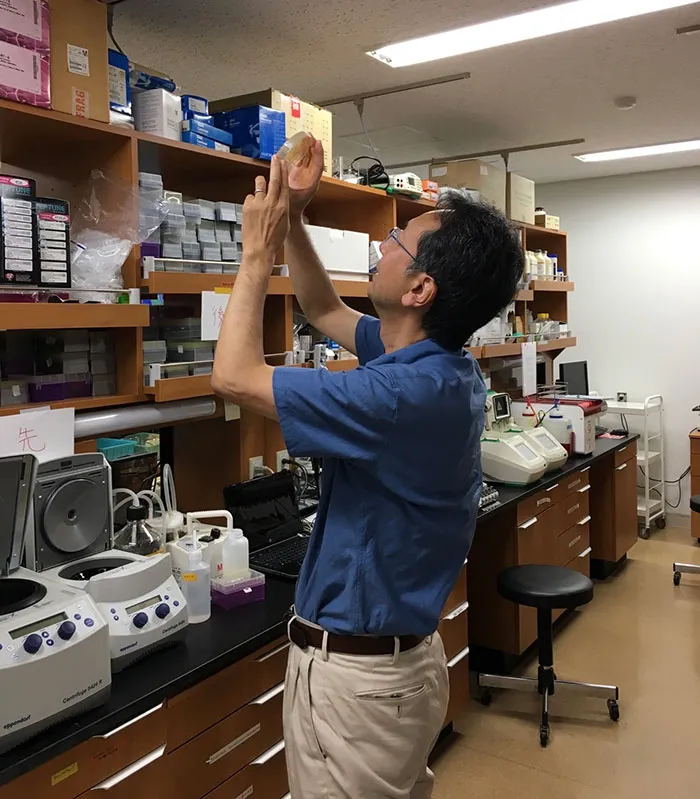
What is “death” from a perspective other than biology?
Explorer Squad: I found the phrase “mutually altruistic beings” very convincing. So far, we’ve heard about “death” from a biological perspective. Biologically, I think “death” is defined as the death of the brain or the body, but if we include concepts like “the death of a culture,” what exactly is “death”?
Mr. Kobayashi: That’s a difficult question. Biologically speaking, we can say a person is physically dead when the heart stops and brain waves drop to zero. As I mentioned earlier, living beings are “mutually altruistic entities.” So, if the people around them are thinking about them, carrying on their will, and doing things in their memory—if they feel that person isn’t dead—then perhaps that person isn’t truly dead. “Death” is something we can’t actually determine at that very moment. It’s only later, looking back, that we realize, “Oh, they were dead at that time.” If we try to reconcile “physical death” and “cultural death,” I think one way of looking at it is that “death” is something we only realize in hindsight—that it happened at that moment.
Can People Find “Happiness” Through Travel?
Explorer Squad: Thinking about it that way, perhaps the timing of “death” varies from person to person. From here, I’d like to shift the topic slightly and ask you about travel. Do you travel often, Mr. Kobayashi?
Mr. Kobayashi: I love traveling. Since I’m a researcher in experimental science, I’m often glued to the lab, but when I’m on business trips, I use the gaps between flights to stop by various places. For example, I once toured the Louvre in 60 minutes and viewed the Mona Lisa in 30 seconds. In a way, having less time might actually allow you to focus more intently (laughs).My usual trips aren’t so much about touring tourist spots as they are about attending events or visiting people. I also enjoy seeing various living creatures wherever I go. I always make sure to visit zoos and botanical gardens.
Explorer Squad: As someone who loves living things, discovering various creatures at your destination is certainly interesting. From a biological perspective, is travel necessary for humans? In your book *Why Only Humans Can’t Be Happy*, I believe you defined “happiness” as “a state in which one maintains a distance from death.” One could argue that travel involves leaving one’s home to go to a new place—which entails risk and brings death closer. What are your thoughts on that?
Mr. Kobayashi: I think it’s exactly the opposite. I believe traveling actually increases the distance from death. Humans evolved from apes while on the move, so we’re optimized for a lifestyle of migration and mutual support among our peers. Therefore, staying in one place might actually bring us closer to death. It’s hard to say definitively which carries greater risk—staying in one place or moving—but throughout history, humans have chosen to move and adapt to new environments. We’ve survived by using our curiosity and wisdom in the process. It’s said that in the 10,000 to 20,000 years since humans began settling down, the cerebral cortex has shrunk by 5 to 10 percent. I suspect this is because, by settling down, we no longer encounter environments that force us to survive, leading to a decline in our ability to think and survive. We have become so reliant on technology that we can no longer survive on our own without it. When we try to adapt to unfamiliar environments, parts of our brain and physical abilities that we don’t normally use are activated, so I believe travel is essential for our survival.
Explorer Squad: So, stimulating the brain and body through travel keeps us further from death and brings us closer to happiness, right? Given this situation, what do you think travel will look like five years from now?
Mr. Kobayashi: First, regarding overseas travel, these days you can see everything through the internet and Street View, can’t you? In the past, we only had postcards and books, so we’d use those as an introduction to fuel our imagination, then actually go there and be moved by the real thing. Now, we skip right past the introduction and see the main event, so it’s not as exciting as it used to be. People’s curiosity isn’t what it used to be, and I think we’ll increasingly need experiential travel—visiting people, or engaging with local customs and ways of thinking. Since communication has become easier with automatic translation devices, I think it would be good to gradually increase cultural exchange—not just observing, but participating, conversing, and building connections. As for domestic travel, I believe that regions and various communities will become increasingly important in the future. As I mentioned earlier, humans are “mutually altruistic beings,” and biologically speaking, we have almost no value as individuals; we live by relying on others. That is precisely why I think maintaining relationships with people will be crucial going forward. It’s good to belong to communities outside your place of residence, or even to your own family home. I also think it’s a good idea to embark on a journey to find a “second home” that serves as a spiritual anchor. You could travel to a place where you feel at ease as a repeat visitor, building relationships with local people until you feel you belong to the community. And if you can find a place that feels like a second hometown—a place where you might even think, “I could die here”—I believe that would bring happiness as you face a long retirement.
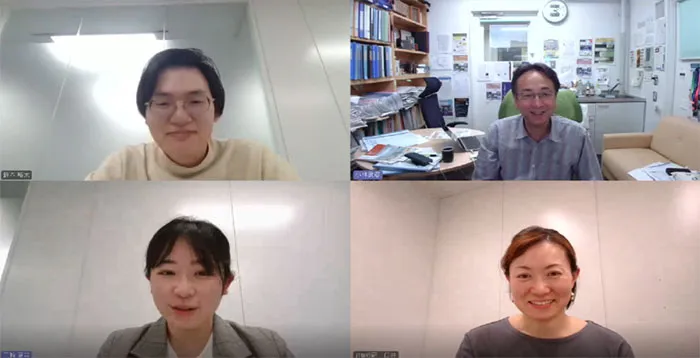
The “Seed” I Found on This Exploration
What I discovered on this journey was “happiness” viewed through the lens of death. “Death” is by no means a negative thing; from a biological perspective, it is a necessary part of the evolutionary process. We live and die for others. Within that context, travel is one of the things we humans can do to find “happiness.” Amid our busy daily lives, why not pause for a moment to reflect on what it means to live (which is to walk toward death) and consider a way of life that brings us happiness?
著者













