
An Interview with Floral Designer Hiroyuki Kikukawa: What Travel Will Look Like Five Years Ahead
What does Hiroyuki Kikukawa—a university lecturer and floral designer—think “connection” through flowers means? In this column, with the aim of identifying future trends in tourism and travel and capturing signs of change (i.e., the seeds of new tourism), we present “Exploration Reports” (i.e., interview transcripts) featuring leading experts from a variety of fields beyond just the travel industry. In this installment, we spoke with Hiroyuki Kikukawa, who researches and teaches about agriculture and rural society as a university lecturer while also creating numerous works as a floral designer.
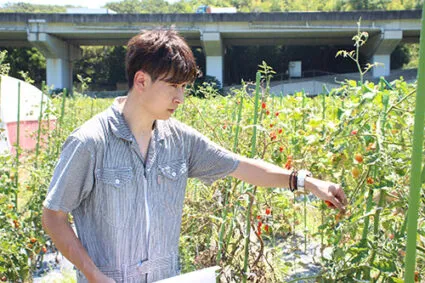
Born in Hyogo Prefecture in 1989. Lecturer in the Faculty of Contemporary Society at Kobe Gakuin University. Certified Level 1 Floral Designer, Advanced Horticultural Therapist, Environmental Counselor, and Technical Support Specialist for Agriculture-Welfare Collaboration. Completed coursework for a Ph.D. in Agricultural Sciences at the Graduate School of Agricultural Science, Kyoto University (Ph.D. in Agricultural Sciences). After working as an agricultural high school teacher and a curator for the Tamba City Board of Education, he assumed his current position in 2022.While teaching about rural communities and agriculture at the university, he is also active as a floral designer and horticultural therapist.
High School Days That Led to the Present
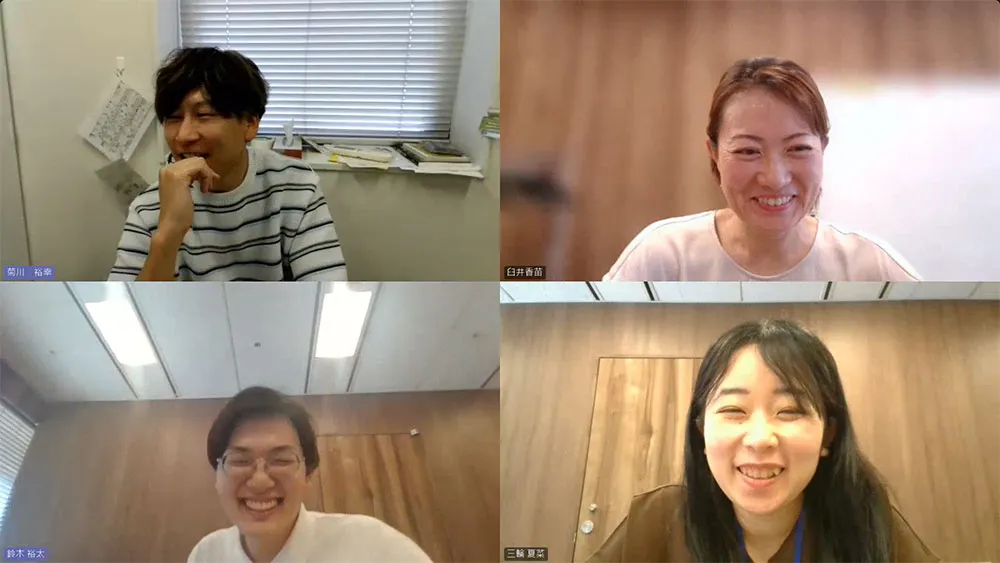
Explorer Squad: Thank you for joining us today. First, could you tell us a bit about your background and what your current job entails?
Mr. Kikukawa: To start with my background, I graduated from the Faculty of Agriculture at Okayama University and taught at an agricultural high school in Hyogo Prefecture for about eight years. After leaving high school teaching, I taught at a junior college for just one year, then joined the Board of Education in Tamba City, Hyogo Prefecture, where I worked as a curator helping to establish a new museum. At the same time, I was conducting research on abandoned bamboo forests at Kyoto University’s graduate school. Once the museum launch project was completed, I began working as a lecturer at Kobe Gakuin University in 2022—my current position—and earned my Ph.D. in 2024. At the university, I primarily teach courses related to agriculture and rural communities. I’m also active as a floral designer and horticultural therapist (a specialist who helps improve physical and mental well-being by utilizing plants and nature).As a floral designer, I not only create arrangements but also serve as an instructor for floral design workshops held across the country. Just the other day, I conducted a workshop in Iwate Prefecture. By the way, that means I’ve now visited all 47 prefectures (laughs).
Explorer Squad: Conquering all 47 prefectures! That’s amazing! What inspired you to pursue agricultural research and become a floral designer, Ms. Kikukawa?
Mr. Kikukawa: Neither of those reasons was particularly noble (laughs). My interest in agriculture stemmed from the fact that I hated studying. Even so, since I’d always loved nature and plants, I chose an agricultural high school. Once I enrolled, I saw that the teachers were having so much fun while teaching. Witnessing that scene made me think, “I want to become an adult like that too.” So, while studying in the Faculty of Agriculture at university, I also took teacher training courses and eventually became a teacher at an agricultural high school. As for becoming a floral designer, it was because I wanted to be popular with women (laughs). I started floral design and flower arranging back in high school, but unlike today, I was the only man competing in the flower shows and contests I entered back then. I thought, “I’ll be popular with women here! I’ve got this!” and started, but I haven’t reaped any benefits from that in the past 20 years (laughs).
The Passion for Local Communities and Floral Culture That Breathes Life into His Work
Explorer Squad: Could you tell us what points you keep in mind or what principles you value when creating your work as a floral designer?
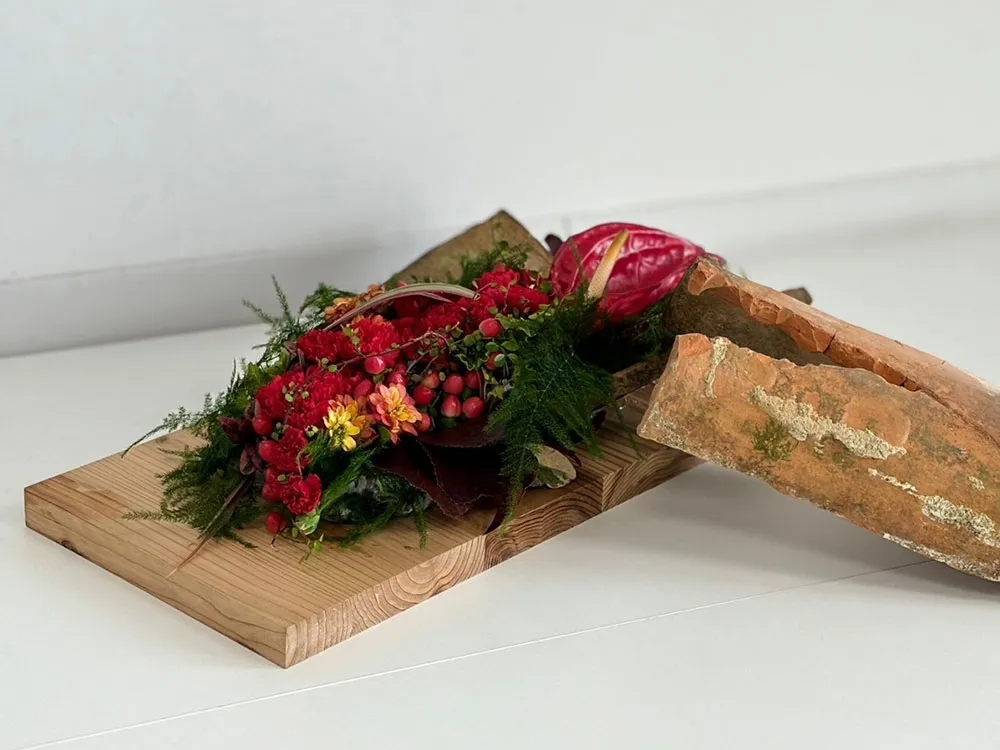
Mr. Kikukawa: I try to incorporate as much of the local culture as possible, such as flowers native to the region and traditional local crafts. For example, when I went to Okinawa to create a piece, I used scrap Ryukyu roof tiles and a plant called dracaena that grows there. The reason I focus on this is because I want local flower growers—and by extension, the local flower industry—to survive. After all, flowers are not a necessity but a luxury item. Consequently, the flower industry itself is unstable due to factors such as the fact that flower consumption is heavily influenced by economic conditions and that sales are largely limited to specific periods like Mother’s Day. Compounded by the current trend of population decline in rural areas, the shortage of producers is becoming severe, and if this continues, there may be regions where flower producers disappear entirely. In the worst-case scenario, we could even see the disappearance of floral culture from these regions. Not wanting that to happen, I incorporate local flowers and culture into my designs to help raise interest in the region’s floral culture, even if only slightly, and to contribute to increasing producers’ sales.
Explorer Squad: So, out of a sense of crisis regarding the decline of local flower culture, you’re incorporating “local character” into your designs. Where do you get the themes and design ideas for your individual works?
Mr. Kikukawa: That would have to be travel. I get a lot of inspiration from visiting museums in the places I travel to and seeing the local history and traditional crafts. I also sometimes refer to in-flight magazines I see on planes. Occasionally, they feature special sections on flowers. I draw ideas from those and think, “I’ll try using this in my next workshop.” While I sometimes seek out themes for my work on my own, I also create pieces based on specific requests. In those cases, I first ask for local specialties to be sent to me so I can gain a deeper understanding of the region. The piece I mentioned earlier that uses Ryukyu tiles is a good example of this.
The Future of Floral Design
Explorer Squad: What is the reason Ms. Kikukawa has continued working as a floral designer for nearly 20 years while also holding other jobs, such as teaching at a university?
Mr. Kikukawa: It’s because I find flower arranging enjoyable and therapeutic. As a floral designer, it’s difficult to survive in this industry unless you keep creating new works, enter contests, and win awards. While there are many challenging aspects to the job, flower arranging itself is a lot of fun and serves as a great way to unwind.
Explorer Squad: Listening to you so far, I’ve noticed the terms “flower arrangement” and “flower design” come up. What is the difference between the two?
Mr. Kikukawa: I don’t think there’s a major difference between flower arrangement and flower design. “Flower arrangement” has a strong connotation of “assembling” (i.e., arranging) and refers to the act of arranging flowers itself. On the other hand, “flower design” refers to the work performed by a flower designer. In short, there isn’t a significant difference between flower arrangement and flower design.
Explorer Squad: Thank you. Getting back to our earlier point, you mentioned that flower arrangement is enjoyable and therapeutic—do you think the flowers themselves have those effects as well?
Mr. Kikukawa: I believe flowers themselves have a soothing effect, and I think this is because they possess the ability to stimulate the five senses. Visually, there is the diversity of colors and shapes; tactilely, the texture of the materials; olfactorily, the scent of herbs; auditorily, the sound of leaves rustling in the wind; and, although taste is generally less prominent, flowers contain many elements that stimulate these five senses. I believe that it is precisely because these senses are stimulated and activated that people are able to experience healing. I also believe that flowers have the ability to evoke memories. The appearance and scent of flowers have remained essentially unchanged throughout history. Therefore, when you come into contact with a flower, it is easy to recall memories associated with that particular flower from the past. Using that as a starting point, you can also recall various memories from before and after that time. I believe that immersing oneself in nostalgic memories also leads to healing, so from that perspective as well, I believe flowers have a healing effect.
Explorer Squad: Ms. Kikukawa, in your work as a floral designer, have you ever felt the power that floral design possesses?
Mr. Kikukawa: Some time ago, I ran a program called “Flower Bento Boxes,” where a group of people collaborated to create a single piece for residents of temporary housing in a disaster-affected area. One of the challenges of living in temporary housing is that, because people from such diverse backgrounds are gathered together, it’s difficult to form a community. We received feedback that this program helped people become acquainted with one another and sparked conversations. To begin with, when people try to build relationships from scratch through one-on-one conversations, they inevitably feel nervous and stressed. Furthermore, for disaster victims, the psychological and physical stress they are already carrying is immeasurable. Even in such cases, using flowers as a medium can create a common topic of conversation and foster communication. In other words, I believe flower design has the power to “connect people.”
Explorer Squad: Flower design has the power to connect people. I found that to be a very interesting perspective. So, what do you think will be required of future flower designers?
Mr. Kikukawa: What will be required of future floral designers ties into the horticultural therapy work I’m currently engaged in. This is because I believe future floral designers will also be expected to fulfill a role in social welfare. As the population decline accelerates, it’s inevitable that opportunities for flowers as luxury items will decrease, and I think the value of the floral designers who handle them may decline as well. I believe that flower designers will be expected to do more than just arrange flowers; they will be called upon to “design people’s health and connections through the act of flower arranging.”
Coincidence and Connection
Explorer Squad: Finally, I’d like to ask Mr. Kikukawa about his thoughts on travel and tourism. Do you ever travel in search of flowers yourself?
Mr. Kikukawa: In the past, I used to visit flower growers in person, where they would show me various varieties and teach me how to grow them. Recently, however, my trips have mostly been for lectures and other business engagements. That said, even when I’m on business trips, I make a point of experiencing the local flowers, plants, and culture, thinking about how to incorporate them into my work. If I have time, I also try to visit the growers.
Explorer Squad: So you place great importance on communicating with flower growers. Do you apply the knowledge you gain from those interactions to your work?
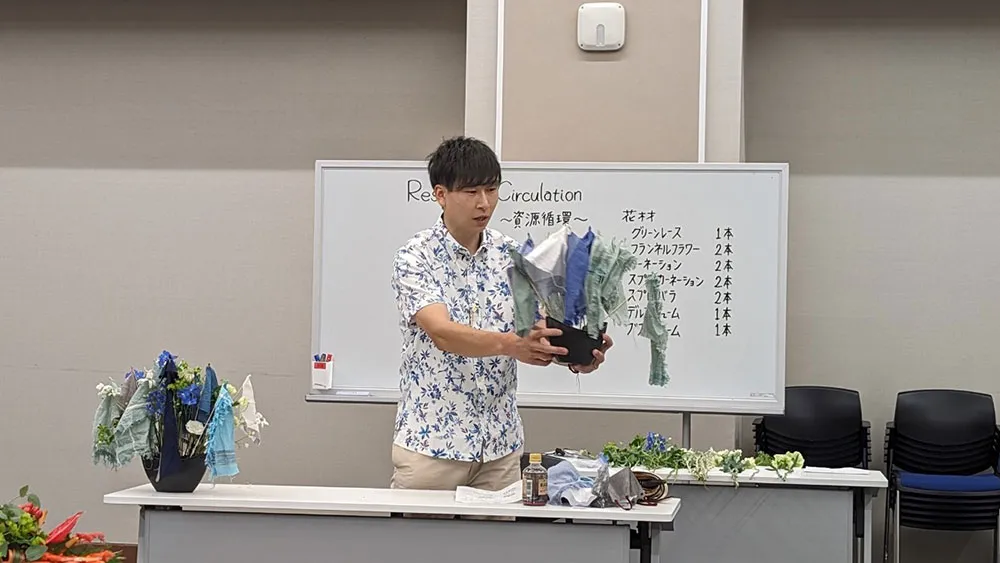
Mr. Kikukawa: Rather than applying it to my own work, I tend to use it more in my workshops. Many workshop participants don’t know what kinds of flowers are grown in their own local areas. So, during the workshops, I share information about local flowers and where they’re sold. I also hope that this will help increase flower consumption in the region, even if just a little.
Explorer Squad: You mentioned that you’ve visited all 47 prefectures. Based on that experience, what do you think is the essence of travel?
Mr. Kikukawa: There’s a phrase I really like—one the former president of my current university used to say often—called “planned coincidence.” I think travel involves deciding in advance, to some extent, where you’ll go and where you’ll stay; in other words, it’s “planned.” On the other hand, encounters with people on the ground and the knowledge you gain there are “coincidental,” aren’t they? The knowledge I gained from the conversations with producers I mentioned earlier is a good example of that. I travel looking forward to those “coincidences.” That’s why I think the essence of travel lies in encountering “coincidence.”
Explorer Squad: Finally, Mr. Kikukawa, what do you think travel should be like five years from now?
Mr. Kikukawa: I hope that while we cherish “chance encounters”—the essence of travel—we also place importance on the “connections” born from them, even if they are tenuous, as long as they endure over time. Perhaps it’s because of the work I do, but I strongly feel that it is thanks to the people working hard in rural areas that those of us living in urban areas can survive. That is precisely why I hope that people will form relationships with these regions and care about them, even just a little. That connection to the region doesn’t have to be anything concrete at first—it’s fine if it’s just a vague feeling. I hope that when they eventually travel there, they’ll be able to build a stronger bond. And the best way to build that connection is through communication with the local people. I myself visited Kesennuma, Ishinomaki, and Onagawa about a year after the Great East Japan Earthquake. The connections I made with the people I met back then are still going strong, and I try to visit at least once a year. Looking back on it now, I think travel five years from now will begin with the connections we’re making today.
The “Seeds” We Found on This Expedition
From Ms. Kikukawa’s talk—which covered not only floral design but also relationships with people and the nature of society—I strongly sensed her deep commitment to “connection.” In recent years, with the establishment of systems like the “hometown tax” and “dual residency,” I believe an environment where we can create “connections with travel destinations” is gradually taking shape. At the same time, I feel we also need to think about “connections with where we live.” It might seem abrupt, but why not take a moment to wonder: What kind of flowers are planted in front of the station, and who tends to them? That might just be the starting point for forging a new “connection with where you live.”













