
An Interview with Environmental Musician Masafumi Komatsu: What Travel Will Look Like Five Years Ahead

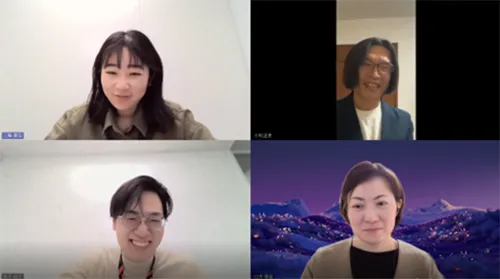
In this column, with the aim of identifying future trends in tourism and travel and capturing signs of change (i.e., the seeds of new tourism), we present “Exploration Reports” (i.e., interview transcripts) featuring leading experts from a wide range of fields beyond just the travel industry. In this installment, we spoke with Masafumi Komatsu, an environmental musician and soundscape designer who works in research, education, and spatial design with a focus on sound.
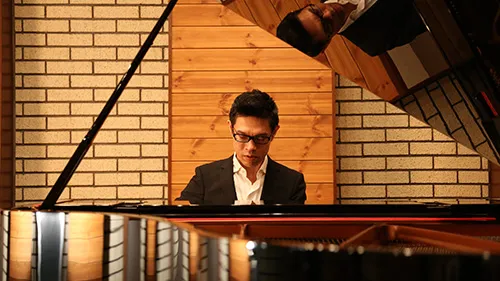
Born in 1971 in Miyazu City, Kyoto Prefecture. Graduated from the Faculty of Agriculture at Meiji University (specializing in Agricultural Civil Engineering and Landscape Architecture). Completed the Master’s Program in the Graduate School of Agriculture at Meiji University (majoring in Agricultural Economics). Completed the Master’s Program in the Graduate School of Music at Kyoto City University of Arts (majoring in Composition). Completed the Doctoral Program in the Graduate School of Engineering at Osaka University (majoring in Environmental Engineering). Ph.D. (Engineering). Focusing on “sound” beyond just music, he applies it to education, academia, and design. His academic specialties are psychoacoustics and soundscape theory. He produces background music and ambient music, and also performs on the piano. He has provided music and served as music director for numerous video productions.He also designs sound environments for public spaces such as Kyoto Tower, the Kyoto International Manga Museum, the Kyoto Tango Railway, and Mibara General Hospital. He conducts unique “sound education” workshops across Japan designed to sharpen auditory and bodily senses. Professor, Faculty of Digital Media, Kyoto Tachibana University (to be appointed in April 2026).
The Journey That Led Me to My Current Work with Sound
Explorer Squad: Mr. Komatsu, what kind of work do you do as an environmental musician and soundscape designer?
Mr. Komatsu: I have two concepts in mind: “Be” (who I want to be) and “Do” (duty). I place great importance on deepening the “Be” aspect. To truly explore my own characteristics and the things I love, sound was absolutely essential. Sound acts as a hub connecting various fields and genres, doesn’t it? My specialties are psychoacoustics, environmental psychology, and composition—fields with tremendous potential—but I’ve been wondering how best to develop them. I spend my time exploring this through research, education, and practice, hoping to share my ideas along the way. I also taught at Kyoto Seika University for 25 years. Originally, I was involved in humanities fieldwork, conducting social surveys with students, and I taught classes that dealt with the realm of the senses. Personally, I play the piano and compose music; I’ve always pursued music as a hobby and as a form of self-expression within the “Be” realm. As I was delving deeper into this, I was offered an opportunity at another university just as a new faculty was being established, and starting in April 2026, I will be teaching at the Faculty of Digital Media at Kyoto Tachibana University.
Explorer Squad: You’re involved in a wide range of activities centered on sound—research, education, spatial design, and media. To begin with, why did you start researching sound?
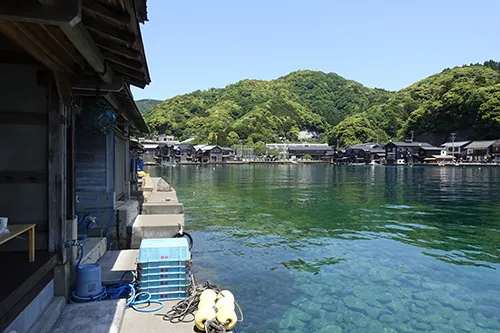
Mr. Komatsu: My hometown is on the Tango Peninsula in northern Kyoto Prefecture, very close to Amanohashidate. I grew up in the village of Funaya in Ine Town, surrounded by the scenery of boat houses lining the bay. In college, I studied in the Faculty of Agriculture, focusing on regional revitalization and landscape engineering. I wanted to use a scientific approach to investigate why the scenery was so beautiful and why my hometown was so appealing. They say that vision accounts for 80 to 90 percent of the information people receive from the outside world, so I started my research there. I conducted surveys on the landscapes of Amanohashidate and Ine Town and wrote a thesis. But something was missing. It was like the final step—or perhaps a sense of real experience—the “Be” part just wasn’t being fulfilled. Later, during my junior and senior years of college, since I’d always loved sound, I thought, “Ah, it has to be sound. ”It felt like because I had been researching landscapes, I wanted to delve one step further into that essential, visceral aspect—and that naturally led me to sound. From there, I began to overlap my research on vision with my research on sound. In graduate school, I moved into environmental psychology and conducted research that approached space, cities, and urban planning from a sensory perspective. Ultimately, I arrived at the conclusion that “sound is one of the elements of spatial design.” So, the progression was from visual landscapes during my undergraduate years, to soundscapes, and then, in my doctoral program, to research that overlapped both.
Explorer Squad: So, in your research, Mr. Komatsu, you place importance not only on hearing but also on sight.
Mr. Komatsu: That’s exactly right. We talk about the five senses, but in reality, we use a fusion of those senses—what’s known as multisensory perception—and we don’t perceive sight and sound as separate entities. They are naturally integrated in our minds, and we perceive space through their interaction. In graduate school, I studied the sound of leaves rustling against each other. You know how being near trees feels pleasant? That sense of comfort comes not only from the visual landscape but also from the sound. If you isolate the sound on its own, it might just sound like noise. But when you hear the sound while looking at the scenery, your vision and hearing interact, making the sound feel pleasant. That’s the kind of research I’ve been doing. For example, experiments have confirmed that urban traffic noise isn’t just visually softened by planting trees; the sound of leaves rustling also acts as a form of psychological masking, reducing the sense of discomfort. That’s why I believe trees are important not only for the landscape but also as a resource for sound.
Creating Natural-Sounding Sounds in Environmental Design
Explorer Squad: I believe you have been involved in sound environment design at over 200 sites so far. What kinds of initiatives have you undertaken at various locations, such as the Kyoto Tower and art museums?
Mr. Komatsu: I originally started playing music purely as a hobby—like the electronic organ I played in elementary school. Around 2002, when I came to Kyoto Seika University, I composed my own piano pieces and even released an album. I had always approached music as a form of self-expression within the “Be” realm. At the same time, I was also engaged in spatial design and research in experimental psychology, but actually, for a long time, these two fields weren’t really connected. The turning point was Kyoto Tower. I liked Kyoto Tower and used to go up there often, but one night when I visited, I intuitively thought, “Something feels off here.” The night view was beautiful, but the sound wasn’t good. The clattering of footsteps on the floor, the street singer’s background music (*Note 1) playing constantly right by my ear, and the sounds of arcade games. All of that was mixed together in that enclosed space, and honestly, I found it unpleasant and thought, “I don’t like this. ”I mentioned to a staff member I knew, “Don’t you think we should improve this a bit?” The following year, coinciding with the 40th-anniversary renovation, I was entrusted with designing the acoustic environment. My approach was to turn the negative into a neutral. I removed unnecessary noise, replaced the vinyl flooring with carpet, and removed the arcade machines. Just doing that made it significantly quieter. To take it a step further, I wanted to add sounds that would enhance the scenery. So I tried playing one of my own piano pieces as a test, and I thought, “Ah, that fits perfectly.” *Note 1: Street Songs: Songs used to memorize the streets of Kyoto (Kyoto Street Songs)
Explorer Squad: What kind of music turns this “zero” into a “plus”?
Mr. Komatsu: It’s hard to put into words, but ultimately, the only phrase that comes to mind is “it doesn’t feel out of place.” When something feels out of place, your sensory receptors kick in, and it usually leads to a negative reaction. People often use background music to create a lively atmosphere, but that’s not the approach here—instead, we create music that mimics the natural composition of ambient sounds. Music is a powerful tool, but depending on how you use it, it can fit perfectly. As a result, even though we only changed the sound, the visual impression improved as well. Since our ears are always open, sound unconsciously influences our other senses too. Through this experience, I felt that musical expression and spatial research had practically come together.
Explorer Squad: So, you’re creating music that doesn’t feel out of place for most people in a space filled with a diverse crowd. Are there any other places besides tourist facilities where you’ve been working on this?
Mr. Komatsu: Lately, it’s been hospitals. At a hospital in Osaka, I composed music to help alleviate anxiety and tension. Currently, I’m working on improving the environment in the Pediatric Intensive Care Unit (PICU) at a hospital in Hyogo Prefecture. In a space filled with mechanical sounds that can feel oppressive, I felt what was needed was a sense of “I’m alive right now. And that’s okay.” So I composed a piano piece designed to improve the flow of air a little, which is played in the morning, afternoon, and evening, as well as at specific times. Sound can be used positively or negatively, but I feel it has the potential to serve as a hub in any setting.

Sound as the final touch that determines the satisfaction of a journey
Explorer Squad: Sound is involved in every aspect of daily life, but I felt it holds great potential for travel as well. Mr. Komatsu, do you travel often?
Mr. Komatsu: Yes, I love traveling. I mostly stick to domestic trips. When I go with my family, it’s often what you might call a retreat. It’s a trip where we take a little distance from reality and seek harmony and tranquility. For example, when I go to Ishigaki Island, which I love, we rent a house and spend four or five days just zoning out. It’s not about moving from place to place; it’s about cherishing what I feel in that specific location. What I’m seeking isn’t so much stimulation as it is multisensory harmony and a sense of renewal. I think this reflects a broader shift in how people travel these days. I’m usually based in Kyoto, a major tourist destination, but if you stay in the same place for too long, you inevitably start to stagnate. In folklore studies, there’s a concept called “Hare and Ke”—the idea that grime inevitably accumulates in daily life. I believe staying in a different environment is crucial for resetting that.
Explorer Squad: So it’s a journey to reset by changing your environment. How do you think travel will look five years from now?
Mr. Komatsu: With economic inequality widening, I think the nature of travel will branch out in many different directions. Some people will take inexpensive trips repeatedly, while others will value retreat-like experiences. But one thing is clear: fatigue caused by digital infrastructure. Since the pandemic, many people have been unconsciously worn out. That’s why the number of people seeking places to reset is definitely growing. Not just trips where you consume events as isolated points, but journeys where you can feel your own personal story within the flow of life. I feel that this trend will accelerate even further in five or ten years. In other words, it seems that journeys that allow us to return to our true selves will become increasingly sought after.
Explorer Squad: In such journeys five years from now, what role will sound play?
Mr. Komatsu: The human brain processes visual information overwhelmingly more, so sound and other senses tend to take a back seat. But I think it’s sound that ultimately determines that final sense of satisfaction. To use a culinary analogy, it’s like that final sprinkle. Just a little salt can completely change the flavor. Sound works the same way—when there are faint natural sounds creating a vaguely reassuring atmosphere, satisfaction levels rise subconsciously. In other words, I think sound is an alchemical tool that can skyrocket satisfaction. If there’s value in that, and if there are places where spaces can be strategically designed around it, people will naturally gather there.
The “Seeds” I Found on This Exploration
What struck me most during this exploration was Mr. Komatsu’s approach to spatial design. He doesn’t just rely on feelings and intuition—he centers his work on a sense of “naturalness”—but he also grounds it in theoretical evidence from experiments and data, balancing both aspects. I feel that sound isn’t something that pushes itself forward; rather, it’s a presence that gently enhances the experience, quietly elevating satisfaction much like the “final touch” of a journey. I believe that this power of sound to connect spaces and people will become a crucial factor in defining the value of travel in the future.
著者













