
Carrying Wooden Barrels into the Future - A Conversation with Yasuo Yamamoto, Fifth-Generation Owner of Yamaroku Soy Sauce: What Travel Will Look Like Five Years Ahead
In this column, with the aim of identifying future trends in tourism and travel and capturing signs of change (i.e., the seeds of new tourism), we present “Exploration Reports” (i.e., interview transcripts) featuring leading experts from a wide range of fields beyond just the travel industry.In this installment, we spoke with Yasuo Yamamoto, the fifth-generation owner of Yamaroku Shoyu, a soy sauce brewery on Shodoshima Island in Kagawa Prefecture that has been in operation for over 150 years and continues to strive to preserve the tradition of wooden barrel fermentation.
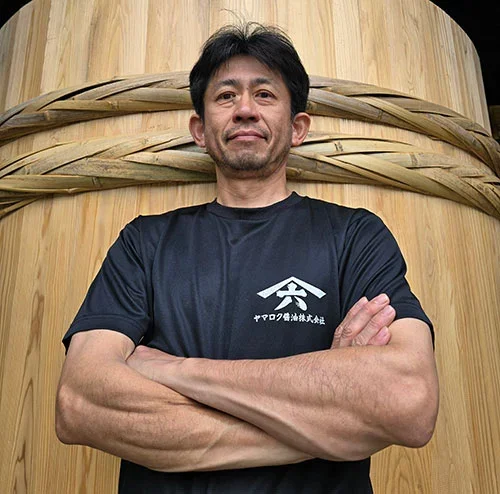
The fifth-generation head of Yamakoku Soy Sauce (Shōdoshima, Kagawa Prefecture). After graduating from college and working in sales at a food manufacturer, he returned to his hometown with the goal of creating products where “you can see the faces behind them.” After taking over the family business, he became a guardian of traditional natural fermentation in wooden barrels, despite facing grueling physical labor and financial difficulties.To preserve the culture of wooden-barrel soy sauce brewing—now practiced by less than 1% of producers nationwide—he taught himself the craft of barrel-making and launched the “Wooden Barrel Craftsman Revival Project.” By engaging a diverse range of stakeholders from across Japan and overseas, he is working to pass on this culinary tradition and create new value.
Why a Soy Sauce Maker Decided to "Make Barrels"
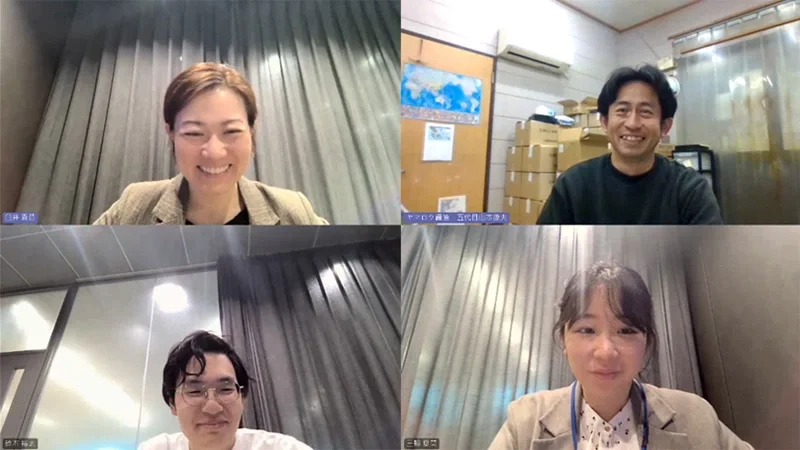
Explorer Squad: Thank you for joining us today. First, could you tell us a little about yourself, Mr. Yamamoto, and how you came to be involved in the Wooden Barrel Craftsman Revival Project, which brings together people from Japan and abroad who are interested in wooden barrel making?
Mr. Yamamoto: We’re a really tiny company on Shodoshima. We don’t have any full-time employees—just a few part-timers. But we have about 90 wooden barrels in our warehouse, and we make all our soy sauce using them. Less than 1% of Japan’s soy sauce production is made in wooden barrels. The old barrels we use are about 150 years old, but if we were to make new ones, they could easily last 100 or 150 years. That’s why there’s no demand, and the craftsmen who make wooden barrels have disappeared.
Explorer Squad: So there was a dilemma: because they last so long, it’s hard to generate new demand.
Mr. Yamamoto: Exactly. Around 2009, when I placed an order for a new barrel with the only remaining barrel maker in Japan at the time—a shop in Osaka—they told me it was the first order they’d received since the war. The second son of the family (who was in his 70s at the time) said to me, “I don’t know how much longer I’ll be able to make these, so make sure you can repair your own barrels.” I realized then that this was a serious problem.
Explorer Squad: That sounds like a pretty urgent situation.
Mr. Yamamoto: Yes. I knew that if things continued this way, wooden barrels would disappear from all over Japan in 50 or 100 years, and I wondered if I could pass the baton to the next generation. I think of tradition as being like a relay race. If you know the relay will end with your generation, you can’t just hand the baton to the next runner and say, “Here you go.” So you’re forced to choose: either take some kind of action, or stop passing the baton (i.e., go out of business). Since I had gotten married, had children, and was starting to think about the future, I chose to take action.
Explorer Squad: Even so, didn’t it take a great deal of resolve for a soy sauce maker to decide to make the barrels themselves? I imagine there were other options, such as switching to non-wooden tanks.
Mr.Yamamoto: Of course, I considered all sorts of options. I even wondered, “If a hundred years from now, ours is the only brewery left with wooden barrels, maybe our soy sauce will sell for a high price” (laughs). Or, since there are craftsmen who make square wooden bathtubs, maybe I could use those as a substitute. But my criteria for making choices in life have always been just one thing: “Is it fun, or isn’t it?” I can’t stick with something that’s simple but not fun, but even if it’s incredibly difficult, if I think “this is fun,” I can keep going. When I applied that standard, I realized that making it myself was the most fun. Plus, soy sauce made in wooden barrels is simply in a different league from the stuff made in tanks—it tastes better. Thanks to the microorganisms that have taken up residence in the brewery, the flavor and aroma are completely different.

A Soy Sauce Maker Builds Barrels: Pursuing Craftsmanship with a 100-Year Vision
Explorer Squad: I imagine barrel-making requires highly specialized skills. How did you learn them?
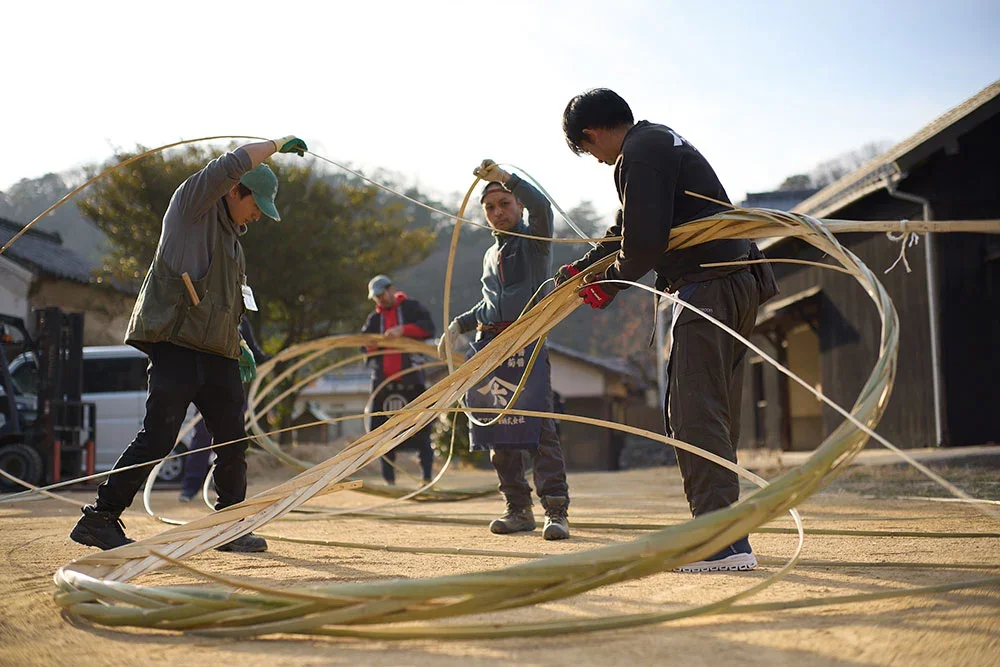
Mr. Yamamoto: I went to learn from a barrel maker in Osaka with a classmate who was a carpenter. We use Yoshino cedar for the barrels, and this wood is quite special. In particular, there’s a layer called the “white line band” between the heartwood and the sapwood. Since this layer has a low permeability to alcohol, we always cut the wood so that this part ends up at both ends of the plank. However, we can only get four planks from a single log. If there are knots, we can’t use them, so just selecting the right material is a huge challenge.
Explorer Squad: Assembling the planks looks difficult too. I heard that the gaps between the planks are secured with bamboo nails.
Mr. Yamamoto: The bamboo nails are there to keep the boards from shifting; they aren’t actually used for securing them. Once the final board is fitted into place, we tighten it securely by tightening the hoops around the perimeter. The traditional techniques of barrel makers are truly amazing, but we’re also incorporating modern methods. While barrel-making techniques have remained unchanged since before the war, carpenters’ tools and techniques have evolved. We believe that by combining these two, we can create barrels that are even more precise and durable. We’re still conducting experiments, adjusting our methods depending on the intended use—whether it’s for soy sauce, miso, or sake.
Explorer Squad: Experiments, you say? So you haven’t reached the final form yet?
Mr. Yamamoto: Yes. We’ll be experimenting again this year by tweaking the construction method slightly. But we won’t know the results until after I’m gone (laughs).If I were to see the results during my lifetime, it would only be when a barrel leaks or breaks. In other words, I’ll only know when it fails. But over the past decade, I’ve tried various methods, and about two or three years ago, I finally began to see what might be the best design for a soy sauce barrel. Signs are starting to appear nationwide that the lifespan of wooden barrels is coming to an end one after another, so our challenge can’t wait.
“It’s meaningless if only I succeed”: How to create a movement that engages the entire industry
Explorer Squad: I hear you had a major epiphany while working on this project.
Mr.Yamamoto: That’s right. When I started making barrels, the media found it intriguing—“A soy sauce maker is making barrels”—and came to cover the story. As a result, our soy sauce sold like crazy. But that’s when I realized, “This is bad.” We only have 90 barrels in our brewery, so we can’t produce any more soy sauce than that. More importantly, if only our soy sauce sells, it won’t create jobs for barrel craftsmen. I realized we’d just be strangling our own future generations.
Explorer Squad: You realized you needed to protect not just your own soy sauce brewery, but the entire wooden barrel culture.
Mr. Yamamoto: Exactly. That’s why I knew it wouldn’t work if only we were the ones selling. So I started calling every single brewery across the country that still makes soy sauce in wooden barrels. The first one I called was a soy sauce maker in Nara. “Is the president there? Would you like to make barrels?” I asked (laughs).At first, they were suspicious, but I said, “Instead of fighting over the 1% market share of wooden-barrel soy sauce, wouldn’t it be easier if we all worked together to make it 2%?” and shifted our approach to getting various manufacturers involved.
Explorer Squad: I hear that circle has now expanded beyond the industry, reaching both domestic and international markets.
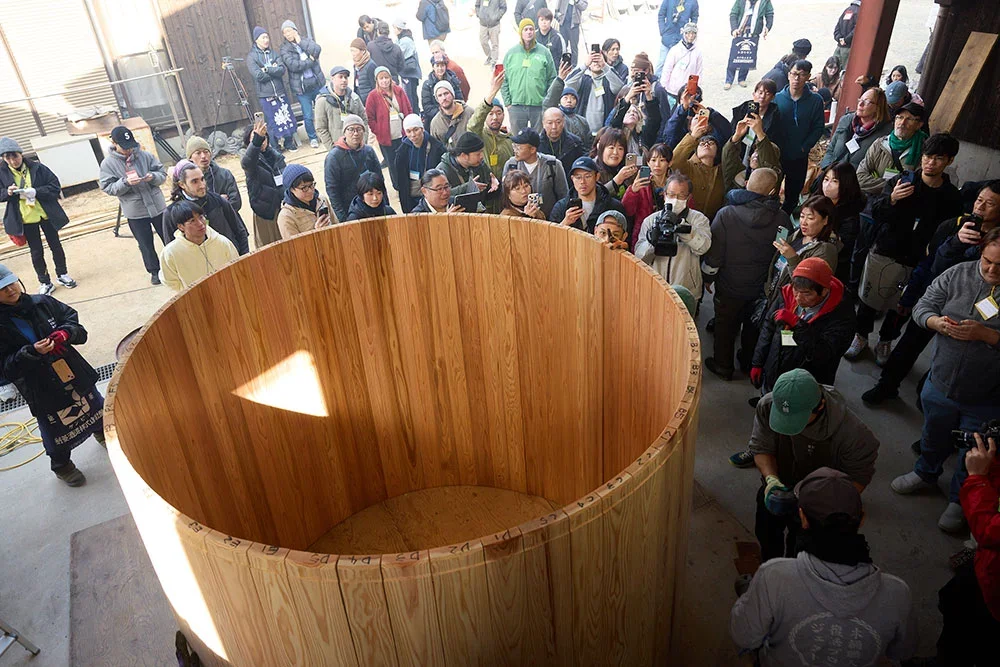
Mr.Yamamoto: Thankfully, yes. People who resonate with the project—wholesalers, buyers, and even folks from major corporations—come to help, even while talking about “telework” (laughs). A truly diverse group gathers, from people making soy sauce and sake overseas to woodworkers. Every winter, we hold an event called the “Wooden Barrel Summit.” This year, about 600 people gathered over three days, and a quarter of them were from overseas.
Explorer Squad: What exactly do you do at the summit?
Mr.Yamamoto: We all make wooden barrels together. But it’s not just work. It’s got that “middle school vibe” (laughs). When we do it while goofing around and having a wild time, an incredible sense of unity emerges. Everyone is also eager to cooperate with us afterward when it comes to sharing information. Interestingly, the more capable people are at their jobs, the more they can really let loose and act silly in settings like this.
Explorer Squad: Does the Summit ever serve as a venue for business negotiations?
Mr.Yamamoto: Of course. This year, we invited the chief buyer from a gourmet food boutique that’s popular in Tokyo. For lunch, we serve rice topped with raw egg and unlimited wooden-barrel soy sauce from all over the country. There, they really liked a product from a Miyagi soy sauce maker and exclaimed, “This is delicious!” Discussions progressed right then and there, and this month, it’s already on the shelves at their Tokyo store—right next to our soy sauce (laughs). Encounters like this are one of the real joys of the Summit.
Explorer Squad: I hear that many people visit Mr. Yamamoto’s brewery for tours throughout the year, even outside of the Summit period.
Mr.Yamamoto: That’s right. About 50,000 people a year. And 99.9% of them show up without an appointment. But since it’s a food factory, we can’t just let them walk in on their own, so my staff and I guide them through each time. It’s a lot of work, but by sharing the story of our brewery directly, people become fans, and the souvenirs they take home spread the word through word of mouth. Of course, there’s also the direct benefit of selling more soy sauce.
Explorer Squad: I hear there are many international visitors among the tour participants.
Mr. Yamamoto: We get 10,000 international visitors a year. While most tourists on Shodoshima come from Asia—like Taiwan and Hong Kong—80% of the people who visit us are from Europe and the U.S. The tourism association even says that nearly 100% of Westerners who come to Shodoshima visit us. We’ve been featured quite a bit in international media—like the BBC, CNN, Netflix, and The Wall Street Journal Magazine—so we might actually be better known overseas. We don’t do any sales or marketing at all, but thanks to this kind of branding and marketing, our sales have increased 15-fold since I returned to the brewery.
Five Years from Now: What Aspects of Japanese “Food” Will Inbound Tourists Discover?
Explorer Squad: Mr. Yamamoto, given that you host so many travelers, do you ever get to go on trips yourself?
Mr.Yamamoto: Actually, no. We’re open 365 days a year. If I had to name a proper trip I’ve taken in the last 20 years, the last one was for my wife’s brother’s wedding—she’s from Okinawa. Even when the kids go back to Okinawa, I’m not even told when they’re going (laughs).I do go on business trips occasionally, but the only time I’ve done anything resembling sightseeing was in Abashiri. Actually, we’re collaborating with Abashiri Prison, where I help inmates make wooden tubs. I went to Abashiri to provide instruction, and while I was there, I visited the Abashiri Prison Museum. That’s one of my very few sightseeing experiences.
Explorer Squad: From your perspective, Mr. Yamamoto—who attracts people from all walks of life to Shodoshima—how do you imagine “travel five years from now” will look?
Mr.Yamamoto: The Japanese baby boomer generation is entering the stage of needing care, and the younger generation may be traveling less due to a lack of financial leeway. On the other hand, inbound tourism is surging. I think the number one reason people come to Japan is, after all, “food.” While there are scenic views and shrines and temples, their greatest pleasure in coming to Japan is “food.” However, I believe a major polarization will occur here.
Explorer Squad: A polarization in food, you say?
Mr. Yamamoto: Yes. Japanese food, especially sweets and processed foods, contains a lot of additives. Even though Japanese food is currently praised as “delicious,” within the next five to ten years, information-savvy foreigners will likely begin to notice this fact. Once that information starts circulating on social media, the trends in inbound tourism will shift. I think travel destinations will clearly divide into those that offer “authentic” food and those that do not.
Explorer Squad: So, there’s a reason why things that are cheap and tasty are the way they are. This also calls into question our own awareness as consumers.
Mr.Yamamoto: Exactly. What travelers will seek in the future is food as “culture”—food steeped in the history and stories of the region. We also need to recognize that this “culture” itself is on the verge of disappearing within Japan. I believe that difference will have a major impact on how people choose their travel destinations in the future.
The “Seeds” We Found on This Expedition
“Is it interesting, or isn’t it?” Mr. Yamamoto’s simple guiding principle is transforming a personal challenge into a massive wave that engulfs the entire industry, and by extension, overseas fans and local communities. At its core lies an unwavering sense of mission to pass the baton of culture to the next generation; he is currently conducting a grand “experiment” with a vision for 100 years from now. While the importance of “food” as a travel destination continues to grow, Mr. Yamamoto points out a growing polarization between what is “authentic” and what is not. As values surrounding affluence and luxury are shifting, I believe that places capable of offering food as a regional “culture”—along with the stories behind it—will become the destinations chosen by people from all over the world.
著者













