
An Interview with Mathematician Fumimoto Kato: What Travel Will Look Like Five Years Ahead
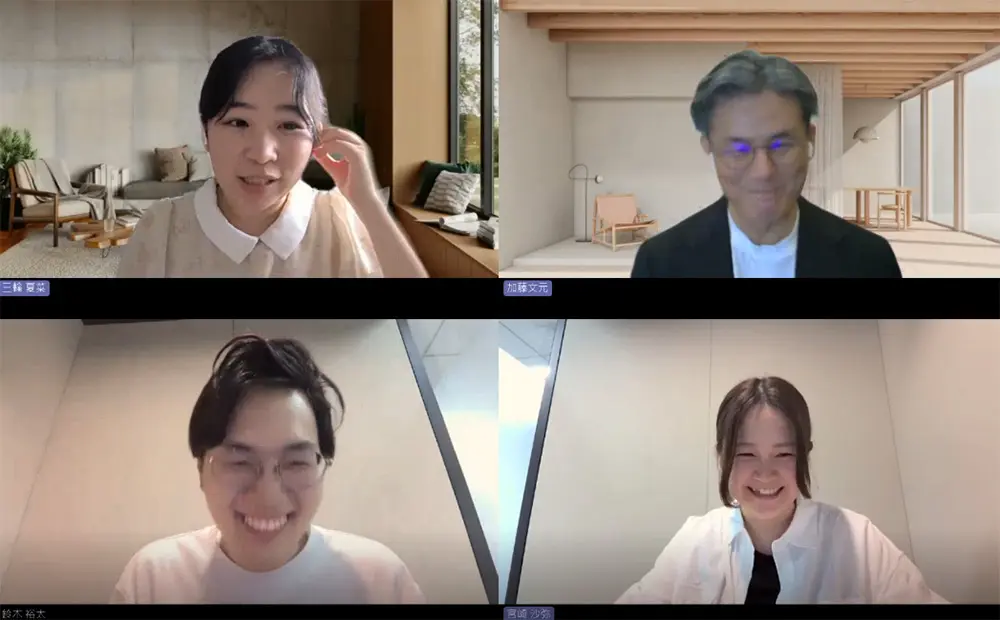
In this column, with the aim of identifying future trends in tourism and travel and capturing signs of change (i.e., the seeds of new tourism), we present “exploration reports” (i.e., interview transcripts) featuring leading experts from a variety of fields beyond just the travel industry.In this installment, we spoke with Fumimoto Kato, a mathematician specializing in arithmetic geometry who serves as the director of the ZEN Mathematics Center (ZMC) at ZEN University.
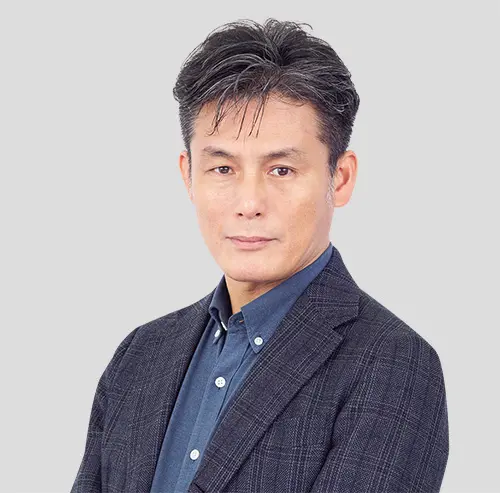
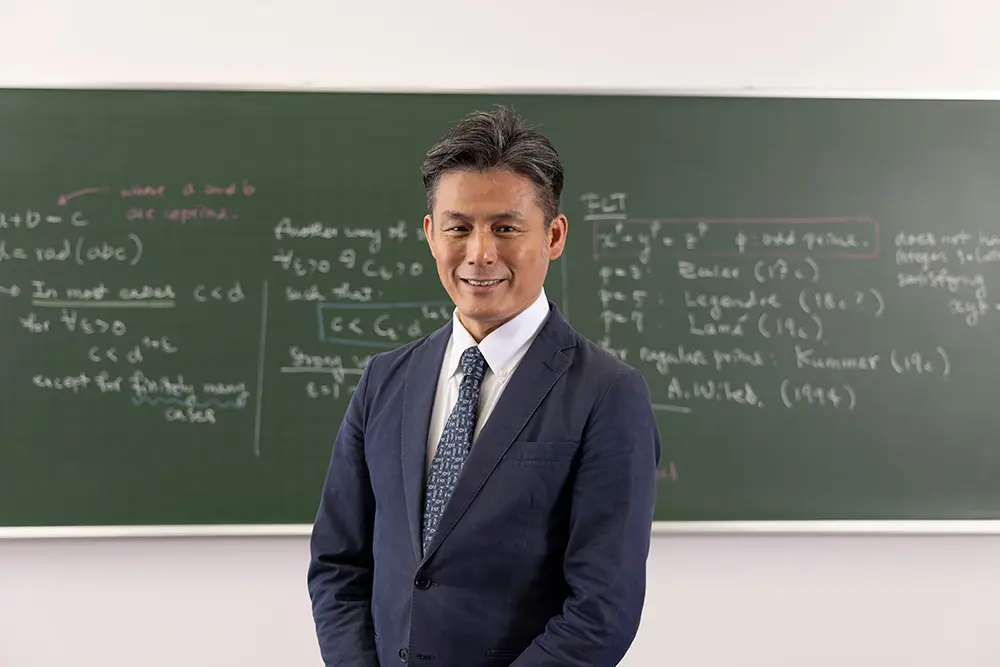
He earned his Ph.D. in Science from Kyoto University in January 1997 and has held positions as a research assistant at Kyushu University, an associate professor at Kyoto University, a professor at Kumamoto University, and a professor at Tokyo Institute of Technology.His specialties are algebraic geometry and number-theoretic geometry, particularly rigid geometry (non-Archimedean geometry), and he has been engaged in foundational research in these areas for many years, publishing specialized books in both Japanese and English.He has also published numerous books for the general public on topics such as the history of mathematics, the thoughts and lives of mathematicians, and mathematical ways of thinking, and is active in promoting mathematics to the public. Professor Kato’s hobbies include playing the piano and singing in a choir; he is such a music lover that he studied conducting under a professional conductor during his student days.He currently serves as a professor at ZEN University, a four-year correspondence university that opened in April 2025.
The Path to Becoming a Mathematician, Inspired by an Encounter with Mathematical Theory
Explorer Squad: Please tell us about your past endeavors and current activities, Mr. Kato.
Mr. Kato: I earned a Ph.D. in mathematics at university and have been engaged in research ever since. After graduating from university, I served as an associate professor at Kyushu University and Kyoto University, became a professor for the first time at Kumamoto University, and had been a professor at Tokyo Institute of Technology since 2015, but I resigned from my university professorship in 2022. The reason was that I wanted to try being the president of a company, so I started one. At the same time, I helped launch ZEN University, and upon its opening in April 2025, I returned to my position as a university professor. I was appointed director of the ZEN Mathematics Center (ZMC), a research institute, where I manage and carry out various projects. When people think of mathematics, they tend to imagine it as a theoretical discipline—a scene of someone silently writing equations with a pencil on paper or a blackboard. However, with the emergence of AI and other developments, the nature of research has been changing. Just like in the world of shogi, I’m engaged in research exploring how to utilize AI, how to interact with it, and what mathematical research in the AI era entails.
Explorer Squad: So you’re tackling themes of this new era, such as the coexistence of mathematics and AI. To begin with, Mr. Kato, why did you choose to pursue a career in mathematics?
Mr. Kato: Originally, I wanted to study physics—specifically, particle physics. There were plenty of professors specializing in that field at my university, so I thought I’d really landed in the best possible place. But then I started thinking, “This isn’t going to make me any money.” At that time, a book called *Molecular Biology of the Cell* had just been published, research in molecular biology was booming, and terms like “biotechnology” were starting to gain attention. I thought that if I got into that field, I’d definitely never go hungry, so I decided to pursue biology. However, I just couldn’t stand dissection (laughs).The people around me actually enjoyed dissecting things—they’d dissect sea cucumbers or shrimp and then take the remains home to eat. When I heard that, I realized they were just different from me, so I quit. In the end, I finally realized that what I loved most was, after all, math.
Explorer Squad: Was there a specific reason you decided to pursue a career as a mathematician?
Mr. Kato: Up through high school, I was good at math and didn’t have any trouble with it. I liked math, but I never once thought of it as a profound field of study or something I’d make my career. When I hit a wall with biology in college and had to rethink my career path, I returned to my parents’ home in Sendai. My grandfather was a mathematician, so I decided to read a math book he’d bought for me back in junior high—one I’d never even opened. The book contained material I’d never encountered in any of my classes, and when I started calculating to figure out what it meant, I couldn’t stop. I spent several weeks repeating the same routine—calculating for 20 hours, sleeping, and then calculating for another 20 hours—and eventually, I thought I’d discovered a new mathematical theory. When I showed it to a professor at Tohoku University, he told me, “This is one of the new number systems called p-adic numbers, developed by a German mathematician named Kurt Hensel around the beginning of the 20th century. It’s amazing that you proved it on your own.” He then recommended a specialized textbook on the theorem I had “discovered.” Since I didn’t have any specialized mathematical background at the time, it took me about another half a year to work through it. When I did, I realized that everything I’d spent weeks calculating and struggled so hard to put into words was already neatly organized in incredibly elegant language. I thought this was something worth dedicating my whole life to. I was completely overwhelmed by the realization that I’d stumbled upon something truly remarkable…
The Coexistence of Number Theory Geometry—Exploring the Hidden Sides of Numbers—and AI
Explorer Squad: So it was an amazing theory that left Mr. Kato so overwhelmed. Is your specialty within mathematics the field of arithmetic geometry, specifically rigid geometry?
Mr. Kato: You can think of rigid geometry as a subfield of arithmetic geometry. Back then, I found Kurt Hensel’s theory—the system of p-adic numbers I mentioned earlier—to be incredibly novel, and I wanted to conduct research that built on its foundations.
Explorer Squad: What kind of field is rigid geometry?
Mr. Kato: It’s a field where geometry is performed not on a system of “ordinary numbers” (*1), but on “unusual numbers” like p-adic numbers. *1 “Performing geometry
”: Using those numbers to examine the properties of figures and spaces
Explorer Squad: “Ordinary numbers,” “unusual numbers”… What does that mean exactly?
Mr. Kato: Well, this is actually really hard to explain (laughs).I think you’ll understand if I call “ordinary numbers” “real numbers.” Things like square roots (√) and pi are also part of the real numbers. Take pi, for example: it’s written as “3.1415…” and is divided into the part before the decimal point (3) and the part after the decimal point (1415…).In the system of ordinary numbers, the digits after the decimal point continue infinitely, but the digits before the decimal point are finite. This is a property inherent to real numbers. I don’t think you’ve really thought about this much before, but it’s actually possible to conceive of numbers where this is reversed—where the digits before the decimal point are infinite, and the digits after the decimal point are finite.
Explorer Squad: ... ?
Mr. Kato: See, they’re just crazy numbers, right? (laughs) This way of thinking about numbers—where the roles of the part before and after the decimal point are reversed—actually exists in the world, and you can even apply it to geometry. Technically speaking, ordinary numbers are called “Archimedean,” and non-ordinary numbers are called “non-Archimedean.” All the math you learn up through high school is based on Archimedean numbers, but this other branch—non-Archimedean math—is also important. For example, when considering integer or rational solutions to equations, there are things you can’t understand by looking only at real numbers—you can only grasp them by examining non-Archimedean numbers. In other words, you have to look beyond the surface of numbers. This kind of theory is also applied in fields like cryptography.
Explorer Squad: Thank you for the clear explanation. I’d never even considered that such numbers existed before. Mr. Kato, I understand you’re working on research that uses AI to formalize and verify mathematical proofs on computers—a theme that truly embodies the coexistence of mathematics and AI. Are you utilizing AI to unravel these complex mathematical theories?
Mr. Kato: I use AI a lot. What I find most distinctive about it is, above all, “chatting” with it. If you give it a single command, it won’t do much, but by continuously chatting with it and letting it understand what you want to do, it ends up teaching you things you couldn’t do yourself or didn’t even know existed. Recently, there have been a flurry of reports in the world of mathematics about new discoveries made using AI. It’s a collaborative relationship where I continuously share the challenges I’m facing with the problem I’m currently working on, and the AI suggests new breakthroughs.
Explorer Squad: It sounds like AI is truly becoming a collaborator for mathematicians.
Realistic Conversations Just Like a Future Journey Guided by AI
Explorer Squad: Mr. Kato, do you travel often?
Mr. Kato: I’d say I travel quite a bit. When I was a professor at a national university, I used to go overseas about four or five times a year at most. When I was a professor at Tokyo Institute of Technology, I participated in a project through JICA to support a university in Egypt, so there were times when I’d spend a week in Egypt, come back to give lectures in Tokyo for a week, and then head back to Egypt the following week.
Explorer Squad: Mr. Kato, I imagine you also have experience with overseas business trips and studying abroad. What did you gain from those experiences?
Mr. Kato: I’ve gained so many things that it’s hard to put into words, but the most significant thing was the difference in research styles. When I was a fledgling researcher in my late 20s, I spent two years studying in Germany. That experience was incredibly valuable to me. Whereas in Japan, research often involves sitting at a desk and calculating intently, German researchers tend to gather together to drink coffee and eat snacks while discussing ideas in front of a whiteboard or blackboard. As I mentioned earlier in the AI discussion, it’s all about “chatting.” They just chat. In that kind of environment, new ideas often emerge. I realized that this difference isn’t a matter of good or bad—it’s better to be able to do both.
Explorer Squad: Mr. Kato, have you also incorporated the research style you learned abroad?
Mr. Kato: We’re holding another week-long project retreat in Edinburgh, Scotland, this month. Since it’s an international project, I initially thought we could just do it online, but I realized that online simply doesn’t work. I think the level of commitment is completely different. For example, it’s hard to imagine spending 10 hours working online, but if we’re at a retreat, actually meeting in person and spending 10 hours researching together doesn’t seem strange at all, does it? I think being given that kind of setting puts us in that mindset—it creates that kind of atmosphere. I believe that kind of “no-holds-barred, all-or-nothing” approach is actually quite important in research.
Explorer Squad: So even in the world of research, there are things you can only do because you’re actually meeting in person.
How do you think travel will change five years from now?
Mr. Kato: If anything changes, it’ll probably be AI. Starting with the question of what you hope to gain from a trip, through extensive chats to understand what kind of travel satisfaction you’re seeking, how much physical stamina you have, and various other factors—such as capacity and financial constraints—that accumulate over time, AI will essentially become your “travel concierge.” I have a feeling it will become highly personalized. Since AI and IT are transforming society at an incredible pace, I think it’s quite possible that things will have already changed significantly by the time five years have passed.
Explorer Squad: Do you think the “no-holds-barred, single-elimination” approach you mentioned earlier in the discussion about the training camp will also be an important element going forward?
Mr. Kato: While we can communicate a lot online, I think a huge amount of information gets cut out. For example, the atmosphere or smells at the actual location. And the other person’s enthusiasm, too—I actually think a lot of information is missing. So, if we can make up for all of that, I think online communication is perfectly fine. I think we could work together online for 20 hours or so. However, I think it’s important to have direct communication with a human being—someone you’re chatting with—and to sense the atmosphere that can’t be conveyed online alone. At least, that’s how it is for me. (Laughs)
The “Seeds” We Discovered on This Exploration
What I discovered on this exploration was the importance of “the ability to engage in dialogue with AI”—which creates new value through interaction with AI—and “the ability to engage in real-world dialogue,” which can only be gained on-site. While repeated chats with AI lead to proposals optimized for each individual, I was also reminded of the importance of the atmosphere and energy that arise from real-world dialogue in a research setting. By leveraging the unique characteristics of both digital and in-person dialogue and finding a way for them to coexist, shouldn’t we strive to hone our ability to think more deeply and be more creative?
著者













