Current Status and Challenges of Investment and Financing in the Tourism Industry by Financial Institutions

Although it faces challenges, investment and financing by financial institutions in the tourism industry can be said to have entered a new phase. There are now examples of financial institutions investing in the development of their own platforms, aiming to generate spillover effects not only in the tourism industry but also in other sectors. Furthermore, the Act on Accommodation Business, scheduled to take effect in January 2018, is expected to promote the development of the long-term stay market—a long-standing challenge—and lead to the expansion of new investment and financing opportunities for financial institutions. *This column is a reprint, with permission, of an article originally published in the July 2017 issue of "Financial Journal" (published by Financial Journal Co., Ltd.).
Challenges in Financial Institutions’ Investment and Lending to the Tourism Industry
The "Japan Revitalization Strategy," approved by the Cabinet on June 24, 2014, included measures to promote lending based on business viability assessments by regional financial institutions and others. Whereas lending decisions had previously been based on financial data, guarantees, and collateral, lending began to be conducted based on these so-called business viability assessments. During this period, the number of foreign tourists visiting Japan continued to grow, reaching 24.04 million in 2016, and reports of a shortage of accommodation facilities began to emerge across the country. Accommodation operators determine new expansion areas based on the business catchment area (tourism patterns, type of tourist destination, business demand, and customer base), the potential for tourism demand (the volume, concentration, and type of tourism resources in the target area), and long-term prospects (sustainable and consistent tourism demand, as well as sustainable and consistent business demand). However, as securing land has become difficult in the three major metropolitan areas, operators are actively seeking to expand into regional areas.
While financial institutions’ willingness to invest in and provide loans to the thriving accommodation industry is growing, investment and lending based on business feasibility assessments for the tourism industry as a whole are not proceeding as planned. Although the shift toward business feasibility assessments is understood, we often hear voices from the field stating, “In the tourism industry, where there are many small-scale operators, it is extremely difficult to make investment and lending decisions based on business feasibility assessments. ”Success in tourism depends not only on the efforts of individual businesses but also on effective PR strategies by local governments and tourism associations, as well as collaboration with other businesses within the area. It can be said that investment and financing based on financial institutions’ business viability assessments can only be realized when there is a unified regional business strategy. In other words, business viability assessments function only when regional comprehensive strategies—formulated with the participation of financial institutions—are reliably implemented. Financial institutions must therefore urge not only business operators but also the government, as the formulator of these regional comprehensive strategies, to ensure their steady execution.
Challenges in Investment and Financing for the Tourism Industry
- Lack of Capacity at the Front-Line Level of Financial Institutions to Handle Feasibility Assessments
- The limited ability of tourism businesses—many of which are small-scale—to adapt to new markets
Weak implementation capacity of regional comprehensive strategies and other initiatives that serve as the foundation for business feasibility assessments in the tourism industry
Investment and Financing in the Tourism Industry by Financial Institutions
As investment and financing for businesses based on business feasibility assessments gradually expand, financial institutions are also beginning to build new platforms through their own investments.
Fukuoka Capital Partners Co., Ltd., in which Fukuoka Bank has invested, and Shizuoka Capital Co., Ltd., in which Shizuoka Bank has invested, have acquired all outstanding common shares of Yukoyuko Co., Ltd., a company that operates an online travel agency targeting senior citizens. This is an example of financial institution groups based in Fukuoka and Shizuoka collaborating to make an investment that leads to the expansion of sales channels for their borrowing clients in the lodging industry. Going forward, by expanding their business beyond travel to encompass the overall lifestyles of senior citizens, a ripple effect on borrowing clients outside the lodging industry can also be expected.
New initiatives are also underway in the agricultural sector. Kagoshima Bank has established an agricultural corporation in partnership with Kitakyushu Seika (Fukuoka Prefecture), Kagoshima Chuo Seika (Kagoshima Prefecture), Kagoshima Kyodo Soko, and Sonoda Rikuun to handle everything from production to sales. Starting with onion cultivation, the company is considering future cultivation in plant factories. While centering on agriculture, the initiative also aims to create synergies with tourism businesses, with a view toward developing tourism based on agriculture, a key industry in Kagoshima Prefecture.
The Accommodation Market Enters a Period of Transformation
On March 10, 2017, the “Act on the Business of Letting Accommodation” was approved by the Cabinet. The background to this was the need for new legislation due to the rapid increase in foreign tourists visiting Japan, the entry into the Japanese market of private lodging services such as Airbnb—which operate globally—and the occasional occurrence of disputes with residents living near these facilities.
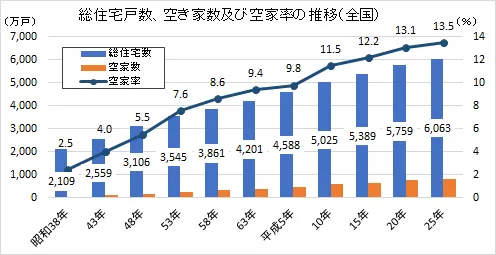
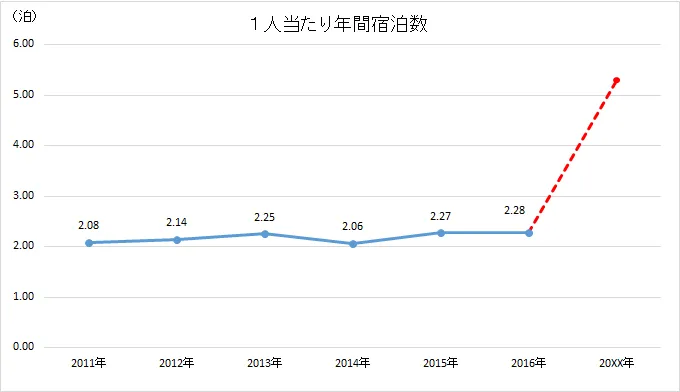
For many years, the difficulty of taking extended leave from work has been cited as a barrier to long-term stays in Japan, but the biggest obstacle has been the high cost of accommodation. While a nightly rate of 7,000 yen is not necessarily high, a one-week stay for a family of four would cost 196,000 yen—an amount that could also cover a trip to a neighboring country. The full-scale introduction of private lodging services is expected not only to increase accommodation capacity for foreign tourists visiting Japan but also to significantly boost domestic tourism, which averaged only 2.28 nights per person in FY 2016.Without even citing the example of vacations in France, long-term stays in diverse accommodations—such as a two-bedroom apartment for 30,000 yen per week—are already well-established in Europe and the United States. In Japan, too, the Residential Accommodation Business Act is expected to bring about a major transformation in the accommodation market. According to the Housing and Land Survey conducted by the Ministry of Internal Affairs and Communications in 2013, out of a total of 60.63 million housing units, 8.2 million were vacant, resulting in a vacancy rate of 13.5%.With the increase in the number of visitors to Japan and the number of overnight stays by Japanese residents on a global scale, new solutions are likely to emerge for the vacant housing problem, which is emblematic of Japanese society. In line with these trends, financial institutions should focus on the accommodation market—where the utilization of vacant homes is advancing due to the enforcement of the Residential Accommodation Business Act—as a new target for investment and financing.
Overview of the Private Lodging Business Act
(1) Establishment of a Notification System for the Residential Accommodation Business
- Those wishing to operate a residential lodging business*1 must file a notification with the prefectural governor*2
- The maximum number of days per year that accommodations may be provided is 180
- Introduction of a mechanism to reflect local conditions (restrictions on the operation of the Residential Accommodation Business via ordinances)
- Mandatory measures to ensure the proper conduct of the residential lodging business (e.g., measures to ensure guest hygiene)
- Require owners who are not present on-site to entrust the management of their property to a residential lodging management business
*1 A business that provides lodging in a residence
for no more than 180 days *2 The head of a city or special ward that has established a public health center and wishes to handle administrative matters related to the residential lodging business
(2) Establishment of a registration system for residential lodging management businesses
- Registration with the Minister of Land, Infrastructure, Transport and Tourism is required to operate a residential lodging management business*3
- Require the implementation of measures to ensure the proper conduct of the residential accommodation management business (such as explaining contract details to residential accommodation business operators) and the performance of the measures specified in (1) [4] on behalf of the business operator
*3: A business entrusted with the management of housing in a residential lodging business where the owner is not present
(3) Establishment of a registration system for residential lodging brokerage businesses
- Registration with the Commissioner of the Japan Tourism Agency is required to operate a residential accommodation brokerage business*4
- Requires measures to ensure the proper conduct of the residential accommodation brokerage business (such as explaining contract terms to guests)
*4: Businesses that act as intermediaries in the conclusion of accommodation contracts between guests and residential accommodation providers
Source: Japan Tourism Agency website
Summary
There is no doubt about the importance of financial institutions’ role in regional revitalization. On the other hand, it is difficult to say that the shift toward business viability assessments is progressing rapidly. As financial institutions explore new investment and financing models, the Private Lodging Business Act, which will come into effect in January 2018, is expected to bring significant changes not only to the accommodation market for the steadily increasing number of foreign tourists visiting Japan but also to that for Japanese tourists. The annual number of overnight stays by Japanese residents ranks among the lowest among OECD member countries. To achieve an annual number of overnight stays on par with Western countries, proactive investment and financing by financial institutions will be crucial, alongside the development of relevant legislation.
著者