[Part 1] Where Fire Circulates and the Sea and Mountains Become One

In Japan, where forests cover about two-thirds of the land, the trees on nearby mountains were, until just a few decades ago, turned into the firewood and charcoal that kept everyday life going. People went into the mountains as part of their daily routine, felled trees, and carried the wood back down to their villages. Over that fire, they cooked what the local sea and mountains provided, and shared the meal together. Nature, energy, food, and people’s work were all woven together within the community, never pulled apart. Starting from a single wood-fired restaurant, this article traces these local connections—so much harder to see today—and considers what it means to experience them firsthand while traveling.
A wood-fired restaurant in Matsuzaki, Shizuoka Prefecture, that meets 100% of its heat needs—for cooking, hot water, and heating—with locally sourced firewood (opened in July 2025). It is run by BASE TRES Co., Ltd., which also operates mountain bike tours on restored historic trails in the surrounding area, kayak fishing experiences, and lodging. Wood that comes from caring for the old trails and nearby forests is turned into firewood—used not only for cooking, but also to fire a wood boiler that supplies hot water, the dishwasher, and winter heating. The ash left after burning goes back to local farmers as a soil conditioner. Recognized for linking local forest resources to energy, food, and tourism, the initiative has received the Ministry of the Environment’s “Good Life Award: Forest, Village, River, and Sea Prize”; the Excellence Award and Corporate Award at the Ministry of Agriculture, Forestry and Fisheries’ “INACOME Business Contest”; the Runner-up Prize at the Japan Tourism Agency’s “3rd Sustainable Travel Award”; and the Corporate Award at “Spain Talks,” hosted by the Spanish National Tourist Board, among others.

In modern life, we may know where the food on our plate comes from, but we rarely stop to think about where the fire or heat that cooked it came from. The people who tend the mountains, grow the food, cook the meals, and welcome travelers usually work in separate worlds, too. Yet here, a cycle has taken shape: wood from mountain care—work that began with restoring an old trail—becomes firewood, generates the heat that runs the restaurant, cooks local ingredients, and finally returns to the soil as ash. Follow that fire back to the mountains, the sea, and the people’s work behind it, and things that once seemed separate begin to reveal their connections.
1. A Local Fire Burning in a Small Restaurant in West Izu
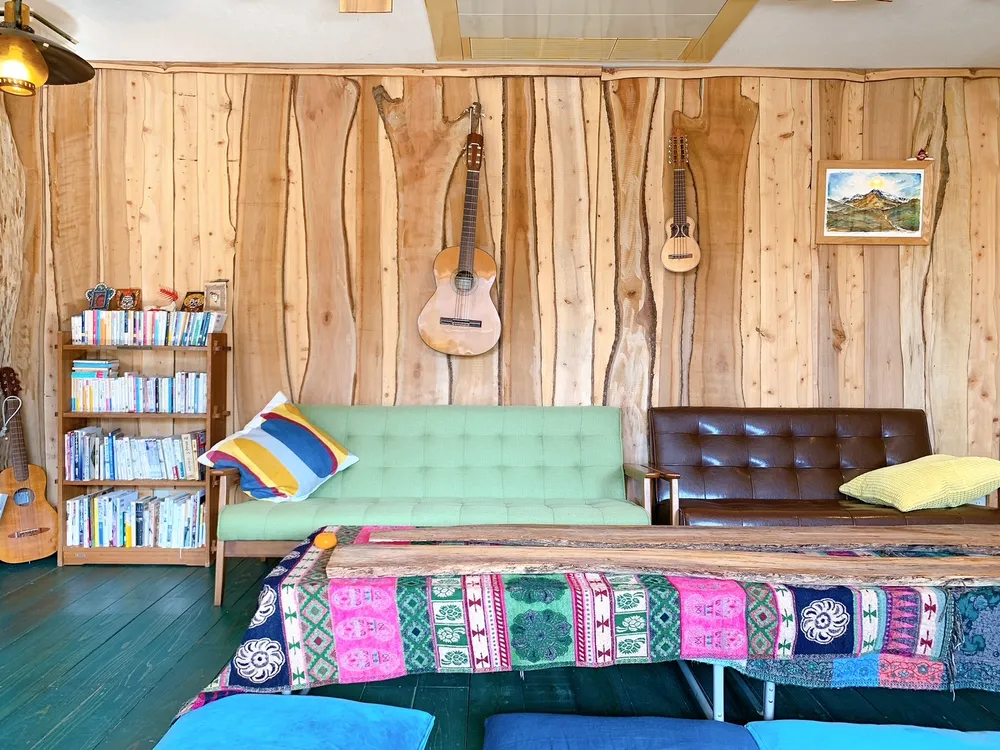
QUEBICO sits along the coastal highway, in the kind of building you might pass in any country town without a second glance. It used to be the town’s stationery shop, we’re told. Step through the door, though, and that first impression changes completely. The tables and furniture are made generously from wood the staff cut themselves from the nearby mountains. Add colorful fabrics, ornaments, and paintings that hint at faraway places, and the simple wooden space is filled with the feeling of being on a journey.
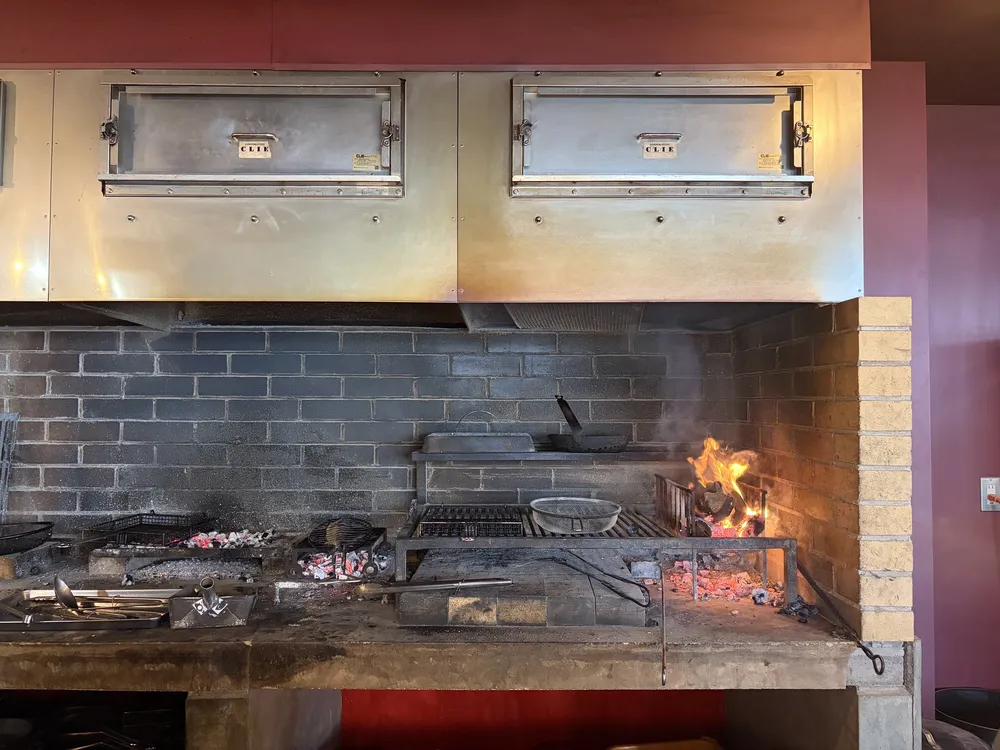
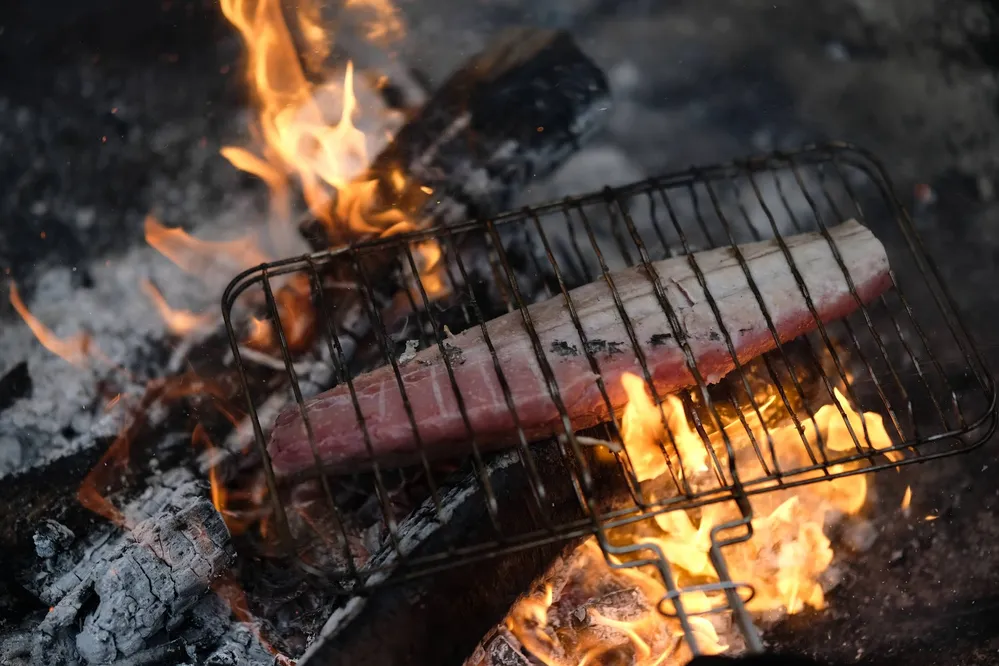
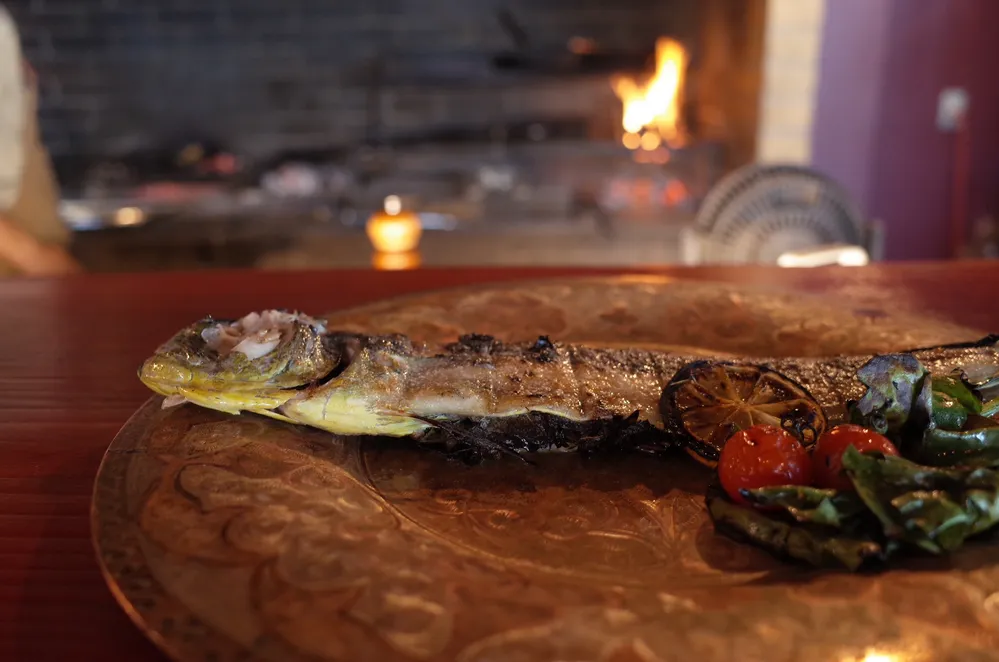
At the back is an open kitchen where every step of the cooking is on display, with a large wood boiler and a wood-fired cooking hearth side by side. In one spot, flames leap high from the logs; right next to it, charred wood glows red, holding its heat as embers. The staff move the ingredients around and adjust their distance from the fire with an easy rhythm, depending on how each one is being cooked. Now and then sparks fly, and even at the counter seats you can feel the heat. What’s being grilled in front of us is a fish that was swimming in the sea just outside—caught from a kayak only a little earlier. Once cleaned, it’s simply salted and grilled straight over the flames. The moment butter, heated in a special pan, is poured over the dish, a rich, toasty aroma fills the room.
In an ordinary kitchen, you turn the gas knob and a flame appears; you turn the tap and hot water flows. Behind every dish, there is always energy that makes it possible. But while we might pay attention to where our food is grown or who produced it, few of us stop to think about how that energy is produced.
The fire burning here wasn’t brought in from somewhere unknown. Trace the firewood and the ingredients back to their origins, and this fire becomes a window onto the local cycle behind them.
2. Tasting the Sea over a Mountain Fire: A Commitment to No Gas at All
Wood-fired cooking has been drawing attention in recent years, especially at fine-dining restaurants in Europe, the US, and Asia. Its appeal lies in the flickering flames, the scent of the wood, and the charred marks on the food—flavors you can’t get from gas or electric cooking—and in the way handling the fire itself becomes part of the dining experience.
At QUEBICO, though, the fire does far more than cook. Beyond cooking, the restaurant produces all the heat it needs to run—from hot water for the kitchen and dishwasher to panel heaters for warmth—using local firewood the team has cut with their own hands. Most striking of all, there’s no gas line here at all. The fire isn’t for show. Their resolve and commitment lie in using no fossil fuels for cooking, hot water, or heating, and covering 100% of their heat needs with hardwood they’ve cut themselves. “If we hooked up gas, it’d all be a lie, right?” laughs Junichiro Matsumoto, who heads BASE TRES. The ash left once the fire has burned out goes back to local farmers as a soil conditioner. This thoroughly local cycle of self-sufficiency has drawn interest well beyond the restaurant world, from people working in the environment, agriculture, forestry, fisheries, and tourism.
The flames and embers of a wood fire aren’t uniform the way a gas flame is. There are spots where a fierce flame sears the surface, spots that give off a gentler heat, and spots where food is slowly finished over glowing embers. The cooks read these different heats and move the food closer to or farther from the fire accordingly. The gentle heat and flicker unique to a wood fire bring out contrasts in aroma, moisture, and color even within a single ingredient—and because the cooking is so simple, they say, the true flavor of each ingredient shines through.
What goes over that fire is mostly produce from nearby fields and the sea, with native Japanese herbs as the key accent, they tell us. Change the type of wood, and the way it burns and the aroma it gives off change, too. Those differences give each place its own character in fire and food, opening up all kinds of pairings of ingredients and herbs. Here, the mountains and the sea aren’t just close on a map—they come together in a single flavor that captures West Izu.
3. Old Trails Born from the Mountains and People’s Lives
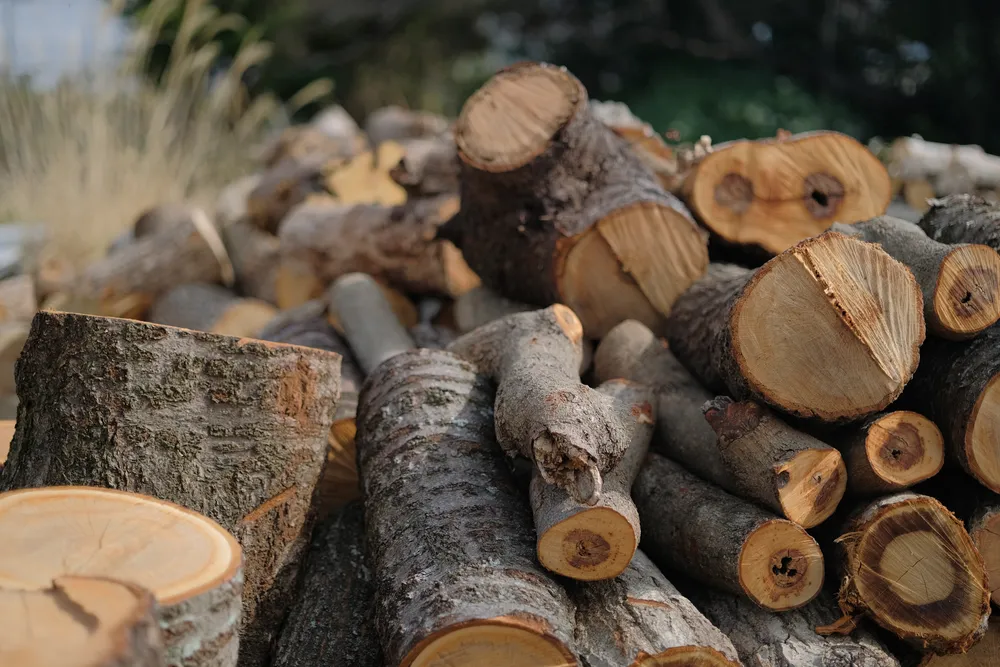
The firewood used at QUEBICO didn’t come from trees cut for the sake of fire. It comes from the team’s work restoring the old trails, which began around 2012, and from the surrounding mountains that locals, seeing that work, gradually began asking them to look after. They first used the wood to heat their lodging. When they found it could cover the baths, hot water, and winter heating, the idea of a wood-fired restaurant was born.
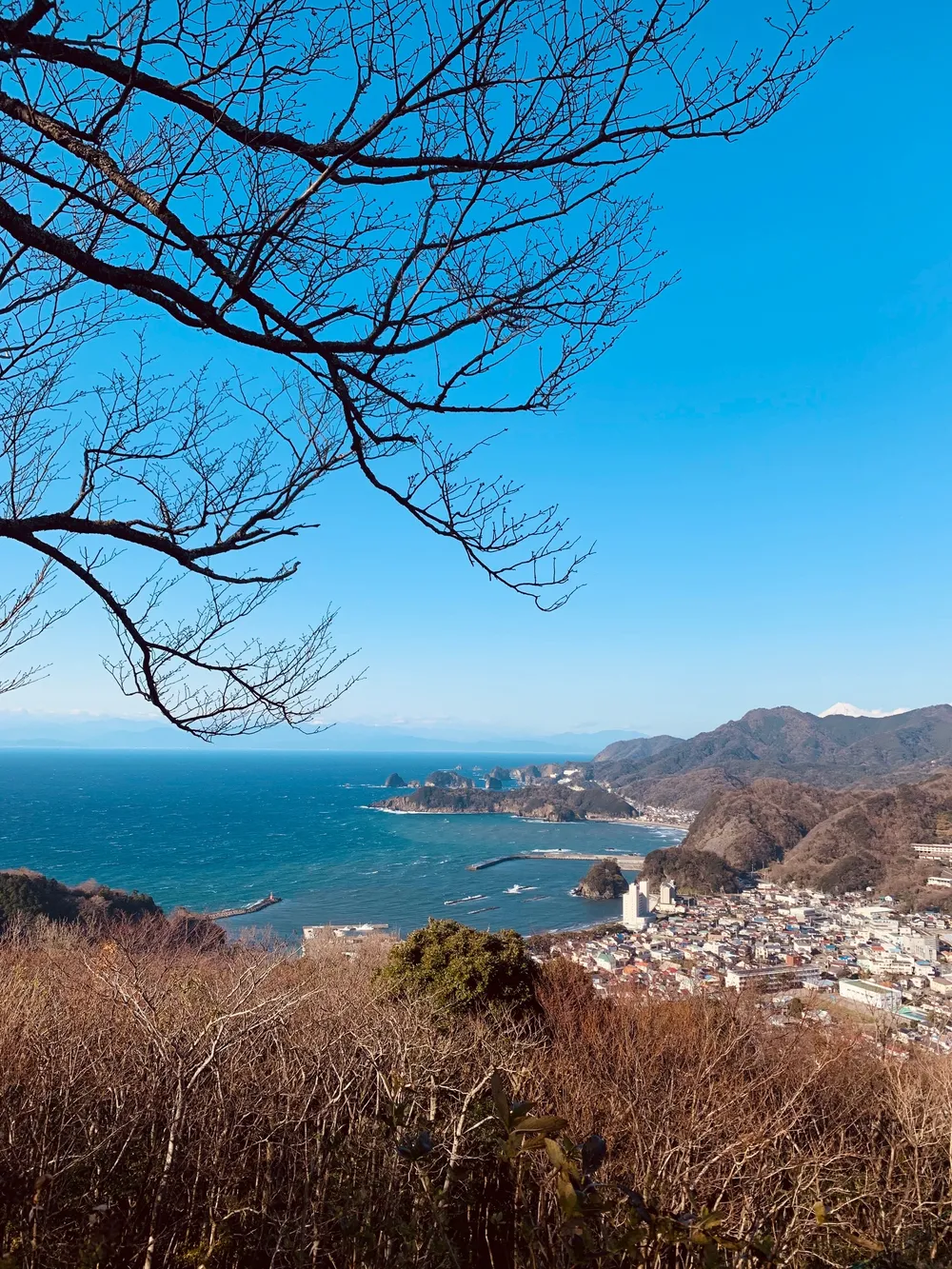
On the west coast of the Izu Peninsula, the mountains press close to the sea, and small rivers flow into Suruga Bay. With mountains, rivers, villages, and sea all so close together, the area once thrived on firewood and charcoal production, farming—including cherry leaves (used to wrap traditional sweets)—and katsuobushi (dried bonito) processing tied to its rich fisheries. Tourism grew on top of all this, with family-run inns linked to hot springs, scenic views, and beach-going.
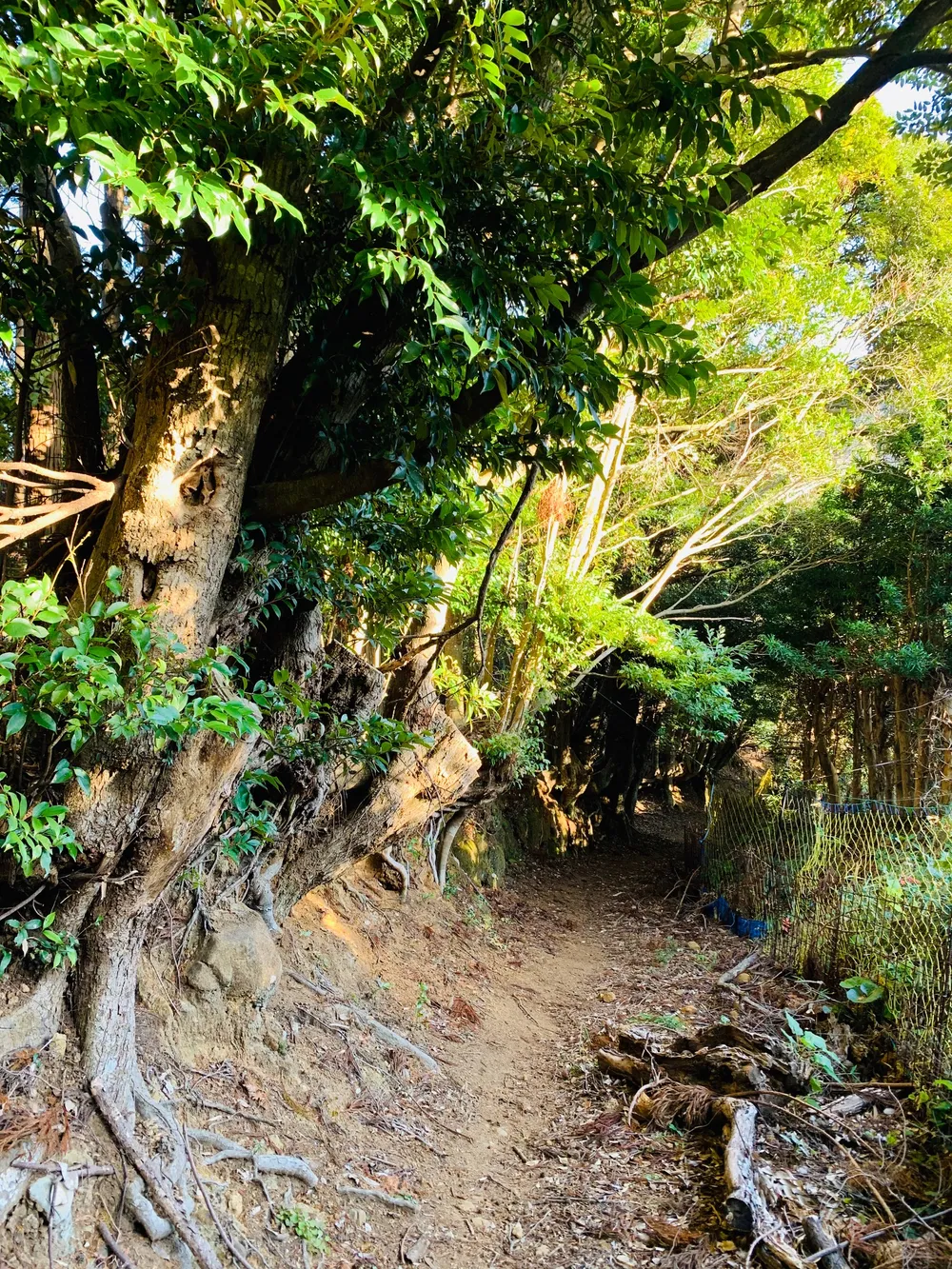
Against this backdrop, the mountains are said to have been crisscrossed by everyday paths—trails people walked and rode horses along, used to carry timber and daily goods, and sometimes climbed to worship at temples on the summits. Matsuzaki is believed to have had old trails for about 1,200 years, linking the lives and livelihoods of local people. But as roads were built, cars became the main way to get around, and the ways people obtained energy and lived their lives changed, people stopped going into the mountains. In time, the trails were swallowed by grass and fallen trees, and people gradually forgot they were ever there.
Today, many of us probably see mountains as places to admire or to visit for fun. Some may even think nature grows richer the less we touch it. But in mountains that were once cared for by people, simply leaving them alone doesn’t necessarily make them richer, we’re told.
When people keep going into the mountains, using the wood while caring for the forest properly, light reaches the ground, and undergrowth and a wide variety of plants can grow. Soil covered with fallen leaves and undergrowth holds rainwater and releases it slowly into rivers, and together with tree roots, it helps prevent soil runoff and landslides. These forests have also served as a buffer zone between wildlife habitats and the places where people live. One challenge, however, is that even when the mountains are cared for, it’s hard to keep the work going if there’s nowhere for the felled wood to go.
The bond between mountains and sea goes beyond physical closeness. Rain that falls on the mountains filters through soil and rock, becoming rivers and groundwater that flow into the sea. Along the way, it carries a range of substances from the mountains, feeding into the marine ecosystem, from seaweed to phytoplankton. Caring for the mountains, then, isn’t just about tidying up the environment; it’s also about keeping the whole region in balance.
BASE TRES’s work can be seen as a way of reconnecting the mountains with modern life—by going back into mountains people had stopped visiting and creating a new cycle from the wood found there. Wood from caring for the old trails and forests turns into heat and food, and finally returns to the local soil. Follow that flow, and you begin to see that mountains, rivers, villages, the sea, and human activity aren’t separate at all—they’re all connected.
4. Moving Under Your Own Power to Feel How the Land Connects
Taken on its own, QUEBICO offers a wood-fired dining experience. But follow the fire back to its source—the old trails and the mountains—and widen your view to include the sea and the ingredients, and you’ll see that QUEBICO serves as a hub for exploring this land. The team offers a range of experiences that let travelers venture right into the places beyond the fire—the mountains and the sea, and the spots where the wood and ingredients come from.
It all started with restoring the old trails, followed by the YAMABUSHI TRAIL TOUR, which takes riders down those restored trails on mountain bikes. You drive up near the summit, then hop on a bike and ride the old trail all the way down. There’s a range of routes to suit every skill level and preference, from beginners to experienced riders.
At first, the narrow paths, steep slopes, fallen leaves, and rocks can feel a little scary. But once you get the hang of it, you start to enjoy the thrill of weaving through the trees and the scenery shifting moment by moment. Because these were once everyday paths, you’ll spot traces of stone walls and old charcoal kilns, pass working mandarin orange groves, and finally roll down into a town where people live looking out over the sea. The words “old trail” alone may not mean much to some people. But as you feel the ups and downs and the ruggedness of the path and watch the scenery change, you come to understand—through your own movement—what these trails once did and how people here once lived.
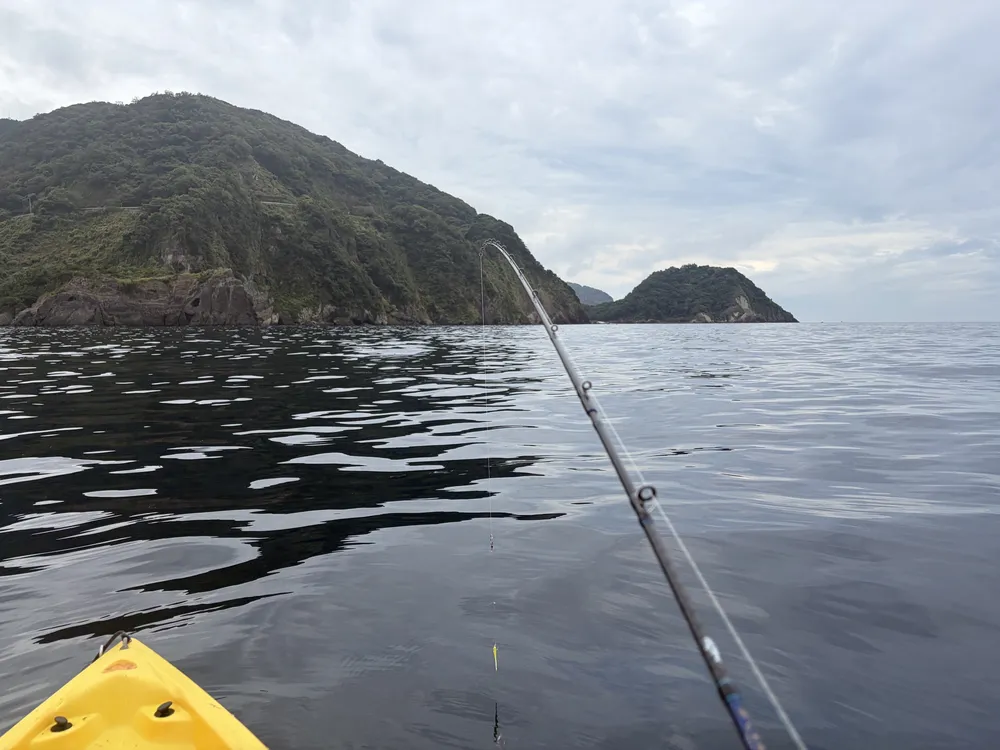
The tours start in the mountains and head down toward town, but there’s also a sea experience waiting beyond. On the kayak fishing tour, instead of paddling by hand as in a standard kayak, you use a highly stable pedal-drive kayak. You move forward under your own leg power, feeling the wind and the waves. The water is close enough to touch, and you drop your line while peering at plankton and the shadows of rocks on the seabed. Suruga Bay, which this area faces, packs a variety of environments—from coastal reefs to deep water—into a small area, and is home to many kinds of fish that change with the seasons, we’re told.
The fish you catch are cleaned right on the kayak and brought back to QUEBICO to be cooked. Fish you caught yourself, cooked over firewood from the care of the mountains and old trails—from stepping into the places where the wood and food come from, all the way to tasting the meal, it’s one connected experience.
Looking back at the land from the sea, the shape of this coastline—where mountains rise straight out of the water—comes into even sharper relief. Rock strata and cliff faces hard to see from land, caves carved by the waves, tiny beaches you can’t reach on foot: as you follow the coastline by kayak, the dramatic face of this region appears with breathtaking force. It was more than a kayaking or fishing trip—it was a chance to see the shape of the land I’d viewed from the mountains from an entirely different angle.
The team also offers other ways to experience the area from many angles, such as hiking tours where you gather firewood for a campfire, and foraging tours where you search the mountains for native Japanese herbs, nuts, and wild plants that are then cooked at QUEBICO. What all their tours share is that participants use their own bodies to step into the land. You read the slopes and the tree roots, walk through forests and streams on your own two feet in search of your goal, and paddle the sea feeling the wind and waves. Rather than just snapping a picture of a finished view, you keep all five senses switched on and engage with the land directly—and perhaps that’s exactly why discoveries tend to happen inside you, too.
This echoes QUEBICO’s own heat self-sufficiency: going into the mountains and making heat from wood they’ve gathered themselves. Just as the fire leads back to the mountains and the sea, participants, too, head into them using their own body’s energy. Instead of being carried to a destination and handed a finished product, you discover a side of the land that only reveals itself when you move on your own.
After a day of moving through the mountains and out on the sea, travelers are welcomed at LODGE MONDO. The lodge is furnished and decorated with pieces that make the most of the natural shapes and textures of wood from the mountain care work; each guest room is designed with a different wood and its own vivid colors; and in the bath, you can soak in water heated by the wood boiler.
Ride down old trails, head out to sea, warm up in water heated by firewood, and eat local food cooked over a wood fire. A single stay may not be enough to fully grasp the region’s whole cycle. Even so, rather than just looking at finished dishes and views, by experiencing the places and processes behind them with your own body, you begin to see how the mountains, the sea, wood, fire, food, and human activity—things that seemed separate—are connected. These connections may simply be hard to see in modern life; for those who lived on this land before us, they were probably just a natural part of life.
5. We Do It Ourselves, So We Can Tell It in Our Own Words
At BASE TRES, every staff member goes into the mountains, clears the old trails and surrounding forest, hauls the felled wood, splits it into firewood, runs the lodge, cooks the food, and guides travelers along the old trails and out to sea. Rather than fixing roles by type of work—forestry, tourism, lodging, food service, or tours—everyone works across multiple sites and takes part in each process firsthand.
In the early days of the trail restoration, they would head into the mountains on weekdays and sell the wood from that work to local katsuobushi makers as firewood for smoking bonito, then run mountain bike tours on weekends. Wood from caring for the mountains became the fire for the region’s long-standing tradition of katsuobushi-making, turning fish from the sea into a preserved food. Later, they built LODGE MONDO as a place for travelers visiting the old trails to stay. They used local wood for its interiors and furniture, and also installed a wood boiler fueled by wood from forest management to heat the baths and the building. Building on those experiences, QUEBICO was born, extending firewood heat to cooking, hot water, dishwasher water, and heating. Today, the ash left after burning goes to local farmers as a soil conditioner.
Trail restoration, forest management, outdoor activities, lodging, and dining. Viewed one by one, they look like separate businesses. But trace them over time, and you can see how each one created the need for the next, linking them together little by little.
It all started with a sense that something was off about how local wood was handled. When Mr. Matsumoto first began restoring the old trails, he kept wondering: why was wood cut here shipped off to distant markets, while the community bought its fuel from somewhere else? Each job—cutting the wood, transporting it, sourcing energy—might make sense on its own. But from the perspective of the whole community, it seemed wasteful. If local wood were used locally, both work and energy would circulate within the community. Giving the wood somewhere to go, he concluded, isn’t just about making good use of resources—it’s also about reconnecting, within the community, the jobs and the economy needed to keep caring for the mountains.
These days, you hear the word “sustainability” everywhere, but building a perfect system where everything circulates smoothly is no easy feat. More than anything, they say they never set out to build a circular system in the first place. By facing the trees in front of them and that nagging sense that something was off, and by building up, one by one, the things they found interesting or necessary, separate efforts gradually connected and grew into a system that circulates within the community.
That’s exactly why the people at QUEBICO can tell you where the wood burning in their fire once stood, why it had to be cut, how it became firewood, what kind of heat it was used for, and where it will eventually return. Because every staff member is personally involved across multiple sites, they can share this flow—and its ties to the region’s mountains and sea—in their own words, not borrowed ones. It isn’t a re-creation of a bygone way of life. Rather, it’s an effort to re-tie the relationships that have always existed in this region—among the mountains, the sea, wood, fire, food, and human activity—in a form that fits today, and to turn them into something travelers can experience.
Mountains and forests across Japan aren’t always put to good use as local resources. In many places, there are fewer uses for the wood and fewer people to look after the forests, making their upkeep a real challenge for local communities. Mr. Matsumoto believes the basic model behind QUEBICO could be taken to other regions.
Care for the local mountains, turn the wood into firewood, and use it for cooking, hot water, and heating. Cook local ingredients, and guide travelers to the places where the wood and food come from. Because wood-fired cooking is so simple, the flavor of the ingredients comes straight through in the dish, and different woods burn differently and give off different aromas. Change the local ingredients—native Japanese herbs and all—the food culture, or the people working there, and the dishes, the stories told about the land, and the experiences travelers take home all change, too. With the same model as a foundation, Mr. Matsumoto believes, each region can create restaurants and experiences with its own distinct character. In fact, even the staff who now cook at QUEBICO didn’t start out knowing how to work with a wood fire; they picked up the skills in time for the opening. That local people can gain experience on the job, learn skills, and become the ones who care for the mountains, make firewood, cook, and guide travelers could also lead to new jobs and employment in mountain communities.
Travelers take in the mountains, the sea, wood, fire, food, and human activity with all five senses, and carry those sensations and discoveries home into their everyday lives. Even if it doesn’t turn into action right away, in Japan, where forests cover about two-thirds of the land, there will surely be moments that bring this experience back to mind. It might change how they see the mountains and local resources close to home—and spark a shift in their daily choices and actions, or even new activities of their own.
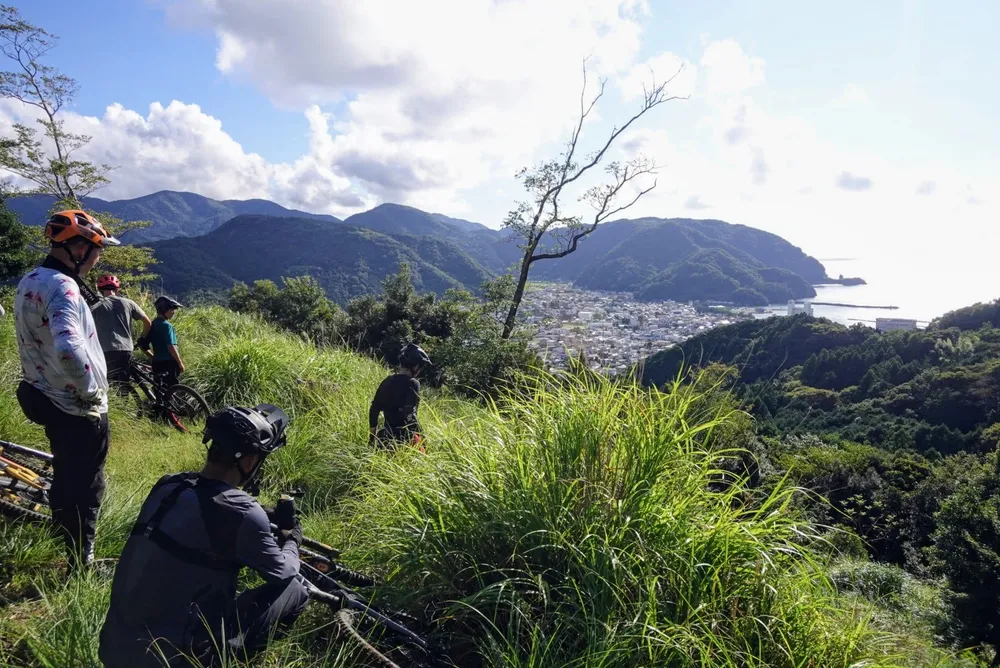
Every staff member is involved on-site and speaks about the work in their own words.
Looking back, this series of efforts might seem to have grown out of a single grand plan. But Mr. Matsumoto says he didn’t have today’s big picture in mind from the start. So how was he able to see the connections between things as separate as mountains, the sea, wood, fire, food, and human activity—and tie them back together into a single cycle? Trace that perspective back to its roots, and you arrive at the experiences of one traveler who walked everyday paths around the world and gathered around local fires.
In Part 2, we follow the journey of Mr. Matsumoto, head of BASE TRES, and explore how—without a finished blueprint—he went on to create new ventures, from restoring old trails to forest management, lodging, and a wood-fired restaurant.
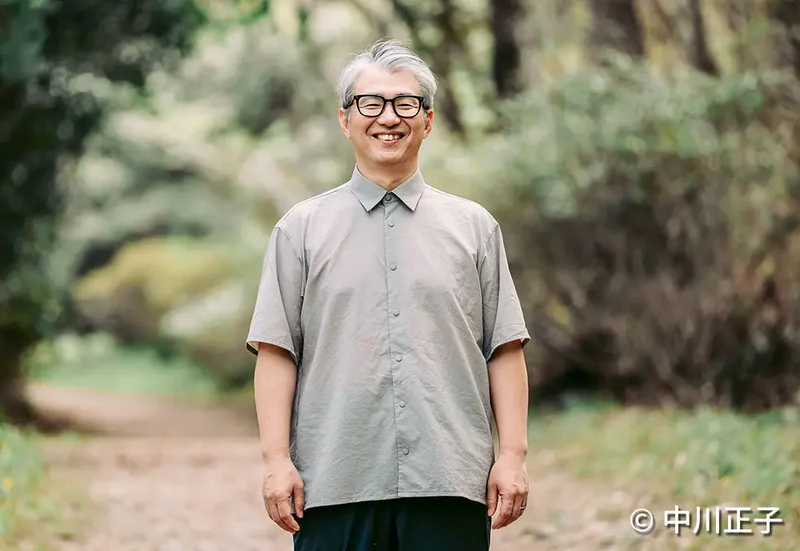
著者