Can the Power of Travel Become a Form of Social Support? — Insights from a Study on the Conversation-Based Travel Program "Kokotori" —
"I just don't have energy lately." "It's hard to enjoy things the way I used to." These quiet struggles are becoming more common today. In response, a growing idea called "social prescribing"—supporting health through human connection and leisure—is gaining attention. Could travel offer a new way to help? To find out, we put the idea to the test. Here's the story behind JTB's new service, "Kokotori."
1. The Growing Challenge of "Mental Sluggishness" in Modern Society
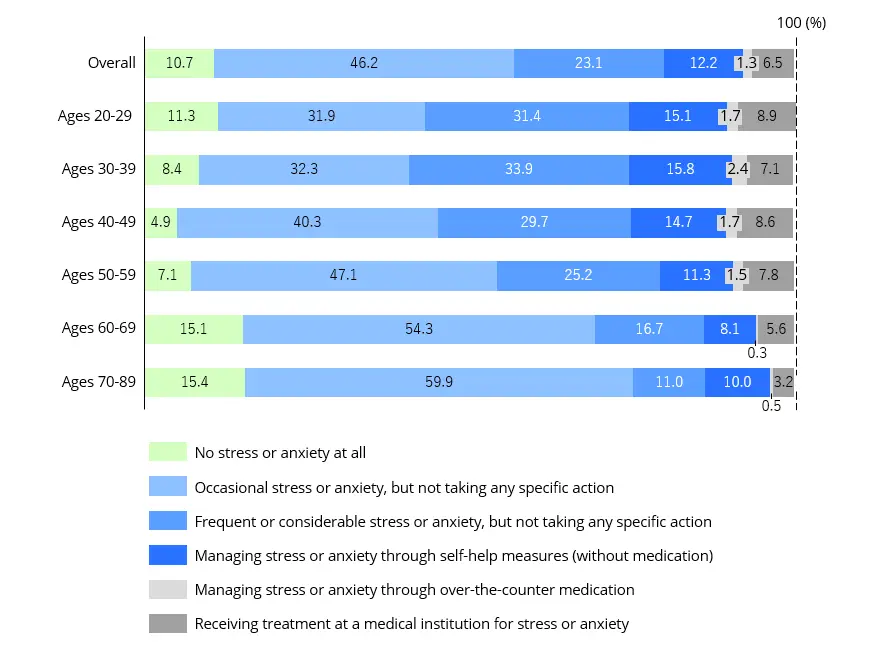
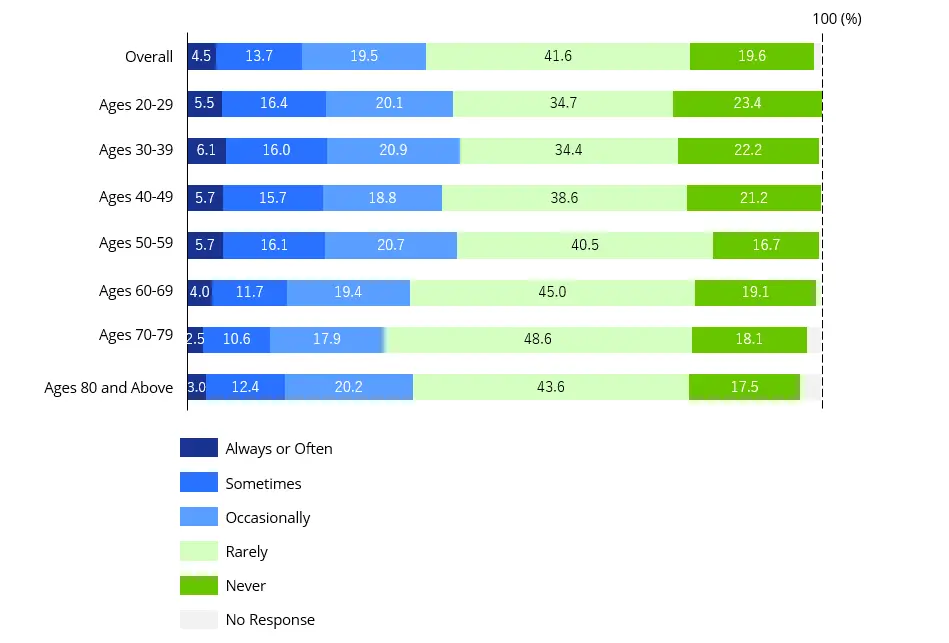
Japan is one of the world's longest-living countries. At the same time, the rise in loneliness, stress, and anxiety has become a major health issue in today's society. In recent years, more and more people report a kind of "mental sluggishness"—feelings like "I somehow can't get motivated," "I get tired easily," or "I can't enjoy the things I used to love." In fact, according to government surveys, nearly 90% of people in Japan carry some form of stress or anxiety, and about 40% (37.7%) say they feel lonely at least occasionally. These feelings tend to be particularly common among people in their 20s to 50s. While such struggles are unlikely to lead to a diagnosis or treatment at a hospital, they can nonetheless have a long-term effect on quality of life (QOL) and social participation (Figures 1 and 2).
(Figure 1) Stress and Anxiety by Age Group:
Which best describes the current state of your mental health?
(Figure 2) Loneliness by Age Group:
How often do you feel lonely?
To address these well-being challenges, a new approach that goes beyond medication—called "social prescribing"—is drawing attention both in Japan and around the world. Instead of relying only on medical treatments like medicine or therapy, social prescribing helps people improve their health and well-being through human connection and by taking part in community, cultural, and leisure activities. In the UK, the National Health Service (NHS) has built a system where doctors and nurses connect patients with specialists called "link workers." These workers help patients get involved in activities like gardening, walking groups, and music or art. Studies show that such activities can help ease depression and loneliness, and lift people's overall sense of happiness.
A link worker is someone who bridges the gap between medical professionals—such as doctors and care managers—and local community resources, in support of patient care.
So, here's the question: could travel—a positive experience for so many people—work as a new social resource that supports our mental and physical health and our connections with others? At JTB, we came up with a hypothesis: perhaps talking about our travel memories and the trips we dream of taking could help improve people's well-being. We carried out a research study to test whether this idea holds up.
In this article, I'd like to share how this service came about through testing that hypothesis, and introduce "Kokotori," the new service that grew out of it, from my perspective as a research supporter.
Travel holds potential not only as a destination in itself, but also as a way to support people's mental health and their connections with society. I hope this article offers a helpful starting point for the travel industry, research institutions, and local governments as they consider the new value that travel can bring.
2. A New Service Concept: How the Program Was Built and What We Hoped It Would Do
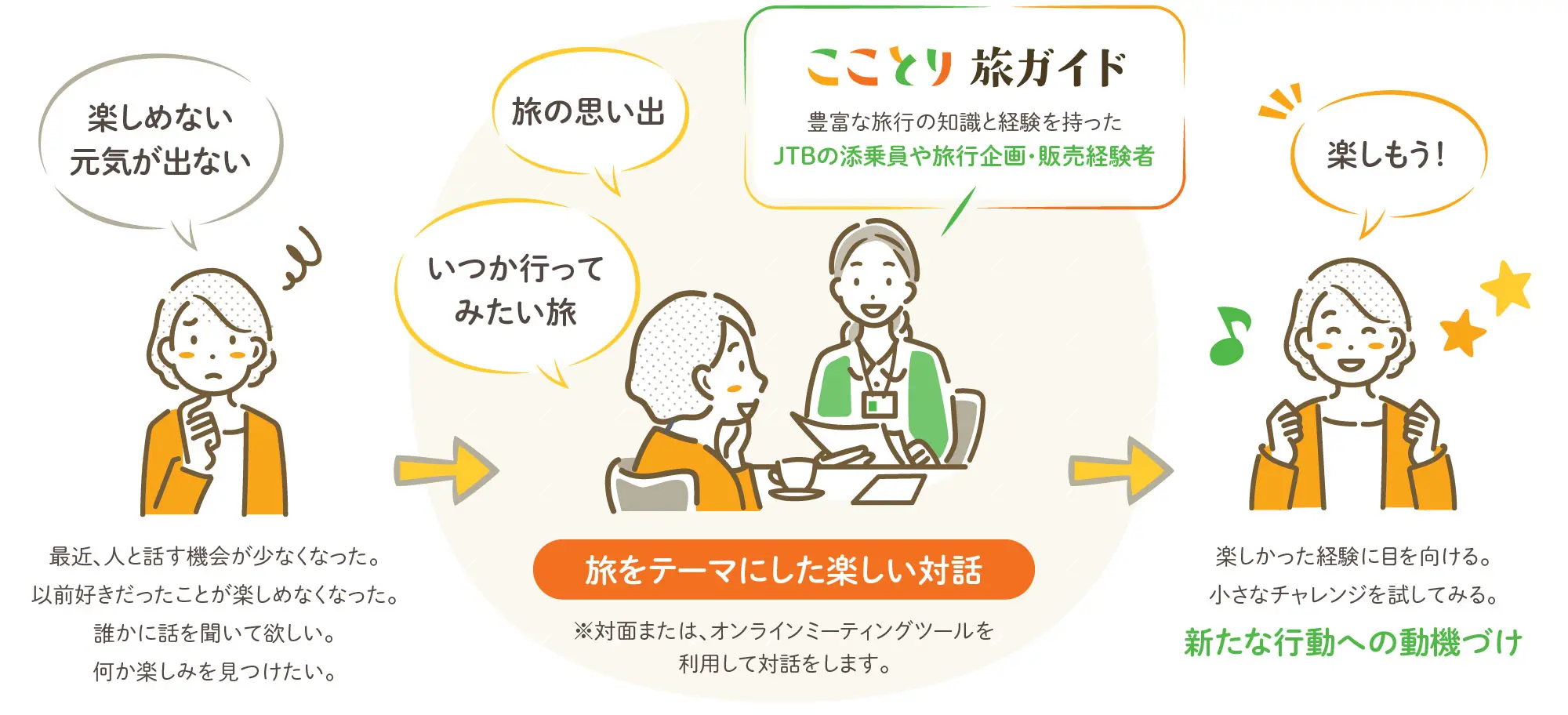
JTB's conversation-based travel program "Kokotori" has a unique feature: participants don't actually travel anywhere. Instead, the program helps bring back a sense of energy and vitality through conversations about travel memories and the trips people dream of taking. The idea came from the developer's own experience during a long hospital stay. With fewer chances to talk with others, they found their spirits sinking—but whenever they looked back on their travel memories, they naturally found themselves smiling. That sparked a hypothesis: perhaps talking about past trips and future travel dreams could bring back feelings of joy and motivation, and help energize everyday life.
In the program, JTB staff serve as facilitators, guiding participants through conversations about cherished memories from past trips and places they'd love to visit someday.
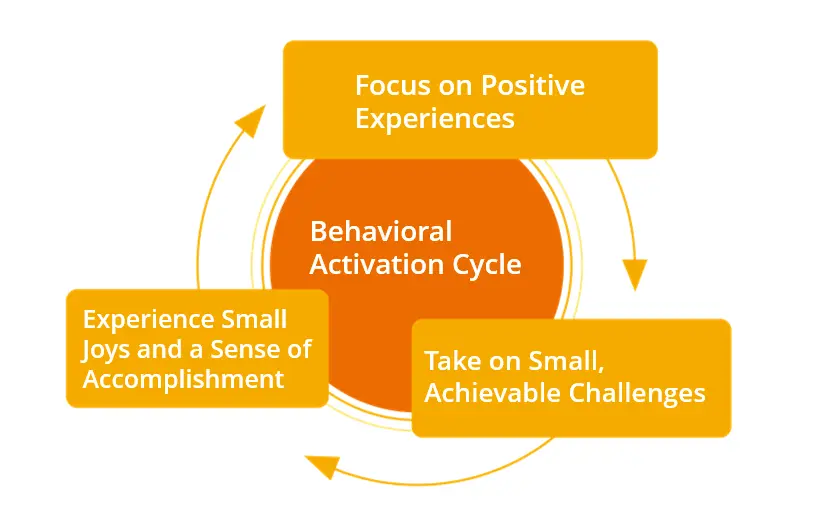
The program is built around a technique from cognitive behavioral therapy called "behavioral activation." First, we selected JTB tour conductors and staff with experience in travel planning and sales—all with a wealth of travel knowledge—and gave them facilitation training to build their conversation skills. As participants look back on their past trips, they rediscover what kinds of activities brought them joy and a sense of accomplishment, and they remember the feeling that "taking action brings enjoyment." By gradually adding more of these activities to their daily lives, the program aims to nurture their capacity to enjoy life and to act on their own initiative.
3. Designing the Study to Test Our Hypothesis
To evaluate our hypothesis objectively, we carried out the study under the supervision of Professor Shinichi Suzuki of the Faculty of Human Sciences at Waseda University.
(1) Method
We wanted to show the new service's effects as solid, objective evidence—not just as people's personal impressions. So we chose a highly reliable method that's standard in medicine and psychology: a "randomized controlled trial (RCT) using the waiting-list method."
Here's how the waiting-list method works. Participants are split into two groups: one that takes part in the program right away, and another that waits a while before taking part. By comparing how each group changes over time, we can measure the program's real effect.
Our participants were general adults aged 20 to 75. We recruited them based on set eligibility and exclusion criteria, and those who agreed to take part were randomly divided into two groups:
- Intervention group (Group A): Took part in the "talking about travel memories and dreams" program right away.
- Waiting group (Group B): Took part in the same program after waiting for a set period.
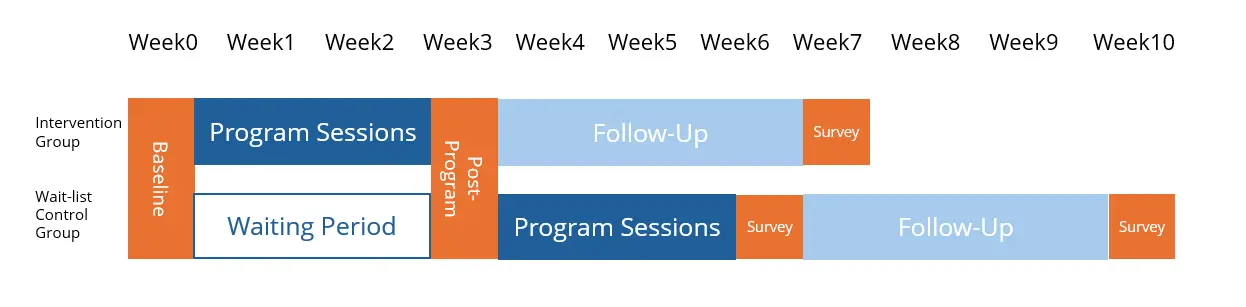
This setup lets us tell the difference between changes caused by the program itself and changes that would happen naturally just with the passage of time—so we can see the program's true impact. Group A took part in two online conversation sessions, each lasting about 50 minutes, with roughly a week between them. Group B took the same program later, and in the meantime served as a comparison group (Figure 3).
(Figure 3: Timing of Measurements)
(2) What We Measured and How We Analyzed It
To measure the results, we used several well-established psychological scales, each proven reliable in the field:
- Recovery of motivation and vigor (POMS2 test)
- The ability to feel joy and pleasure in life (EROS and VAS)
- Self-confidence and belief in one's own abilities, known as self-efficacy (GSES)
- Subjective happiness (SHS)
- Feelings of smiling and one's emotional state (Smile Scale)
We took these measurements at three points—before the program, right after it, and again at a later follow-up—so we could see both short-term changes and whether the effects lasted.
(3) What We Found
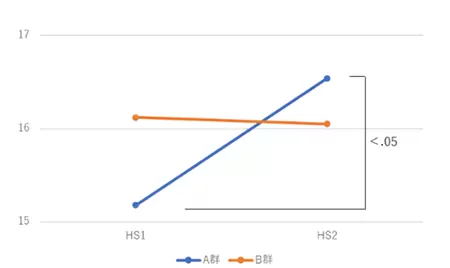
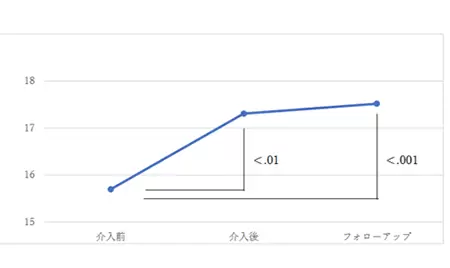
When we compared Group A (who took the program first) with Group B (who hadn't taken it yet during the same period), Group A showed a clear, statistically significant rise in their subjective happiness scores. What's more, at the follow-up check, this boost in happiness largely held steady. This suggests that the program's effects aren't just a passing good mood—they may last for some time. In short, the results strongly supported our hypothesis: talking about travel really does have a positive effect on people's overall sense of happiness.
(Figure 4: Survey Results)
jective Happiness Score Results
4. From Evidence to Reality: The Birth of "Kokotori"
Based on these results, JTB Corp. refined the program further and decided to launch it as an official service (https://www.jtbbwt.com/business/service/solution/benefit/health-support/kokotori/).
The name "Kokotori" carries a heartfelt meaning. By talking about travel memories, people revisit feelings of joy and happiness, and build up the feeling of wanting to travel again—helping them bring back a healthy, energized spirit. (The name plays on the Japanese words kokoro, meaning "heart" or "spirit," and tori-modosu, meaning "to recover.")
What makes this service meaningful is how it views travel—not as an "extraordinary trip away," but as a resource for the mind. Drawing on the "behavioral activation" theory from cognitive behavioral therapy, it treats the act of recalling happy past experiences and giving them fresh meaning as a spark for the next step: new actions and new things to look forward to.
*"Kokotori®" is not intended for medical treatment or psychological therapy. It is a program designed to support everyday well-being.
5. Travel's Potential as a Form of Social Support
The goal of social prescribing isn't to "fix" a problem. It's to help people rediscover pathways to joy and connection in their daily lives. The conversation-based travel program "Kokotori" can be one such option. Using the deeply personal resource of travel memories, it gently reinflates a heart that has lost its air—and quietly restarts the pathway that helps a person take one more step forward.
Travel isn't medicine, and it isn't welfare—it sits in a third space all its own. How might it come to be seen as a social resource that supports people's well-being? That's a question we hope to explore more fully, step by step, through further practice and research in the years ahead.
We are moving from an era where travel was simply about going somewhere, toward one where it can also serve as a "means" of supporting people's mental health and their connections with others. I hope the case introduced in this article offers a starting point for considering the new potential of travel—not only for the travel industry, but also for research institutions, local governments, and professionals in the health and welfare sectors. At JTB Tourism Research & Consulting Co., we will continue to support this practice through evidence-based research in the years ahead.
著者