
In today’s world of “convenience and abundance,” how can we create travel experiences that embrace a world of “inconvenience and scarcity”?
This new series focuses on the "line" that separates the everyday from the extraordinary in a traveler’s life, exploring different ways of perceiving and approaching "travel."In the first installment, we feature traveling chefs who offer experiences that cross multiple “lines” separating the everyday from the extraordinary—such as physical locations, ingredients, tools, communities, and eras. From there, we explore the value of travel that crosses these “lines,” how to create such journeys, and the styles of experiences they provide.
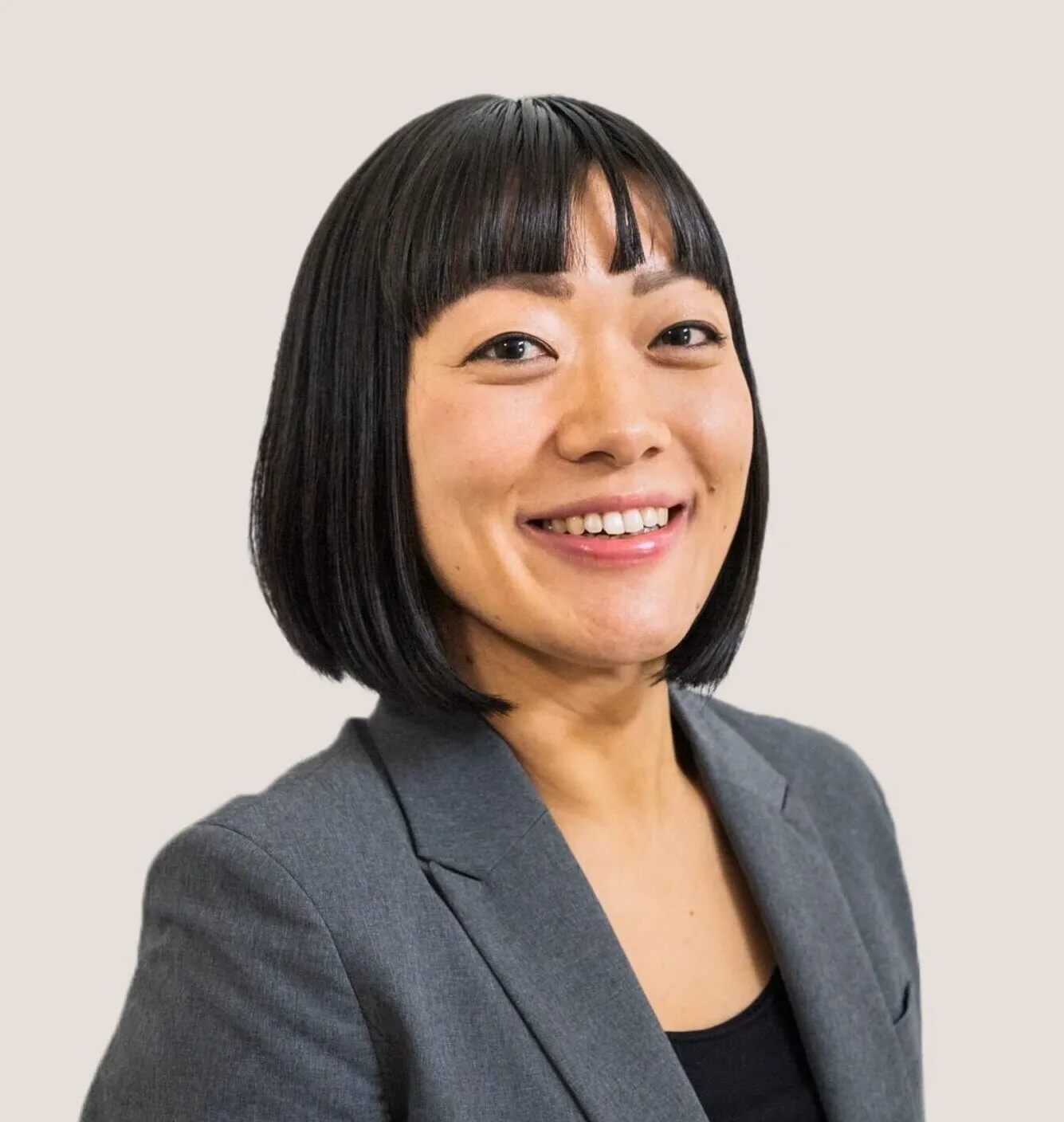
A graduate of Tokyo University of Agriculture. Under the theme of “creating dining tables where we can see the faces behind our food,” she connects the unique local cultures and the charm of producers from across Japan through food. She runs “Around the Fire,” a learning space where participants imagine the future from the dining table, and the “Jomon Club,” where participants learn about our origins from the Jomon period. In addition to serving as a chef teacher for Edible Schoolyard Japan, she also provides food education for children. Whether by the sea, in the mountains, or by the river, her culinary field extends everywhere. She builds primitive outdoor kitchens by stacking stones, constructing wooden arches, and cooking over open fires. Photo courtesy of Takashi Gomi
A Perspective on a Journey to Encounter "Lines"
In today’s world, where technological advancements are reducing the need for travel, what value can travel—which is neither essential nor urgent, and requires both money and time—offer modern people, and what role can it play in their lives?
Generally, travel is defined as “leaving one’s home to visit another place temporarily.” Some theories suggest that in ancient times, the term “travel” was not necessarily limited to journeys to distant lands, but referred to any departure from one’s place of residence.
If we define “travel” as stepping away from daily life to become aware of, approach, or cross the “line” that exists between the traveler’s ordinary and extraordinary worlds, the “lines” encountered at our destinations include clearly recognizable ones—such as objectively defined borders, or the other side of a mountain or river. On the other hand, there are also things that can subjectively become “lines” due to the differences between the traveler’s own daily life and their new surroundings—such as people’s lifestyles and values, new sensations, or discovering a side of oneself that was previously unknown.
In this rapidly changing era, we hope this project will provide an opportunity for those involved in creating travel experiences to step back from their day-to-day work, rethink “travel,” and broaden their perspectives and ways of understanding it.By introducing case studies that focus on the types of “lines” travelers encounter at their destinations and how they engage with them, we hope to expand the possibilities of “travel” for the regions and businesses involved.
The first installment features a traveling chef who offers extraordinary experiences that transcend multiple “lines”—such as physical locations, ingredients, tools, communities, and eras.Nao Mikami, whose theme is “creating dining tables where faces are visible,” connects the local cultures and the charm of producers from across the country through food, providing a space for learning about life.
Her style is a journey of creating and savoring local ingredients using local tools, together with the people present at that moment.It is not merely about eating a meal; it is a space where participants can become aware of a sense of “living” that lies beyond the joy of “deliciousness”—a joy shared by everyone.
Gathering around a meal prepared together with the people present, in that place, on that day
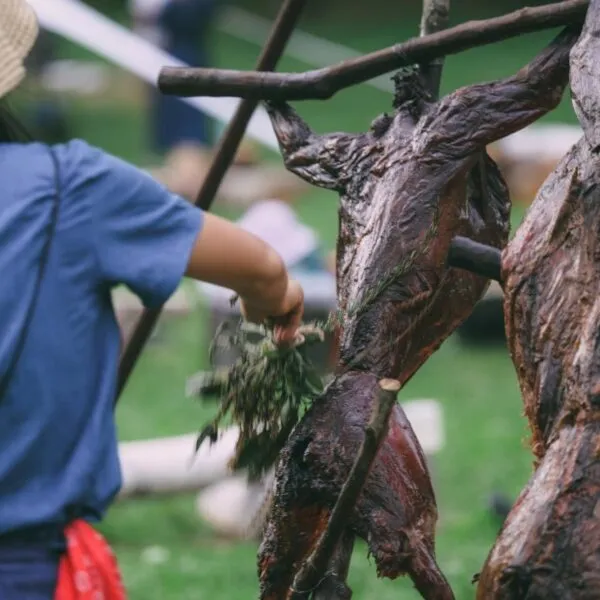
Nao Mikami is a chef who describes herself as a “traveling chef” and works under that moniker.If you look at her website or social media, you’ll see her in fields rather than kitchens, hanging wild boar to roast over an open fire, or cooking in an enormous paella pan over a campfire—most of the photos show her cooking under a bright blue sky.
She doesn’t have a restaurant or a specific location, nor does she decide on a menu in advance; instead, she travels to places where opportunities arise and cooks with the ingredients she finds there. Whether she’s cooking on a plain, in a forest, on the coast, or by a riverbank, she builds an outdoor kitchen using whatever stones and wood she finds on the spot.Her approach to choosing locations isn’t about gathering detailed information and planning in advance; rather, she forges connections with the people she meets—farmers, fishermen, hunters—and moves to wherever she feels called, devising dishes based on what’s available.She is truly a “traveling chef.” On her journeys, she offers a variety of insights, ranging from food education for children to introspection for adults through campfires.
When asked why she adopted this style, she replied with a smile: “Living in Tokyo, I had doubts about eating things without knowing who had grown them. When I met farmers, went to their fields, and took a bite of the vegetables right there, it was simply delicious.That’s why I wanted to cherish a dining table where we can see each other’s faces—one that’s not one-sided but mutual. When I thought, ‘I want everyone to prepare and eat together the most delicious gifts of nature harvested right there, right then,’ I realized I had no choice but to go to the local area and bring people there. I simply thought that way and took action, and before I knew it, connections were formed, and my current style was established.”
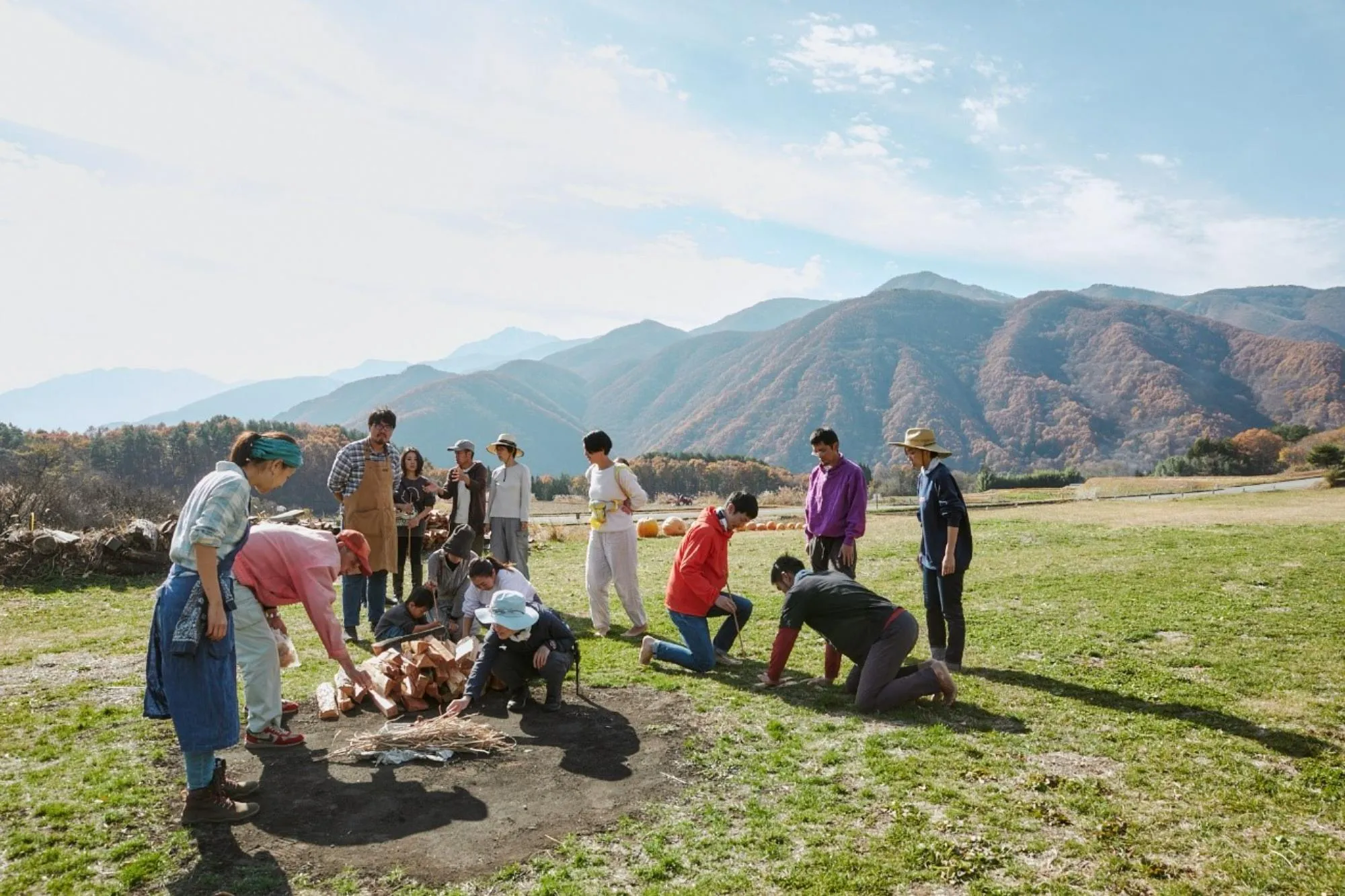
“What is ‘delicious’?” The experiential value she wants to convey is “feeling, thinking, and choosing for yourself.”
Many of the trips she organizes allow general participants to join in from the “pre-cooking stages.” They listen to the producers’ stories and sometimes even help with the harvest. Afterward, all participants cook together and share a meal from the same pot, creating a space to share that entire experience.
For example, one such trip is structured as follows.
The destination is the seaside. First, guided by the owner of a beach house and a free-range chicken farm, participants tour the chicken coop and collect eggs. They also experience slaughtering and butchering the chickens.Once ingredients harvested by local farmers or caught by free-diving fishermen are gathered, she builds a bonfire using driftwood and stones found on the beach and begins cooking.She comes up with the idea of boiling potatoes in water drawn from the sea right in front of them, and even uses the chicken carcasses to make broth. The fish, vegetables, water, and fire—all are gifts from this land. As ideas take shape on the spot, the cooking progresses with the hands of all the participants.
Finally, producers and participants gather around the same fire to share a meal. Before they know it, dusk falls and the sun sets over the sea. For the participants, this is an opportunity to learn about the daily lives of the local producers; for the producers, it is a time to reflect on their own routines from an outside perspective and exchange viewpoints.
When I asked, “Why do you offer this kind of journey?” I received an interesting answer. She replied immediately, “I consider myself an ‘educator.’”
She explains that, in her view, education means helping participants cultivate their five senses as living beings, using their feelings as a foundation to ask “Why? Why?” about everything, and gaining the strength to make their own choices, think for themselves, and navigate life. When it comes to the food they eat, this might mean paying attention to and imagining where it was harvested and how it was produced.If it’s a news story they saw on social media, it might mean keeping an open mind to the background of the incident and diverse perspectives. If it’s a sense of unease about something someone in front of them said, it might mean thinking about why they feel that way.
She believes that precisely because we live in an uncertain world flooded with information, people should choose and survive based on their own judgment, and realize the importance of living flexibly while staying true to their own values. She says that cooking serves as a tool to help participants gain these insights and trigger behavioral change.
“Eating is something everyone does every day, and everyone loves delicious food,” she says. “When I think about it that way, cooking is a wonderful learning opportunity that goes right into your body.” By using “That looks delicious! That looks fun!” as a starting point, she ensures that a wide range of people—not just those already interested in local food or honing their own senses—can participate casually.And after that instinctive sensation of “Ah, that was delicious, that felt so good,” asking “What is deliciousness?” leads participants to reflect and gain new insights. She told me that rather than intentionally choosing cooking as a tool, she realized later that it was the perfect tool for this purpose.
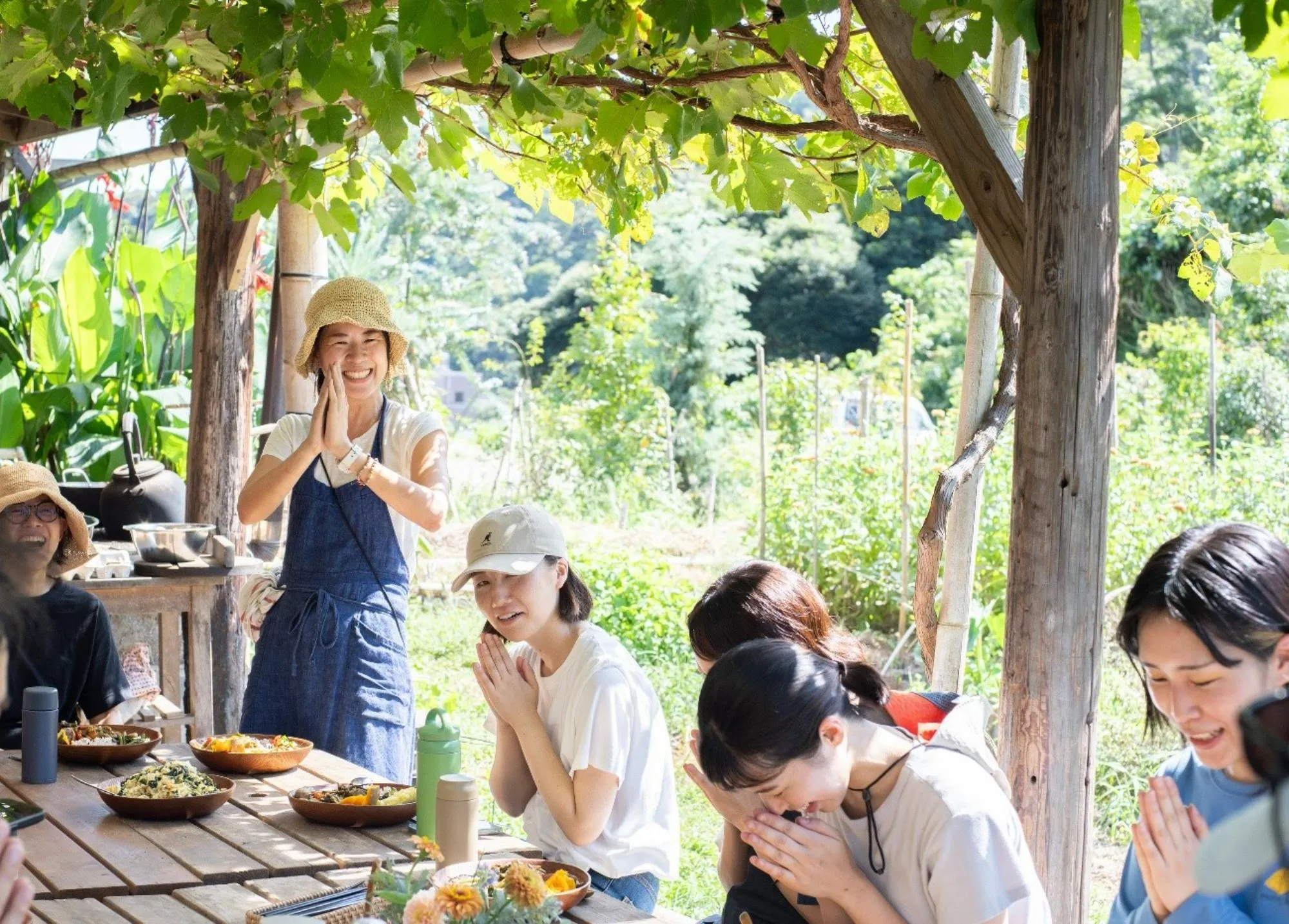
Insights for modern people living in a “convenient, abundant” world, set against a backdrop of “inconvenience and scarcity”
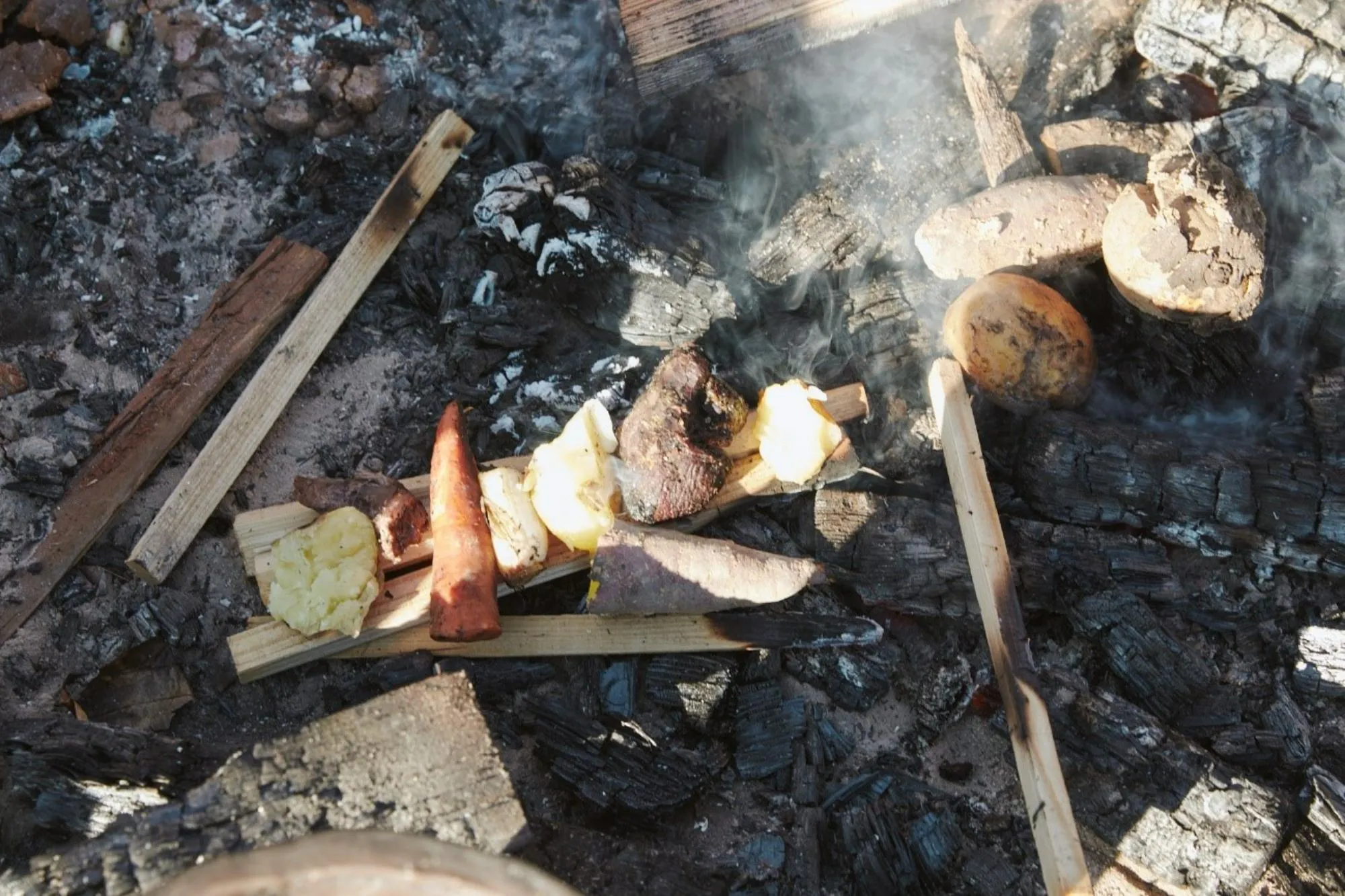
One of the keywords for her current activities is “Jomon.” While she now builds kitchens out of wood and stone and tends open fires in any location, she didn’t start out cooking over an open fire.A few years ago, when she found herself in a place without an oven and wondered, “What should I do?” a local suggested, “We don’t have an oven, but we can make a campfire.” That’s when she decided to try cooking over a campfire for the first time.The oven, which she had always taken for granted as a fixture in the kitchen, was suddenly “absent.” As a result of her flexible, improvised approach to this unexpected situation—unable to set the temperature or calculate cooking times—she found herself observing the current conditions more closely and making her own judgments based on her experience.
The use of “fire” is an indispensable part of the story of human evolution. Her journey involves seeking out delicious ingredients available in that place on that day, getting creative with the tools at hand, cooking and savoring the food with those present over the fire, and sharing the moment together around the flames.At times, she reflects inwardly, asking herself “Why?” and sharing those insights, which helps connect people who have just met. Through providing this experience, she says she imagined that life during the Jomon period—centered around a hunter-gatherer lifestyle—might have been just like this.
When placed in a world of “inconvenience and scarcity,” people accept the situation and naturally adapt with ingenuity, without forcing themselves.It is precisely because of this “inconvenience and scarcity” that cooperation, sharing, and giving arise—rather than division—and people connect with one another. She believes that if everyone could hold onto that sense of connection even in our modern daily lives of “convenience and abundance,” the world might become a more peaceful place.
She offers hints on how to apply what she has gained from cross-cultural experiences while traveling to everyday life.
Her philosophy isn’t simply about advocating for a self-sufficient lifestyle or claiming that the Jomon period was better.In fact, she says lightly, “I grew up in the city too, and I use electrical appliances.” She offers these trips to a “world of inconvenience and scarcity” strictly as opportunities to gain insights into “feeling, thinking, and choosing for oneself” and “cooperating and adapting with ingenuity.”She hopes that bringing these cross-boundary experiences back into the “convenient and abundant” modern daily life will bring about some kind of change in each participant’s life.
The experiences she offers aren’t intended for a specific group; they’re aimed at all modern people living today. Rather than pushing specialized survival experiences in nature, she uses “delicious” as the keyword, making the barrier to entry low enough for anyone—women, children, and even those who don’t usually pay much attention to food—to participate.On the other hand, looking at the content of the experiences, they are not merely lighthearted affairs that end with simply eating local ingredients, chatting with locals, and having some brief connection with the region. Participants join casually with the simple joy of “deliciousness” as their goal, yet before they know it, they gain insights about life and return to their daily routines. I felt that her ability to provide such a space is what sets her apart.
Finally, I asked her about her philosophy on travel and life. She says that for her, travel is “something that broadens her horizons.” It’s an opportunity to challenge her assumptions and reflect on where she stands in the world and how she wants to live. She values acting on her intuition, speaking simply about her hopes, thoughts, and desires, and taking the initiative to open doors for herself.Believing that what she feels and acts upon will come to fruition, she will continue to offer journeys through cooking.
A Word from the Observer of “Lines”
For those involved in the travel and tourism industry, there may be a growing trend lately to think not only in terms of the “extraordinary” but also the “unfamiliar.” This encompasses a wide range of experiences, from relaxing while taking in breathtaking scenery not found in daily life, to staying with a local family as a homestay guest, or even surviving in untouched wilderness. While it may be common to develop content based on the characteristics of a location or its infrastructure, considering the “cross-boundary” experiences we want to offer—based on the perspective and depth of experience we wish to provide—may expand the range of “non-everyday” and “different-from-everyday” experiences.
著者













