An Interview with Cultural Anthropologist Keiichiro Matsumura: The Future of Travel Five Years from Now
"Questioning Unspoken Assumptions": What Does the Future Hold from a Cultural Anthropological Perspective? In this column, with the aim of identifying future trends in tourism and travel and capturing signs of change (i.e., the seeds of new tourism), we present "Exploration Reports" (i.e., interview transcripts) featuring leading experts from a variety of fields beyond just the travel industry. In this installment, we spoke with Keiichiro Matsumura, who researches human connections and the nature of nations and economies from a cultural anthropological perspective.
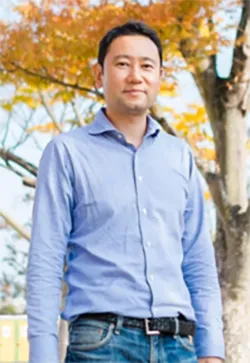
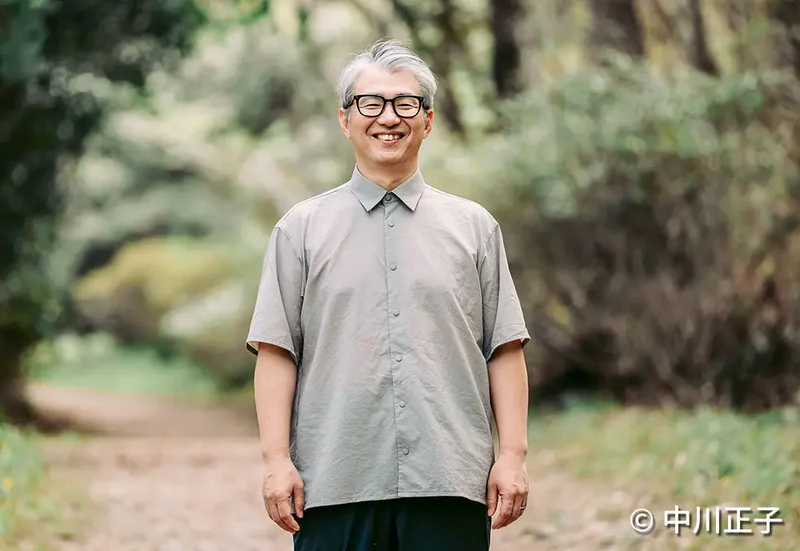
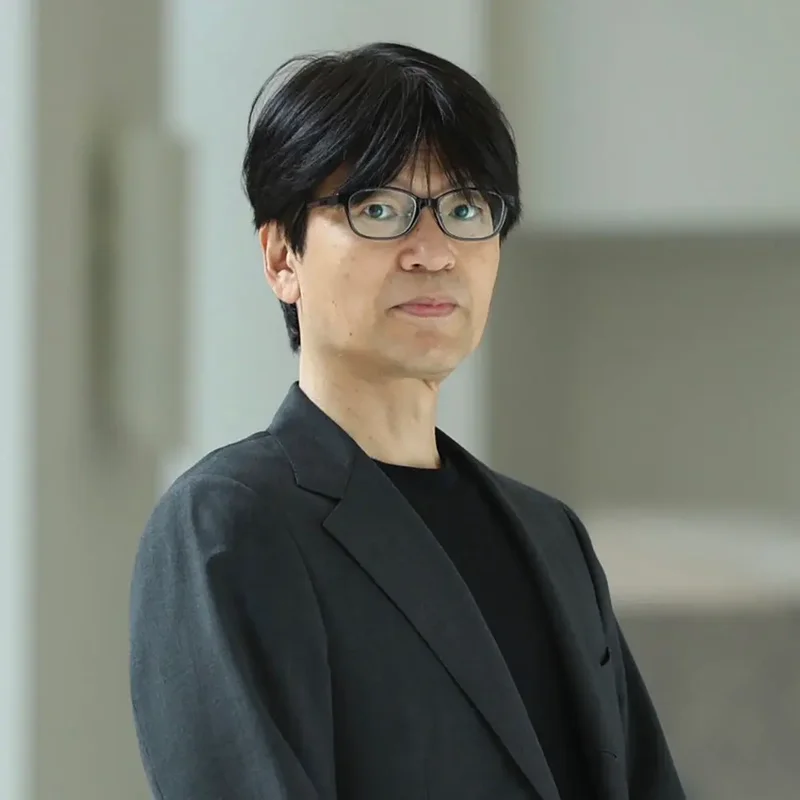
Associate Professor, Faculty of Letters, Okayama University. His specialty is cultural anthropology. He has conducted ongoing fieldwork in rural Ethiopia and urban areas of the Middle East, researching topics such as the ownership and distribution of wealth, poverty and development aid, overseas migration, and borders. His publications include *The Anthropology of Ownership and Distribution: Questioning Private Property from the Perspective of Rural Ethiopian Society* (Chikuma Gakugei Bunko), *The Revolving Anthropology* (Kodansha), *Of the Little Ones* (Mishima-sha), *The University of the Future* (Shunjusha), and *Through the Anthropologist’s Lens: Interpreting the Age of “Crisis”* (Nishinippon Shimbun, released April 18).
Travel—the act of moving between countries and regions—is only possible because it involves “returning home” and is “temporary.”
Explorer Squad: We understand that you, Mr. Matsumura, have been conducting research in rural Ethiopia for many years. You have focused on migrant workers traveling from rural Ethiopia to the Middle East and Europe, and recently your research has centered on the themes of “human mobility” and “borders.”
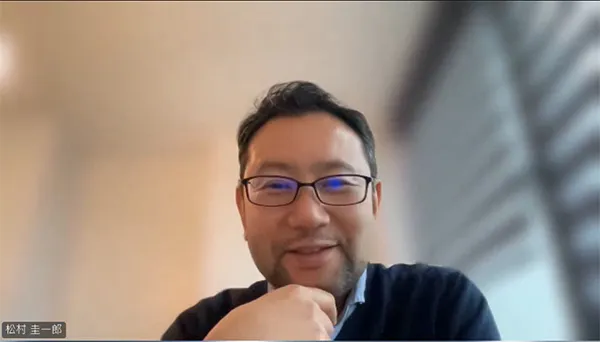
Mr. Matsumura: In today’s world, “the nation-state” and “human mobility” are closely intertwined. The reason I can travel and reside in other countries or regions is because I have official recognition of my identity as “myself” through a passport issued by Japan. If human mobility is not sanctioned within the framework of the “nation-state,” simply crossing a border makes one an illegal presence. This is a problem facing the entire world. The framework of the “nation-state” regulates “human mobility.” Everyone takes this for granted, but when viewed over a long span of thousands or tens of thousands of years, it is merely a very recent phenomenon. Given this context, I believe how we interpret the current situation is a major question.
Explorer Squad: Movement is an integral part of travel—in fact, moving itself is travel—so we feel this is a very important question for us as well.
Mr. Matsumura: In many countries, borders are often open to “travelers,” but that’s because there’s the underlying assumption that “this person will return.” Tourist visas are valid for about three months at most, and staying beyond that becomes an illegal stay. That’s why high barriers are set up for “immigration,” which is distinct from tourism. On the other hand, however, there are also systems in place where you can obtain permanent residency if you have the money.
Explorer Squad: So, in addition to being recognized by the state, are we being asked how much “value” that person holds?
Mr. Matsumura: Exactly. The movement of people itself is significant for both the tourism industry and the national economy. However, behind that lies the power to control where and how people live based on their usefulness.
There are things you can only gain when the “journey” ends and “daily life” begins
Explorer Squad: How do you view the relationship between cultural anthropology and travel?
Mr. Matsumura: An anthropologist I respect once said, “Anthropological fieldwork begins when the journey ends and daily life begins. ”It feels as though anthropology can finally get to work when that ordinary, uneventful daily life begins. I realize this perspective limits the definition of “travel” somewhat, but cultural anthropological fieldwork involves settling down somewhere, building relationships, and living out daily life as a member of that community. I think it’s true that if you only travel, you rarely encounter anything truly profound.
Explorer Squad: Is the reason you continue to be involved with Ethiopia today because you encountered something profound during your first fieldwork visit?
Mr. Matsumura: It all started when I was an undergraduate. My cultural anthropology professor was an expert on Ethiopia, and he supported me so that I could stay for a full year and conduct proper fieldwork—not just travel. I think I actually stayed in the first village for about four or five months, but once I began my research there, I ended up returning to that same village for over 20 years. The main reason
I’m still involved today is that the family who took me in and I have become practically family. Also, learning to speak the local language broadened the range of people I could meet. I became able to talk to strangers on the street. At first, my involvement was like a journey, but gradually it started to feel like my own hometown.
What impact does “academic study” have on travel?
Explorer Squad: Mr. Matsumura, you launched the “Traveling University” project in 2022 together with Ken Matsushima of Hiroshima University. Could you tell
us how this initiative came about?
Mr. Matsumura: The initial trigger was a sense of disconnect between the needs of society and the current situation facing universities. I felt that there must be more people out there—not just students—who want to discover the fascination of scholarship. As someone who works at a university, I also wanted to learn alongside people who are truly eager to learn. I believed it was necessary to create a space outside the university where people could enjoy scholarship, so I started this initiative with Mr. Matsushima, who shared my vision.
The Traveling University isn’t a formal organization; it’s just a concept and a group of people. We hosted the very first session, but since the second one, whoever steps forward has taken on the role of host and managed the event.
Explorer Squad: You mentioned that “Traveling University” is a concept—are there any elements you feel are essential for it to function as “Traveling University”?
Mr. Matsumura: Hmm, that’s a tough one… (laughs) We started without knowing if people would actually show up, but within a few days we were over capacity, and once we got going, it turned out to be incredibly fun. Something indescribable—something truly amazing—happens there. In that learning environment, knowledge and titles become irrelevant; I felt there was a potential there that wasn’t defined by the hierarchy created by academic tests. Perhaps the fundamental element is a journey that satisfies the curiosity of people who gather because they want to “learn” and “study.”
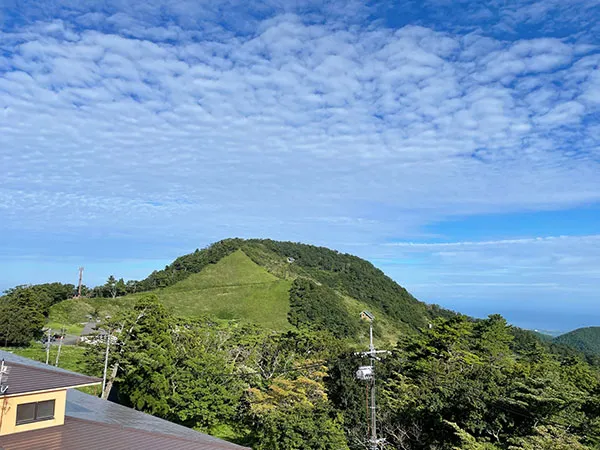
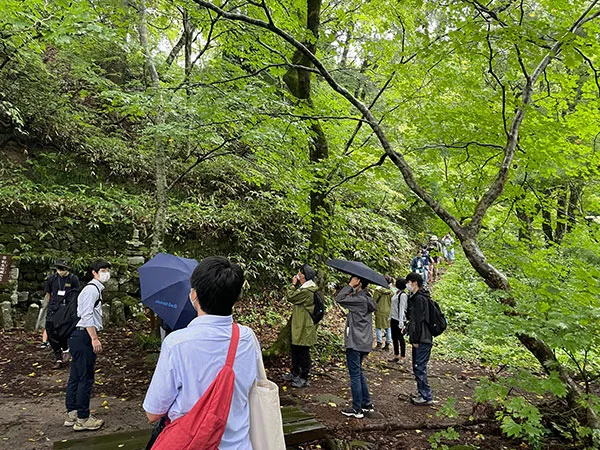
” we invited cultural anthropologists and a Buddhist priest as lecturers to deepen our learning alongside participants within the grounds of Daisen-ji Temple and at the foot of Mt. Daisen.
Photographer: JTB Tourism Research & Consulting employee
What matters is capturing the small “signs” that are already happening but that no one has noticed yet
Explorer Squad: In this interview, we’d also like to ask you about “travel five years from now” from a cultural anthropology perspective…
Mr. Matsumura: I’m not a fortune-teller, so I don’t know what the future will look like five years from now. (Laughs) As
a fundamental premise, the moment you formulate a “question,” the answer becomes somewhat constrained, doesn’t it? Anthropology is a discipline that strives to ask, “Is this the right way to frame the question?” It questions the “implicit assumptions” underlying the question. Those of you in the tourism industry, affected by COVID-19, have likely been forced to realize that “the future is unpredictable,” haven’t you?
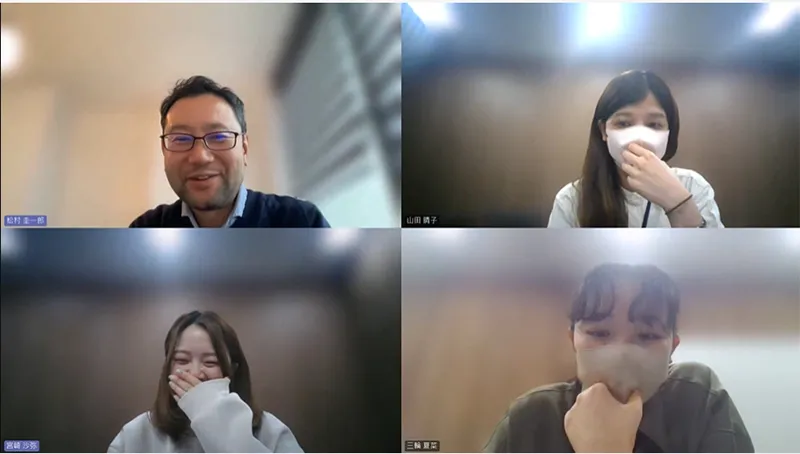
Mr. Matsumura: In other words, the very act of asking, “Is this the right question to ask?” is what matters. Even assuming that the future is unpredictable, I believe we should still consider what significance there is in “thinking about five years from now.” Compared to yesterday, today is “the future one day ahead,”
isn’t it? The future lies in the extension of the present. Thinking about the future means grasping what is happening right now. In other words, it’s necessary to understand what is happening on the ground at this very moment. To think about what will happen tomorrow, we need to pick up on the subtle movements and signs happening today that are too small for anyone to notice. Based on
what I’m seeing, I can tell you that there are people out there “right now” who find the “Traveling University” initiative interesting. Perhaps what you yourselves are seeing on the front lines of tourism is what really matters.
Explorer Squad: We in the Explorer Squad tend to focus on “signs” visible from a bird’s-eye view, but we must also capture the “signs” visible from the perspective of those directly involved. I felt we needed to think about things by changing our stance, environment, and perspective.
Mr. Matsumura: Exactly. My current research is based on the same principle. From a bird’s-eye view, you can grasp major trends, such as the incidents reported in the newspapers, but there are aspects of social change and people’s sensibilities that remain unspoken—things you simply cannot understand unless you immerse yourself in the situation. It takes time to interpret these things in your own way, but the anthropological perspective holds that there are things you cannot understand unless you are actually there.
Furthermore, as stakeholders who are part of this society, we need to clarify our “intentions” regarding what kind of society we want to create. Rather than viewing “five years from now” as a “phenomenon” to be analyzed from a distance, we should ask ourselves, as stakeholders: “What is needed to create a better society and ensure people’s happiness through tourism?” I believe that discussion is a long road ahead, but it is necessary.
The “Seeds” We Found on This Expedition
What this expedition sought to find was not a “fortune-telling” (prediction) of what travel will look like five years from now, but rather the “seeds” for considering what “the shape of travel five years from now” should be, through the perspectives of various people. I was reminded once again that these seeds connect to our collective will. When I was told, “I’m not a fortune-teller, so I don’t know what will happen five years from now,” I was startled for a moment… But I think readers may have also realized that we often overlook the fundamental questions: “Why are we asking this question?” and “Is this the right question to ask?” Whether in this expedition or in my own daily life, I want to continue to value the steady process of discovering the small signs and ripples happening all around us that no one else has noticed.
著者