An Interview with Kentaro Nakajima, an Expert in Spatial Economics: The Future of Travel in Five Years
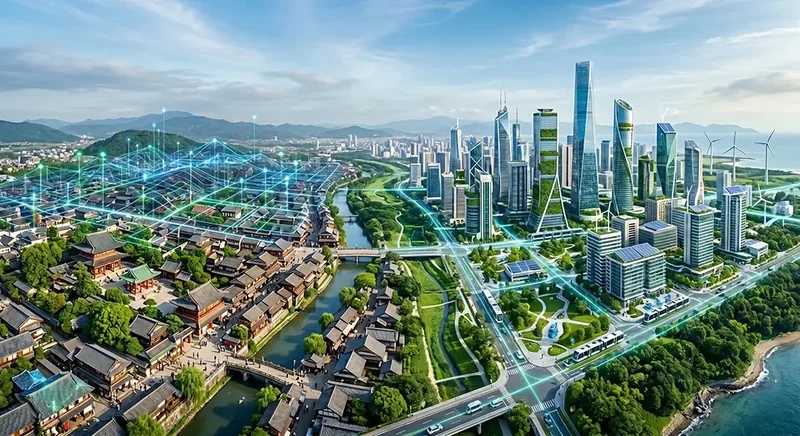
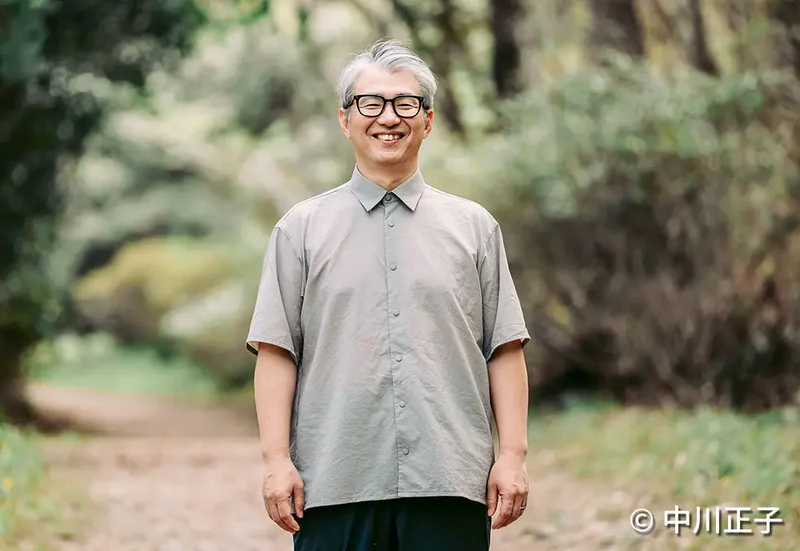
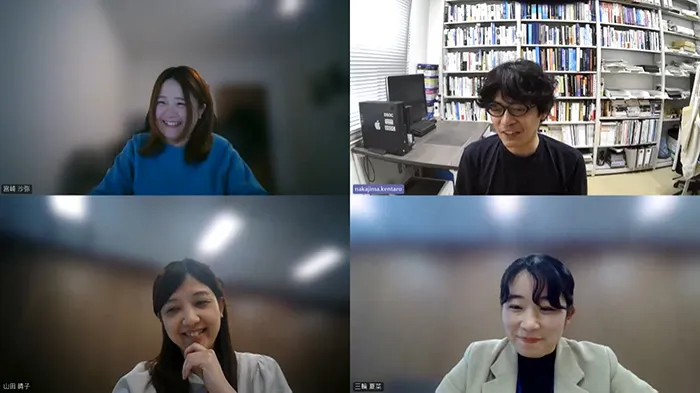
What will the cities of the future look like from the perspective of spatial economics, with a focus on “human mobility”? In this column, we present “explorations” (interviews) with leading experts from various fields—not limited to the travel industry—with the aim of identifying future trends in tourism and travel, as well as detecting signs of change (i.e., the seeds of new tourism). In this installment, we spoke with Kentaro Nakajima, a professor at Hitotsubashi University who focuses on empirical research in spatial economics.
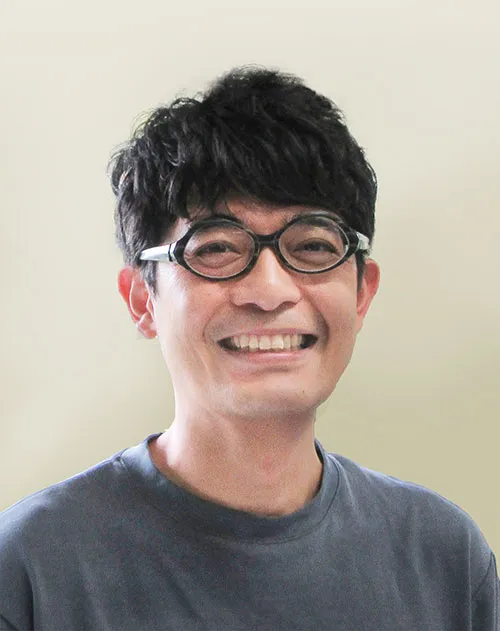
Graduated from the Faculty of Economics, University of Tokyo, in 2003. Completed the doctoral program at the Graduate School of Economics, University of Tokyo, in 2008 (Ph.D. in Economics).After serving as Associate Professor at the Endowed Chair of Regional Economics and Finance (No. 77) at the Graduate School of Economics, Tohoku University; Associate Professor at the Center for Economic Institutions, Institute of Economic Research, Hitotsubashi University; and Associate Professor at the Graduate School of Economics, Tohoku University, he has been a Professor at the Center for Innovation Research, Hitotsubashi University; a Professor at the Graduate School of Business Administration; and a Professor at the School of Commerce since 2023. He conducts empirical research in spatial economics using a wide range of data, including satellite imagery, smartphone GPS data, and historical data.
Urban economics and spatial economics involve the study of cities shaped by human mobility
Explorer Squad: Mr. Nakajima, what exactly do you specialize in researching within the fields of urban economics and spatial economics?
Mr. Nakajima: Economic activity is spatially heterogeneous—it concentrates in certain areas while remaining sparse in others. I investigate why such heterogeneous spaces emerge and the underlying causes of these patterns. While I am currently working on various projects, one tourism-related theme involves tracking human flow using GPS data (*Note 1). I am researching how much and where the population has decreased during the COVID-19 pandemic, as well as how the reduction in mobility will reshape the future of cities. *Note 1: GPS data: The data used to track human flow consists of anonymized location information obtained from smartphone users’ apps.
Explorer Squad: Could you also explain the difference between urban economics and spatial economics?
Mr. Nakajima: Urban economics and spatial economics differ in their spatial scales. Urban economics is a field that focuses on a single city, while spatial economics operates on a broader scale. For example, within Tokyo, Otemachi is used for offices, while the suburbs serve as residential areas from which people commute to the city center. Urban economics examines why such differences arise within a city. Spatial economics, on the other hand, considers why people gather in Tokyo within the context of Japan as a whole.
Explorer Squad: We’ve heard that there was a decrease in foot traffic during the COVID-19 pandemic. What were the reasons for this? Also, did the pandemic change the structure of cities?
Mr. Nakajima: The first reason for the decline in foot traffic is that people stopped commuting to work during the pandemic, which is clearly visible in GPS data. The second reason is that non-commuting travel decreased significantly during the pandemic. When we break down the factors behind the decline in foot traffic in the city center, one reason is that opportunities to travel from far away specifically to shop or dine out in the city center have decreased. However, that alone doesn’t fully explain the decline in foot traffic in the city center. People combine various destinations in their daily lives, creating “trip chains”—for example, going from home to a convenience store, then to work, out for lunch, back to work, and stopping by an izakaya or supermarket on the way home. The decline in these trip chains—particularly the fact that people stopped going to downtown workplaces—explains the sharp drop in downtown foot traffic, and this allows us to consider how it will affect the future structure of our cities. As of 2023, foot traffic has returned to pre-pandemic levels to some extent, but it hasn’t fully recovered. Even if remote work becomes the norm, I don’t think many people generally enjoy commuting or traveling for its own sake. I believe people travel because there is something to be gained at the destination that outweighs the hardships of the journey. The COVID-19 pandemic has created an option—remote work—that eliminates the need to travel. I am very interested in how this will affect the long-term shape of our cities.
What are the factors that change human mobility and the shape of cities?
Explorer Squad: I imagine that urban structures can change due to various factors beyond the COVID-19 pandemic. What kinds of factors do you think significantly alter the shape of cities?
Mr. Nakajima: I think there are multiple factors, but “regulations” such as building height and floor area ratio are key. One reason companies want to have offices in the city center is that it makes it easier to bring together people living in various locations. Terminal stations are attractive because of their excellent transportation access. Another reason is that, since many people gather in the city center, information exchange and meetings become smoother, leading to increased productivity. In urban economics, the benefits gained when business activities concentrate in a specific area are referred to as “economies of agglomeration.” Companies gather in city centers because of the value derived from these economies of agglomeration, but I believe that excessive regulations can undermine that value and ultimately diminish the value of the city itself. Depending on the regulations, there is a very real possibility that they could alter the city’s value and structure. Another key factor is “transportation infrastructure.” The importance of public transportation has been extensively studied, and it is said that its value varies depending on income. Without public transportation, people must rely on cars or other private vehicles, which can be burdensome. Furthermore, if one’s workplace is far from home, it may become difficult to find a good job. Therefore, properly developing public transportation is crucial for urban planning from the perspective of where people live and work.
Explorer Squad: Mr. Nakajima, are there any particularly memorable areas where you’ve felt the city’s form has changed in the regions you’ve been involved with so far?
Mr. Nakajima: On a personal note, since I’m from Fukuoka, I have a special connection to the city and have researched it extensively, so I’m particularly interested in land use in Fukuoka City. In the case of Fukuoka City, there were typical development restrictions. Because the airport is close to the city center, development is limited. Regarding building height restrictions, the Civil Aviation Act specifies the maximum height of buildings based on their distance from the airport. In the case of Fukuoka Airport, Hakata Station is only 3 km away and Tenjin Station is only 6 km away. Consequently, for example, buildings taller than 54.1 meters cannot be constructed in front of Hakata Station. While building taller buildings would increase floor area and allow land owners to charge higher rents, these regulations prevent them from constructing buildings as tall as they would like to meet demand for floor space. I was trying to estimate how much this reduces the value of land in Fukuoka City. Now, thanks to deregulation, redevelopment projects like the Tenjin Big Bang have begun, and high-rise buildings are starting to go up in Fukuoka City. I am researching how this will change the city’s urban landscape and productivity.
What will the future shape of cities look like from a long-term perspective?
Explorer Squad: From the perspective of urban economics and spatial economics, what do you predict major and regional cities in Japan will look like five years from now?
Mr. Nakajima: Regarding major cities, remote work seems likely to become fairly established, so I’m interested in what will happen to offices in that scenario. If remote work becomes one day a week, the required office space decreases to four-fifths of what it was. Office layouts will change—for example, adopting a free-address system to ensure effective communication on those valuable days when people come into the office. Additionally, office rents in major cities are falling. Offices in major cities that were previously only affordable for large corporations are now becoming accessible to startups, which may lead to their entry into city centers. If that happens, I think it will become possible to leverage a different kind of agglomeration economy than before, and the shape of urban growth will change. As for regional cities, the spread of remote work may also lead to a decline in the value of offices in city centers. On the other hand, since regional cities do not have the same population overflow as major cities like Tokyo, it is difficult to predict exactly how they will change in the future. Earlier, I mentioned that “regulations” are a factor in changing the shape of cities, but whether we’re talking about major cities or regional cities, we need to look at them not just from a “short-term perspective” focused on temporary congestion, but also from the “long-term perspective” of urban economics.
Explorer Squad: So, the way cities change varies depending on whether we’re looking at the “short-term” or “long-term” timeframes. In urban economics and spatial economics, what time periods do the “short-term” and “long-term” perspectives refer to?
Mr. Nakajima: Regarding the short-term and long-term perspectives, we consider the “short term” to be the period when people and businesses have not yet moved locations, and the “long term” to be the period when they begin to change where they are located. Taking Niseko as an example, we consider the period when inbound tourists began visiting Niseko to be the “short term,” and the period when, in response to that, many local residents began living in Niseko and providing services to be the “long term.”
Explorer Squad: In that case, when considering the long-term perspective, is it possible that overtourism could change a city? Also, in the travel sector, there are emerging efforts to disperse the flow of people. Will managing the flow of people become one of the functions of a city?
Mr. Nakajima: There have been numerous discussions on how to avoid urban congestion, and I believe development regulations are one solution. Since overtourism is a hot topic in this context, I consider how to curb congestion to be a crucial point. When the number of tourists increases in city centers, services geared toward tourists proliferate, pushing aside the services residents need. This makes it impossible for residents to live in the city center, forcing them to move out to the suburbs. I believe this is highly likely to be a critical issue that will reshape the city in the long term. While our attention tends to focus on short-term congestion, the concentration of inbound tourists in the city center causes locals to stop visiting, leading to changes in where they live and what they do—which in turn alters the long-term “shape of the city.” In other words, a city changes only when people move. That perspective is central to urban economics, and I find it fascinating.
The “Seeds” We Found on This Exploration
What we discovered on this expedition was that the flow of people changes due to various factors, such as regulations, and that “the movement of people reshapes the city. ”In the tourism sector, we can infer the psychology behind why people visit—such as the appeal of local tourist spots and their reasons for visiting—based on the volume of foot traffic and the order of their itineraries, and use this to inform promotion and visitor attraction strategies. On the other hand, I was reminded once again that to seriously consider future urban development, we must broaden our temporal and spatial perspectives and think about the value and form of cities from a long-term viewpoint.
著者