A Conversation with E-sports Caster OooDa: What Travel Will Look Like Five Years Ahead
What does OooDa, a prominent esports caster, think about the power of esports and the concept of “traveling with your daily life”? In this column, with the aim of identifying future trends in tourism and travel and capturing signs of change (i.e., the seeds of new tourism), we present “exploration reports” (i.e., interview transcripts) featuring leading experts from a wide range of fields beyond just the travel industry. This time, we spoke with OooDa, an esports caster who has helped energize various game tournaments and events.

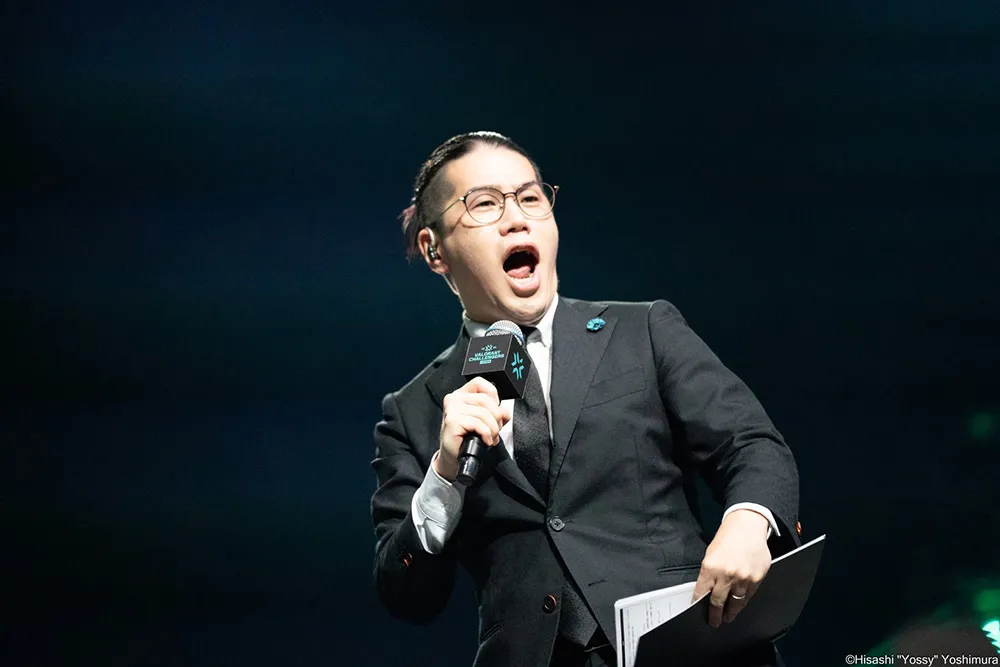
Born in Osaka Prefecture in 1987, he is an esports caster who appears in over 200 programs and tournaments annually, primarily covering FPS (first-person shooter) games. With a motto of “tournament commentary that even beginners can understand,” he energizes venues and broadcasts across a wide range of genres with his dynamic commentary and lively commentary style.
How I Ended Up as an "Esports Caster"
Explorer Squad: Thank you for joining us today. First, could you tell us a bit about your background and what your current job entails?
Mr. OooDa: I’m from Osaka Prefecture and worked locally until I was about 20. However, a series of events led me to decide, “Okay, I’m going to become a film director!” I worked as an assistant director (AD) on films while independently producing my own movies. But I hit a wall and ended up staying home all the time. That’s when I discovered online PC games. As I continued interacting with other players through those games, I made friends—and even found a girlfriend. I knew I had to work and earn money to see her, so I started working again around that time. But I also wanted to help energize the gaming community that had helped me get back on my feet, so I volunteered behind the scenes to help run the community. That’s when I was invited to try speaking on an upcoming live stream because people thought I was entertaining, and that’s how I started streaming on platforms like YouTube. After a while, I was headhunted by a professional event staff member who asked if I’d like to try commentating on game tournaments as a job. That was around 2010, and that’s how I ended up in my current line of work. 99% of my current work is game-related; I mainly work as a commentator for game tournaments—what we now call esports tournaments—and as an MC for game events, such as hosting new game launch events.
Explorer Squad: So, it sounds like you’ve had quite a winding path to get to where you are today. When people hear “esports caster,” I think many imagine commentators for other sports like baseball or soccer. Are there any differences between the two?
Mr. OooDa: With sports like baseball or soccer, the camera usually starts by briefly showing the broadcast booth for the announcer’s introduction, and then it mostly focuses on the players on the field or the spectators. On the other hand, with esports, the camera is often on the broadcast booth. Esports is basically online, and players compete from their homes or gaming houses (places where players on a team gather to practice). So, during pre-match prep time or downtime between matches, there’s nothing to show on screen—in other words, the visuals just don’t hold up. That’s why we often keep the camera on the casters’ booth during those times. As a result, the casters themselves need the ability to hold the audience’s attention—a kind of on-screen presence. I think that’s the difference compared to casters in other sports. Personally, I see casters as being strictly behind-the-scenes, so I’d rather not be on camera that much (laughs).

Esports: Where a Single Game Screen Converges a World of Emotions
Explorer Squad: To begin with, what exactly is “esports”?
Mr. OooDa: “Esports” is “competing using digital games.” For example, if you’re playing a puzzle game alone in silence, it’s just a “game,” but if two or more people compete against each other—such as by competing for high scores—it becomes “esports. ”Even in single-player games like RPGs, where the game system doesn’t allow you to compete against others, if players can set their own rules—like time trials—to compete against each other, it becomes esports. So I believe any game has the potential to become esports.
Explorer Squad: So games and esports aren’t separate entities—they’re on the same continuum. What do you think is the appeal of esports, OooDa?
Mr. OooDa: As is true of other sports, it’s the ability to experience the excitement and exhilaration that comes from the competitive nature of the event. You can get that feeling from simple gameplay, but when you add live commentary and the players’ personal stories to the mix, I think that excitement and exhilaration become even stronger. I also find it fascinating that a single game screen is packed with the diverse thoughts and emotions of so many people. Of course, the players themselves have a strong desire to win, but the passion of the fans is also incredible. At recent offline tournaments (those held at physical venues), you’ll see fans cheering with fans bearing the players’ names. It’s practically like an idol fan club. They’re captivated by the players’ backgrounds and personal stories, cheering for the players on the other side of the screen. I think it’s truly wonderful as entertainment to see laughter, anger, and emotion all condensed into a single screen.
Explorer Squad: The passion poured into a single game screen. I wondered if the passion of game developers, event organizers, and casters like OooDa is also poured into that. Among all sports, isn’t the density of passion per screen the highest in esports? Listening to your story, I became curious about holding offline esports tournaments. I think one of the appeals of esports is that it can be played online from anywhere in the country, but what exactly is the appeal of holding them offline?
Mr. OooDa: I think it’s easier to understand if you imagine your favorite artist. These days, you can watch live streams on streaming sites and enjoy powerful visuals right at home. But the exhilaration you feel when you actually go to a live venue and get hyped up alongside thousands of other fans who share your passion is truly beyond imagination. Watching esports offline is exactly the same.
Explorer Squad: So, do you think esports will eventually consolidate into offline events?
Mr. OooDa: I think offline events are just one option among many. Of course, the energy at an offline venue is something you just can’t get online. But nowadays, we can set up virtual venues and use AR or VR to watch together, so the infrastructure for creating an experience close to an offline event is already taking shape. Also, since I went through a period of social withdrawal myself, I don’t think we should force people in that situation to come out into the real world. I hope that online games and online interactions can serve as a source of emotional support for them. Esports is fundamentally centered around online play, but beyond that, how people enjoy it is entirely up to them.
The Role of Esports in the Community
Explorer Squad: I imagine there are community-based esports tournaments and gaming events held locally. Do you ever get involved in organizing those, OooDa?
Mr. OooDa: Of course. I’ve been fortunate enough to travel to various places across the country. Outside the Tokyo metropolitan area, some of the places I visit every year include Gifu, Saga, Fukuoka, and Osaka.
Explorer Squad: Is there anything in particular that left a strong impression on you during those trips?
Mr. OooDa: What made me happy was when attendees told me, “I can’t really make it all the way to Tokyo to see events, so I’m really glad you’re holding one here in my hometown.” Those are the moments when I truly feel that holding the event was worth it. Also, since events in regional areas are often held in places like shopping malls, it’s really rewarding to see people who aren’t very familiar with games just happen to drop by and participate or watch—it’s a great way to introduce them to games and esports.
Explorer Squad: So you sometimes hold events at shopping malls, too. In that case, it’s true that all kinds of people are likely to participate.
Mr. OooDa: Exactly! Once, when we held an event using "Taiko no Tatsujin," a boy around kindergarten age joined in. He lost in the score battle, and he was so upset that he fell to the ground and burst into tears (laughs).We also had a man in his 60s with hemiplegia come to try it out. He held the drumsticks with one hand and played happily, and the people around him got really into it too. Seeing that, I was reminded once again of the incredible power of games and esports—how they can be enjoyed and get everyone excited, no matter who you are.
Explorer Squad: It really does attract such a diverse range of participants! I feel that the fact that people of all ages and genders can enjoy it together is one of the benefits of utilizing games and esports in the community. Are there any other reasons why it’s meaningful to hold esports tournaments and gaming events in the local area?
Mr. OooDa: My perspective is a bit different, but in recent years, esports teams have been operating in ways that are closely tied to their local communities. I think there are various reasons for this trend, but I feel one of them is the desire to turn local cheers into a source of strength. For example, if we take an esports team based in Fukuoka, I imagine some fans would cheer them on by saying, “Don’t lose to teams from Kansai or Kanto!” If that happens, it adds another layer of passion and excitement to the matches, so I expect the games will become even more exciting.
Explorer Squad: After speaking with you, I felt that supporting an esports team could potentially deepen people’s connection to their local community. In other words, esports could serve as a catalyst for fostering a sense of attachment to the region. I hope you’ll continue to host community-focused esports and gaming events in the future, but are there any challenges you feel might become obstacles during the operation?
Mr. OooDa: Speaking generally about small-scale events—not just those held in regional areas—the rising appearance fees for performers are a major issue. Given the current state of esports in Japan, where its appeal as content is still relatively weak, we often have to rely heavily on influencers like live streamers and video creators on platforms like YouTube. We frequently invite them to our events, but the reality is that appearance fee standards within the industry are being driven up by large-scale events.While I think rising appearance fees are a positive sign of the industry maturing, regional and small-scale events have limited budgets, making it difficult to invite these individuals. I’m not simply asking them to lower their fees, but personally, I believe we need to find common ground to achieve the goal of “revitalizing events and local communities.”

A Journey That Carries “Everyday Life”
I’d like to ask OooDa from the Explorer Squad about their thoughts on travel. Is there anything in particular you look for when you travel?
Mr. OooDa: Whether it’s for personal or work reasons, when I arrive at a destination, I take a deep breath and breathe in the local air. The air really does differ from place to place. I really love the air around Gifu and Nagano—it makes me feel connected to nature. Other than that, it might sound cliché, but I always make sure to eat the local food, and since I love waterfalls, I go see them. If I get even slightly lost, I often talk to a local before looking it up. People are usually surprised when I strike up a conversation, though (laughs).
Explorer Squad: Talking to locals is actually pretty rare! The internet is great for pinpointing exactly the information you want, but when it comes to communicating with people, you can often get information you weren’t even looking for. So, if you want to learn about a region, I definitely think that’s an effective approach. For our final question, what do you think “travel five years from now” will look like?
Mr. OooDa: It might be a bit hard to predict five years from now, but since I love my car, I’d like to be able to easily drive anywhere from home in my own vehicle. Of course, I can already take long trips using the highway, but it takes much longer than taking the Shinkansen or a plane, doesn’t it? Also, sometimes people take the Shinkansen or other trains to their destination and rent a car there, but I want to drive my own car. So, for example, I’d love it if they developed a “Shinkansen for cars” where I could load my car onto it and quickly reach my destination. Then, I could explore the area in my own car—that’s my ideal scenario.
Explorer Squad: Recently, a next-generation transportation system has been proposed where a single cabin (room) is loaded onto a car, train, ship, or plane and moves automatically as a whole. Research is progressing in various areas—is that the kind of image you have in mind?
Mr. OooDa: That’s exactly the image I have in mind! I think it would be great to travel that way.
Explorer Squad: I sense that underlying this concept is a desire to improve comfort at travel destinations—where stress is inevitable—by bringing the “everyday space” of a private car into the “non-everyday space” of a travel destination. Perhaps we’ll see the emergence of this kind of “travel where you bring your everyday life with you” in the future. Thank you so much for sharing your valuable insights with us today!
The “Seeds” We Found on This Expedition
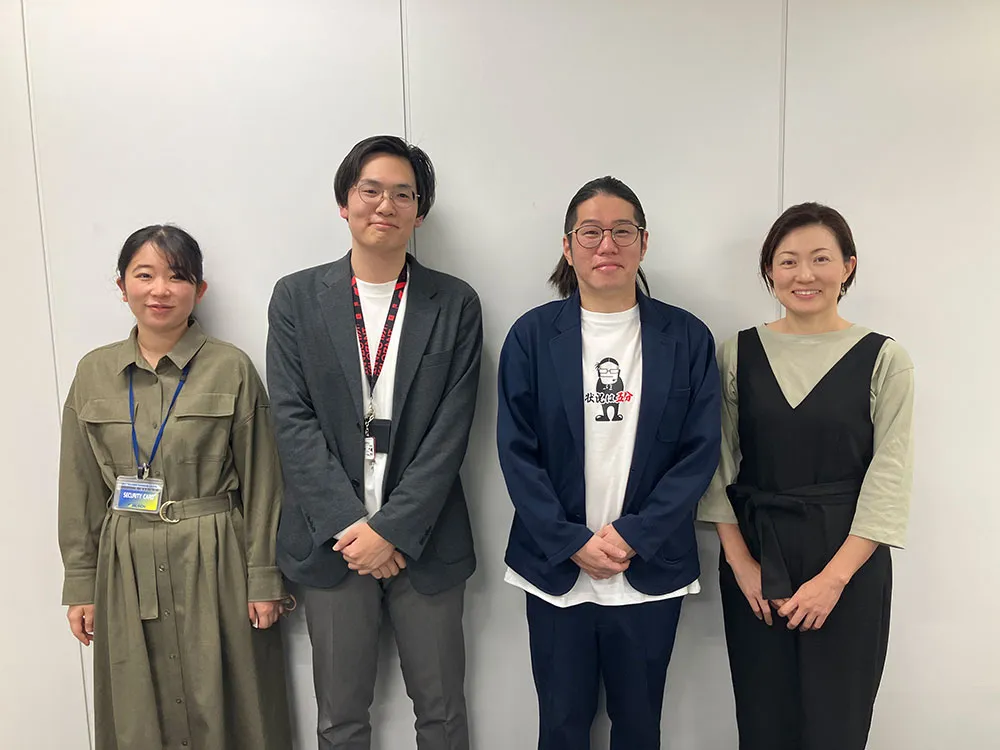
I think OooDa’s insights gave us a hint about how we might perceive “space” in travel five years from now. In the world of esports, it’s commonplace to be in the everyday space of one’s home, then switch to online matches (the “non-everyday”) when it’s time, and return to daily life once they’re over. Since there is no “travel” involved, I believe the boundary between “everyday life” and “the extraordinary” is very close. OooDa’s concept of “carrying everyday life with you”—developed through years of experience in the esports scene—may well become the mainstream way of thinking about “everyday life” and “the extraordinary,” as well as the “travel” between them, in travel five years from now.