Community Building Through Interaction: What Rural Community Organizations (Rural RMOs) "Connect"

In rural areas, the declining birthrate and aging population are progressing rapidly, making it increasingly difficult to sustain the activities of local organizations and preserve farmland. Consequently, there is a growing focus on connecting these organizations to address challenges in a comprehensive manner. Drawing on the concept of “Rural Community Management Organizations (Rural RMOs),” which has garnered attention in recent years, this paper examines approaches to community development that connect people and organizations both within and outside the region.Note that the community activities discussed in this paper refer to those targeting areas smaller than municipalities (ranging from a single hamlet to multiple hamlets).
Introduction: From Fieldwork in District I
In the rural area (District I) where I conduct my fieldwork, I hear about local challenges every time I visit.
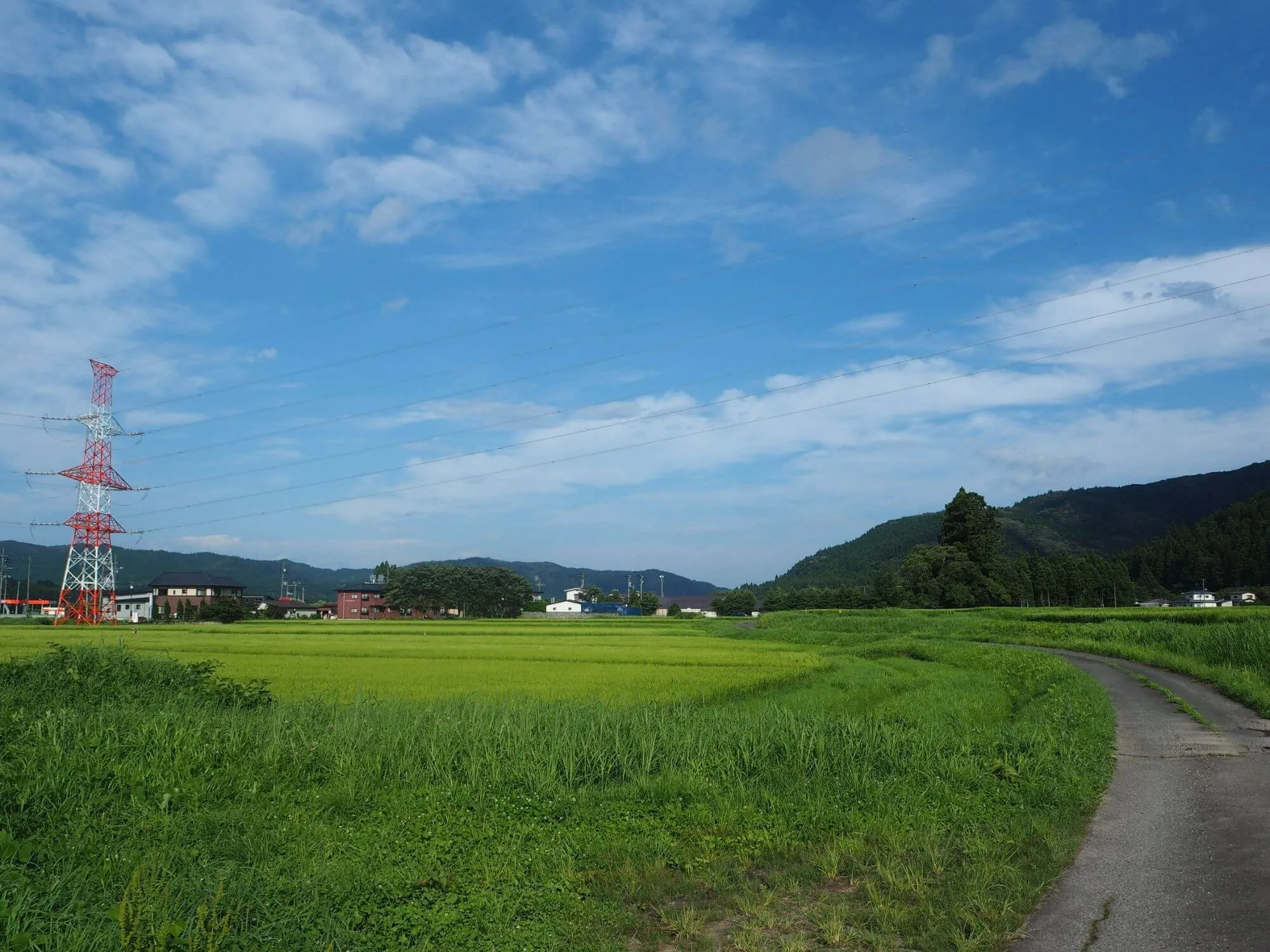
In every village, wildlife damage is becoming a serious problem. Even when electric fences are installed around fields, wild boars crawl underneath and ravage the crops. No matter how often the grass is cut, the field edges and abandoned farmland quickly become overgrown. It’s heartbreaking to see elderly residents using heavy brush cutters under the scorching sun, but because they are reluctant to ask for help, I can’t bring myself to say, “Why don’t you just stop?”
These challenges are common to many rural areas in Japan. In rural regions, particularly in mountainous and mid-mountain areas, aging and population decline are progressing rapidly; between 1970 and 2015, the population decreased by over 40% in mountainous agricultural regions and by just under 20% in mid-mountain agricultural regions*¹.
Agricultural production requires not only the farming tasks themselves—such as sowing seeds and harvesting—but also complementary functions like the maintenance of field paths, reservoirs, and irrigation channels. These tasks are labor-intensive, and with the declining number of farmers, there are cases where proper maintenance is not being carried out. Furthermore, the increase in abandoned farmland and degraded forests has blurred the boundaries between humans and wildlife, leading to a rise in wildlife damage.
1. Organizations Engaged in Community Development
There are various organizations active in the community, such as neighborhood associations, town associations, volunteer fire departments, and district social welfare councils. For example, volunteer fire departments play a public role that complements administrative services by carrying out disaster prevention activities and initial firefighting efforts that the fire department alone cannot handle.
For local governments, maintaining the standard of administrative services has become difficult due to administrative and fiscal reforms, as well as the expansion of municipal boundaries resulting from the “Heisei Merger.” Meanwhile, at the community level, challenges related to an aging population and population decline—such as providing support for elderly people living alone—are on the rise.
Consequently, there is a growing movement to consolidate local organizations into “Regional Management Organizations (RMOs)” to pool their strengths and aim for more comprehensive solutions to these challenges. According to data from the Ministry of Internal Affairs and Communications as of September 2022, there are 7,207 Regional Management Organizations active in nearly half of all municipalities nationwide*². With the aim of enabling residents to take the lead in addressing issues that the government alone cannot handle, some municipalities have established Regional Management Organizations in every district.
Let’s examine the activities and organizational structures of Regional Management Organizations based on the report*² from the “Survey and Research on the Formation and Sustainable Operation of Regional Management Organizations” conducted by the Ministry of Internal Affairs and Communications in FY 2022.
Regarding activities, “events such as festivals, sports days, and concerts” are the most common, followed by “community exchange programs,” “health promotion,” “community beautification and cleanup,” “disaster prevention drills and training,” and “creation and publication of community newsletters,” each accounting for around 60% of activities. On the other hand, among agriculture-related initiatives, even the most common activity—“weeding and dredging of irrigation channels, and repair of farm roads”—accounts for only 11.7%, representing a relatively low proportion (Figure 1).
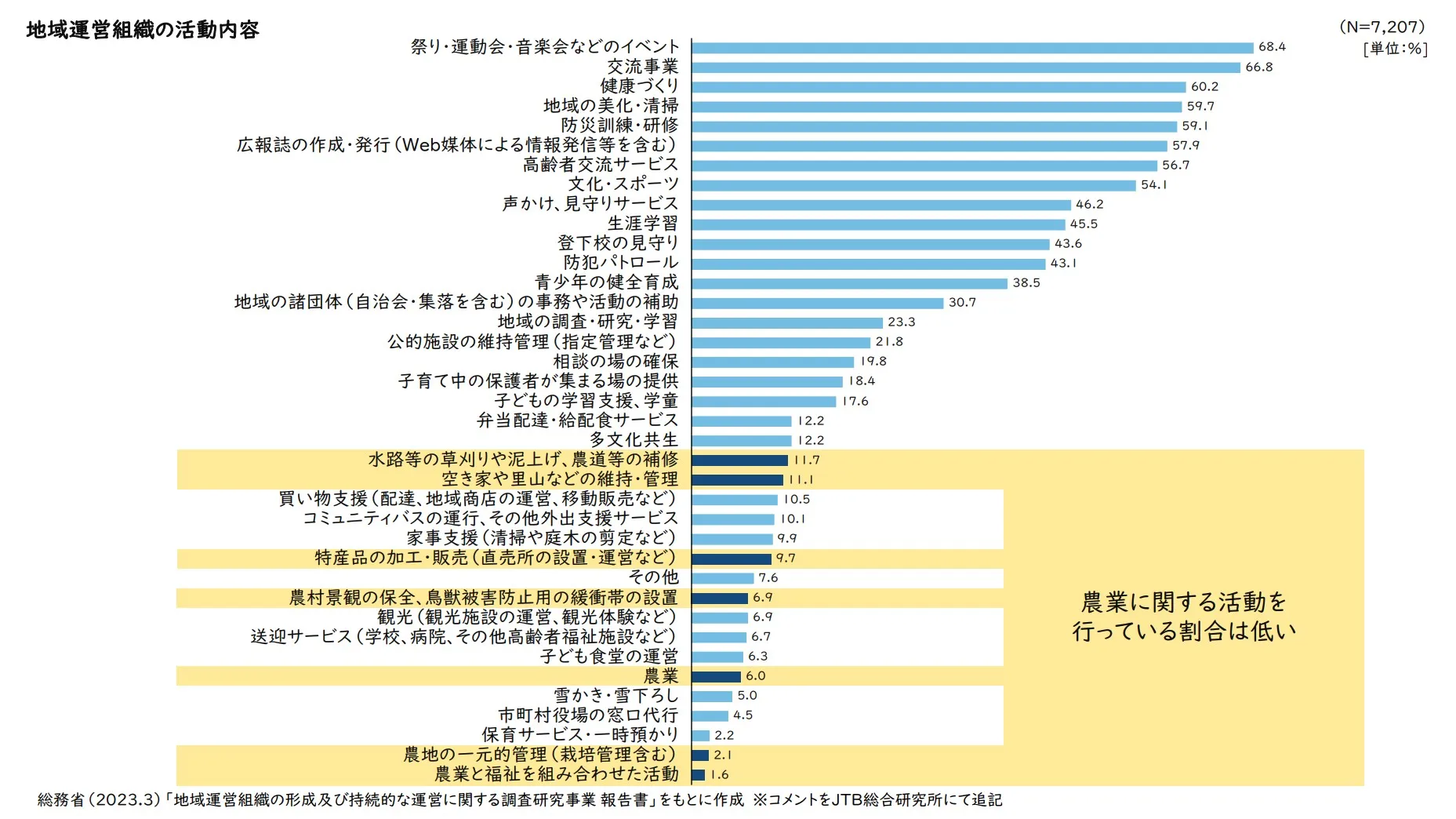
Residents living in rural areas, regardless of whether they are engaged in agriculture, perceive issues such as the “increase in abandoned farmland” and the “burden of grass cutting” as local challenges. However, the current reality is that many community organizations are not addressing these agricultural issues. Even in the example of District I mentioned at the beginning, although the community center staff member who spoke with us is not involved in agriculture themselves, they recognize agriculture as an issue for the entire region by listening to stories from community center users and observing the condition of fields and farmland in their daily lives.
Community management organizations are often formed through collaboration among various groups active in a given area, such as the “XX Community Development Council. ”While “neighborhood associations” account for 78.2% of members, and “organizations involved in local welfare activities, community welfare commissioners, and child welfare commissioners” as well as “organizations involved in the development of local children and youth” together make up a majority, “farmers, village farming organizations, and agricultural corporations” account for only 6.4%, and “agricultural and forestry land conservation organizations, etc.” account for just 1.7% (Figure 2)*².
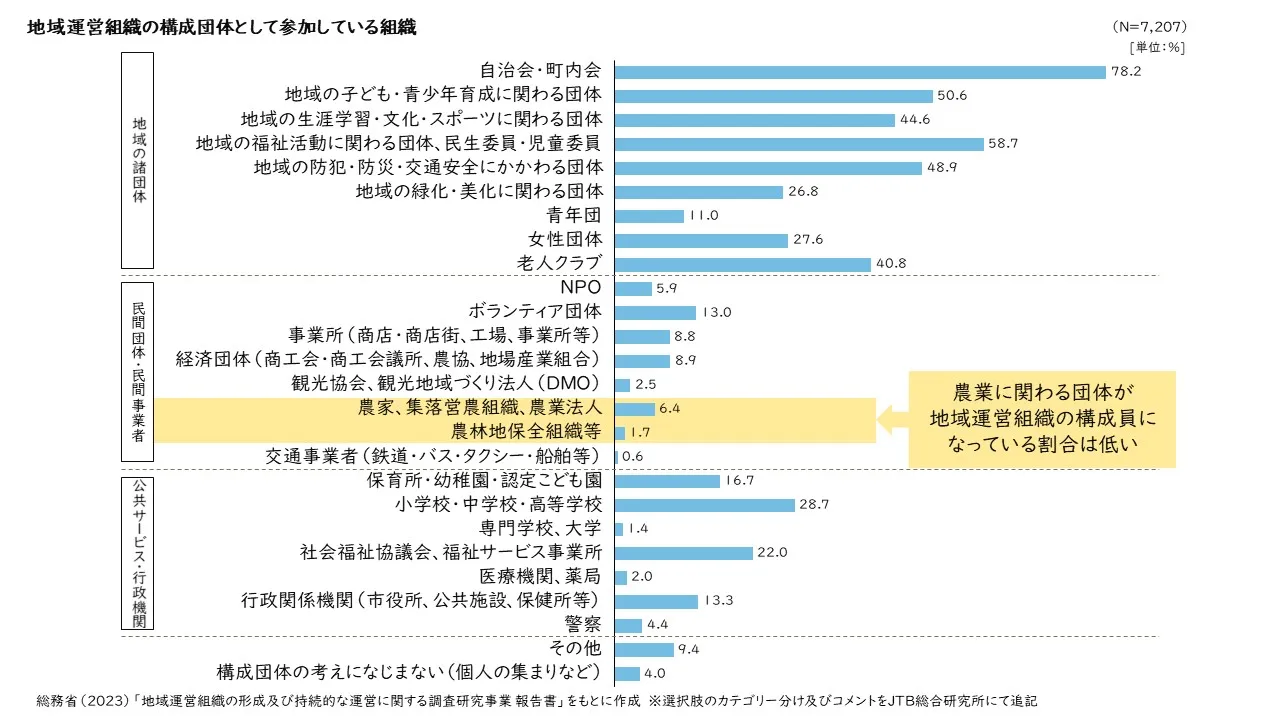
*Although the term “farmer” may evoke an image of agriculture as an individual endeavor, many regions have organizations of agricultural producers. Examples include agricultural corporations and village farming groups, which engage in collective agricultural production, as well as village agreements and other organizations involved in farmland conservation.
2. Reasons for the Limited Involvement of Agricultural Stakeholders in Community Management Organizations
The following three factors are considered reasons for the low participation rate of agriculture-related organizations in community management organizations.
(1) Different Scopes of Activity
(2) Different Government Departments Are Responsible
(3) Lack of collaboration between farmers and non-farmers
Let’s examine these points in order.
(1) Different Scopes of Activity
Community management organizations are often established on the basis of [former] elementary school districts*, and are composed of multiple hamlets. On the other hand, “hamlet agreements”—which are primarily established in mountainous and hilly areas to preserve farmland—are often concluded at the “hamlet” level, making it difficult for community management organizations to fully grasp the actual state of activities (Figure 3).
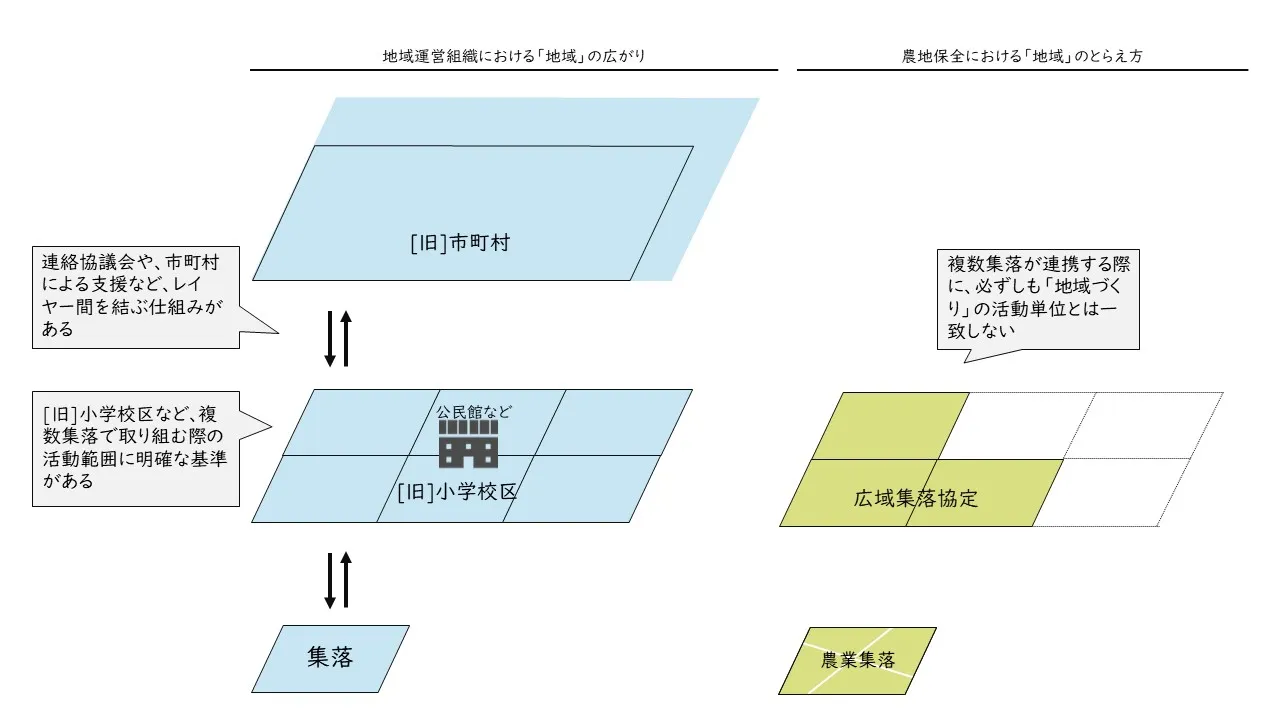
As the number of farmers continues to decline, some areas are finding it difficult to maintain “village agreements” because they cannot gather enough members at the village level. While the government is encouraging the expansion of these agreements to cover broader areas, there is no obligation to align them with the operational scope of community-based organizations. If expansion is pursued gradually, starting with areas where consensus has been reached, it is not easy to align these agreements with the operational scope of community-based organizations.
*While the consolidation of elementary schools has been progressing rapidly in recent years, the pre-consolidation school districts are often retained as the units for community development; therefore, we use the term “[former] elementary school district” as a reference for the scope of activities.
(2) Different Government Departments Are Responsible
Because the roles of local organizations are diverse, the responsible departments within municipalities tend to be divided into areas such as local governance, disaster prevention, lifelong education, and agricultural policy. Since the nature of their activities varies, information regarding the status of each organization is often not easily shared across these departments.
While some groups collaborate with municipalities—using community centers as their base of operations or having municipal staff observe their activities—village associations are not always included in these networks, and it is not uncommon for them to operate out of the chairman’s home.
(3) Lack of Collaboration Between Farmers and Non-Farmers
Neighborhood associations and volunteer fire departments, for example, carry out activities—such as distributing circulars and newsletters or conducting disaster prevention patrols—in ways that all residents can tangibly benefit from, and anyone can serve as an officer or member regardless of occupation. In contrast, village agreements are often composed solely of farmers, so they may be less familiar to residents who are not farmers.
3. The Need to View Agriculture as a Local Issue
Is it even necessary for community management organizations to take on the task of farmland conservation in the first place? Furthermore, how should people who are not engaged in agriculture get involved in farmland conservation?
The “village agreements” mentioned above as organizations working on farmland conservation are groups of farmers necessary to receive national support targeted at farmers in disadvantaged mountainous and mid-mountain areas*.
Support for farmland conservation is provided because it recognizes the roles of agriculture “beyond food production” (values that cannot be covered by crop sales). If farming ceases, not only does the landscape deteriorate as land is abandoned, but wildlife also settles in, leading to increased damage to nearby fields and homes. Since humans are an integral part of the satoyama ecosystem, there is concern that the decline of agriculture will disrupt the balance of the natural environment as a whole.
*There are also similar support programs that assist in realizing the “non-agricultural” value (multifunctional benefits) of agriculture, regardless of whether the area qualifies as a mountainous or semi-mountainous region.
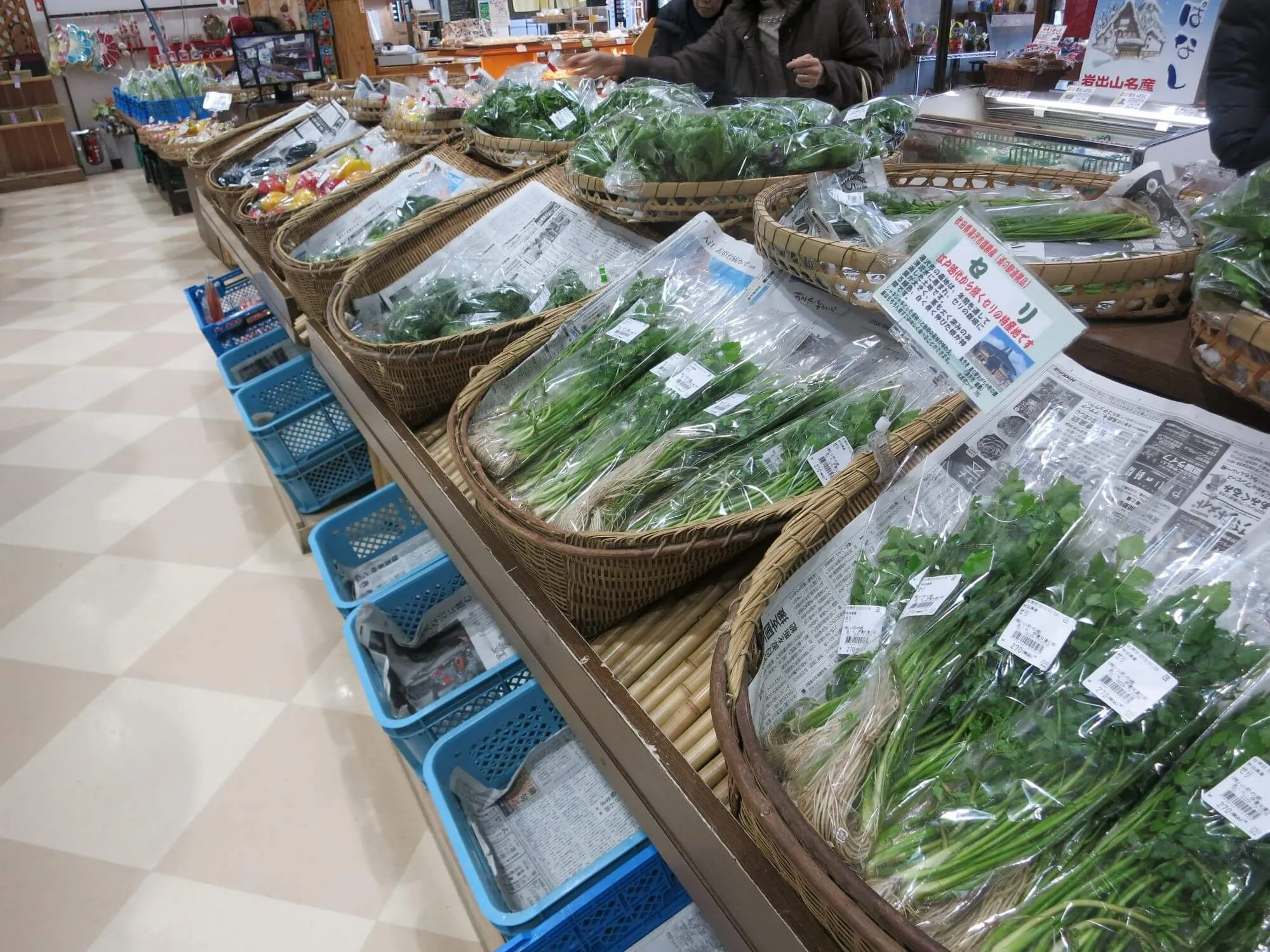
The benefits of agriculture extend beyond the environment. Just as many farmers’ markets attract large numbers of tourists, agriculture can serve as a tourism resource and act as a driving force to boost economic circulation both within and outside the region. “Agritourism” programs—which combine meals, agricultural experiences, and cultural immersion—are also evolving into luxurious offerings that transcend the traditional image of farm stays.
Agriculture is often closely linked to daily life and food culture; if the region’s distinctive agricultural practices were to be lost, it would be a great loss for future generations as well.
4. How to Protect Local Agriculture
So, how can we protect and revitalize local agriculture? There are many examples where “non-farmers”—such as operators of direct-sales markets for agricultural products or owners of farmstay accommodations—play a major role in “utilizing” agricultural resources. The reality is that it is often difficult for farmers themselves to ask for help when it comes to “protecting” these resources. The first step may be for “non-farmers”—such as members of local community organizations—to identify the challenges hidden behind the surface appearance of “everything being fine.” In District I, community center staff members who were not involved in farming frequently voiced concerns about agricultural issues.
For example, holding a workshop at the community center where participants spread out a large printed map of the village and color-code “abandoned farmland” and “potential abandoned farmland (farmland expected to be abandoned within a few years)” can foster a sense of community around addressing agricultural challenges as shared local issues. While this method is commonly used for addressing vacant housing issues, it can also be applied to farmland conservation. The primary outcome would be for non-farmers to participate in farmland conservation, making it easier to continue farming. If we can engage in more in-depth discussions—such as farmland consolidation or withdrawing from low-quality farmland—we can optimize the system for addressing the farming needs of the entire village with an eye toward the future.
5. The Goals of Rural RMOs and Addressing “People”-Related Issues
In situations where “a local management organization exists but does not include agricultural groups,” such initiatives may seem to merely increase the burden on existing local management organizations. In reality, many local management organizations are run by volunteers and lack both personnel and funding. Similarly, many villages struggling with village agreements face difficulties securing secretariats and board members. Therefore, if the secretariats of village agreements and local management organizations can be consolidated, it is expected that a limited number of members will be able to tackle local issues more effectively.
Furthermore, by involving various organizations in agriculture, we can expect to tackle challenges from new perspectives—such as devising measures to attract people who move to the area to start farming, or reexamining local agricultural culture through the production of traditional foods.
A regional management organization that incorporates such agricultural groups and also engages in activities such as farmland conservation is called a “Rural Regional Management Organization (Rural RMO).” The Ministry of Agriculture, Forestry and Fisheries envisions this as “an organization that complements the functions of multiple hamlets and, in conjunction with farmland conservation activities and agriculture-centered economic activities, carries out initiatives that contribute to the maintenance of local communities, such as livelihood support”*³.
The national vision for Rural RMOs incorporates not only “agricultural land conservation” and “livelihood support” but also “utilization of local resources.” While it is difficult to tackle everything from the outset, there are organizations that have successfully generated revenue through the processing and sale of agricultural products, demonstrating that protecting agriculture leads to a prosperous local lifestyle.
The author believes that rural RMOs are not an entirely new concept, but rather a way to enhance responsiveness by organizing the efforts that have already been undertaken in the region. In fact, some community-based organizations have been engaged in agricultural activities even before the term “rural RMO” became widespread. The first step in pursuing Rural RMO is to take stock of existing organizations and their activities, and to gather collaborators. To do this, it is essential to have key figures who have a deep understanding of local organizations and are well-known and respected among residents. The ability of these key figures to connect people and organizations can be seen in the case studies published in the “Guide to Rural Regional Management Organizations (Rural RMO)” compiled by the Hokuriku Regional Agricultural Administration Office.
As the local population declines, the ability to “connect” not only within the community but also with people and organizations outside the region will become increasingly important in the future. There are many communities that are already leveraging the power of “outsiders,” such as hosting university seminar retreats to secure volunteers for festivals.
A key person is not necessarily a single individual. By dividing roles among multiple people and sharing their respective networks, new partners may be found. Connecting people and organizations both within and outside the community will also be a key challenge for securing and nurturing the next generation of leaders. To ensure sustainable operations, it is essential to establish systems that prevent the burden from falling solely on key persons—such as having key persons serve as leaders of rural RMOs while staff at community centers managed by municipalities handle administrative duties—and to create mechanisms that help those around them understand the key persons’ networks.
In recent years, there have been initiatives to promote grass cutting and snow shoveling as sports or experiential activities. This approach has the potential to attract urban residents interested in the real-life experiences of rural, mountainous, and fishing communities—beyond just the “high-profile” experiences like festivals and preparing preserved foods.
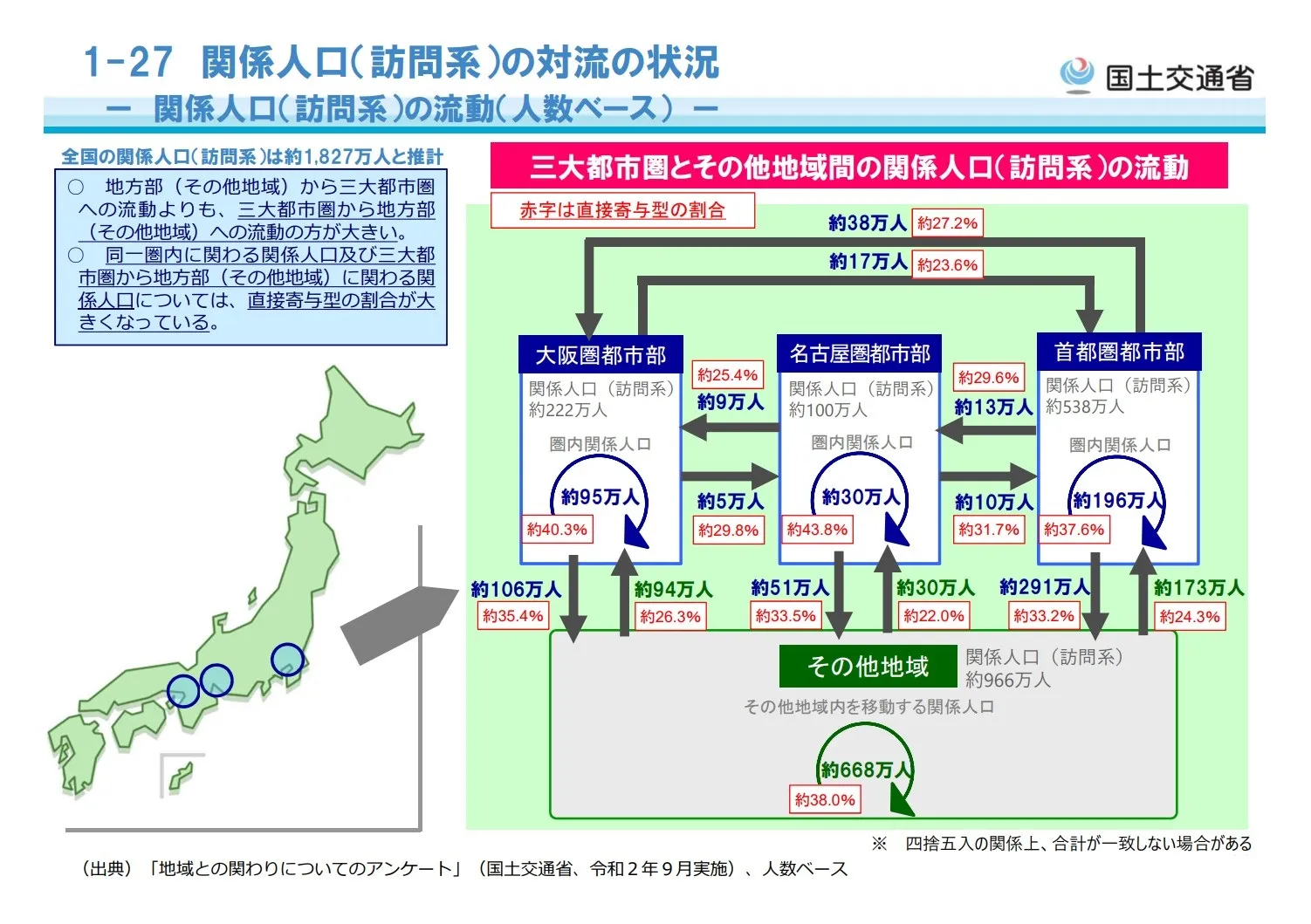
According to a 2020 survey*⁴ conducted by the Ministry of Land, Infrastructure, Transport and Tourism, the “related population” that visits these areas (“visitor-type”) accounts for 18.4% of residents (aged 18 and older) in the three major metropolitan areas, and just under 10% of that group visits rural, mountainous, and fishing villages.
Since half of the nation’s population is concentrated in the three major metropolitan areas, even if the proportion of “related population visiting rural, mountainous, and fishing villages” is small, calculations show that there are still over 800,000 people in this category (Figure 6).
As population decline accelerates, “connecting” people will become increasingly important for future community development. Even as agricultural operations become more efficient through large-scale farming and the consolidation of farmland, the need for many forms of collective work—such as dredging irrigation channels and road maintenance—remains unchanged. Such collective work has also shaped the culture of rural communities, including traditional gatherings and festivals.
A resident of District I spoke to me as if it were yesterday about how, during a major disaster that cut off the water supply, a family allowed them to use a well they normally did not use. Connections between people may prove even more powerful in times of crisis. “Not trying to manage everything on our own” will likely help sustain life in rural, mountainous, and fishing communities.
<References>
*1: National Institute for Agricultural and Food Policy Research (2019), “Future Projections of Rural Population and Agricultural Settlements: Rural Structure in the Year 2045”
*2: Regional Revitalization Office, Regional Strength Creation Group, Ministry of Internal Affairs and Communications (March 2023), “Report on the Research Project Concerning the Formation and Sustainable Operation of Regional Management Organizations”
*3: Ministry of Agriculture, Forestry and Fisheries, Hokuriku Regional Agricultural Administration Bureau (April 2023), “Guidelines for the Formation of Rural Regional Management Organizations (Rural RMOs)”
*4: Ministry of Land, Infrastructure, Transport and Tourism (March 2020), “Nationwide ‘Relational Population’ Exceeds 18 Million! — Publication of Survey Results on ‘Relationships with Local Communities’”
著者