Changes in Travelers and Travel Patterns Over the Past Decade: On the Occasion of the 10th Anniversary of the JTB Tourism Research & Consulting
This year marks the 10th anniversary of JTB Tourism Research & Consulting. Over the past decade, the Japanese tourism industry has been profoundly affected by numerous events, including recovery efforts following the Great East Japan Earthquake, nationwide initiatives to establish Japan as a leading tourism destination, the rapid growth of inbound tourism, and the global COVID-19 pandemic. We will look back on the changes in travelers and travel patterns over the past 10 years and consider the future of tourism as it begins to move toward a full-scale recovery.
Our company began operations as the “JTB Tourism Research & Consulting” institute and celebrated its 10th anniversary this past June. While the institute was established to mark JTB’s 100th anniversary in 2012, it was also born out of a conviction and hope—amid a stagnant economy and a Japanese society urgently focused on recovery from the Great East Japan Earthquake that had struck the previous year—that tourism would eventually become a vital force transcending industry boundaries. Over the past decade, we have faced a turbulent landscape in tourism, marked by recovery from the Great East Japan Earthquake, the decision to host the Tokyo Olympics and efforts to become a leading tourism nation, the rapid expansion of inbound tourism, and the COVID-19 pandemic. In this article, we will briefly review the changes in travel patterns that have emerged over the past 10 years from the traveler’s perspective and consider the future of tourism.
1. Perspectives on Changes in Travel Patterns and Their Impact
Over the past decade, numerous events have reshaped the social landscape and had significant impacts—both positive and negative—on tourism. These include the 2011 Great East Japan Earthquake and the subsequent recovery efforts, the 2013 decision to host the 2020 Tokyo Olympics and the nationwide drive to become a leading tourism nation, the rapid expansion of inbound tourism, and the global COVID-19 pandemic. When I was in charge of public relations at JTB and had to announce difficult financial results following the Lehman Shock and the Great East Japan Earthquake, I often reflected on the “significant impact on tourism.” I identified two distinct perspectives: first, the direct impact that events or phenomena shaking society have on economic activity and consumer behavior; and second, the impact resulting from changes in lifestyles and behavior triggered by those events. While the former currently has a greater economic impact, I believed that the latter often leads to more severe consequences, as these changes can morph into structural issues depending on how they are addressed. Furthermore, I believe that while some changes are directly triggered by specific events, others—changes that were already underway—may accelerate as a result of those events. The trend toward “safe, nearby, and short” travel during the COVID-19 pandemic falls into the former category, while remote work and workations likely fall into the latter. In any case, the key theme has been to detect the seeds of change as early as possible, which brings us to the present.
In the next section, I will focus on key points from past surveys and other sources regarding changes in travelers and travel over the past decade, organizing them from the aforementioned indirect, medium- to long-term perspective.
2. Changes in Consumers and Travelers Over the Past Decade
(1) The Role of Social Media in Driving Changes in Travel and Tourism Styles
In 2019, we published a research study titled “Evolving and Expanding Japanese Domestic Travel (2019).” In it, we used charts to explain “changes in travel patterns” (Figure 1).
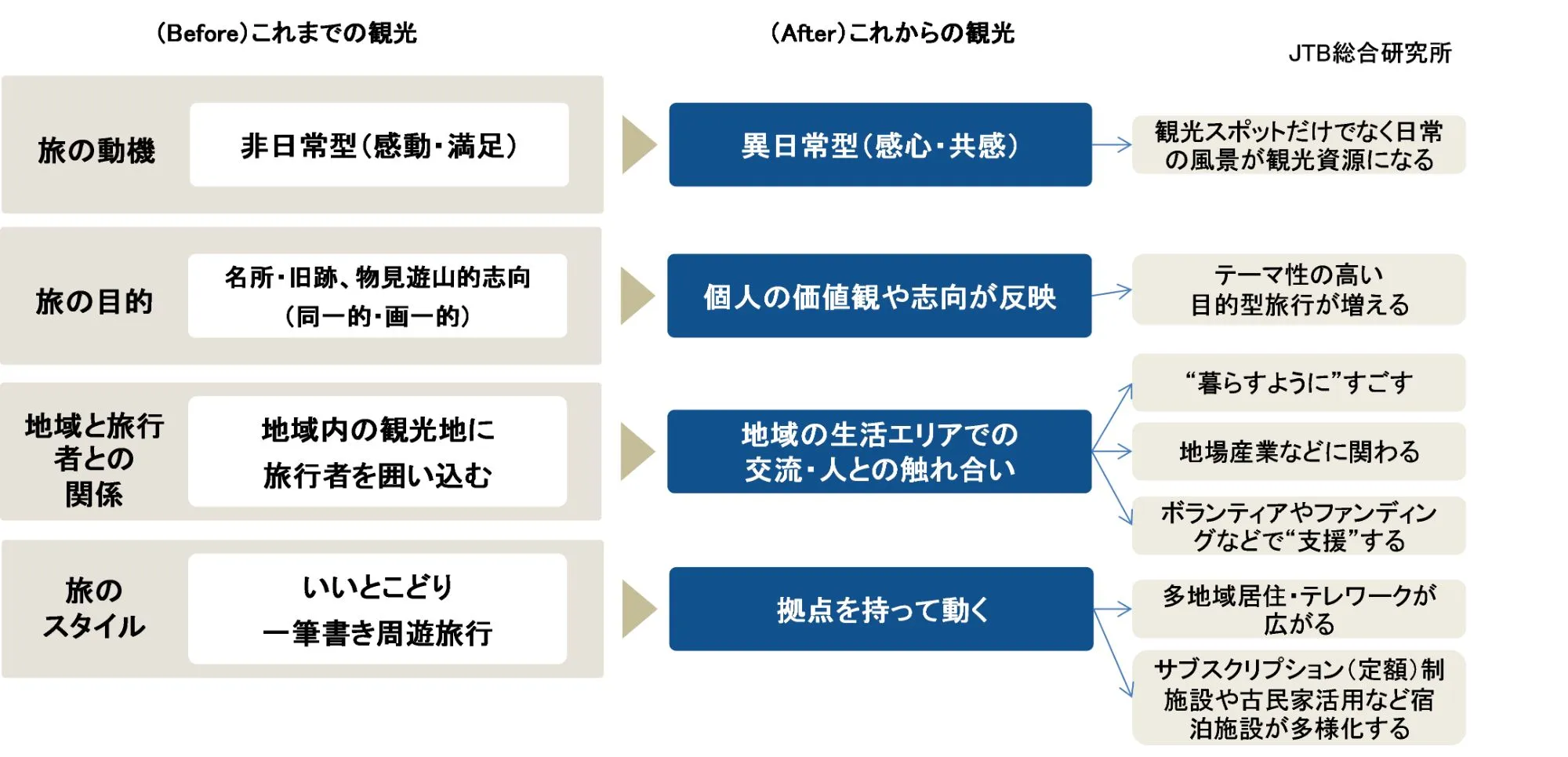
: JTB Tourism Research & Consulting, “Evolving and Expanding Japanese Domestic Travel (2019)”
Travel has shifted from a “goal” to a “means” for hobbies and self-fulfillment, leading to greater diversification
The history of tourism in Japan dates back to the era of rapid economic growth. Along with the upward trajectory of economic development, the standard of living for Japanese people improved, and interest in leisure activities grew. Travel was seen as a symbol of “special-occasion spending,” where the act of going was the “purpose” itself. While the personalization of travel progressed simultaneously, until the dawn of the internet era, sources of travel information were essentially limited to tourist destinations, travel and tourism operators, and mass media, and travelers’ behavior based on that information was uniform. Subsequently, as society and the economy matured and the Internet became more widely accessible, travel styles diversified alongside the diversification of individual values and lifestyles. As a result, travel can be said to have evolved into a “means” of embodying hobbies and self-realization (Figure 1).
Social media has expanded travelers’ horizons and evolved their relationships with local communities
Nowadays, everyone owns a smartphone, and social media networks have been established. The power of the “individual” has grown stronger not only through the acquisition of information but also through “sharing” it. It can be said that social media is one of the key factors that has expanded travelers’ activities and evolved their relationships with local communities (Figures 1 and 2).In the early days of social media, immediately after the Great East Japan Earthquake when a mood of self-restraint swept across Japan, posts from people in Tohoku expressing their desire for others to enjoy cherry blossom viewing and Tohoku sake resonated widely, spreading the idea of supporting the region through consumption. During the state of emergency declared due to COVID-19, online tours became widespread; however, many of these tours were not limited to traditional tourist destinations. This suggests that the relationship between regions and travelers has evolved, making it easier for areas that are not conventional tourist spots to connect with potential travelers.
Traditional travel was largely uniform, with most activities consisting of sightseeing in designated tourist areas. As social media made it possible to access interesting posts from local residents, travelers began seeking authentic experiences at their destinations, expanding their activities into the “local living areas” of those places. As travelers have come to feel attracted to or empathize with the local culture, industries, and people rooted in these areas, their attachment to these regions has grown in ways distinct from the past. Consequently, the relationship between regions and travelers has become two-way, creating a dynamic where travelers’ own posts contribute to regional branding (Figure 2). The same can be said for foreign visitors to Japan.
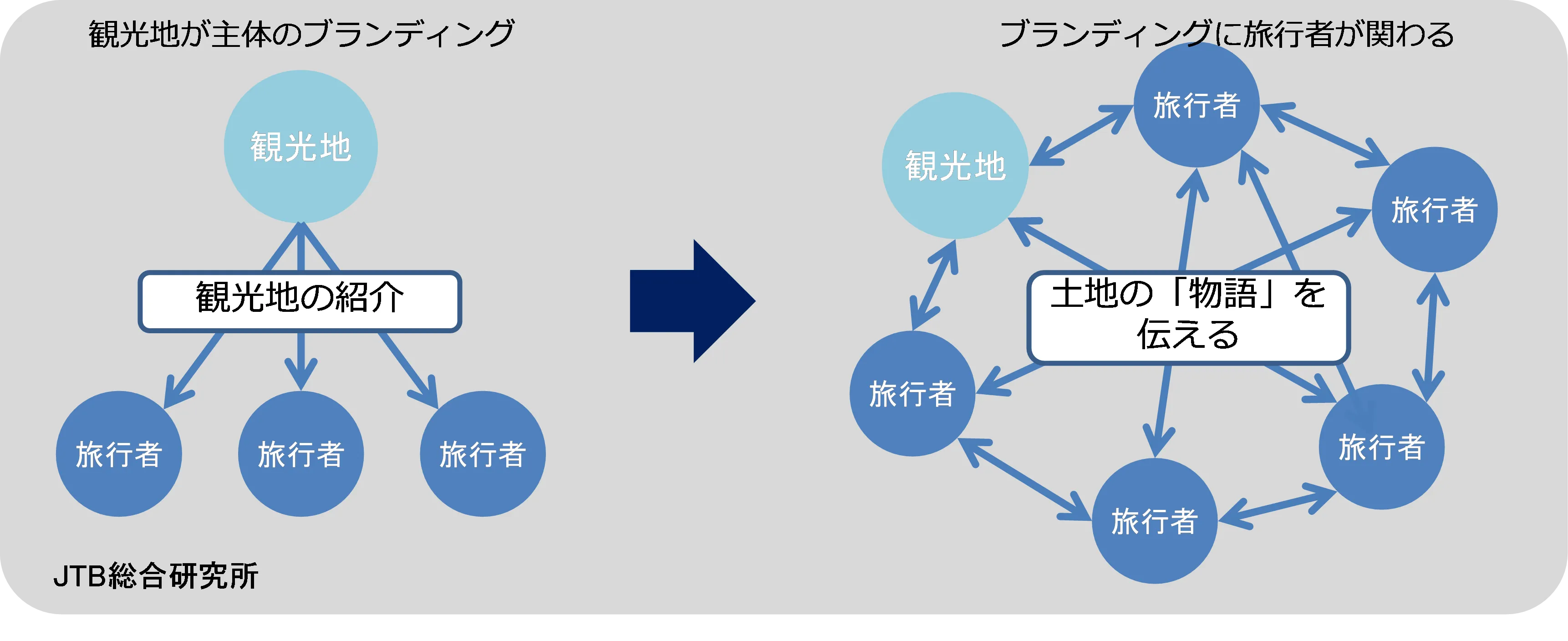
: JTB Tourism Research & Consulting, “Evolving and Expanding Japanese Domestic Travel (2019)”
Travel temporarily returned to conventional styles during the COVID-19 pandemic, but...
Post-pandemic travel saw a return to traditional styles, characterized by “safety and security, short trips with people close to home, and short durations.” Due to the cancellation of festivals, events, and exchange programs, as well as travel restrictions for visitors from high-infection areas and the impact of local residents’ sentiments, travelers increasingly favored destinations where they could minimize contact with locals—such as tourist areas in hot spring towns. Perhaps due to the stress of the pandemic, “relaxation” was a top travel objective, and the percentage of respondents who said they “wanted to travel even without a specific reason” rose with each survey.
Currently, as vaccination rates have increased, residents are becoming more accepting of visitors from outside the region. This year, there is a growing trend toward holding in-person events while strictly implementing infection prevention measures. For example, with the “Echigo-Tsumari Art Triennale 2022” in Niigata Prefecture being held one year later than its usual triennial schedule, travel that allows visitors to experience local culture and daily life is gradually making a comeback. Although there was a temporary setback, domestic travel, as shown in Figure 1, is expected to continue expanding its scope and evolving.
*Reference: JTB Tourism Research & Consulting “Survey Series on Changes in Daily Life, Mental Well-being, and Travel Attitudes Due to the Spread of COVID-19”
(2) Generations Driving Travel Spending and Generational Shifts
The generations that have symbolized travel consumption over the past decade are the Baby Boomers, representing senior spending, and Generation Z, representing youth spending. Even among seniors and young people, differences in the historical context in which they were raised shape generational characteristics and influence their values and behaviors. The characteristics of each generation, summarized from our research, are shown in the table below (Table 1). It can be inferred that for every generation, experiences during their formative years influence their subsequent values and consumption patterns. Generations change every few years, and over the past decade, generational shifts have occurred among both seniors and young people.
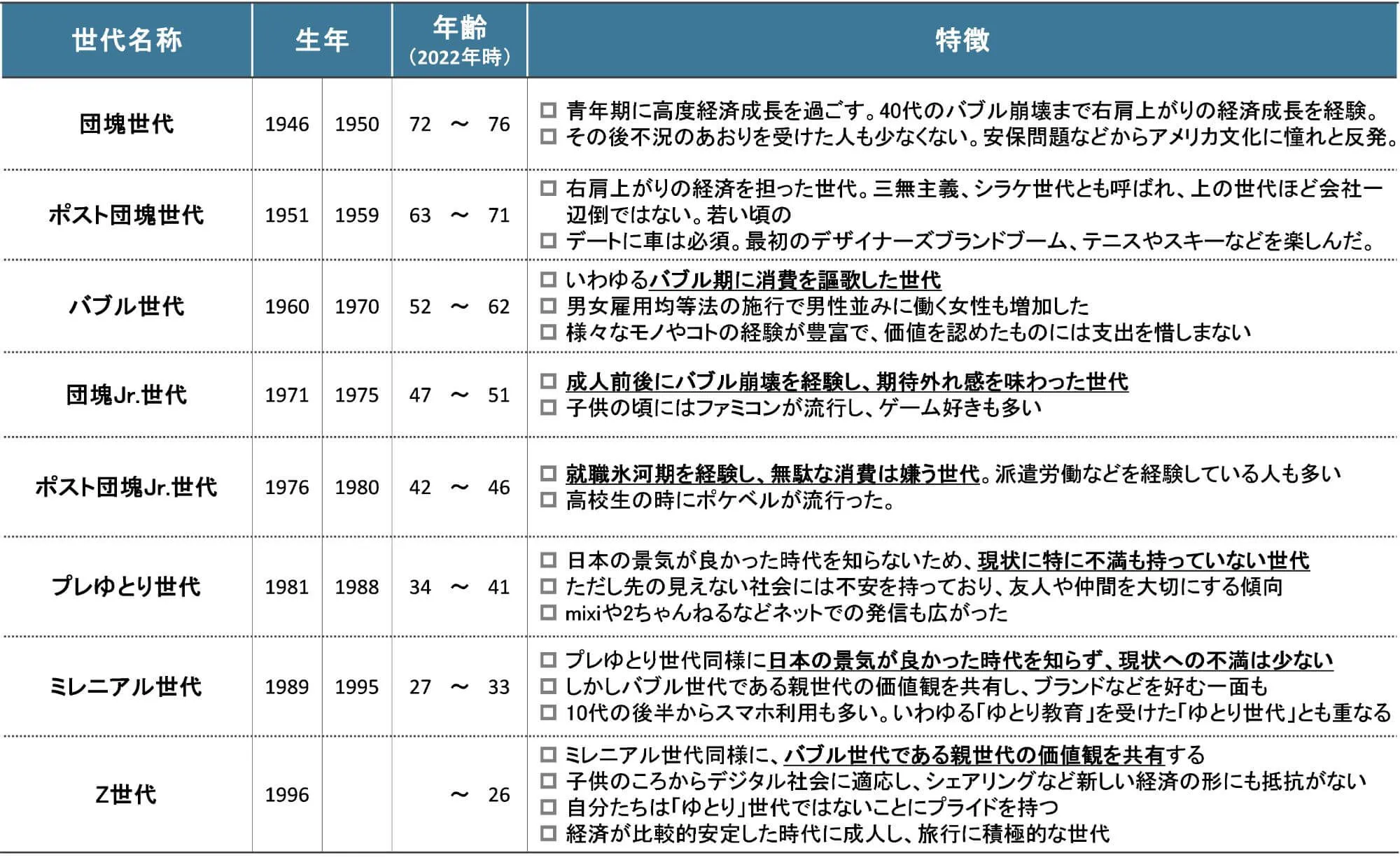
Senior Consumption Shifts from the Baby Boomer Generation to the Next Generation: Post-Baby Boomers and Early Bubble Generation
Around 2010, as the Baby Boomer generation reached retirement age, senior consumption came into focus. Born during the first baby boom, this generation is large in number, and expectations for travel spending fueled by retirement benefits and free time were high. However, this generation is now entirely in their 70s, and the number of people with health concerns is increasing.
The next generation consists of the post-baby boomers and the early bubble generation. This generation spent a longer period in an economic downturn than the older generation, and the bubble generation, in particular, tends to have a higher proportion of people who feel anxious about their future living expenses. However, based on their vigorous consumption experiences in their youth, they also exhibit a tendency toward "spend when they spend"—a balanced approach to spending. Individual overseas travel began to spread when the Bubble Generation was young. Since they had been using the internet on personal computers from a young age, they are a generation skilled at gathering information from various sources and making choices based on past experience—more so than younger people who rely solely on smartphones. The next generation of seniors grew up hearing about the “100-year life” concept even while they were still working, making them a generation that actively questions their future lives. Taking this influence into account, we will be watching closely to see how travel among the next generation of seniors, as shown in Figure 1, evolves.
Reference: JTB Tourism Research & Consulting, “Survey on Seniors’ Lifestyles and Travel (2) – Don’t Call Us ‘Seniors’! Toward the Arrival of the ‘Next-Generation Seniors’ Era”
Young Travelers: Generation Z
While inbound tourism was increasing, the number of Japanese travelers abroad had been stagnating. However, starting around 2015, the rate of outbound travel among those in their early 20s began to rise. This coincided with Generation Z reaching adulthood, marking the beginning of a generational shift among young people away from the Millennial generation, who had come of age during the financial crisis. The rise in travel among Generation Z is driven by a relatively stable economic environment and favorable employment conditions. Generation Z has also been a driving force behind domestic travel during the COVID-19 pandemic, and this trend is expected to continue for some time. For more details, please refer to the author’s column, “The Influence of Generation Z on Changing Society and Consumption Patterns, and the Future of Travel.”
The Unknowns of Generation Alpha and Consumption Potential
As the generation following Gen Z, the “Alpha Generation” is beginning to attract attention. It is defined as children born after 2010 who are currently in elementary school or younger. A defining characteristic of this generation is that they are even more digital natives than Gen Z. There are high expectations for their flexible thinking, which allows them to readily and practically utilize emerging digital technologies—such as AI, VR, and the metaverse—without resistance. While the Alpha Generation itself lacks purchasing power, it is said to already be influencing the consumption habits of their parents (and grandparents) through digital tools and education expenses. Furthermore, because a significant portion of their lives has been spent during the COVID-19 pandemic and they are exposed to daily news about international affairs and climate change, their interest in social issues is expected to be even higher than that of Generation Z. Similar to Generation Z, even though they lack purchasing power at this early stage of attention, by the time they reach adulthood, they may have an unimaginable impact on travel as a generation capable of transforming society and consumption patterns. We cannot take our eyes off them until 2030.
(3) The Potential of Japan’s Travel Consumption
Looking at the trend in domestic travel spending over the past 10 years, the total amount in 2012 was 21.8 trillion yen, and by 2019—the year before the COVID-19 pandemic—it had increased by 6.1 trillion yen to 27.9 trillion yen. Of this, 3.7 trillion yen represents the increase in spending by foreign visitors to Japan, but domestic accommodation spending by Japanese residents also increased by 2.2 trillion yen. Considering that Japan’s total population peaked in 2010 and began to decline, decreasing by 1.038 million people between 2012 and 2019 (Statistics Bureau, Ministry of Internal Affairs and Communications), it can be said that the potential for domestic travel among Japanese residents remained strong. Furthermore, it is believed that infrastructure development aimed at expanding foreign tourism had at least some impact on Japanese people’s desire to travel (Table 2).
On the other hand, when global crises such as the financial crisis and the COVID-19 pandemic occur, Japan tends to lag behind other countries in terms of consumption recovery. During this spring’s Golden Week holiday, for the first time in three years, no state of emergency was declared, and travel finally began to pick up; however, the enthusiasm was not as palpable as in Europe and the United States. Where do these differences stem from?
Figure 3 shows that Japanese consumption has been stagnant for a long time compared to other OECD member countries. When the 2015 level is set at 100, Japan is the only country showing little change. In the spring of 2020, when the global COVID-19 pandemic began and economic activity ground to a halt due to lockdowns, retail sales in Japan did not decline as much as in other countries. Conversely, even as the economy recovered, sales did not rise as much as in other countries, remaining around 100.This prolonged environment of stagnant incomes and no inflation, coupled with anxiety about the future, indicates that Japan’s consumption power is structurally lower than that of other countries. To sustain travel demand, the key challenge is not only stimulating short-term consumption but also raising the structural level of consumption power.
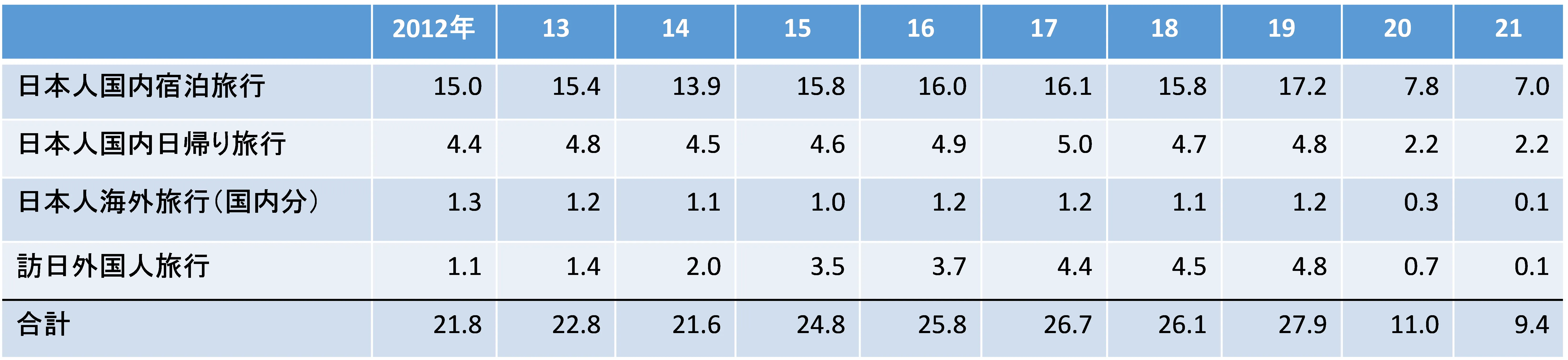
: Japan Tourism Agency White Paper on Tourism (“Survey on Travel and Tourism Consumption Trends” and “Survey on Consumption Trends of Inbound Foreign Visitors”)
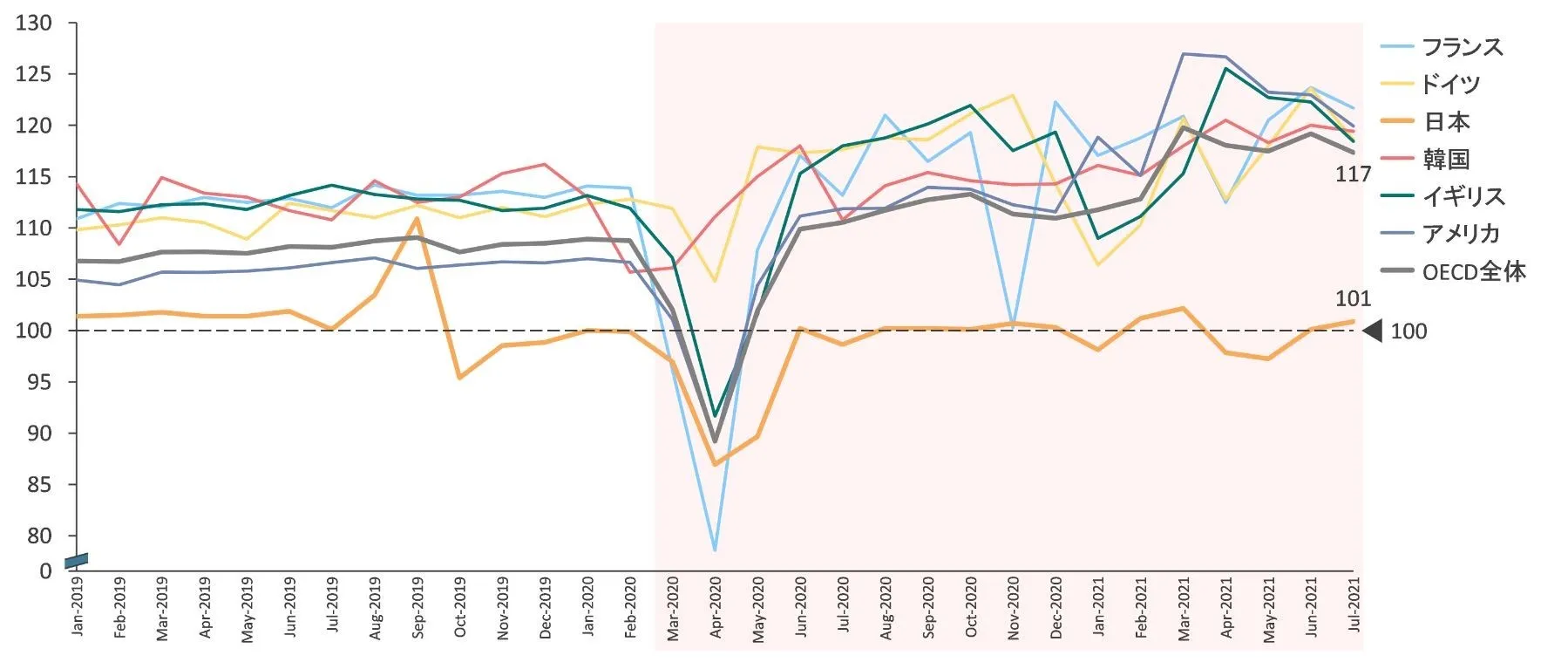
Source: Prepared by JTB Tourism Research & Consulting based on OECD Data “Production and Sales (MEI): Sales”
3. Resumption of Travel Following the COVID-19 Pandemic and Future Challenges
With the resumption of accepting international visitors to Japan beginning on June 10, significant progress has been made toward the normalization of the travel market. Media coverage suggests that expectations for the resumption of international travel are higher than anticipated, and it is likely that we will see a sharp increase in the number of travelers in the near future.
When discussing changes in travelers and travel patterns over the past 10 years, we believe the impact of the COVID-19 pandemic over the last two years has been significant. We have been conducting regular surveys of consumer attitudes since February 2020, when the spread of the virus began, and as we enter the third year, we feel that our research has entered a new phase. It is not just the movement toward resumption; changes in consumer attitudes following the pandemic, as well as shifts in the economic environment and demographics, are becoming clearer. We feel that the focus is shifting from the direct impacts and challenges of COVID-19 to indirect and structural challenges. Issues such as the precarious economic environment, the structural limitations of Japanese consumer spending power, the declining birthrate and aging population, productivity and labor shortages in the tourism industry, as well as tourism-related pollution and environmental problems—these are sustainability-related issues that existed even before the pandemic, and it can be said that the pandemic has further magnified and accelerated them.
The next decade may be one of even more rapid change for the tourism industry. The Alpha Generation will also come of age. I feel it is essential to constantly maintain a broad perspective on the situation, identify the seeds of change and act upon them, and be prepared to pass on a new and better environment to the next generation.