Toward the Development of Tourism-Oriented MaaS
"Tourism-Driven MaaS" addresses both travelers' needs and the challenges faced by local businesses. Here is a summary of some of the traveler behavior observed during the pilot test conducted in January.
MaaS (Mobility as a Service) is a concept for seamless mobility services that combine various modes of transportation, with the goal of enabling anyone to travel conveniently and efficiently through apps and other platforms. While pilot projects led primarily by transportation operators, such as railway companies, are already underway across Japan, the specific objectives of these MaaS pilot projects appear to vary depending on the level of service integration.
Together with Kominato Railway Co., Ltd. and Chiba University—both of which are partners in the “Chiba University Regional Revitalization Strategy Research Promotion Platform”—we conducted a pilot project for “Tourism Demand-Driven MaaS” aimed at revitalizing the area along the Kominato Railway line in Chiba Prefecture. This tourism demand-stimulating MaaS aims to address both the desires of travelers—such as “wanting to more easily obtain information that matches their preferences and wishes while traveling” and “wanting to travel efficiently”—and the various challenges faced by local transportation operators and tourism-related businesses. This article summarizes some of the traveler movements observed during the pilot.
1. How Digitalization Has Shaped Travelers’ Mindsets and Behaviors
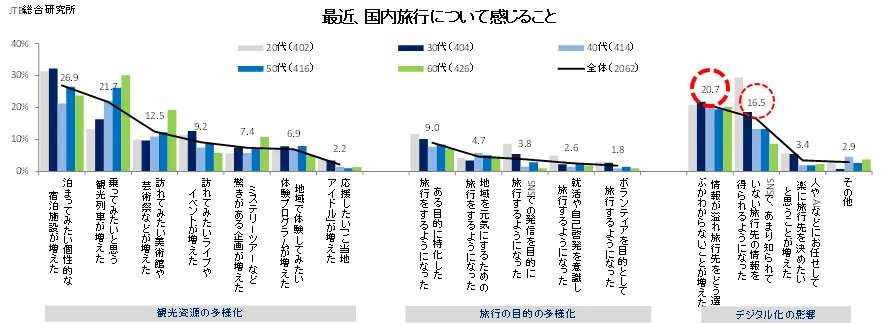
The wave of digitalization in recent years has significantly transformed our daily lives, enabling a wide range of activities previously unimaginable with just a single smartphone. In the travel sector as well, travelers’ preferences have diversified. Centered on the younger generation, it has become possible to obtain niche information through social media and other channels, leading to the recognition of unexpected elements as tourism resources and an expansion of travel horizons. While information is freely accessible, some people seem unsure how to select what suits them best from the overwhelming amount of tourism information available. In our survey (Note), when asked about their recent feelings regarding domestic travel, 20.7% of respondents answered, “There is an overload of information, and I find it increasingly difficult to know how to choose a trip.” On the other hand, 16.5% also stated, “I’ve been able to find information on lesser-known travel destinations via social media” (Figure 1).
This shows that the impact of digitalization is evident in how people gather travel information and choose destinations. However, the reality is likely that “while searching online is easy and convenient, the sheer volume of information makes it difficult to determine what suits me, so I can’t make a decision. ”Furthermore, while travelers are likely to make advance reservations for destinations where the attraction itself is the main purpose of the trip, in reality, most decisions are likely made on the spot while traveling. “Tourism Demand Stimulation MaaS” addresses this fundamental issue by providing travelers with the push they need to make decisions during their trips and further improving the efficiency of their travel.
(Figure 1) Recent perceptions regarding domestic travel (diversification of tourism resources, diversification of travel purposes, impact of digitalization) (multiple responses allowed)
2. About the "Tourism Demand Stimulation MaaS" Pilot Project
(1) Dedicated App Features
Although the range of ancillary services is limited due to the pilot phase, we have developed a dedicated app with two main functions.
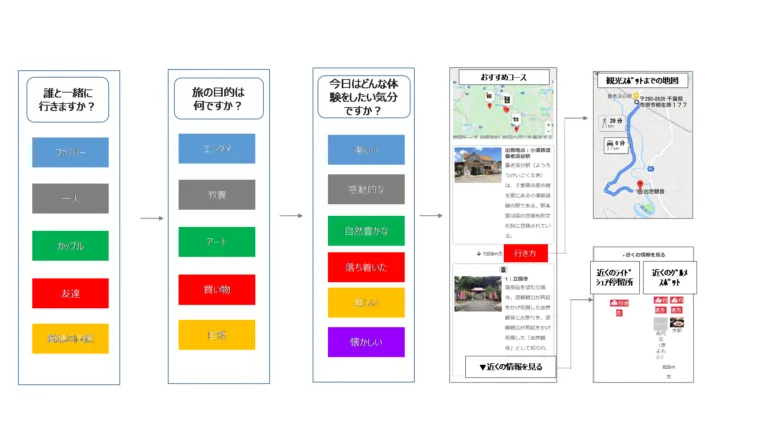
- Tourism Recommendation Function: Based on information entered by travelers—such as travel companions, purpose, and mood—the app pushes notifications for optimal itineraries and sightseeing spots. It suggests not only famous tourist destinations but also lesser-known attractions and seasonal hotspots tailored to individual preferences. At the same time, it recommends the optimal mode of transportation (Figure 2).
- On-Demand Shared Taxi Dispatch (Ride-Share) This service combines the advantages of taxis—which can be dispatched according to passenger requests—with the low fares of shared route buses, operating without fixed routes.
(Figure 2) Tourism Recommendation Feature

(2) Expected Benefits for Local Communities from "Tourism Demand-Driven MaaS"
While the benefits for travelers have been discussed above, push-type information dissemination also offers potential benefits for the local community in terms of fostering interaction and promoting consumption.
- It can introduce tourist attractions within the area to a wider audience and increase the number of visitors
- Tourists can be dispersed, helping to alleviate congestion
- By increasing the length of stay within the area, an increase in spending on items such as lunch can be expected
(3) Pilot Project in the Area Along the Kominato Railway Line in Chiba Prefecture
The pilot project was conducted as follows. Participants were recruited via the website and other channels, including 158 app users and 59 non-app users, to enable a comparison based on app usage.
Date: January 18 and 19, 2020 Location: Yoro Valley Area Participant Requirements: Meet at Goi Station at 8:00 AM; use the Kominato Railway for round-trip travel to Yoro Valley Station; stay in Yoro Valley from approximately 10:00 AM to 5:00 PM
- App Users (158 participants) → Freely sightseeing using the app and shared taxis
- Non-app users (59 participants) → Did not use the app or shared taxis; searched for sightseeing information on their own and toured freely using local buses, etc.
3. Pilot Test Data Results
(1) Participating Monitors and Services Used
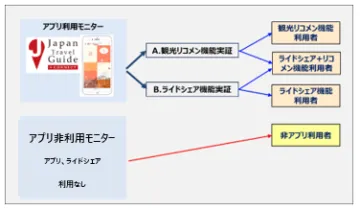
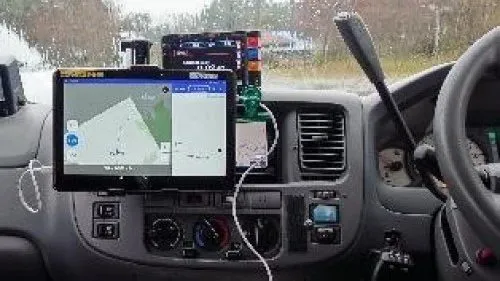
The recruited participants included ❶ app users and ❷ non-app users. App users were asked to use the app whenever and wherever they chose. The flow of services utilized by each group is shown in the figure below (Figure 3)
(Figure 3) Service patterns provided to participating monitors
(2) Log Analysis and Survey Results
① Input Trends for the Tourism Recommendation Feature
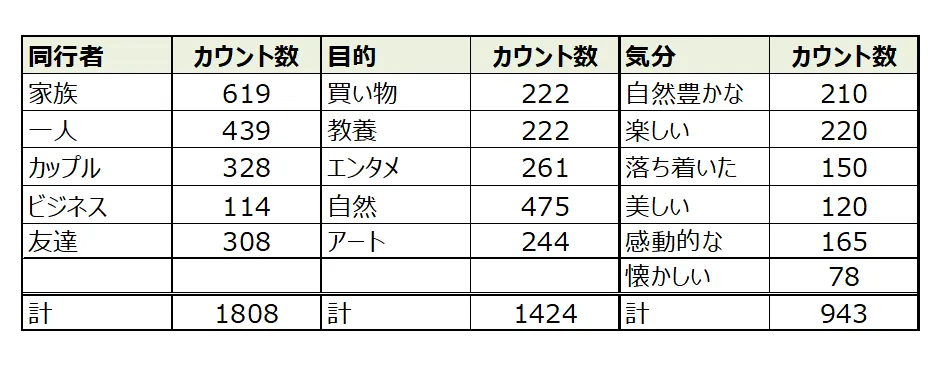
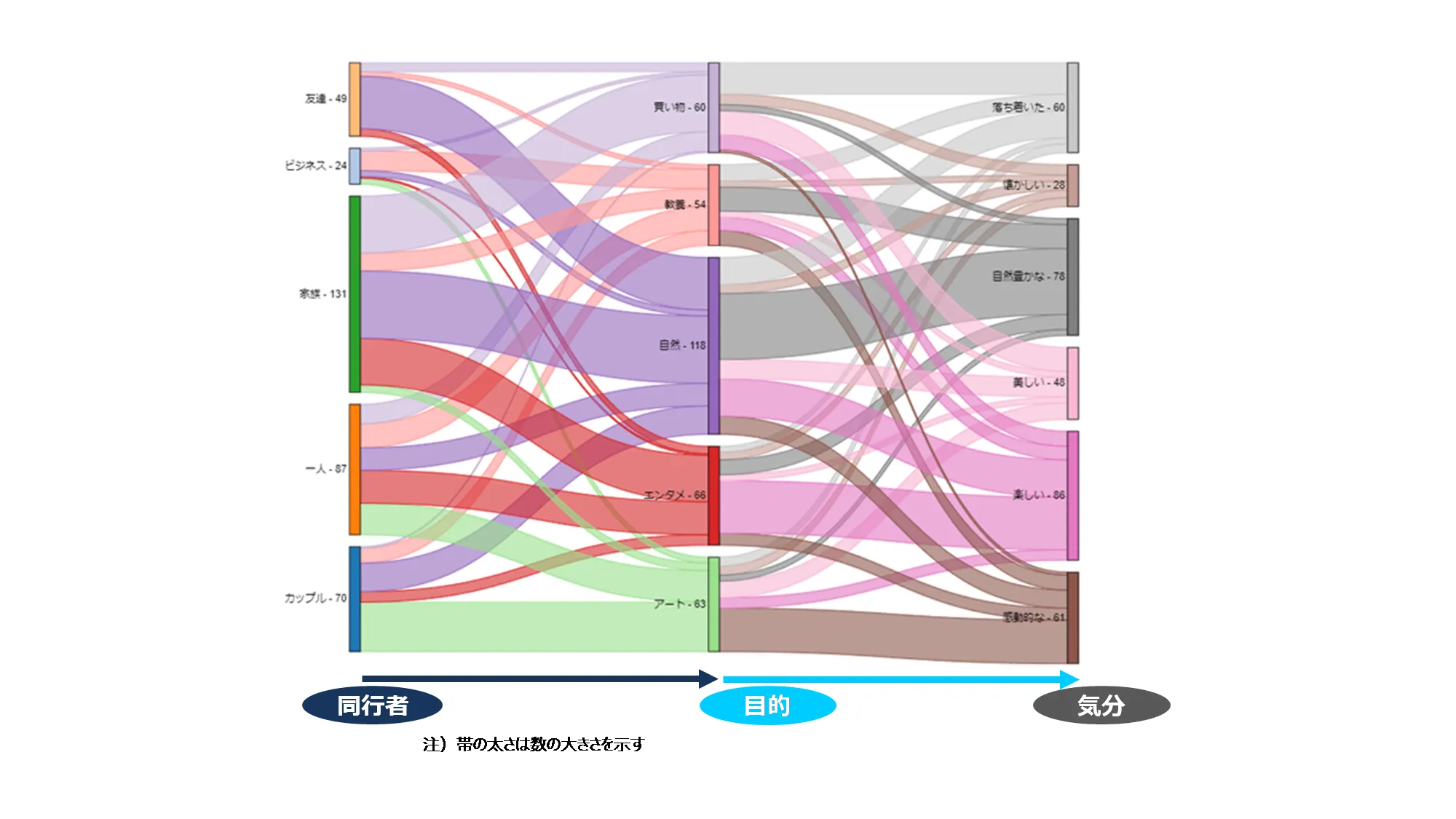
The total number of entries for the feature that suggests recommended routes was approximately 1,800. For “travel companions,” “family” was the most common, followed by “solo” and “couple.” For “purpose,” “nature” was by far the most frequent choice, while for “mood,” “fun” and “nature-rich” were the most common, with nearly equal numbers. We also created charts to illustrate the correlations between travel companions and trends in “purpose” and “mood” selections. We found that people traveling with friends or family frequently selected “nature” as their purpose and tended to choose “rich in nature” or “fun” when indicating the type of experience they desired. Additionally, we found that couples often selected “art” as their purpose and frequently expected moods such as “moving” or “beautiful” (Table 1) (Figure 4).
(Table 1) Total number of uses of the tourism recommendation feature (by travel companion, purpose, and mood)
(Figure 4) Correlation between “Travel Companions,” “Purpose,” and “Mood” when entering data

② Number of Recommended Itineraries and Actual Behavior by Input in the Tourism Recommendation Feature
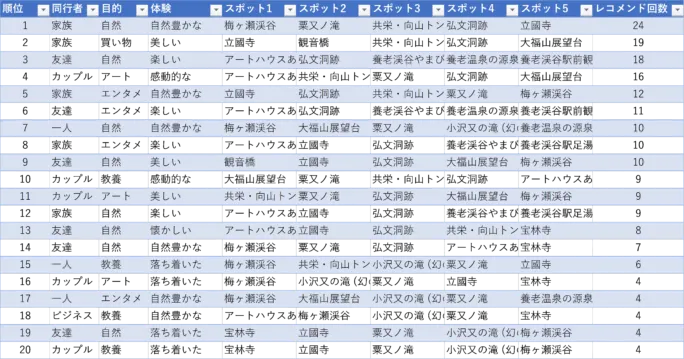
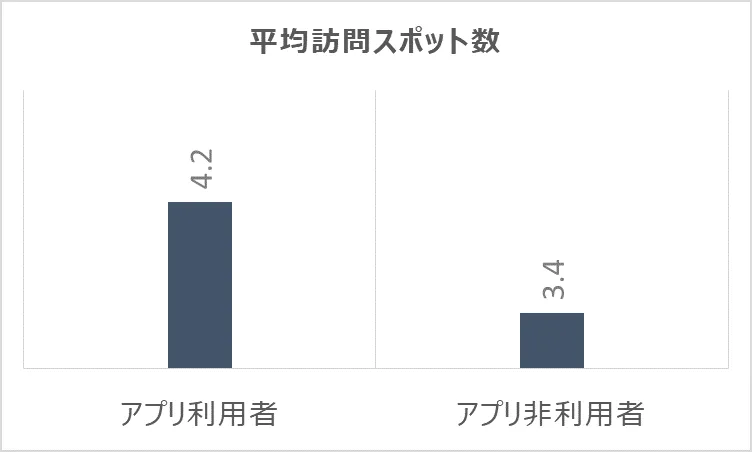
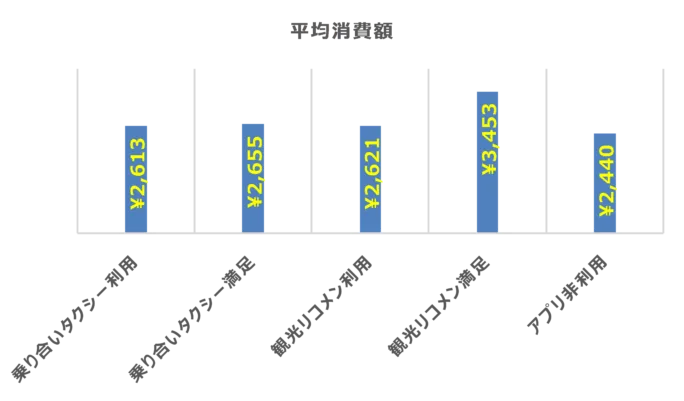
The top 10 routes recommended by the tourism recommendation feature based on the input categories are shown in the table below (Table 2). There was a clear difference in the average number of locations visited between app users and non-users: 4.2 for app users and 3.4 for non-users. It is also evident that app users who utilized the tourism recommendation feature spent more money than non-app users. Furthermore, the results showed that higher satisfaction levels correlated with higher spending (Figures 5 and 6).
(Table 2) Top 10 Recommended Routes
(Figure 5) Average Number of Visited Spots (n=217)
(Figure 6) Average spending (n=217)

③ Relationship Between Tourism Recommendation Sessions and Shared Taxi Demand
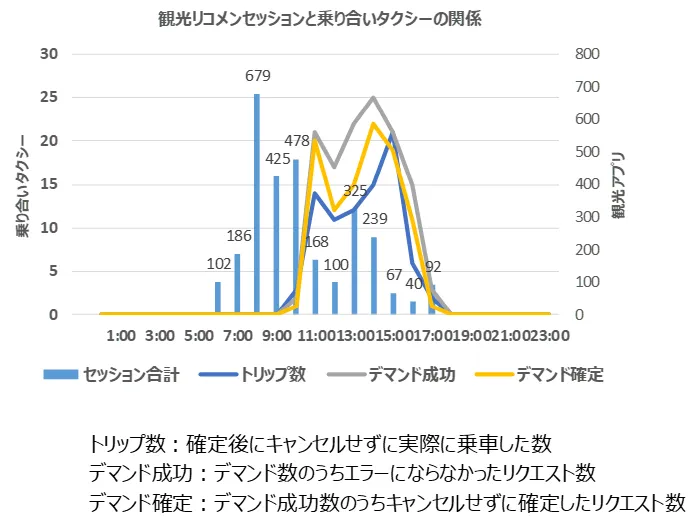
Excluding the 8:00 a.m. hour when explanations were provided, searches for tourism recommendations were conducted approximately one to two hours before the time when demand for shared taxis typically increased. It can be clearly inferred that there was a relationship where users decided on a destination via tourism recommendations → placed a request for a shared taxi → and boarded the taxi (Figure 7).
(Figure 7) Relationship between Tourism Recommendation Sessions and Shared Taxis (n=217)
④ Satisfaction with the Sightseeing Recommendation Feature
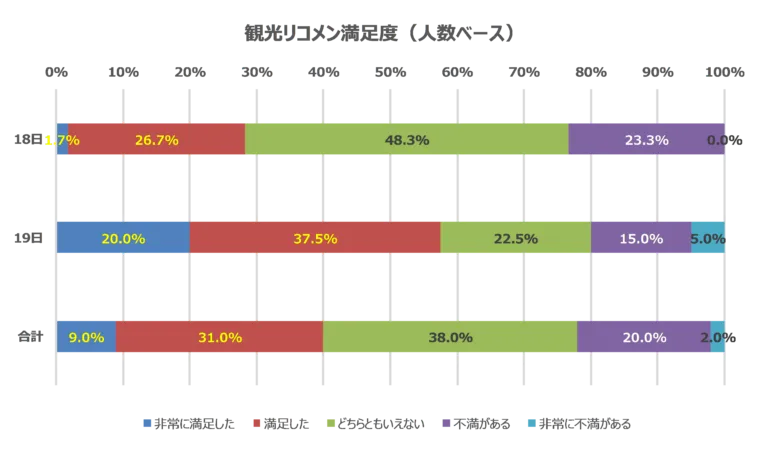
Satisfaction levels are as follows. Over the two days combined, 40% of participants reported being satisfied; however, there was a significant difference in satisfaction levels between the first and second days. This is believed to be due to snowy conditions on the first day, which prevented the service from providing recommendations tailored to the weather (Figure 8).
(Figure 8) Satisfaction with the tourism recommendation feature (based on number of people) (n=217)

4. Toward the Future Development of Tourism-Oriented MaaS
The results of this pilot demonstrated that app usage can contribute to an increase in the number of visited spots and spending. The most common reason cited for satisfaction with the tourism recommendation feature was “I was able to visit tourist spots I didn’t know about.” Such features are effective for raising awareness of places that local communities often struggle to promote. Going forward, we aim to improve the accuracy of recommendations based on environmental factors such as weather, while also integrating the app with information from other public transportation systems. Our goal is to expand the service beyond the rural areas along the Kominato Railway line to include urban tourism as well.