Promoting Tourism Through Video Content: Challenges and Prospects
From visiting filming locations for movies and TV dramas to stunning views trending on social media… In recent years, the influence of visual media on tourism has grown significantly. This article explores the potential of visual tourism to effectively promote regional attractions and attract large numbers of visitors, as well as the challenges that arise alongside it, and initiatives aimed at sustainable regional development.
1. The Rise of Film and TV Tourism: Its Effect on Attracting Visitors and Its Impact on the Local Economy
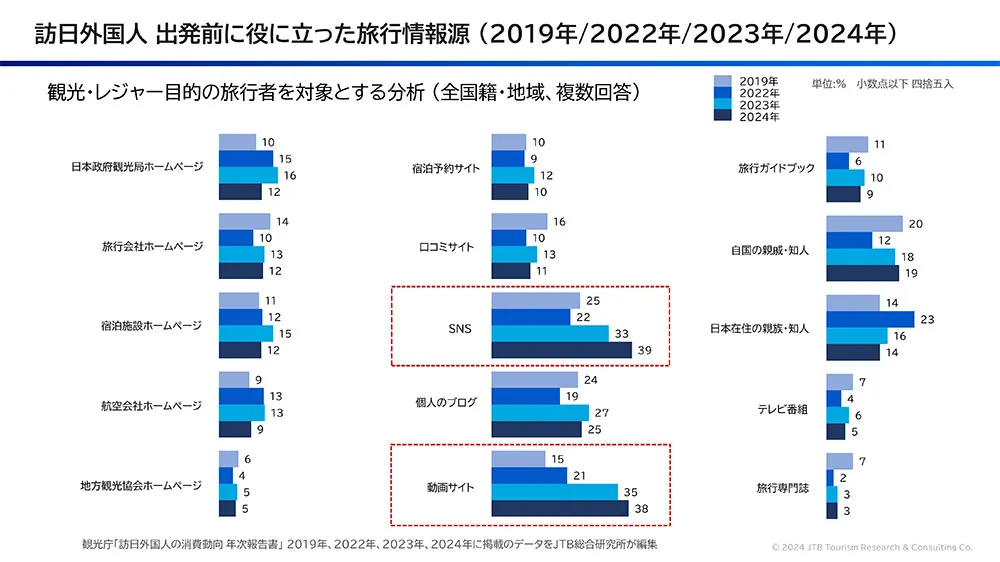
In recent years, audiovisual works such as movies, TV dramas, and anime have had a significant impact on attracting tourists and regional branding. Known as “filming location tourism” or “content tourism,” this phenomenon attracts many tourists from both within Japan and abroad, bringing substantial benefits to local economies. At the same time, social media platforms like Instagram feature numerous posts by travelers sharing their experiences and introducing tourist destinations, which greatly influences their choice of travel destinations and their activities while there.The Japan Tourism Agency’s “Survey on Consumption Trends of Inbound Foreign Visitors” also reports that video sites and social media account for a high percentage of travel information sources found useful before departure, underscoring the growing importance of utilizing videos set in specific regions.
Movies and TV dramas possess two key qualities: their ability to appeal to the senses and their capacity to create emotional connections. The beautiful scenery depicted in these works intuitively conveys a region’s charm to viewers. Furthermore, through the appeal of the story and its characters, viewers develop a special attachment to the region.On the other hand, videos on social media highlight the region’s hidden charms—aspects that official tourist guides cannot fully capture—through the unique perspectives and personal experiences of the creators. This allows viewers to visualize specific ways to spend their time in the region using information that feels more relatable and fresh.
2. Latest Trends: Diversifying Methods and Evolving Content
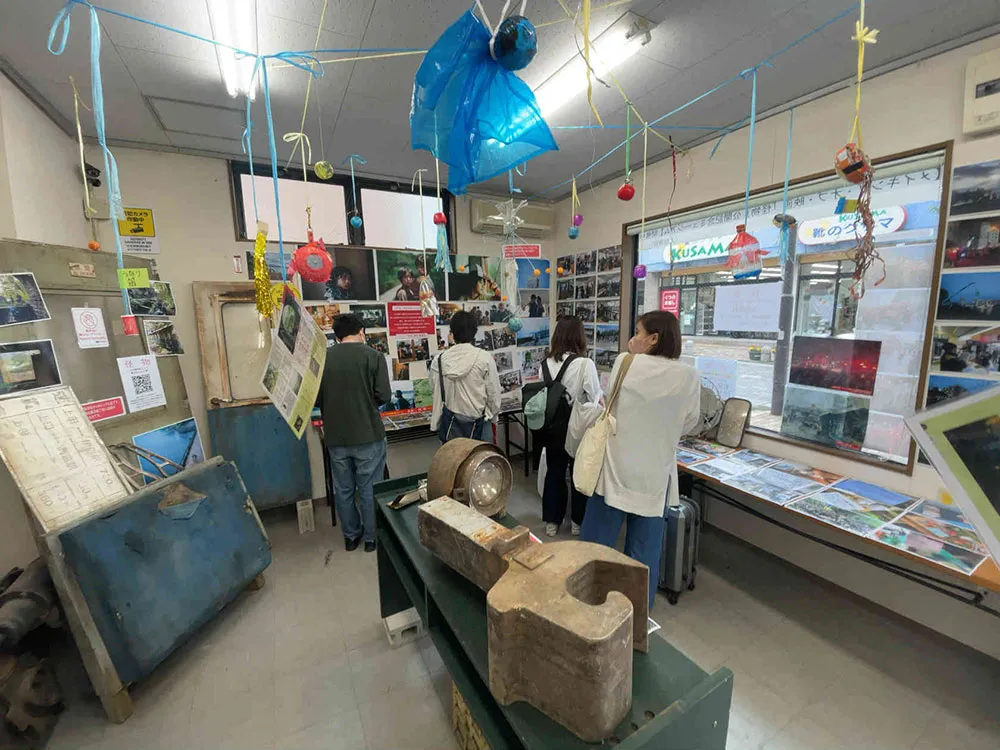
Currently, many local governments have established film commissions and are focusing their efforts on attracting film and TV production locations by setting up support desks, providing subsidies for filming costs, and offering location scouting assistance.For example, the Suwa Area Film Commission in Nagano Prefecture has successfully attracted numerous TV dramas and films. After serving as the setting for the 2023 film *Kaibutsu* (Monster), the region saw a surge in domestic and international tourists visiting for location tours and special exhibitions. These initiatives not only contribute to raising the region’s profile and attracting tourists but also significantly revitalize the local community through opportunities for residents to participate as extras and the hosting of related events.
Traditionally, tourism promotion videos produced by local governments primarily focused on introducing famous sights, historical sites, local cuisine, and festivals. Recently, however, filming techniques utilizing drones and wearable cameras have become prevalent, allowing viewers to experience the excitement and enjoyment of these locations in a more immersive way.Another notable trend is the emergence of videos that deliberately avoid emphasizing tourist attractions. These videos focus on the authentic, everyday life rooted in the community and the people who live there, resulting in content that resembles a documentary film. This approach can be seen as a response to the needs of customers seeking spiritual fulfillment through experiences that offer a break from the ordinary.
Furthermore, with the spread of social media, an increasing number of local governments are focusing on disseminating information through domestic and international influencers. By delivering information to specific target demographics based on age and interests, they are successfully attracting visitors. Recently, there have been cases where vertical short dramas aimed at attracting tourists have been produced and have garnered a large number of views. Expectations are high for their future contribution to visitor attraction and branding efforts.
Scene from the special exhibition for the movie "Kaibutsu" (Lake Suwa Geyser Center, Suwa City)
3. Challenges and Countermeasures: Toward Sustainable Development
When a sudden surge in tourists is triggered by a film, there is a risk of negative impacts on the living environment of local residents and the natural environment. Cases such as the controversy over the composition of a convenience store and Mount Fuji, or the sudden surge in tourists following the global success of an animated film, are still fresh in our memories. Local communities need to monitor the information being disseminated as closely as possible and establish reception systems aimed at maximizing economic benefits and avoiding problems.
Furthermore, if there is a gap between the image of the region portrayed in a film or video and reality, it can lead to disappointment or dissatisfaction among tourists. To avoid this, it is crucial to carefully introduce the unique charms of the region to tourists who visit as a result of the media content, transforming the gap between expectation and reality into an opportunity for new discoveries. A community-wide attitude of welcoming tourists and proactive communication with visitors will be the key to success.
Tourism videos are an effective means of widely promoting a region’s appeal, and many reports indicate direct effects, such as actual visits resulting from the videos. However, there is also the challenge that this does not necessarily lead to improved regional branding. A strategy is needed that goes beyond temporary buzz and visitor attraction to convey the region’s essential appeal and lead to sustainable tourism promotion.While it is often thought that local involvement in the scriptwriting of video productions is difficult, we believe it is extremely important for the region to establish a brand identity—specifically, to define “how we want our town to be perceived through these videos.”
4. New Possibilities: Branded Movies and Corporate Hometown Tax Donations
Branded films are gaining attention as a new method for conveying corporate and regional brand messages through film.The “BRANDED SHORTS” category within the “Short Shorts Film Festival & Asia” is a prime example of this. The Tourism Film Grand Prix within this category solicits and screens short films produced across the country that showcase regional appeal, effectively conveying the depth and charm of these areas—which traditional tourism promotional videos often fail to capture—through moving stories.
The “BRANDED SHORTS” category also features works produced using the corporate version of the Hometown Tax Donation program.For local communities, this makes it possible to produce high-quality video content that would be difficult to achieve with standard budgets. For companies, on the other hand, there are economic benefits: not only can they participate in regional revitalization as part of their social contribution activities, but they also receive tax incentives. Furthermore, by being involved in high-quality video production, companies can expect results that traditional advertising cannot achieve. In this way, video production utilizing the corporate version of the Hometown Tax Donation system offers benefits to both local communities and companies, and can be considered an effective means of achieving sustainable regional revitalization.
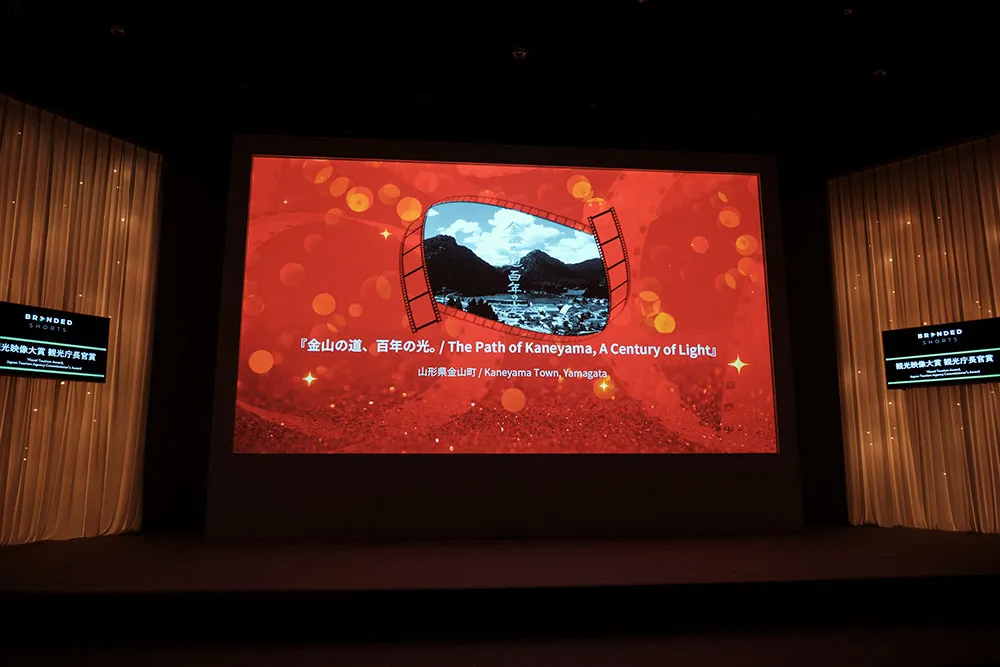
Kanayama Town, Yamagata Prefecture: “The Road of Kanayama, The Road of a Century” – Scene from the Award Ceremony for the 14th Tourism Video Awards (Commissioner of the Japan Tourism Agency Award)
Scene from the BRANDED SHORTS Talk Show (held in 2024, featuring the author)

5. Summary and Future Outlook
Video production should not be considered in isolation. Instead, it requires a strategic approach aimed at achieving specific goals—goals that are shared after fully understanding the region’s unique value and customer needs, and after committing to both video production and regional revitalization. At the same time, it is essential to formulate well-balanced measures that promote tourism while preserving the region’s culture and environment. Furthermore, amid increasing globalization, a “glocal” perspective—one that communicates the region’s unique value to the world—is also crucial.
Videos set in local communities have the potential to go beyond being mere tools for attracting tourists; they can serve as a foundation for establishing and passing down regional identity, as well as for sustainable regional development. To maximize this potential, strategic initiatives based on a long-term perspective and the establishment of a framework for ongoing cooperation among stakeholders are essential.