The Influence of Generation Z (late teens to early twenties) on Changing Society and Consumption Patterns, and the Future of Travel
In the 2021 edition of the “Nikkei MJ Hit Product Rankings” published by the Nikkei, Generation Z was named the “East Yokozuna.” Along with the preceding Millennial generation, Generation Z has long been recognized globally for its influence as a generation transforming society and consumer behavior. This article focuses on the influence of Japan’s Generation Z and explores how it can be leveraged to revitalize the travel and tourism industry.
In the 2021 edition of the “Nikkei MJ Hit Product Rankings,” published annually at the end of the year by the Nikkei Inc., “Generation Z” was selected as the top-ranked group in the East. Generation Z, along with the “Millennial Generation” just one generation above them, has long been garnering global attention as a generation set to transform society and consumer behavior. The reason for their inclusion in this year’s Hit Product Rankings appears to be their high level of interest in environmental and social issues amid the worsening global warming crisis. They are recognized for choosing products that address sustainability, as well as for being a generation poised to eventually transform Japanese society and consumption patterns.
The author has been tracking the values, behaviors, and travel habits of young people in Japan since around the time the Millennial generation began attracting attention in Europe and the United States. Initially, there did not seem to be much market expectation similar to that seen with senior consumers, but starting in 2015—when Generation Z began reaching adulthood—changes in travel spending became apparent, making the generational shift among young people tangible. At the same time, it became clear that Generation Z exerts influence on other generations, society, and businesses, and this is considered the driving force behind this generation. In this article, drawing on our past research, we focus on the influence of Japan’s Generation Z and explore the potential for how this can be leveraged to revitalize the travel and tourism sectors.
Note that in our surveys, prior to the widespread use of the term “Generation Z,” we referred to this group as the “Post-Millennial Generation.”
1. Global Attention on Gen Z Behavior from Society and Businesses
While there are various theories regarding the birth years that define Generation Z, it generally refers to young people in their late teens to early twenties born from the late 1990s to the early 2000s. They are known as digital natives who have had smartphones and social media as part of their everyday lives since they were old enough to remember.
Their general characteristics are said to include: (1) being digital natives for whom smartphones and social media have been a natural part of life since childhood; (2) being sensitive to social issues, including environmental concerns, and possessing liberal and free-thinking mindsets; (3) having a strong voice through social media and other platforms; and (4) constituting a large proportion of the global population, which will influence future society and consumption patterns. In fact, the actions of Generation Z have a significant influence on society and businesses. For example, Greta Thunberg is a symbolic figure whose actions have had a profound impact on environmental issues. The “flight shame” movement, which began in Sweden in 2018, spread across Europe, leading to a shift toward rail travel, including the discontinuation of short-haul flights. Furthermore, following a mass shooting in Florida that same year, a movement by high school students calling for gun control spread nationwide, leading airlines and car rental companies to decide to discontinue benefits for members of the National Rifle Association. The comment by an airline CEO at the time—that they “made this decision for the sake of future customers”—was particularly striking. In emerging Asian nations, amid rapid economic development, Gen Z and Millennials have received higher levels of education than their parents’ generation and include many high-income earners, making them the core of Asian visitors to Japan. Gen Z is a far greater force on the global stage than we Japanese realize.
2. The generational shift among Japanese youth that began around 2015 and Generation Z
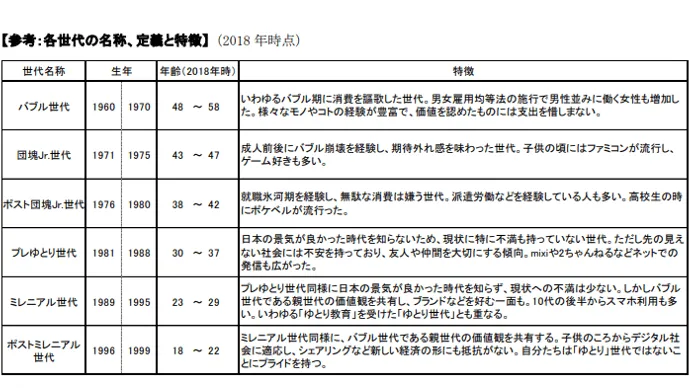
What about Japan? Young people around the time of the Lehman Shock, about 10 years ago, were called the Millennial generation and coincided with the “Yutori generation,” who had received “Yutori education. ”This was also a period of economic downturn, and young people were perceived as “not traveling,” “not driving,” and “not drinking alcohol.” Japan’s Generation Z corresponds precisely to the “post-Yutori Education” or “post-Yutori generation.” While their attitudes and behaviors do not exhibit the same striking characteristics as those of young people overseas mentioned earlier, the underlying fundamentals are the same as those worldwide.
When Generation Z first came into focus in Japan, expectations from the market—such as those for senior consumer spending—were not particularly high, partly due to their small population and low per-capita spending. However, around 2015, as the older members of Generation Z reached adulthood and began engaging in full-fledged consumption driven by their own choices and spending power, the rate of outbound travel among those in their 20s began to rise. Survey results consistently show that young people in their 20s maintain a high desire to travel even during the current COVID-19 pandemic. The reasons behind this trend are believed to be: (1) they spent their high school and college years during a period of relatively long-term economic stability and a favorable employment environment (even during the COVID-19 pandemic, conditions were not as severe as during the financial crisis); (2) their parents belong to the “Bubble Generation,” who enjoyed a period of high consumption; they grew up during a time when minivans were popular and had many experiences with family travel; and (3) diverse and new ways of thinking from the West have finally taken root among the Japanese. These factors highlight the differences between Generation Z and the Millennial generation(Figures 1 and 2).
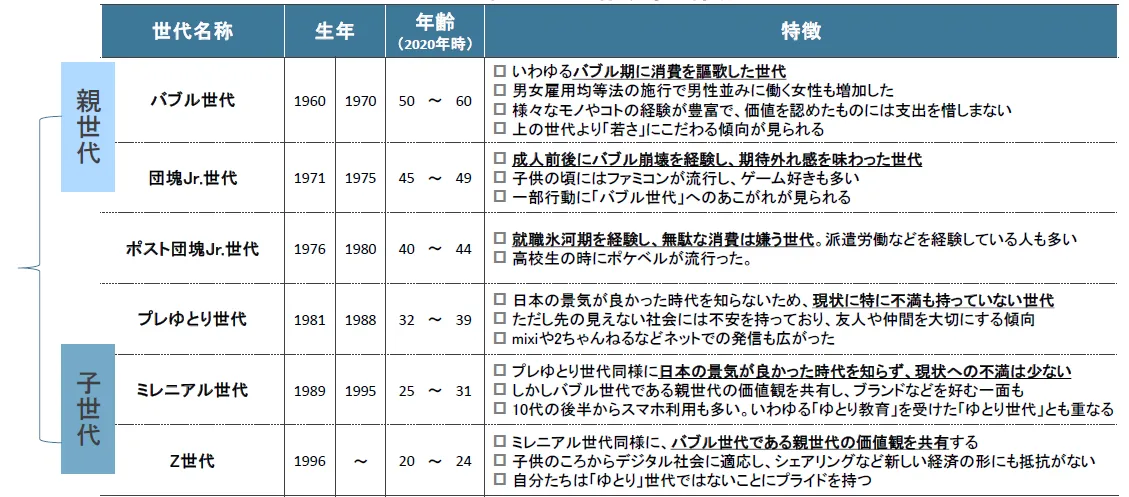
Source: Prepared by JTB Tourism Research & Consulting based on “Survey on the Values and Travel Habits of Japan’s Millennials and Post-Millennials (2018)” by JTB Tourism Research & Consulting
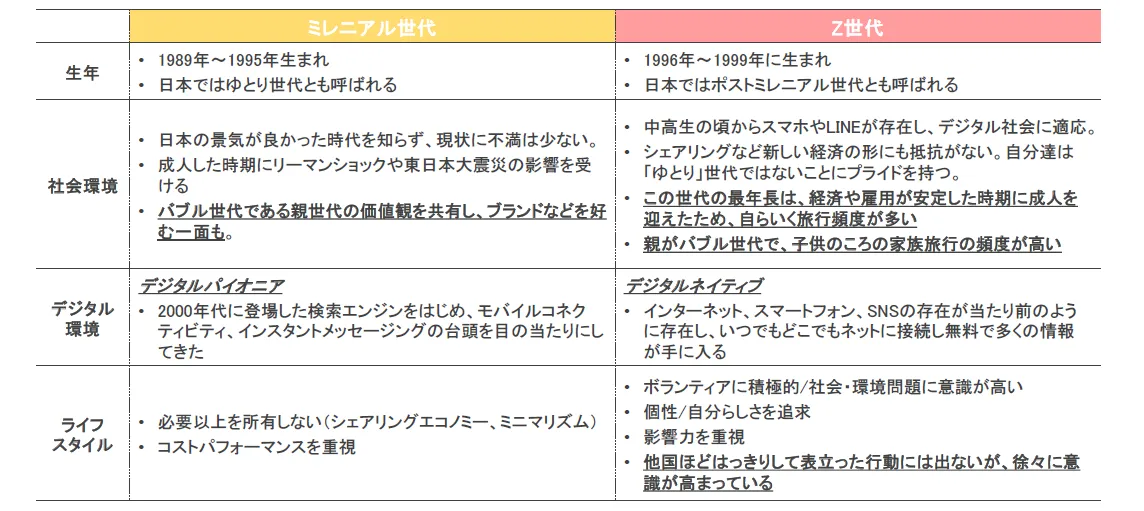
Japanese Millennials and Generation Z Source: Prepared by JTB Tourism Research & Consulting based on various materials
3. Relationships with Parents of the Bubble Generation: Mutual Influence in Travel, Music, Shopping, and More
In his book, Philip Kotler identifies “young people,” “women,” and “netizens” as the three consumer segments to watch in the digital age. Young people tend to be quick to adopt new things, while women play a role in using information to research and find quality products. It can be said that all three of these groups are valued not only for their individual spending power but also for their influence on others. In other words, in the coming era, rather than providing products and services that resonate only with specific targets through traditional marketing methods, we can understand that by anticipating ripple effects, it is possible to ultimately reach a broader range of demographics. While social media generally plays the role of creating these ripple effects, our research shows that real-life human relationships—such as those between parents and children, who have been close for a long time—also play a significant role.
Figure 3 examines the influence between parents and children regarding hobbies and consumption. It shows that the closer the parent-child relationship is among younger generations, the more their consumption patterns influence each other. While a high percentage of Gen Z (post-Millennials) and Millennials report that “their parents influenced them to start something or make a purchase,” the percentage of those who say “they influenced their parents to start something or make a purchase” is also higher than in parent-child relationships among older generations. This is likely due to parent-child relationships becoming closer—more akin to those between siblings or friends—than in the past. Although we have omitted the specific charts here, by product category, music and travel showed influence flowing from parent to child, while fashion, digital devices, and home appliances showed influence flowing from child to parent. The fact that people who experienced more family trips during childhood tend to travel more frequently as adults also suggests that parent-child relationships may play a role.
Incidentally, the “parent generation” referred to here consists of the “Bubble Generation”—those who came of age during the economic bubble and enjoyed a wide range of consumer experiences. Even though they have lived frugally since the bubble burst, they tend not to skimp on spending for items they recognize as valuable, and they are a group that places a stronger emphasis on “youth” than older generations. This generation is also highly likely to choose a higher-end accommodation when they do go on a trip. It is a common story that parents from the Bubble Generation purchase the same smartphone model as their children and ask them for new ways to use it. Furthermore, when children adopt new trends, such as fashion, first and these trends spread to the parent generation, the parents’ values come into play, which can lead to the purchase of higher-quality items in terms of materials and brands.
(Source: "Kotler’s Marketing 4.0: The Ultimate Rules for the Smartphone Era," Asahi Shimbun Publications)
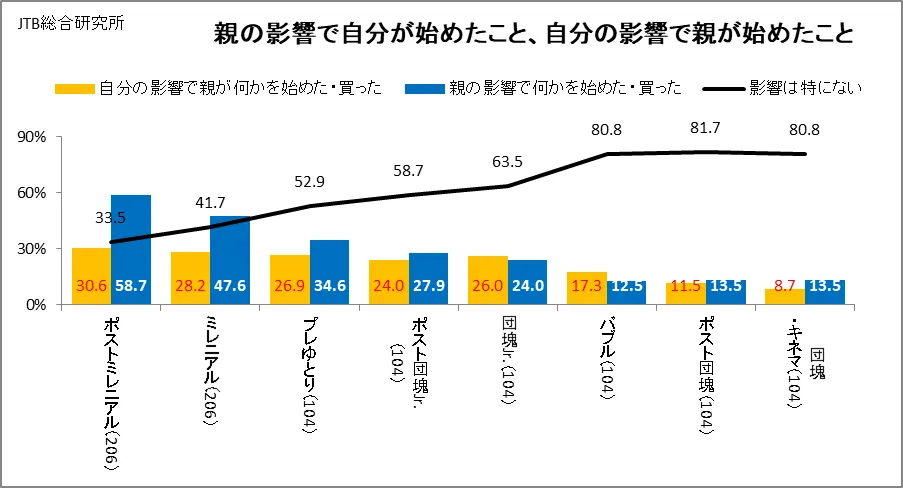
: JTB Tourism Research & Consulting, “Survey on the Values and Travel Habits of the Millennial Generation (2017)”
4. From Sightseeing Trips to Next-Generation Travel That Resonates with Local Communities
As society matures and becomes more digital, individual values have diversified. Even before the COVID-19 pandemic, travel was shifting from a means of enjoying the extraordinary to a way to pursue personal hobbies and achieve self-realization. In addition to the traditional sightseeing trips to famous tourist destinations, a new style of travel has emerged that involves enjoying lifestyles and cultures different from one’s own daily life. Concepts such as workation and multi-location living have gained attention, blurring the lines between “living” and “staying,” and expanding the scope of tourism (Figure 4). The younger generation is the key driver of this shift in orientation.
One way to embody local lifestyles and culture as tourism resources is through collaboration with local industries, agriculture, and fisheries. For example, over the past decade, initiatives such as “open factories”—which showcase the production processes of local specialties and convey the creators’ passion—have spread nationwide. However, even among those interested in local and traditional industries, the nature of their engagement varies by generation. Generation Z and Millennials tend to show a stronger desire than other generations to engage more deeply—through hands-on experiences and support—rather than simply buying and enjoying products (Figure 5).When it comes to interactions while traveling, older generations are more likely to say, “I want to be taught,” while Gen Z is more likely to say, “I want to do it together.” Even if their spending per visit is smaller than that of older generations, Gen Z’s approach to engaging with local communities is expected to foster repeat visitors. Furthermore, it is believed that this will lead them to view social and regional issues as personal concerns, driving them toward activities and consumption aimed at solving or supporting these issues. Additionally, there is hope that products popularized by young people—if they are of high quality—will eventually reach older age groups as well. Incidentally, in a previous survey our company conducted among French people, it was young people who were actively engaging with Japanese culture, such as “bonsai” and “bento.” Young people in both France and Japan are attracting attention from a new perspective—shifting from “admiring” to “using”—and when they recognize something as good, they spread the word. In this way, young people provide new values to local industries.
While exchanges are currently stalled due to the COVID-19 pandemic, young people’s desire to travel remains consistently high. With freedom of movement restricted for nearly two years, Generation Z’s travel motives may currently be driven more by the simple desire to “just go on a trip!” rather than by local interests, self-realization, or interaction with the local community. However, it is likely that this will eventually shift. Given that Generation Z and younger generations have experienced the unprecedented crisis of the COVID-19 pandemic, we must approach tourism promotion with the aim of confidently passing the baton to the next generation—considering how these young people will shape the future of the planet and society, and how travel and consumer activities should evolve and develop within that context.
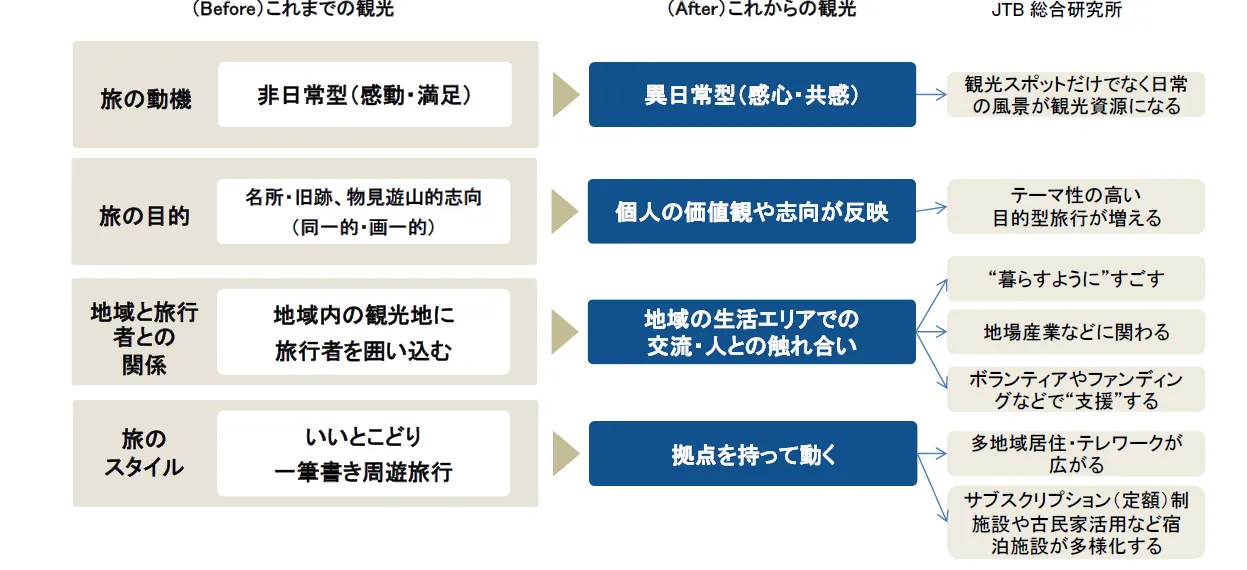
: JTB Tourism Research & Consulting, “Evolving and Expanding Domestic Travel by Japanese People (2019)”
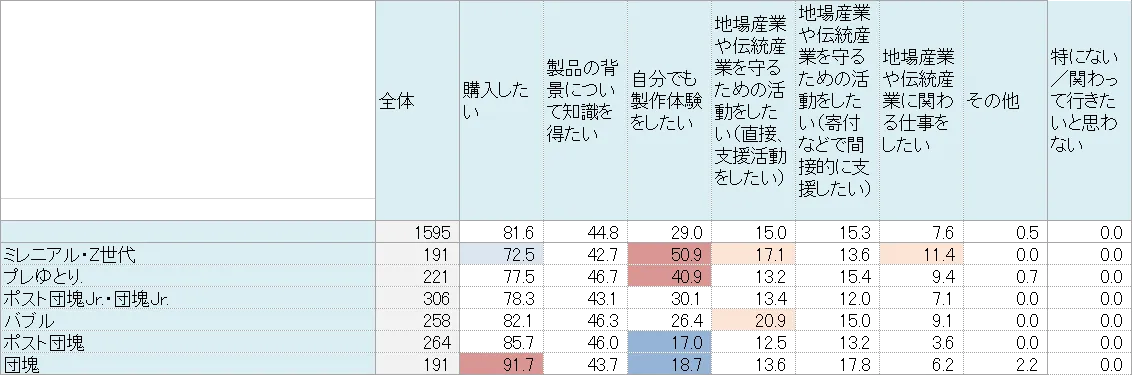
Source: JTB Tourism Research & Consulting, “Survey on Awareness of Regional Specialty Products (Local and Traditional Products) (2018)”