Thinking About Future Chinese Tourists Visiting Japan

The government has set a target of attracting 40 million international visitors to Japan by 2020 and 60 million by 2030. As we work toward achieving these goals, we are entering an era where we must cater to travelers with diverse values—not only across different countries but also within individual countries. In this column, we will use the “Travel Life Segment 5” framework—which categorizes travelers into five types based on their lifestyles and travel preferences—to gain a deeper understanding of the needs of Chinese travelers visiting Japan.
The government has recently set a target of attracting 40 million international visitors to Japan by 2020 and 60 million by 2030. It also plans to triple the number of repeat visitors—those who visit Japan multiple times—to 36 million by 2030, up from 2015 levels. As the volume of inbound travelers and the number of repeat visitors increase and the market matures, it is inevitable that travelers’ needs will diversify. Until very recently, it was not uncommon to discuss foreign visitors to Japan as a single homogeneous group; however, we have now entered an era where it is necessary to cater to travelers with diverse values—not only by country but even within individual countries—and this trend is expected to grow even stronger in the future.
In this column, we will use the “Travel Life Segment 5” framework—which categorizes travelers into five types based on lifestyle and travel preferences—to gain a deeper understanding of the needs of Chinese travelers to Japan*.
A Distinctive Feature of Chinese Travelers to Japan: The High Proportion of “Experience-Oriented” and “Trend-Sensitive” Types
When we categorized the Chinese travelers surveyed using “Travel Life Segment 5,” the most common type was “Empathic” (29.5%), followed by “Balanced Spender” (28.8%). Additionally, compared to travelers from other countries, the types that stood out as particularly common were “Experience-Oriented” (20.5%) and “Trend-Sensitive” (15.8%)."Experience-Oriented" travelers are travel enthusiasts who are willing to spend as much time as necessary to fully savor their travel experiences, while "Trend-Sensitive" travelers are highly information-savvy and eager to discover things and experiences that no one else knows about yet—they can be described as innovators (or trendsetters).
The Spread of New Products and Services
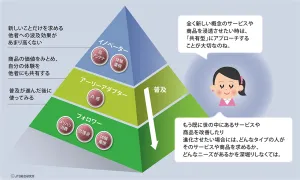
Based on our previous research findings, when new products or services become popular, the "Highly Attuned" type—who are innovators—are the first to discover and start using them. Among these, the "Empathetic" type—who are early adopters—then use the ones they find appealing and help spread them.
To discover the lesser-known charms of Japan and help them take root among Chinese travelers, it is particularly important to understand what kinds of things and experiences the “Highly Attuned” and “Empathetic” types—among the five types—are interested in.
Characteristics of the "Highly Attuned" Innovator Type
So, what are the characteristics of the “High Antenna” type of Chinese travelers to Japan, who are innovators?
1) Globally-minded internationalists
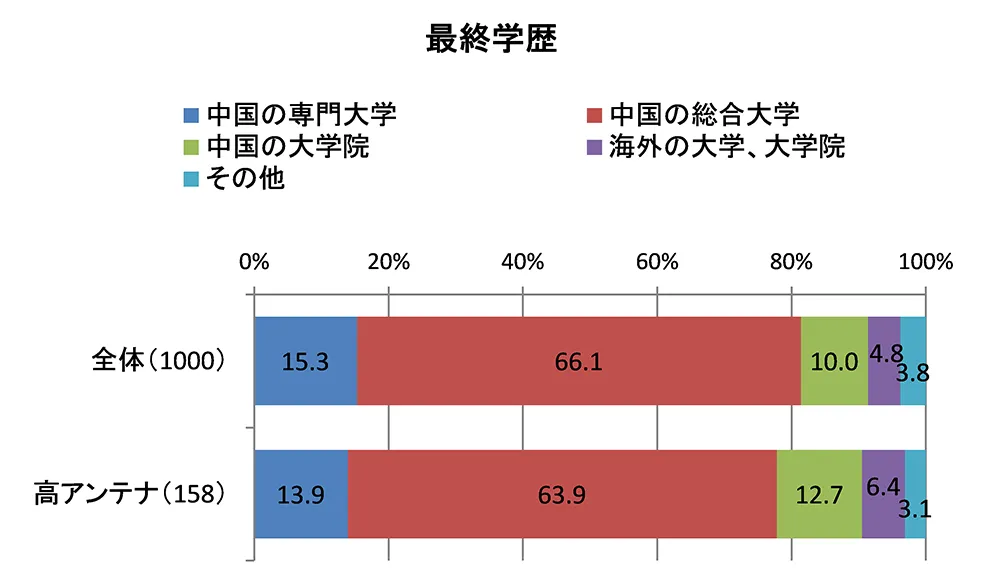
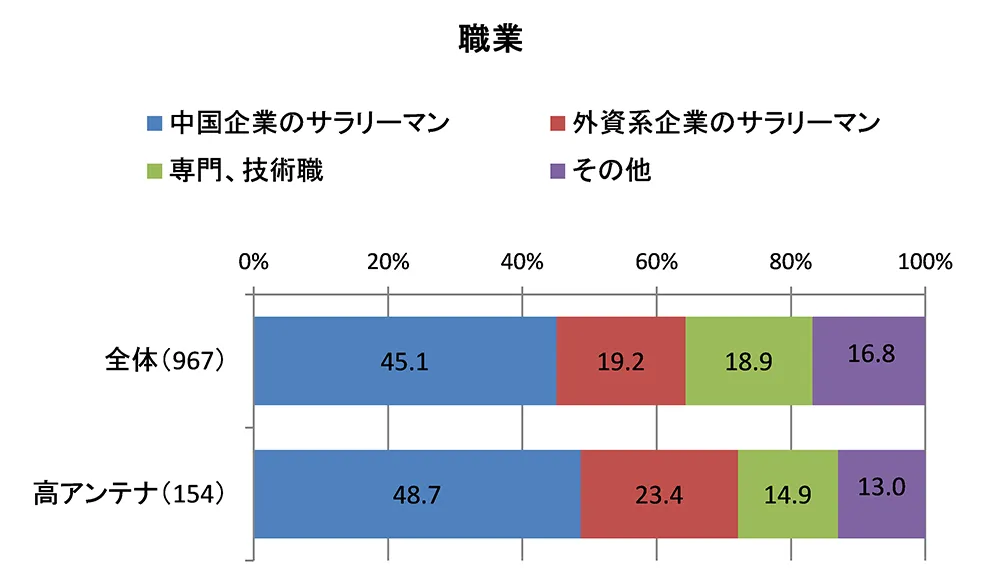
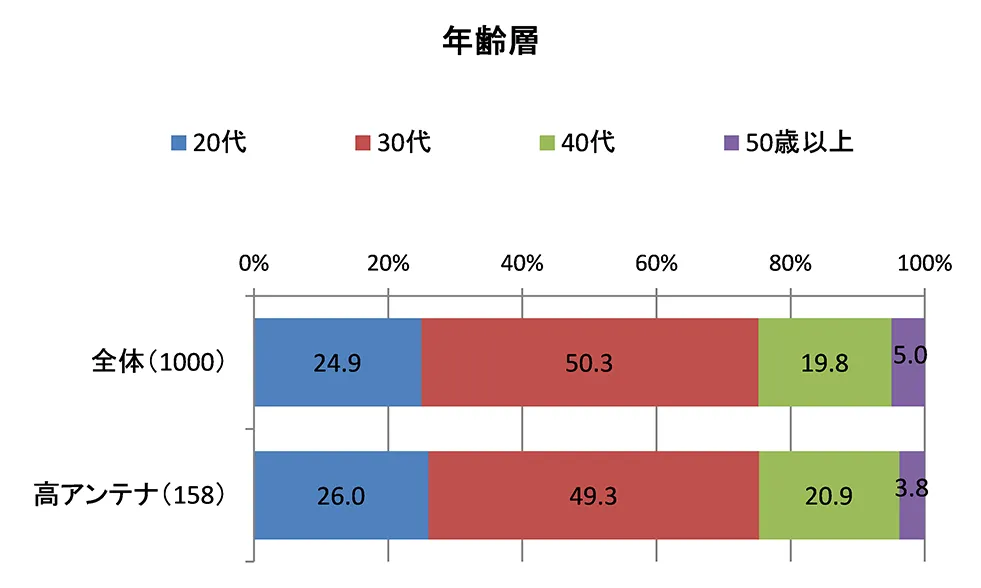
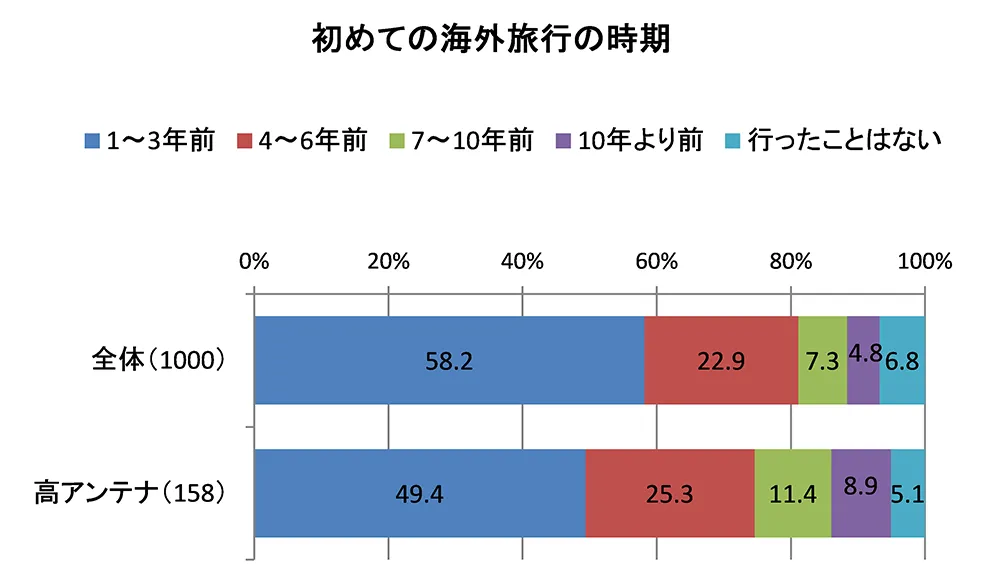
Looking at the attributes of the “Highly Attuned” type, the percentage of those who graduated from universities or graduate schools abroad (6.3% for Highly Attuned vs. 4.8% overall) and those working at foreign-affiliated companies (23.4% for Highly Attuned vs. 19.2% overall) was higher. Additionally, the percentage of those who have traveled abroad since a young age is also relatively high, suggesting this type can be considered internationally-minded individuals with a global perspective.
2) Emphasis on Quality, Safety, Brand, and Health
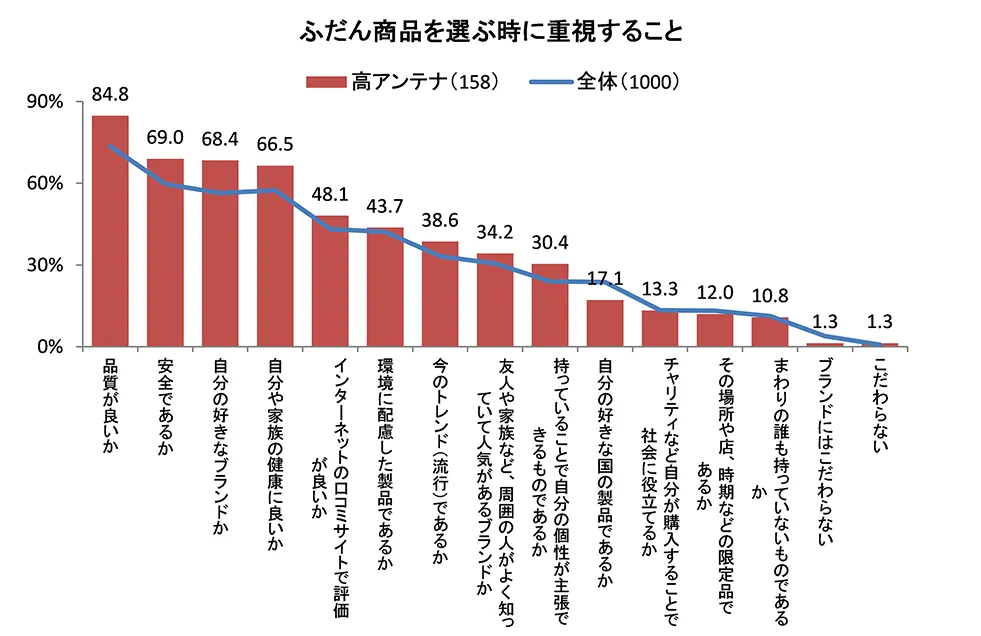
When examining what factors people prioritize when selecting products in their daily lives, the main priorities were “quality,” “safety,” “favorite brands,” and “health benefits.” In another question, the percentage of respondents who said they “usually choose and buy Japanese-made products” (74.1% of those with high awareness, 50.3% of the total) was also high, suggesting that there is a strong expectation for quality and safety regarding Japanese products (Figure 5).
3) Desire to actively engage with Japanese people and culture
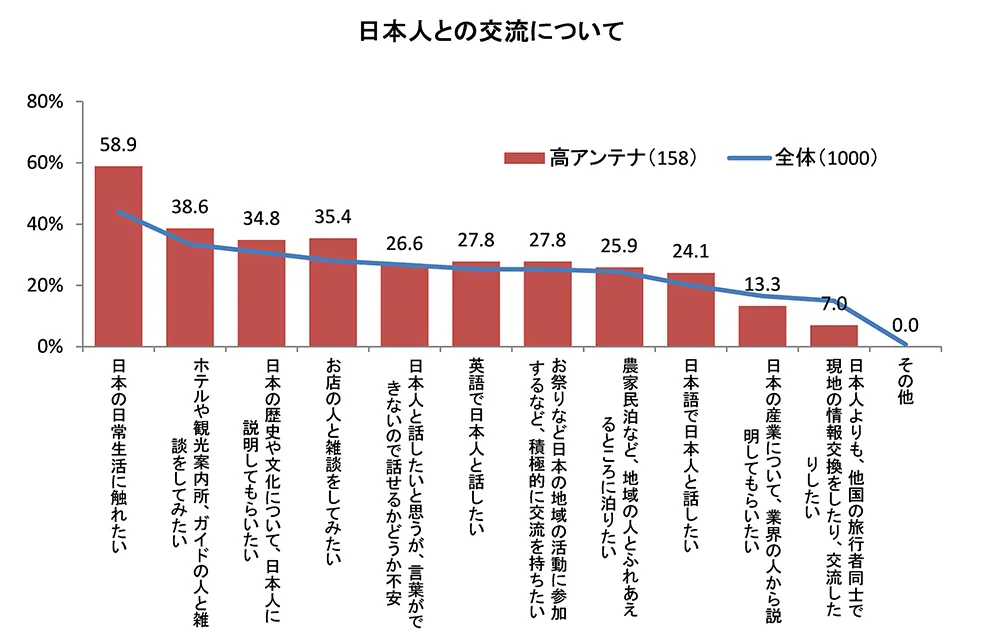
In response to the question about what kind of interaction they would like to have with Japanese people when visiting Japan, “I want to experience daily life” was selected by 58.9%, nearly 15 percentage points higher than the overall average of 44.0%.In addition, the percentage of respondents who wanted to talk with staff at hotels, tourist information centers, guides, and shops, or who wanted Japanese people to explain Japanese history and culture to them, was relatively high, revealing a desire to actively engage with Japanese people and Japanese culture (Figure 6).
Cosmetics rank high among the items Chinese tourists visiting Japan wish to purchase, but it seems that quite a few women prefer to buy them at department store cosmetics counters rather than duty-free shops, even if the prices are higher. This is because they appreciate the meticulous service unique to Japan, such as having sales staff apply makeup for them and receiving advice on makeup techniques while making a purchase. It is also considered important to think about how to make the act of “buying” itself an “experiential value” through services and products, and how to add value to that experience.
Creating a Smooth Flow of Information from “Highly Attuned” to “Empathetic” Types
So far, we have briefly examined the characteristics of the “Highly Attuned” type, who actively seeks out new trends. However, because the fact that “only I know this” is important to the “Highly Attuned” type, they do not actively share information themselves. This is where the “Empathic” type plays a crucial role. Unlike the “High-Antenna” type, the “Empathic” type does not actively seek out information themselves. However, they keep a close eye on new trends identified by highly information-sensitive individuals like the “High-Antenna” type, and they enjoy experiencing and sharing with others the things they find interesting among these trends. Identifying the points of interest where “High Antenna” and “Empathy” types among Chinese visitors to Japan intersect, and figuring out how to create a smooth flow of information from “High Antenna” to “Empathy” types, will likely be crucial for developing products and services that stand out.
著者