Understanding Tourism Crisis Management Through the "4Rs" (5) Recovery - Recovering from a Crisis
Maintaining business operations and maximizing the impact of recovery efforts
In tourism crisis management, “recovery from a crisis” refers to restoring tourism-related organizations to their original state after a crisis and ensuring that tourists return to the affected destinations as soon as possible.
Formulation and Implementation of a Business Continuity Plan (BCP)
The first step in recovery is the development and implementation of a Business Continuity Plan (BCP) for the tourism region. The three main challenges in BCP are as follows:
Support for Business Continuity
Local governments, DMOs, tourism associations, and other entities support the business continuity and resumption of operations for tourism-related businesses within the region.
Communication (with employees, stakeholders, the market, and the media)
Detailed information on the current status of the region following the crisis will be gathered, and information—such as which hotels and tourism facilities are open for business and the reopening schedules for those currently closed—will be provided to relevant parties. For the market, detailed information on which facilities are operating and to what extent will be provided to encourage visitors to the region.
Post-Crisis Marketing Strategy
Immediately after the crisis, we will collaborate with various media outlets to convey accurate local information to the market. Today, it is also important to incorporate communication via websites and social media into marketing strategies, in addition to traditional mass media.
Securing Human Resources for Crisis Response
The second step in recovery is securing human resources (employees) for post-crisis operations. Due to the closure of tourism businesses following a crisis, personnel previously employed in the tourism industry may be forced to leave their jobs, either temporarily or permanently. In the tourism industry, human resources are the source of revenue. If their employment can be maintained in some form amid the harsh post-crisis business environment, operations can restart smoothly once the crisis has been overcome. Employees who were present at the scene of the crisis or staff who were placed on temporary leave after the crisis tends to experience emotional instability and a decline in motivation. Providing emotional support to these individuals is also a critical factor in the recovery of tourist destinations.
Evaluation and Improvement
The third step in recovery is to apply the lessons learned from the crisis or disaster. To do this, the first step is to gather and listen to feedback from the front lines. We must ask those who were directly involved in the tourism crisis response how effectively the crisis management plan functioned, what was lacking, and what needs to be done to improve the plan and response measures. At the same time, we must not forget to acknowledge the hardships these individuals faced on the front lines.
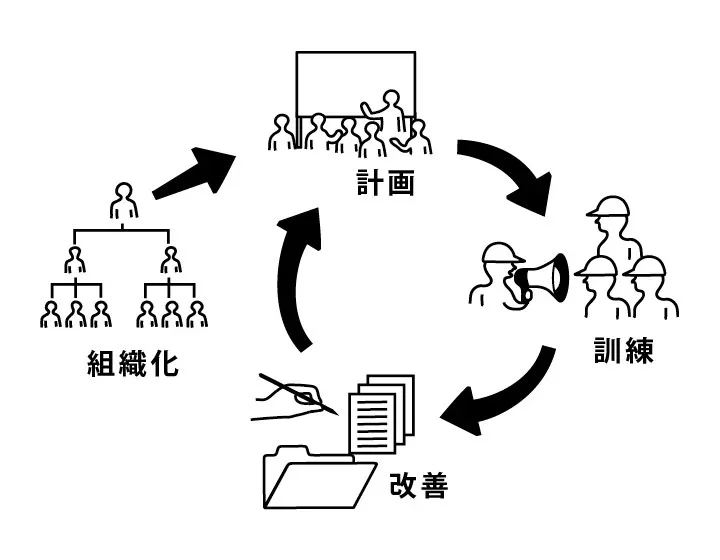
After gathering these on-site perspectives, analyze and evaluate them to identify areas for improvement in plans, countermeasures, and training. Then, revise existing plans based on the four “R’s.” Once revised, disseminate the updated plans to all stakeholders and conduct training sessions and workshops in accordance with them to ensure thorough implementation and adoption.
Learning from Those Cases
Here are some specific, real-world examples from companies, the national government, and local municipalities.
The Phuket Tsunami
After a crisis occurs, promptly create and implement an action plan for recovery
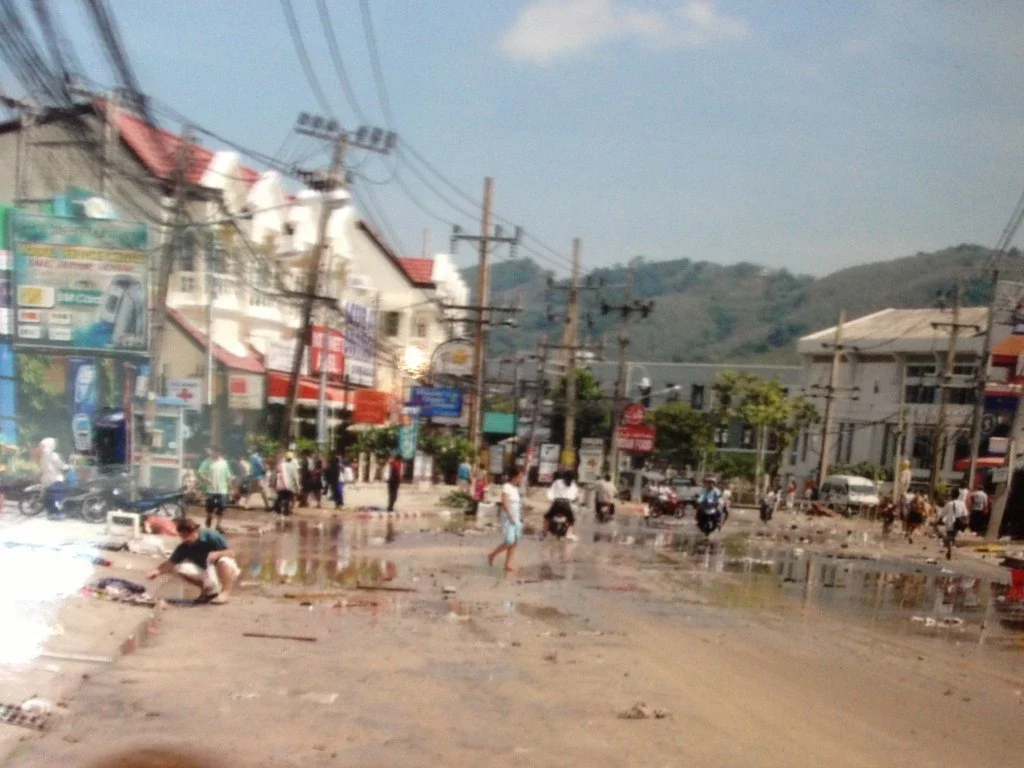
In December 2004, a massive earthquake off the coast of Sumatra, Indonesia, caused severe tsunami damage to Thailand’s coastal regions. Following the disaster, the Thai government established a crisis response project led by the Tourism Authority of Thailand (TAT) and, with the cooperation of the World Tourism Organization (UNWTO) and the Pacific Asia Travel Association (PATA), quickly compiled the “Phuket Action Plan” to revitalize tourism. The recovery plan included specific activities such as marketing and communications, sales promotion, community support, tourism workforce development, and sustainable redevelopment, all of which were implemented without delay.
The slogan for the recovery is “Build Back Better.”
Hotels damaged by the tsunami could not operate until their buildings were repaired or rebuilt. Under the Action Plan, with the slogan “Build Back Better” (to rebuild better than before the disaster), we provided hospitality and language training to employees of hotels that were temporarily closed. This helped maintain employment while striving to improve service levels. Today, Phuket has fully recovered as a tsunami-resilient resort, particularly along the beachfront. Service levels at hotels and tourist facilities have improved, and the number of foreign tourists visiting now exceeds pre-tsunami levels.
Hong Kong: Recovery from SARS
Strategic Tourism Recovery Plan
In November 2002, SARS broke out in Guangdong Province, China, and the number of infected people spread rapidly, mainly in Asia. In Hong Kong, the infection spread in the blink of an eye after a Chinese doctor fell ill in February 2003. On April 2 of the same year, the World Health Organization issued a recommendation to refrain from traveling to Hong Kong and Guangdong Province, China, which brought Hong Kong’s tourism industry to a virtual standstill. Hotel occupancy rates plummeted to single digits, and the number of flights to and from Hong Kong was drastically reduced.
As the SARS outbreak was spreading in April, the Hong Kong Tourism Board and the Hong Kong government formed a special task force and began drafting a plan to revive tourism once the outbreak subsided. On May 23, thanks to the Hong Kong government’s efforts, the WHO lifted its travel advisory against Hong Kong. On June 23, the WHO announced that it was removing Hong Kong from the list of SARS-affected areas, and a few days later, Hong Kong launched a massive global tourism recovery campaign that had been meticulously prepared. Through a PR campaign costing 400 million Hong Kong dollars (6 billion yen), they promoted Hong Kong’s revival to people around the world and travel agencies. In August, they invited over 1,000 key figures in the travel and tourism industry from 55 countries to Hong Kong, creating an opportunity for them to see and experience firsthand how Hong Kong had fully recovered from SARS.
Collaboration with PATA
In addition to the Hong Kong government’s own tourism recovery plan, the revival of Hong Kong’s tourism industry was supported by PATA’s (Pacific Asia Travel Association) communication campaign aimed at recovery from SARS, named “Project Phoenix. ”To make the most of a limited budget and restore tourism demand that had fallen due to SARS, PATA implemented a strategy to communicate the impact of SARS and the current state of recovery to global consumers by publishing expert interviews in television and magazines such as CNN, the BBC, *Time*, and *Fortune*.As a result of the campaign, which ran from August to December 2003, tourists returned sooner than expected to the target regions, including Hong Kong. This can be cited as a best practice example of how a communication strategy accelerated recovery from a tourism crisis.
Exercise
How would you go about starting the recovery?
Q: In February 2013, a random shooting incident occurred in Guam, resulting in the deaths of three Japanese tourists and leaving many others with serious or minor injuries. If you were a manager at the Guam Visitors Bureau, what would you do to minimize the post-incident decline in tourist numbers and ensure a swift recovery of the tourism industry?
A: Sample Answer
The following recovery measures could be considered, for example.
- Provide the most attentive care possible to the victims, their families, and those affected.
- Respond promptly and responsibly regarding the treatment of the injured, including negotiations with insurance companies.
- Hold a press conference with the Director of the Guam Tourism Bureau or the Governor to clearly convey the following to the media:
- Words of condolence and comfort on behalf of the people of Guam for the victims
- That the suspect (perpetrator) has been apprehended and safety on the island of Guam has been ensured
- The incident was the act of a lone suspect and has absolutely no connection to any criminal organization or terrorist group
- The suspect is being interrogated to determine the motive for the crime
- Regardless of this incident, Guam remains a safe and enjoyable resort destination, and we encourage visitors to continue coming
- To prevent reputational damage, we will review all articles published in the media and request corrections if any inappropriate language is found.
- We will use tourism websites and social media to promote Guam as a bright and enjoyable tourist destination, just as always.
- We will conduct interviews and surveys with travel agencies and tourists to monitor whether the incident has changed their impression of Guam.
Q: You are the general manager of a resort hotel. Recently, a group of high school students on a school trip who stayed at your hotel suffered from collective food poisoning. An investigation by the public health department detected Salmonella in the affected students’ stool and in the salad served at breakfast, identifying this as the cause of the food poisoning. The hotel was ordered to suspend operations for five days, and the incident was reported on television and in newspapers. Since the day after the reports, cancellations of school trips and group reservations have been pouring in. What steps will you take to restore the hotel’s operations?
A: Sample Answer
The following recovery measures could be considered:
- Apologize to the school where the cases occurred.
- Hold a briefing session at the school for parents to apologize and explain future measures.
- Apologize to the travel agency that handled the school trip.
- Dispatch company staff to the hospital where the student is being treated to provide attentive support to the student and their family.
- Advance payment of medical expenses, transportation costs for returning home, and rescue costs, as well as negotiations with insurance companies.
- Thorough investigation into the cause of the bacterial contamination.
- Developed and implemented measures to prevent recurrence (in collaboration with the kitchen staff) based on guidance from the public health center.
- Disinfection of the kitchen and refrigerators, and review of operations related to food preparation and serving.
- Conducting food safety training for all employees.
- Documenting the circumstances and causes of the incident and sharing them internally.
- Posting an "Apology and Notice" on the company website.
- Posting food safety measures on the company website.
- Issue a press release regarding the "food safety measures."
- Apologizing to and explaining the corrective measures to school and group organizers whose reservations were canceled.
- Explain the measures to travel agencies.